







Badrinath is one of the most important Vishnu pilgrimage destinations in the Char Dham Yatra, but it should not be planned like a casual hill-station stop. The journey takes you into high-altitude Himalayan terrain, where temple dates, road conditions, registration, darshan flow, weather, and altitude all shape the experience.
A smoother visit depends on choosing the right season, carrying the required documents, keeping buffer time, and respecting the pace of the mountains.
Planning Snapshot
Best suited for: Pilgrims, families, senior citizens with support, and spiritual travellers.
Main travel season: Late April to November, depending on temple opening and closing dates.
Best practical months: May to June and September to early October.
Avoid or plan with caution: July and August due to monsoon-related road risks.
Common base/halt: Joshimath.
Main route: Haridwar/Rishikesh – Devprayag – Rudraprayag – Karnaprayag – Joshimath – Badrinath.
Registration: Mandatory for Char Dham/Badrinath Yatra.
Planning style: Better with advance bookings, route buffers, and local updates.
Essential Planning for Badrinath Yatra
Badrinath Temple Opening Date 2026
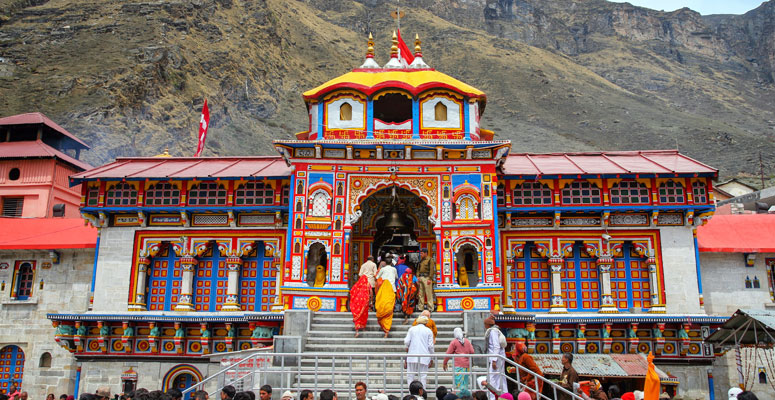
Badrinath Temple opened for the 2026 pilgrimage season on 23 April 2026 at 6:15 AM.
The opening date is announced in accordance with traditional rituals and updates from the temple authorities. Travellers should always recheck the latest official advisory before final travel, especially if planning around opening week. If you are travelling with senior citizens or children, avoid planning the opening period too tightly.
Badrinath Temple Closing Date 2026
The Badrinath Temple closing date for 2026 is expected around 13 November 2026, but this should be treated as tentative until officially confirmed by the temple authorities or Uttarakhand Tourism, closer to Vijayadashami and the closing period.
If you are planning a late-season Badrinath Yatra, confirm the final closing date before booking flights, trains, hotels, or road transfers.
Best Time to Visit Badrinath
The best time to visit Badrinath depends on your comfort level, tolerance for crowds, and ability to handle high-altitude weather.
May to June
This is the main pilgrimage window. Roads are usually active, services are better arranged, and the yatra rhythm is fully underway. It is also the busiest period, so advance booking is important.
Plan May and June if you want:
Better availability of yatra services
Strong pilgrimage atmosphere
Easier access compared to shoulder months
A full Char Dham or Do Dham route
Late April and Opening Period
This period is spiritually significant but colder and more crowded around the temple opening. It suits pilgrims who specifically want to be part of the opening-season darshan.
Travellers should prepare for:
September to Early October
This is often a better window after the monsoon, provided road conditions are stable. Crowds are usually more manageable than peak summer, and the weather is often clearer. This period works well for travellers who want a calmer pilgrimage pace and may also want to visit Mana, Joshimath, or nearby sacred sites.
November Before Closing
This period is suitable only for travellers prepared for cold weather and possible service limitations. It can be meaningful for pilgrims who want to travel close to the closing period, but it is not the easiest time for senior citizens or families with young children.
Months to Avoid
July and August should be avoided or planned with strong caution. The monsoon can affect the Char Dham route through landslides, roadblocks, traffic holds, and sudden weather changes.
Problem areas may shift quickly during this period, especially on mountain stretches beyond Rishikesh, Rudraprayag, Karnaprayag, Joshimath, and onwards to Badrinath.
Winter closure months are not open for regular pilgrim darshan at Badrinath. The temple remains closed due to heavy snowfall and extremely high-altitude conditions, and winter worship shifts as per temple tradition.
Travel Steps: Registration, Route and Local Support
Mandatory Char Dham Registration
Char Dham registration is compulsory for Badrinath Yatra. Travellers should register through the official Uttarakhand Tourist Care/Char Dham registration portal or mobile app before starting their journey.
The usual registration process includes:
Creating the tour
Selecting travel dates
Choosing Dham visits
Entering pilgrim details
Downloading the Yatra Registration Letter with QR code
How to Reach Badrinath
The nearest major airport for Badrinath is Jolly Grant Airport in Dehradun. Common railheads and starting points include Haridwar, Rishikesh, and Dehradun.
The usual road route is:
Haridwar/Rishikesh – Devprayag – Rudraprayag – Karnaprayag – Joshimath – Badrinath
Joshimath is an important halt before Badrinath. For many pilgrims, this is where the journey begins to feel more controlled by mountain conditions. Start early from Joshimath for the onward drive to Badrinath. Early movement gives you a better chance of managing traffic, check-post timing, weather changes, road repair delays, local administrative controls and landslide-prone stretches.
Temple Darshan and Ritual Planning
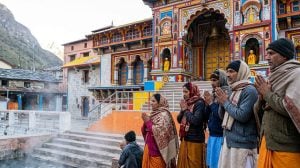
Badrinath Darshan Flow
Expect queues during May and June. Opening week, festival periods, weekends, and peak Char Dham movement days can be especially crowded.
Early planning helps, but darshan timings may change due to:
Rituals
Crowd movement
Weather
Temple authority decisions
Local administrative controls
Carry only essentials near the temple. Keep your ID proof, registration proof, warm layers, basic medicines, and a small amount of cash handy.
Avoid carrying bulky bags or unnecessary items into the temple area. If you have a puja booking or a special ritual timing, arrive early and follow the instructions provided by the temple authorities.
Important Temple Rituals
Badrinath has important morning and evening rituals, including Abhishek or Mahabhishek-style pujas, Ved Path, Geeta Path, evening aarti, and Shayan Aarti. Travellers who wish to book a puja should follow BKTC instructions and reach before the given time. Do not plan darshan too tightly around a fixed road arrival time because mountain delays are common.
Holy Dip at Tapt Kund
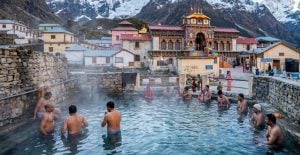
Many pilgrims take a holy dip at Tapt Kund before darshan. The area can be crowded, especially in peak season and early morning hours. Elderly travellers, people with heart or blood-pressure concerns, and those sensitive to sudden temperature changes should be careful.
Places to Visit Near Badrinath
Nearby places should be selected based on time, road conditions, fitness, and whether you are doing only Badrinath or a wider Char Dham route.
Mana Village
Mana Village is one of the most common short excursions from Badrinath. It is culturally important and usually visited after darshan when roads, weather, and time permit. It works best as a calm extension, not as a rushed stop. If your route has already been delayed or the group is tired after darshan, keep Mana for another time or skip it.
Vyas Gufa and Ganesh Gufa
Vyas Gufa and Ganesh Gufa are associated with religious and cultural significance. They are usually visited along with Mana Village. These stops suit travellers who want a short, meaningful extension beyond the temple visit. Keep the visit simple and avoid turning it into a hurried checklist.
Bhim Pul
Bhim Pul is a short visit near Mana with mythological association and scenic value. It is easy to combine with Mana Village when conditions are favourable. The area can become busy during peak season, so move patiently and avoid crowding narrow points for photographs.
Charan Paduka
Charan Paduka may require walking and a reasonable level of fitness. It should be attempted only when the weather is stable, and the traveller is comfortable with altitude and physical effort. Senior citizens, or anyone who feels breathless after reaching Badrinath, should skip it rather than push through.
Vasudhara Falls
Vasudhara Falls is not for every Badrinath traveller. It involves a longer excursion or trek from the Mana side and should be considered only by travellers with time, fitness, suitable weather, and local route clarity. It is not ideal as a casual add-on after a tiring road journey or a crowded darshan day.
Joshimath
Joshimath is more than a route halt. It is an important pilgrimage base and a practical staging point before Badrinath. Many travellers stay here before heading to the temple because it helps break up the journey and reduces the pressure of same-day travel. For most pilgrims, Joshimath is the point where the mountain rhythm begins to shape the journey.
Pandukeshwar and Yog Dhyan Badri
Pandukeshwar and Yog Dhyan Badri are meaningful stops for travellers interested in the wider Badri pilgrimage circuit. They are best included when the route has enough breathing space and the journey is planned as a spiritual Uttarakhand circuit rather than a single-point darshan trip.
Travel Tips
Road Safety
Start early from Joshimath or the previous halt.
Avoid night driving in the hills.
Keep buffer time for landslides, road repairs, traffic, and weather delays.
Follow local police, BRO, and administration advisories.
Do not rush the route for same-day darshan if the road or weather is unstable.
Avoid unnecessary stops on vulnerable stretches during poor weather.
In the mountains, a delayed but safe arrival is always better than forcing a tight schedule.
Monsoon Cautions
July and August need extra caution. Landslides, road closures, and traffic restrictions can change plans quickly. If you are travelling during or close to the monsoon period:
Keep buffer days.
Avoid tight flight or train connections after Badrinath.
Check weather alerts before moving beyond Joshimath.
Stay updated through local authorities and your driver.
Do not continue the route if there is advice to hold movement.
The road may look manageable at one point but still be affected further ahead.
Altitude Preparedness
Badrinath is a high-altitude destination. Travellers may feel cold, fatigued, have lower oxygen levels, feel breathless, or experience mild discomfort on arrival. On reaching Badrinath:
Walk slowly.
Stay hydrated.
Avoid overexertion.
Do not rush uphill walks immediately after arrival.
Eat light if you feel uneasy.
Keep prescribed medicines accessible.
Survival Tips
Small preparations can make the Badrinath journey much smoother. Carry:
Some cash, as digital payments may not always work smoothly.
Offline copies of ID, registration, hotel bookings, and emergency contacts.
Warm layers even in summer.
Snacks and water for road journeys.
Personal medicines and prescriptions.
A power bank for long travel days.
Also remember:
Book stays in advance during peak season.
Keep luggage practical, not excessive.
Respect temple rules.
Avoid littering.
Expect patchy mobile networks.
Keep your schedule flexible.
What to Pack
Pack for cold weather, walking comfort, temple discipline, and route uncertainty. Badrinath does not require heavy luggage, but it does require the right essentials. A practical Badrinath packing list should include:
Warm jacket
Thermals
Woollen cap
Gloves
Warm socks
Comfortable walking shoes with good grip
Raincoat or poncho during monsoon and shoulder months
Personal medicines
Basic first-aid kit
Sunscreen
Sunglasses
Lip balm
Valid ID proof
Yatra Registration Letter / QR code
Power bank
Torch
Reusable water bottle
Light snacks
Small backpack for darshan essentials
Avoid overpacking for the temple area. A light, organised bag is easier to manage during queues, transfers, and short walks around Badrinath.