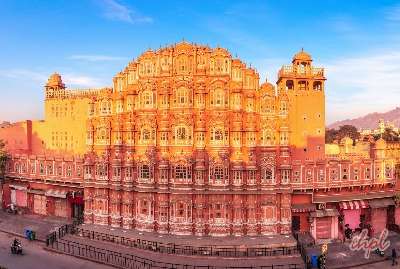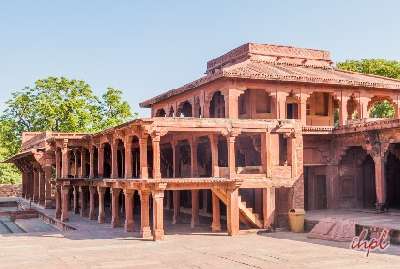







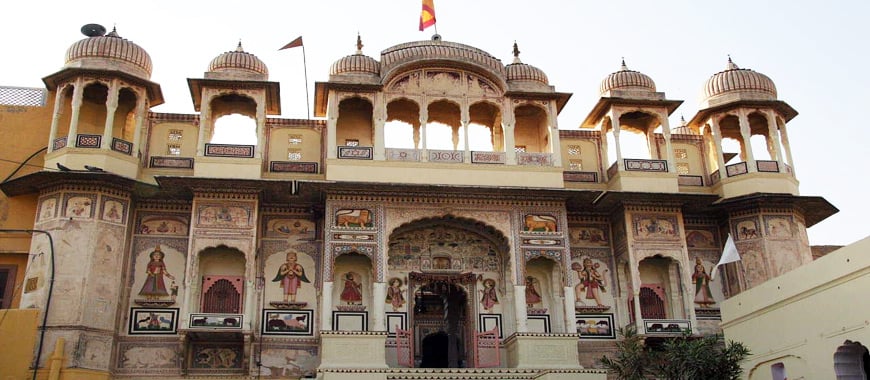

In Mandawa, every wall and every haveli tells a story. Tucked deep into the Shekhawati region of Rajasthan, this sleepy little town feels like a time capsule, one that is painted in rich hues of ochre, indigo, and gold. Once an important pit stop along the ancient Silk Route, Mandawa today is an open-air gallery of frescoed havelis, charming alleyways, and living history. Mandawa appeals to everyone, whether you are a slow traveller, an art lover, or just someone who loves discovering quiet corners of India wrapped in vivid colours.
Why Should You Visit Mandawa?
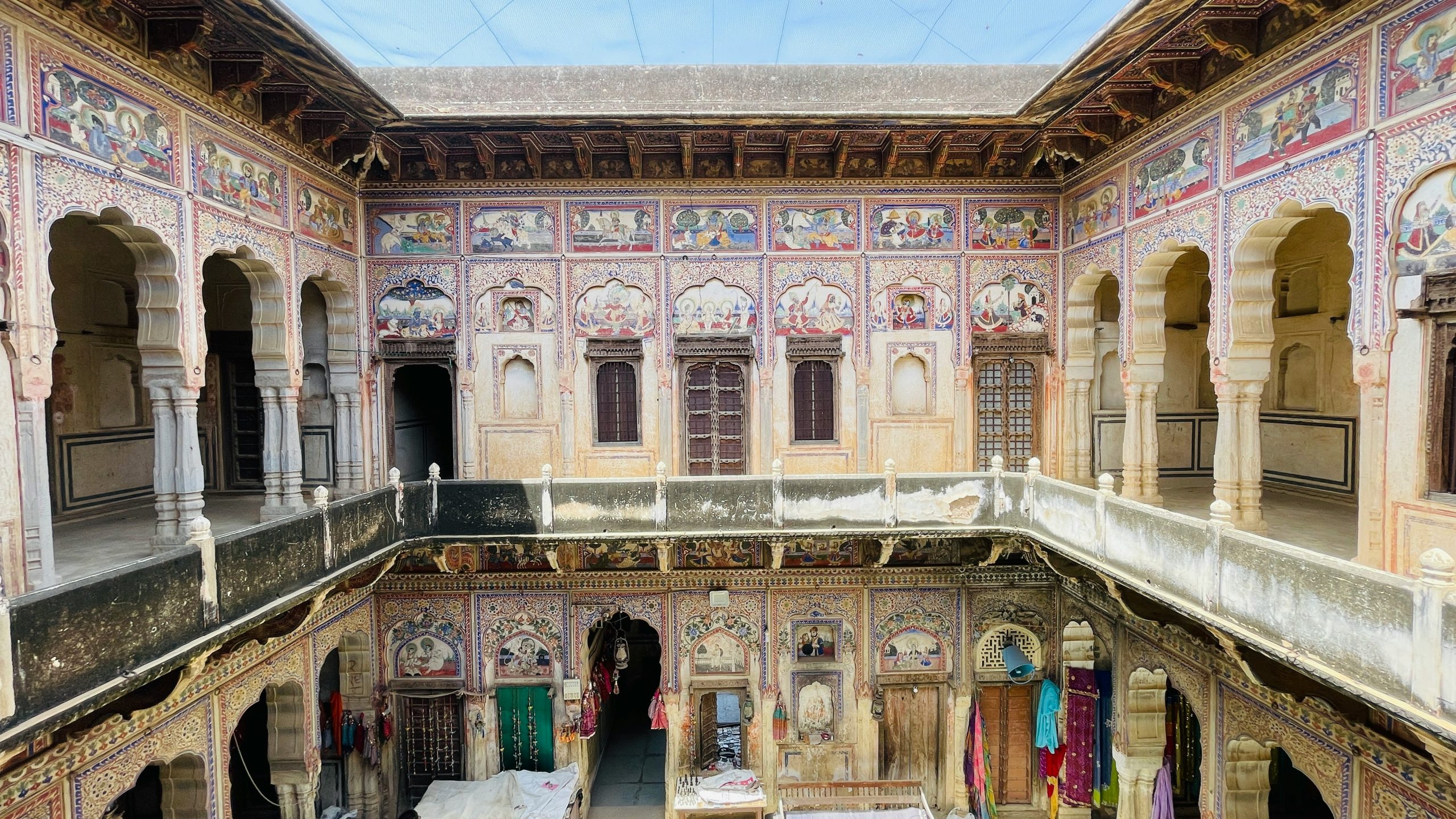
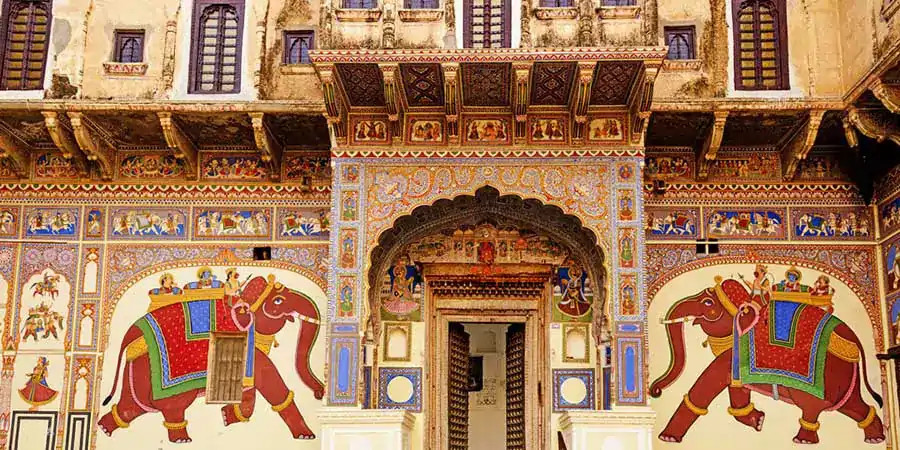
Streets resembling an open-air gallery: The moment you step into the town’s narrow lanes, hand-painted stories of mythology and royalty surround you, and even references to the colonial empire are on the walls of century-old merchant homes.
Stay in a fort: Mandawa Fort, built in the 18th century, has been lovingly turned into a heritage hotel. Enjoy a cup of masala chai and feel like royalty.
Every haveli is a surprise: Every haveli is a work of art with gold-leaf ceilings and mirrored corridors. The havelis that should make it to your bucket list are the Goenka double haveli, the golden room at Jhunjhunwala, and the peacock and floral frescoes in Chokhani Haveli.
The town moves at a slow, peaceful pace: No traffic snarls. No guides herding groups with flags.
It’s the perfect base for exploring Shekhawati: Whether you’re headed to Nawalgarh, Fatehpur, or Dunlod, Mandawa puts you within easy reach of some of Rajasthan’s most artistic villages.
What Are the Top Places to Visit in Mandawa?
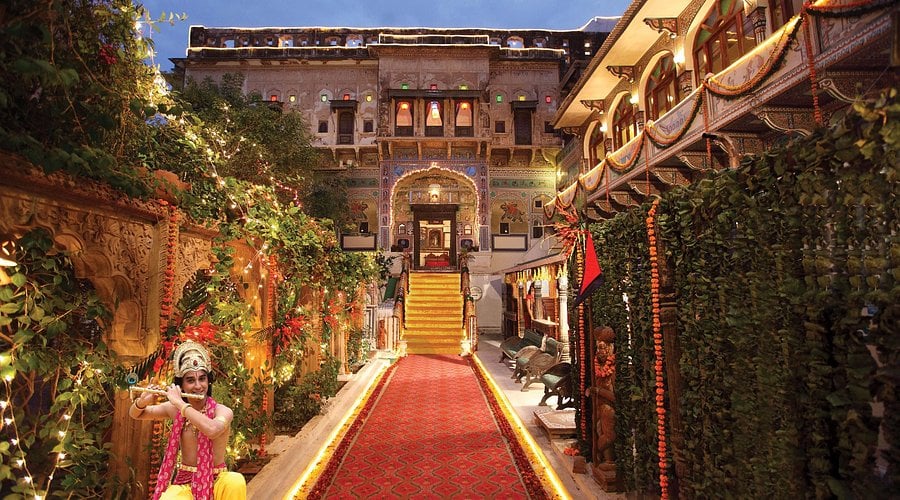
Mandawa Fort
The 18th-century fort built by Thakur Nawal Singh invites you to experience life amidst the frescoed walls. It’s grand and full of little moments with arched windows, and fading murals. If you’ve ever wanted to live inside a medieval storybook, here’s your chance.
Goenka Double Haveli
Just off the main square, this pair of mirror-image havelis stands out with their vibrant frescoes depicting elements of daily life from a bygone era – British soldiers, a man on a cycle, and even Hindu gods. The small balconies overlooking the street give you a glimpse of everyday Mandawa life.
Jhunjhunwala Haveli (Golden Room)
Tucked away in a quiet alley, this haveli houses the famed “Golden Room”. The walls have gold-toned frescoes depicting Hindu gods. If you visit close to sunset, the whole space seems to glow.
Chokhani Double Haveli
The grand Chokhani Double Haveli, dating from 1910, was built by two brothers from the famous Chokhani family. Featuring Rajasthani-style courtyards with verandahs, arches, and balconies, the haveli is adorned inside and out with vibrant frescoes.
Gulab Rai Ladia Haveli
Perhaps the most elaborate of them all, this haveli surprises with every turn. Look closely and you’ll find paintings of European women, steam engines, and royal processions all layered with fine floral borders and intricate latticework.
Harlalka Well & Painted Streets
Don’t miss the Harlalka stepwell, a quiet, photo-perfect spot. From there, simply wander through the meandering doorways, pause and admire!
Local Experiences and Activities
Hire a local guide
Mandawa is famous for its intricately painted havelis (merchant mansions) richly adorned with frescoes—mythological stories, vibrant floral and animal motifs, and colonial influences. Hiring a local guide is highly recommended and a common practice. They provide essential context, point out hidden details, and share fascinating stories about the families, mythology, history, and social commentary depicted.
Live like royalty at Mandawa Fort.
Staying within its walls is more than just accommodation—it is an immersive journey into the opulence, tradition, and charm of Rajasthan’s bygone era. From high-ceilinged rooms to candlelit courtyards, your stay shall be unforgettable.
Savour Ghevar, Dal- Batti, and popular dishes at local restaurants
The locals always know where to eat, and these are some of the places you must get a bite at – Mandawa Kothi Restaurant, Shekhawati Restaurant, Utsav Soda and Juice, Mandawa Pavilion Restaurant, and Gwala Rooftop Restaurant.
Make day trips
Use Mandawa as your base to explore other painted towns like Nawalgarh or Fatehpur.
Best Time to Visit Mandawa
Visit between October and February to make the most of the weather and the mellow charm of Mandawa’s streets.
| Season | Months | Avg High (°C) | Avg Low (°C) | Travel Notes |
|---|---|---|---|---|
| Winter | Oct–Feb | 22–27 | 8–15 | Ideal for sightseeing, outdoor walks, and photography |
| Spring | Mar–Apr | 30–36 | 16–22 | Warm but manageable; good for festivals and cultural visits |
| Summer | May–Jun | 38–44 | 24–30 | Extremely hot, avoid extended outdoor activity |
| Monsoon | Jul–Sep | 30–35 | 22–26 | Light to moderate showers; frescoes look vibrant, but roads get slushy |
How to Reach Mandawa
By Air: The closest airport is Jaipur (approx. 170 km), connected to all major Indian cities.
By Train: The nearest station is Jhunjhunu (about 30 km away). Taxis and buses are available from there.
By Road: Mandawa lies along NH-11 and is easily reached from Jaipur or Delhi by car or bus.
Festivals and Events in Mandawa
Shekhawati Festival (Jan- Feb): A celebration of local art, music, and culture held across the region. Expect folk dances, handicraft stalls, and colour everywhere.
Mandawa Holi: If you’re here during Holi, join the locals for a celebration that spills into the streets – vibrant, messy, and unforgettable.
Quick Travel Tips
Wear comfortable shoes- the best of Mandawa is seen on foot.
Keep small change handy for guide tips and haveli entry.
The locals shop from the Mandawa market, so whether it’s silver jewellery that you are looking for bangles or Rajasthani footwear
Carry sunscreen and a hat, even in winter. The sun can be deceptive.
IndianHolidays helps you plan a comfortable itinerary to explore the murals and frescoes of Mandawa. Contact us by WhatsApp or click here.