






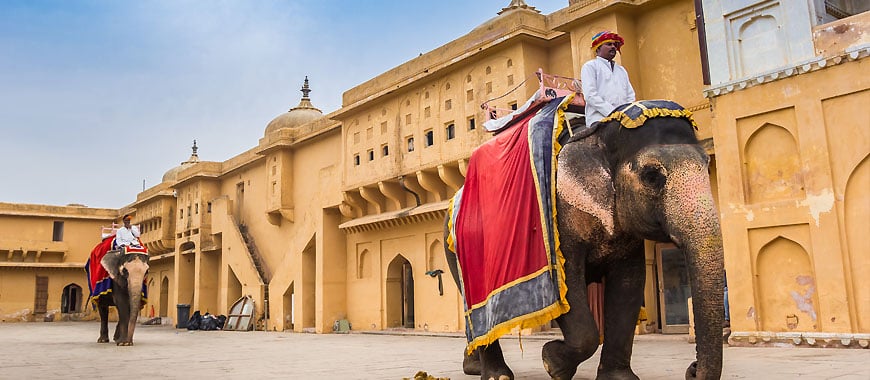

These historical places are most useful for travellers who want more than landmark photography and are willing to spend time on context, interpretation, and slower heritage exploration.
Rajasthan offers everything from scientific observatories to atmospheric landmarks, but only a few translate historical value into a meaningful on-ground experience. Instead of trying to cover every named site, most itineraries benefit from selecting one high-context monument and one visually immersive stop.
This guide helps you prioritise based on actual visit payoff—what the experience feels like, how much time it needs, whether a guide adds value, and when a site is realistically skippable.
The goal of this page is to help you decide which monuments are worth your limited time, and which ones are better skipped unless they align closely with your travel route or interests.
Who Benefits Most from These Monument Types
These sites reward specific visitors:
- Science/history buffs drawn to Jantar Mantar’s precise instruments over decorative forts
- Photography seekers prioritise Jal Mahal’s reflective serenity and dramatic lighting
- Offbeat explorers willing to detour for Laxmangarh’s functional clock tower or Tonk’s monolithic elephant
- Jaipur-centric travellers naturally layer these into Pink City circuits
Casual fort-hoppers gain little beyond photos; these require deliberate time.
Jaipur’s Architectural Crown Jewels: Jantar Mantar & Jal Mahal
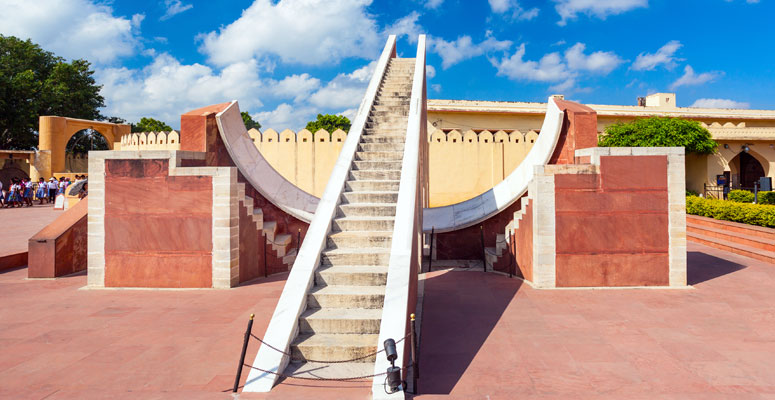
Jaipur hosts Rajasthan’s two most high-value monuments—the astronomical observatory meets the water palace isolation.
For travellers focusing on the Pink City, refer to the Jaipur Travel Guide to structure these monuments within a broader sightseeing plan.
1. Jantar Mantar: World’s Largest Stone Sundials (UNESCO Masterpiece)
Why it matters to visitors: Jantar Mantar, built in 1734 by Maharaja Jai Singh II, houses 19 massive masonry instruments tracking celestial positions with remarkable precision. Vrihat Samrat Yantra (world’s largest sundial, 27m tall) dominates; others like Jaiprakash Yantra and Ram Yantra reflect the scientific ambition of the period.
Actual visit experience: Open courtyards with towering marble/stone structures; climb gnomon shadows, peer into hollow hemispheres. The interpretation centre explains orbits; less crowded mornings reveal shadow precision. No interiors—pure outdoor geometry.
Time needed: 60-90 minutes
Guide/audio value: High—decodes instrument functions (e.g., zodiac latitudes via Rasivalaya); essential for non-astronomy buffs
Operational notes: 9 AM-4:30 PM; Rs 50 Indians/Rs 200 foreigners; mornings avoid heat/crowds (Oct-Mar ideal)
Skippable on short Jaipur stays?
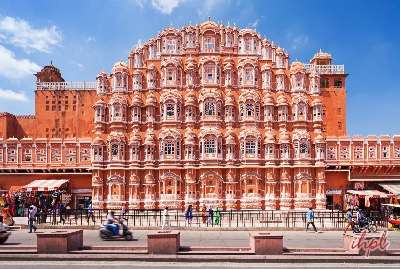
No—flagship for science-minded; pairs perfectly with nearby Hawa Mahal.
2. Jal Mahal: Serene Water Palace Mirage
Why it matters to visitors: 18th-century Jal Mahal rising from Man Sagar Lake, Mughal-style pavilion surrounded by receding Aravalli steps. Represents elite escapism—visible but inaccessible, forcing reflective appreciation over entry.
Actual visit experience: Lakeside viewing platforms offer tiered red sandstone drama against water; migratory birds add winter life. Sunrise/sunset transforms reflections; no boat access, pure visual immersion.
Time needed: 30-45 minutes
Guide/audio value: Low-medium—context on Rawal Madho Singh’s design enhances; photography is self-sufficient
Operational notes: Always accessible; free entry; pair with Nahargarh Fort for elevated views (13km circuit)
Skippable on short Jaipur stays?
If forts dominate, yes—secondary to Amber/City Palace but unbeatable for calm contrast.
Jaipur pairing logic: Jantar Mantar (morning science) → City Palace lunch → Jal Mahal/Nahargarh sunset (2-3 hour heritage loop). Half-day covers both without fatigue.
Offbeat Architectural Statements: Laxmangarh & Tonk
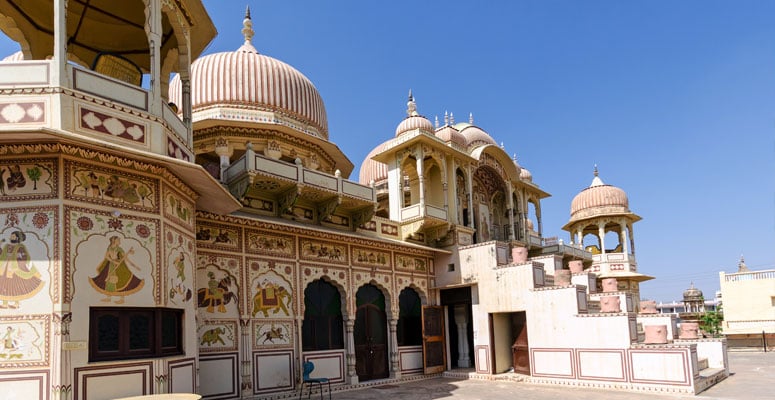
These sites are best considered only when your route already includes Shekhawati or Tonk, as they require deliberate detours rather than fitting into standard Rajasthan itineraries.
1. Ghanta Ghar Laxmangarh: Shekhawati Clock Tower Sentinel
Why it matters to visitors: Colonial-era clock tower dominating Laxmangarh skyline, anchoring haveli cluster views. Functional timepiece atop merchant town bazaar—practical heritage vs decorative forts.
Actual visit experience: Street-level bazaar base with tower views; climb nearby for panoramas over painted mansions. Atmospheric market integration; less polished, more lived-in.
Time needed: 20-30 minutes
Guide/audio value: Low—local bazaar chat suffices; haveli context from nearby tours enhances
Operational notes: Always accessible; free; integrates with Laxmangarh haveli walk
Skippable?
Yes on Jaipur-only trips; essential for Shekhawati heritage day.
2. Hathi Bhata Tonk: Monolithic Elephant Sculpture
Why it matters to visitors: Single-rock elephant carving (larger than life-size) near Kakod village, etched with the Raja Nal-Damayanti legend. Raw rock-cut power in sandstone country—unique vs polished palaces.
Actual visit experience: Open-air rock face viewing; trace legend panels, appreciate scale against arid landscape. Quiet, photogenic; nearby Toda Rai Singh ruins add context.
Time needed: 45-60 minutes (30km from Tonk town)
Guide/audio value: Medium—legend storytelling elevates; self-view strong for sculpture fans
Operational notes: Road access; free; combine with Sunheri Kothi/Toda Rai Singh (half-day Tonk circuit)
Skippable?
Unless Tonk/Ranthambore en route, minor standalone.
Regional pairing: Laxmangarh (morning havelis + Ghanta Ghar) → Tonk detour (Hathi Bhata + ruins) for full-day Shekhawati-Tonk heritage.
Comparative Site Hierarchy: Time vs Payoff
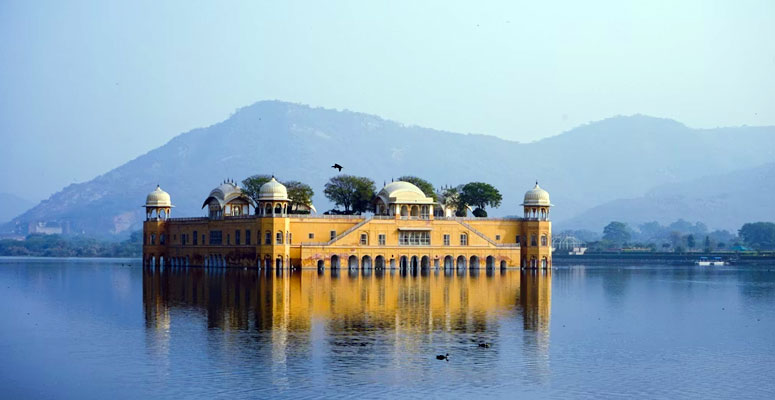
The table below helps compare these monuments based on actual travel payoff, time investment, and whether they justify inclusion in shorter itineraries.
| Monument | Visit Payoff | Time Cost | Guide Boost | Best Season | Skip Score (Short Trip) |
|---|---|---|---|---|---|
| Jantar Mantar | High (science marvel) | 60-90 min | High | Oct-Mar | Low (must-do) |
| Jal Mahal | Medium-High (visual serenity) | 30-45 min | Medium | Oct-Mar | Medium |
| Ghanta Ghar | Medium (town anchor) | 20-30 min | Low | Year-round | High |
| Hathi Bhata | Medium (rock art oddity) | 45-60 min | Medium | Oct-Mar | High |
Coverage realities: Short Jaipur (1 day): Jantar Mantar only. Extended (2+ days): Add Jal Mahal. Shekhawati road trip: Ghanta Ghar + havelis.
Half-Day vs Full-Day Monument Circuits
These monument combinations work best when planned with realistic time expectations:
Jaipur Half-Day Precision (3 hours)
- Morning science: Jantar Mantar (9-10:30 AM)
- Lunch: Nearby City Palace cafe
- Afternoon visual: Jal Mahal sunset views
Total: Core Jaipur heritage without overload.
Shekhawati-Tonk Full Day (6-7 hours)
- Morning: Laxmangarh havelis + Ghanta Ghar
- Midday: Drive to Tonk (Hathi Bhata + Sunheri Kothi)
- Afternoon: Toda Rai Singh ruins return
Realistic?
Yes for dedicated heritage drivers; skip if Ranthambore-bound.
Guide Value Breakdown & Prep Notes
- High-guide sites (Jantar Mantar): Prior historical/science interest unlocks deeper appreciation; audio tours available.
- Medium (Jal Mahal/Hathi Bhata): Atmospheric context elevates.
- Low (Ghanta Ghar): Visual/architectural self-evident.
Prep: Download Jaipur monument apps; Shekhawati—no apps needed, local drivers suffice.
Skippable Scenarios & Alternatives
- Skip all four if Rajasthan <5 days, wildlife/palace focus.
- Jaipur short-stay tradeoffs: Drop Jal Mahal for Hawa Mahal (proximity).
- Shekhawati bypass: Standard forts superior.
- Alternatives: Nahargarh (Jaipur views), Ranthambore ruins (Tonk en route).
Plan Your Rajasthan Heritage Journey
City heritage hubs:
Core Decision Principle
These monuments justify time only when they sharpen heritage choices. Jantar Mantar stands essential for Jaipur science seekers; Jal Mahal adds a serene contrast. Laxmangarh/Tonk suit deliberate detours—skip otherwise. Stronger itineraries emerge from selective focus, not comprehensive coverage.
Strong Rajasthan itineraries come from selecting a few high-payoff monuments that match your interests, rather than trying to cover every historical name on the map.