
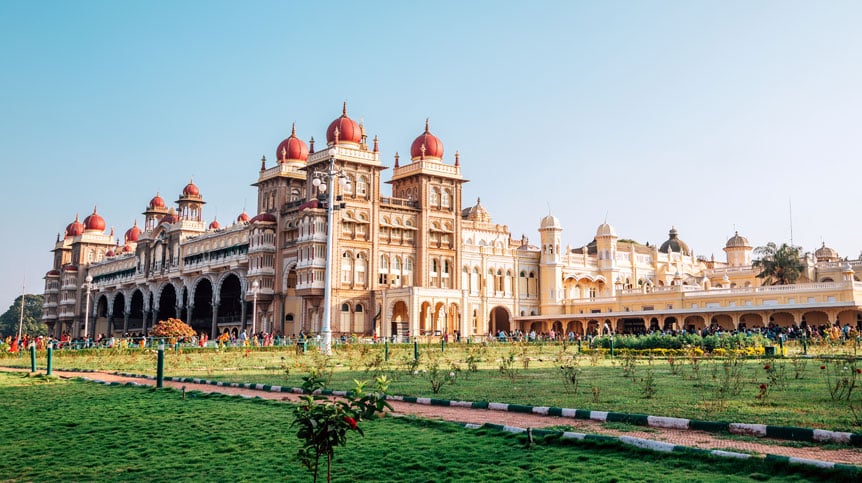

Mysore Palace, also known as Amba Vilas Palace, is best experienced as the heritage anchor of a Mysore city trip rather than as a quick monument stop. The palace introduces travellers to Mysore’s royal legacy, Wadiyar history, ceremonial halls, stained-glass interiors, court traditions and evening illumination, making it a natural starting point for a wider Mysore heritage circuit.
A rushed walkthrough may show the main interiors, but a better visit gives time for the Durbar halls, Kalyana Mantapa, royal exhibits, courtyards and interpretation from a guide or audio support where available. Travellers who combine the palace with Devaraja Market, Jaganmohan Palace, Chamundi Hill or St. Philomena’s Cathedral usually understand Mysore’s cultural setting better than those visiting the palace in isolation.
This guide explains how Mysore Palace fits into a Mysore-based trip, the type of travellers who are likely to enjoy it most, the ideal amount of time to allocate, and practical tips for planning a comfortable visit while making the most of the surrounding attractions.
Who Is Mysore Palace Most Likely to Impress?
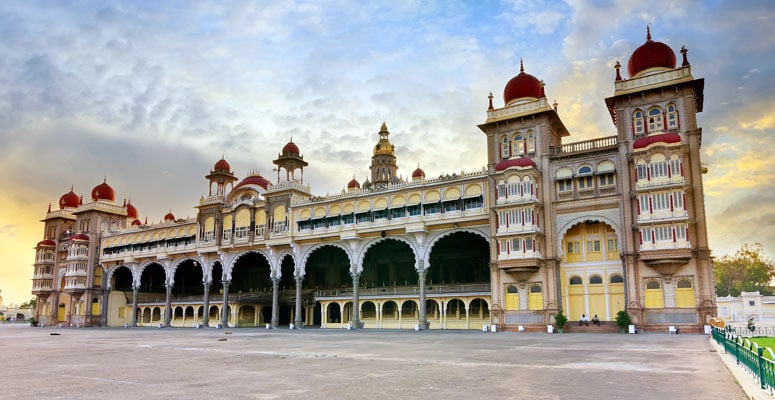
Mysore Palace delivers the most value to travellers interested in understanding Mysore’s historical and cultural context. It is also well-suited to those looking for a centrally located attraction that can be incorporated into a half-day or full-day city itinerary.
Prioritise Mysore Palace if you are:
Heritage-focused traveller seeking insight into the history of the Wadiyar dynasty and the development of Mysore as a princely state.
An architecture enthusiast interested in exploring a major royal residence that reflects multiple architectural influences within a single complex.
Traveller with limited time, as the palace is centrally located and accessible from most parts of Mysore.
A family or multi-generational group looking for a cultural attraction that does not involve strenuous walking or trekking.
A visitor who values guided interpretation, museum-style displays and historical storytelling.
How To Navigate Your Way Around The Palace?
Visitor movement inside Mysore Palace usually follows a designated one-way route, but exact entry, exit and gallery access can change with crowd control, security, maintenance or Dasara arrangements.
The palace complex is enclosed by multiple historic gates, with the principal gateways being Jaya Marthanda (East), Jayarama and Balarama (North), and Varaha (South). Visitors usually enter through the designated tourist entry, commonly the Varaha Gate area, subject to current arrangements.
Entering through the designated tourist entry point, commonly the Varaha Gate area, subject to current arrangements.
Walk across the open palace forecourt towards the main palace building.
Pass through the ground-level halls and ceremonial spaces, including areas displaying royal artefacts, photographs, and historical exhibits.
Proceed to the Kalyana Mantapa (Marriage Pavilion), known for its stained-glass ceiling and decorative flooring.
Continue through the principal audience halls, including the Diwan-e-Aam (Public Durbar Hall) and connected royal chambers open to visitors.
Move along the designated visitor route to the upper-level sections that provide access to the main durbar spaces and palace interiors.
Follow the one-way circulation path through the remaining galleries and exhibition areas.
Return to the ground level and proceed towards the designated visitor exit within the palace complex.
Where Mysore Palace Fits into Your Mysore Itinerary?
1. Half-Day Royal Core Circuit
Route: Mysore Palace → Devaraja Market → Jaganmohan Palace
Best for: Heritage travellers, first-time visitors, photographers and short-stay travellers.
Why it works: Keeps movement within central Mysore and builds the day around royal history, art and local market life.
2. Full-Day Mysore Heritage Circuit
Route: Chamundi Hill → Mysore Palace → Devaraja Market → St. Philomena’s Cathedral → evening palace illumination, if scheduled
Best for: Active travellers with one full day in Mysore.
Why it works: Covers hilltop religion, royal heritage, local culture, church architecture and evening palace views.
3. Palace + Art and Museum Circuit
Route: Mysore Palace → Jaganmohan Palace / Art Gallery → Rail Museum or another selected museum
Best for: Art lovers, museum travellers and indoor heritage-focused visitors.
Why it works: Builds a deeper culture route instead of treating the palace as a standalone stop.
4. Mysore Palace as Part of Karnataka Route
Route fit: Bengaluru → Mysore Palace → Coorg / Ooty / Srirangapatna / wider Karnataka heritage route
Best for: IndianHoliday package travellers and curated Karnataka itineraries.
Why it works: The palace is a strong introduction to Karnataka’s royal and cultural identity before moving into hill, temple or nature circuits.
Best Time to Visit
October – February (Winter): Best Overall Comfort Window
Best suited for combining the Mysore Palace with other city sights in a single itinerary. Visitors can usually combine palace and nearby city stops more comfortably than in peak summer or heavy rain. The overall visit feels more evenly paced, allowing extended time inside the main palace circuit.
June – September (Monsoon): Useful for Indoor Palace Viewing
The main palace interiors are usually easier to visit during the rain than outdoor attractions, but entry, exit and courtyard movement can still be affected. Monsoon weekdays may be quieter, though holidays and weekends can still be crowded. Brief delays can occur at entry and exit points during periods of heavy rainfall.
March – May (Summer): Use Early Morning or Late Afternoon
A practical period for shorter queues and steady movement through the palace circuit. Early morning and evening visits allow smoother passage through the main halls and entry checkpoints. Midday hours are slower due to direct sun in open sections, which also affects comfort while transitioning between non-air-conditioned interiors and courtyards.
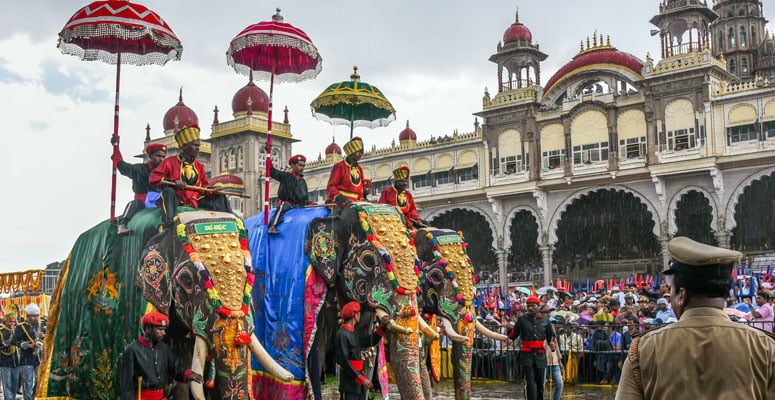
Festive Season (September/October – Dasara): Best for Festive Atmosphere, Hardest for Crowd Comfort
During Dasara, Mysore Palace may operate with different crowd-control, illumination and ceremonial arrangements, so travellers should check current-year advisories before planning. The interiors are decorated for royal processions, with key halls used for cultural programmes and official events. Evening illumination of the façade and courtyards is a major highlight, and the palace grounds remain significantly more crowded throughout the day.
Quick Planning Snapshot
Ideal time to spend: 2–3 hours for interiors, Durbar halls, Kalyana Mantapa, exhibits and courtyards.
Short visit: 1.5–2 hours if only covering the main palace route.
Best time of day: Shortly after opening or during the late afternoon, depending on the crowd.
Best for: Heritage-focused travellers, architecture enthusiasts, families with children, solo travellers, and photographers.
Combine with: Devaraja Market, Jaganmohan Palace, St. Philomena’s Cathedral, Chamundi Hills, Brindavan Garden or as part of a broader Mysore city heritage circuit.
Guide value: High if the traveller wants Wadiyar history, court traditions and hall-by-hall interpretation.
Evening visit value: Worth planning if illumination or sound-and-light show is currently scheduled.
Not an ideal fit for: Travellers seeking adventure activities, nature-based experiences, or extended outdoor exploration.
Verification needed: Timings, ticketing, sound-and-light show, illumination schedule, gate access and photography rules.
Ideal Duration For Visiting Mysore Palace
2–3 hours are sufficient to explore the palace interiors, Durbar halls, Kalyana Mantapa, museum sections, and courtyards at a leisurely pace.
If you are short on time, a focused 1.5–2 hour visit can work, but it will feel more like a walkthrough than a deeper heritage experience.
Half Day Circuit (5–6 Hours)
Mysore Palace (2–3 hours)
Devaraja Market (30–45 minutes)
Jaganmohan Palace (1–1.5 hours)
This circuit works well for travellers interested in royal heritage, local culture, and traditional market areas without travelling far from the city centre.
Full-Day Circuit (11–12 Hours)
Mysore Palace (2–3 hours)
Jaganmohan Palace (1–1.5 hours)
Devaraja Market (30–45 minutes)
Chamundi Hills (2–3 hours)
St. Philomena’s Cathedral (30–45 minutes)
Evening palace illumination (where applicable)
This itinerary combines Mysore’s regal, cultural, religious, and urban heritage attractions within a single day without requiring long travel times between sites.
Timing, Booking Tickets and Evening Illumination
Mysore Palace is generally open for day visits from 10:00 AM to 5:30 PM. Arrive at least 1.5–2 hours before closing if you want a comfortable visit through the main interiors. Verify current Sound & Light and illumination schedule separately.
Last entry is generally aligned with ticketing hours, so arriving at least 1–2 hours before closing is advisable for a hassle-free visit.
Offline Ticket Counter: Tickets can be purchased at the Varaha Gate ticket counter, which serves as the main tourist entry point. This remains the simplest option for most travellers, especially on regular weekdays.
Online Booking: Another option is to book through the official Mysore Palace website: Mysore Palace Official Website. Online booking helps avoid ticket queues during weekends, holidays, and the Dasara season.
Sound and Light show tickets: Sound & Light show tickets are issued separately at the Varaha Gate counter after 6:30 PM, according to the official ticket/notice information. Current show days, language, timing and ticket rules should be verified before travel.
Illumination: Official palace information refers to 97,000 electric bulbs used for palace illumination. The illumination schedule can vary by Sunday, government holiday, state festival, Dasara and show programming, so verify the current official schedule before planning an evening visit.
Crowd and Tourist Influx
| Factor / Period | Crowd Reality | Planning Advice |
|---|---|---|
| Dasara Season (September–October) | The highest tourist volume of the year, with heavy crowding across most parts of the palace. | Verify current crowd-control, security, ticket and illumination arrangements. |
| Winter – October to February | Consistent tourist flow (weekends and holidays), especially along the main interior circuit and ceremonial halls. | Visit soon after opening or late afternoon. |
| Summer – March to May | Moderate crowds, with smoother movement on some weekdays. | Avoid midday heat in courtyards and nearby market areas. |
| Monsoon – June to September | Weekdays may be quieter, but rain can affect entry/exit flow. | Carry rain protection and avoid tight evening-show plans in heavy rain. |
| Most Crowded Areas | Varaha Gate entry zone, ticket counters, security screening points, Kalyana Mantapa, and Durbar halls. | Keep buffer time and avoid peak holiday hours. |
| Relatively Quieter Areas | Outer courtyards, palace grounds, and peripheral sections beyond the main visitor route. | Useful for short breaks between interior sections. |
| Busiest Days | Weekends, public holidays, and school vacations, Dasara. | Pre-plan tickets and arrival time. |
| Least Crowded Visits | Non-holiday weekdays outside the Dasara season. | Still verify if a special event or closure is scheduled. |
Do You Need a Guide?
A guide can add significant value at Mysore Palace, as much of the experience revolves around royal history, court traditions, ceremonial functions, and the significance of individual halls and artefacts. Without interpretation, many sections may appear as ornate rooms rather than spaces with a specific historical purpose.
Choose a guide if:
You want Wadiyar dynasty context.
You are travelling with international guests or heritage-focused travellers.
You want to understand Durbar halls, Kalyana Mantapa and ceremonial spaces in detail.
You are including Mysore Palace as part of a larger Karnataka heritage route.
Self-guided visit works if:
You only want a short overview.
You are travelling with young children and need flexible pacing.
You have limited time and prefer moving through the main visitor route.
Practical Tips for Visiting Mysore Palace
Plan a Karnataka Trip Including Mysore Palace
Mysore Palace is one of the strongest heritage anchors in a Karnataka itinerary. It works well as part of a Mysore city break, a Bengaluru–Mysore short trip, a Bangalore–Mysore–Ooty route, or a broader Karnataka heritage journey with Coorg, Srirangapatna, Hampi or other cultural stops.
IndianHoliday’s Karnataka specialists can help you plan the right visit window, guide support, private transfers, evening illumination timing and nearby heritage circuit.
Share these details before finalising your trip:
Travel month
Number of days in Mysore
Starting city
Traveller age profile
Interest in guided palace interpretation
Whether you want evening illumination or Dasara timing
Children or senior travellers in the group
Whether Mysore is standalone or combined with Coorg, Ooty, Bengaluru or wider Karnataka
Preferred pace: quick overview, relaxed heritage, family-friendly or photography-focused