(Approx. 2–3 hours including ferry crossing)
After an early breakfast, begin your guided sightseeing tour of Majuli, focusing on the island’s spiritual and cultural legacy. Majuli is home to numerous Vaishnavite Satras—monastic institutions founded in the 15th–16th centuries by the saint-reformer Srimanta Sankardeva, who played a central role in shaping Assamese religious and artistic traditions.
Your first visit is to Kamalabari Satra, one of Majuli’s most prominent monasteries. Known for its calm ambience and disciplined monastic life, Kamalabari Satra is a key centre for the preservation of Sattriya dance, classical music, and devotional practices. The simple architecture and serene courtyards reflect the spiritual ethos of the island.
Next, proceed to Auniati Satra, among the oldest and most influential Satras in Majuli. This monastery houses ancient artefacts, ceremonial items, manuscripts, and traditional costumes that offer insight into Assam’s religious history and artistic continuity. Visits here provide cultural depth similar to experiences included in curated Assam Cultural Tours.
Continue to a traditional mask-making centre, where artisans demonstrate the craft used in religious dramas and folk performances. These masks—crafted from bamboo, clay, cloth, and natural pigments—play a vital role in storytelling traditions associated with the Satras. Observing this process helps visitors understand how art, religion, and daily life are deeply intertwined in Majuli.
If time permits, you may also explore nearby villages to gain a closer look at island livelihoods, including farming, fishing, and handloom weaving. This gentle cultural immersion is often appreciated by travellers extending their journey through routes such as the Assam Cruise Tour or longer North East circuits.
By afternoon, transfer back to Nimati Ghat for your return ferry to the mainland. After disembarking, continue by road to Jorhat Airport or Railway Station for your onward journey.
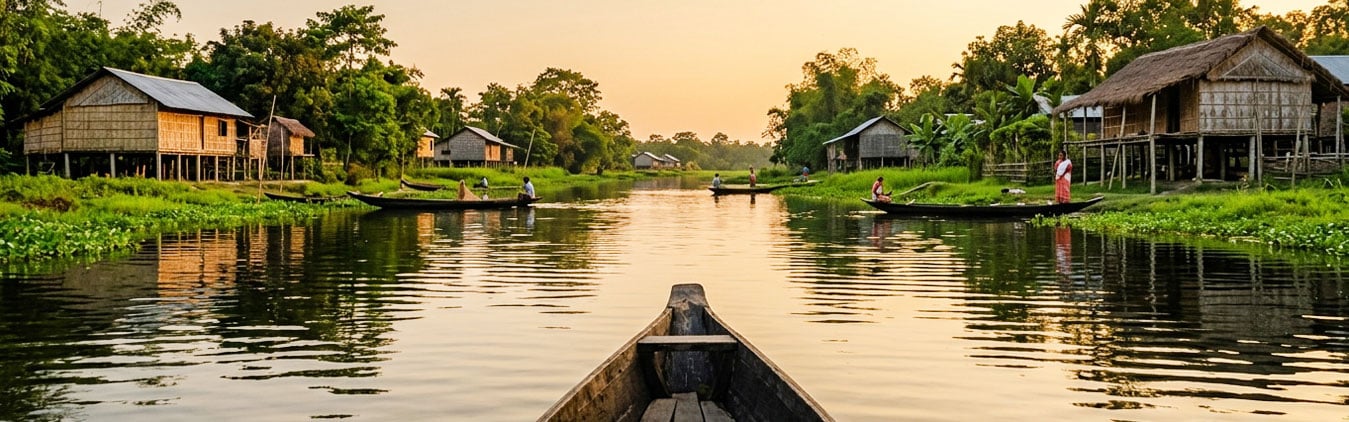
Your 2-Day Majuli Tour concludes with meaningful impressions of river landscapes, spiritual heritage, and the slow, reflective lifestyle of the world’s largest river island—an experience that lingers well beyond the short duration of the trip.