


Kolkata works best when travellers explore it through its neighbourhoods, riverfronts, old institutions, spiritual landmarks, and museum-rich cultural attractions. The city’s appeal lies in the way colonial architecture, Bengal’s intellectual legacy, devotional spaces, old markets, and Hooghly-side landmarks sit close to everyday urban life.
The city suits first-time visitors, heritage travellers, families, spiritual travellers, architecture lovers, and those who enjoy slower cultural sightseeing.
Planning Snapshot
- Ideal stay length: 2 to 3 days for a balanced first-time Kolkata sightseeing plan.
- Best time of day: Early morning for flower markets and old neighbourhoods; daytime for museums and monuments; late afternoon or evening for riverfront stops.
- Who it suits: Heritage travellers, families, senior travellers, spiritual travellers, architecture lovers, museum-goers, and slow cultural travellers.
- Short-stay advice: Prioritise Victoria Memorial, St Paul’s Cathedral, Prinsep Ghat, and one central Kolkata cultural stop.
- Longer-stay advice: Add North Kolkata, Jorasanko Thakur Bari, Kumartuli, Dakshineswar, Belur Math, Indian Museum, and one family or green-space stop.
Top attractions to explore in Kolkata
1. Colonial Landmarks and Riverside Icons
Kolkata’s colonial landmarks and riverfront icons are best planned around the Maidan and the Hooghly. These places work well for first-time visitors because they give a strong introduction to the city without forcing too many distant transfers into one day.
• Victoria Memorial
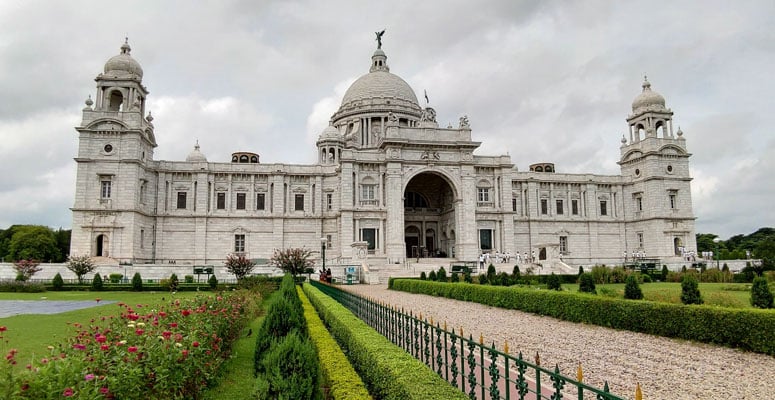
Victoria Memorial is Kolkata’s most recognisable heritage landmark and starting point for first-time sightseeing. The marble building, museum galleries, gardens, and open Maidan setting make it more than a quick photo stop. It suits travellers who want architecture, colonial-era context, old Calcutta’s public memory, and a visually strong introduction to the city.
Planning Notes
Time needed: Around 1.5 to 2 hours; shorter if you only visit the gardens and exterior.
Best timing: Morning or late afternoon.
Pairs well with: St. Paul’s Cathedral, Maidan, and Prinsep Ghat.
• St. Paul’s Cathedral
St. Paul’s Cathedral works well as a quieter companion to Victoria Memorial. Its Gothic-style architecture, stained glass, and calm setting give travellers a softer pause within the Maidan area. It is not a long visit, but it adds balance to a central Kolkata heritage route.
Planning Notes
Time needed: Around 30 to 45 minutes.
Best timing: Morning or late afternoon.
Pairs well with: Victoria Memorial and Maidan sightseeing.
• Howrah Bridge
Howrah Bridge is not a conventional monument that travellers need to spend hours at, but it is one of Kolkata’s strongest markers. It shows the city’s working movement, the Hooghly riverfront, and the connection between Kolkata and Howrah. The bridge is most meaningful when combined with the flower market or riverfront movement rather than planned as an isolated stop.
Planning Notes
Time needed: Around 20 to 30 minutes; longer if combined with nearby market activity.
Best timing: Early morning.
Pairs well with: Mullick Ghat Flower Market.
• Prinsep Ghat
Prinsep Ghat is one of the places in Kolkata for a slower riverfront break. It works better in the late afternoon or evening than as a rushed daytime stop. The promenade, Hooghly views, and bridge backdrop make it a good way to end a central Kolkata sightseeing day.
Planning Notes
Time needed: Around 45 minutes to 1 hour.
Best timing: Late afternoon or evening.
Pairs well with: Victoria Memorial, St. Paul’s Cathedral, and Maidan sightseeing.
2. Spiritual and Cultural Landmarks
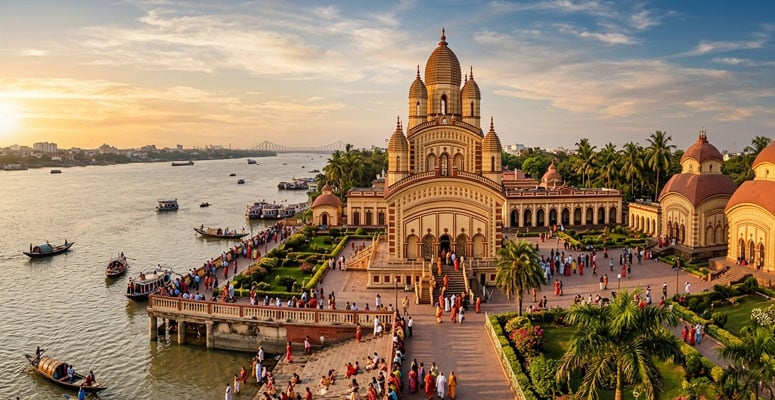
Kolkata’s spiritual places are important cultural markers, reflecting the city’s devotional traditions, reform movements, old neighbourhoods, and Hooghly-side spirituality. Plan these places with respectful clothing, crowd awareness, and updated timing checks.
• Dakshineswar Kali Temple
One of the most important spiritual places near Kolkata, Dakshineswar Kali Temple is best planned with enough time. The temple’s setting near the Hooghly and its association with Bengal’s devotional traditions make it a meaningful visit for pilgrims and culture-focused travellers.
Planning Notes
Time needed: Around 1.5 to 2 hours, depending on crowds.
Best timing: Early morning or a calmer non-peak window.
Pairs well with: Belur Math.
• Belur Math
Belur Math offers a calmer, more contemplative experience compared with many busy temple visits. The campus, riverfront setting, and spiritual association with the Ramakrishna Math and Ramakrishna Mission make it valuable for travellers who prefer reflective spaces and meaningful architecture.
Planning Notes
Time needed: Around 1 to 1.5 hours.
Best timing: Morning or late afternoon, depending on current visiting hours.
Pairs well with: Dakshineswar Kali Temple.
• Kalighat Kali Temple
Kalighat Kali Temple is culturally important and suitable for travellers with a strong devotional interest. It can feel crowded and intense, so it is not always the best choice for visitors looking for a quiet temple experience. It works better when planned deliberately rather than squeezed into a short central Kolkata route.
Planning Notes
Time needed: Around 45 minutes to 1.5 hours, depending on queues.
Best timing: Early morning or outside peak prayer hours.
Pairs well with: South Kolkata sightseeing or a day in central Kolkata, depending on the route.
• Mother House
Mother House is a quiet spiritual and memorial stop connected with Mother Teresa and the Missionaries of Charity. It suits travellers who want a reflective visit rather than a visit to a large monument. The experience is simple, respectful, and best combined with central Kolkata sightseeing.
Planning Notes
Time needed: Around 30 to 45 minutes.
Best timing: Daytime, after checking current visitor hours.
Pairs well with: Central Kolkata sightseeing, Park Street area, or Indian Museum.
• Nakhoda Masjid
Nakhoda Masjid is one of the important landmarks in the crowded commercial fabric of old Kolkata. It suits travellers interested in urban religious architecture, old trading neighbourhoods, and the layered character of central-north Kolkata. The surrounding area is busy, so it works best as part of a guided or carefully planned old-city route.
Planning Notes
Time needed: Around 30 to 45 minutes.
Best timing: Morning or non-peak hours.
Pairs well with: Old Kolkata lanes, Burrabazar-side areas, or BBD Bagh heritage zone.
3. Museums and Literature
These suits travellers interested in Bengal’s literary, artistic, colonial, and intellectual legacies. It adds depth to a trip to Kolkata but should not be rushed into a half-day plan. Museum timings, gallery access, permissions, and closed days should be verified before finalising the schedule.
• Indian Museum
The Indian Museum is Kolkata’s indoor attraction and suits travellers who want depth beyond monuments. Its collections include archaeology, art, anthropology, geology, and natural history, so the visit can take longer than expected if you are genuinely interested in the galleries.
Planning Notes
Time needed: Around 1.5 to 2.5 hours.
Best timing: Late morning or early afternoon.
Pairs well with: Park Street, Maidan, Mother House, or central Kolkata sightseeing.
• Jorasanko Thakur Bari
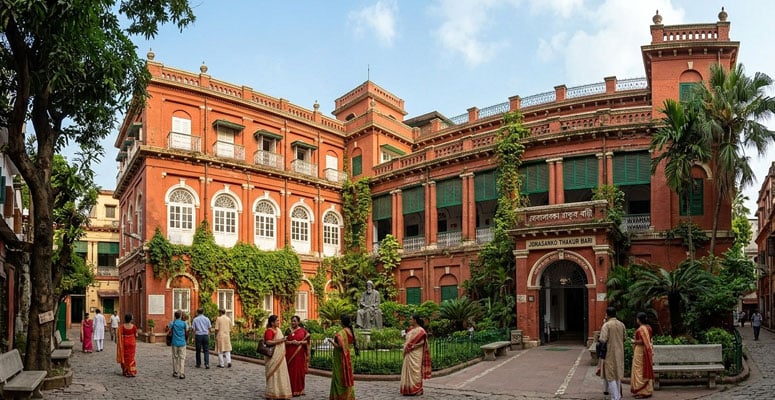
Jorasanko Thakur Bari is closely associated with Rabindranath Tagore and Bengal’s literary and cultural world. It works best for travellers who want to understand Kolkata as a thinking city, not only as a city of buildings and riverfronts. The visit is more meaningful when paired with North Kolkata’s older neighbourhoods.
Planning Notes
Time needed: Around 1 to 1.5 hours.
Best timing: Morning or early afternoon.
Pairs well with: Kumartuli, College Street, and North Kolkata heritage areas.
• Marble Palace
Marble Palace can be a rewarding addition to North Kolkata for travellers interested in old mansions, private collections, and 19th-century elite residences. However, it should be treated as a conditional stop because visitor access and permission requirements may apply.
Planning Notes
Time needed: Around 1-1.5 hours if access is confirmed.
Best timing: Morning or early afternoon.
Pairs well with: Jorasanko Thakur Bari and North Kolkata sightseeing.
• College Street
A living heritage museum along the ECR that showcases South Indian architecture, crafts, and traditional coastal lifestyles. While not a beach itself, it fits naturally into the coastal circuit as a cultural stop between beach segments.
Planning Notes
Time needed: Around 45 minutes to 1 hour.
Best timing: Late morning or afternoon.
Pairs well with: Jorasanko Thakur Bari and North Kolkata sightseeing.
• Markets and Old Neighbourhoods
These places are best for travellers who want to see Kolkata’s working-city rhythm rather than only its monuments. Early starts, patience, and sensitivity around photography are important, especially in active markets and artisan neighbourhoods.
Planning Notes
Time needed: Around 45 minutes to 1 hour.
Best timing: Early morning.
Pairs well with: Howrah Bridge.
• Kumartuli
Kumartuli is Kolkata’s artisan neighbourhood, best known for idol-making workshops. It is especially meaningful before Durga Puja, when work around idols becomes more visible, but the exact experience depends on production stages and access. It suits travellers who are inclined towards craft, festival culture, and old neighbourhoods.
Planning Notes
Time needed: Around 45 minutes to 1.5 hours.
Best timing: Morning or early afternoon.
Pairs well with: Jorasanko Thakur Bari and North Kolkata sightseeing.
4. Parks, Family Stops, and Slower Breaks
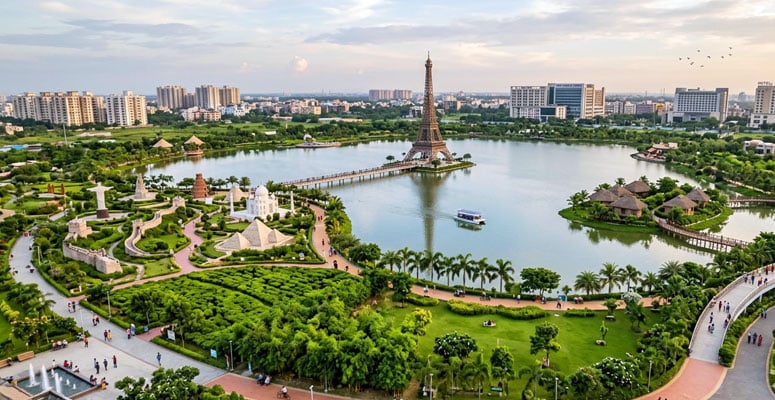
These places should be chosen based on traveller type. They are useful for families, children, senior travellers, and those staying near specific parts of the city, but they are not essential for every Kolkata itinerary.
• Eco Park
Eco Park is a large planned green space in New Town. It works best for families, relaxed travellers, and those staying near the airport or New Town side. It is not an add-on to a central Kolkata heritage day unless you have extra time.
Planning Notes
Time needed: Around 2 to 3 hours.
Best timing: Late afternoon or early evening.
Pairs well with: New Town-side stays or airport-side planning.
• Zoological Garden Alipore
Zoological Garden Alipore is mainly useful for family trips with children. It can be enjoyable if you are already planning South Kolkata or Alipore-side movement, but it should not replace the city’s stronger heritage and cultural attractions for first-time visitors with limited time.
Planning Notes
Time needed: Around 2 to 3 hours.
Best timing: Morning or early afternoon.
Pairs well with: South Kolkata or Alipore-side sightseeing.
How to plan Kolkata sightseeing
Kolkata sightseeing becomes easier when you plan by time and route zone instead of trying to cover every attraction.
1. If you have half a day
Best for travellers on a short stopover, a late arrival, or a one-night stay in Kolkata.
Suggested plan:
- Victoria Memorial
- St. Paul’s Cathedral
- Prinsep Ghat
2. If you have one full day
This plan gives a balanced first-time Kolkata experience without making the day too heavy.
Suggested plan:
- Early morning: Mullick Ghat Flower Market + Howrah Bridge
- Late morning: Victoria Memorial + St. Paul’s Cathedral
- Afternoon: Indian Museum or Mother House
- Evening: Prinsep Ghat
3. If you have two days
Two days allow you to separate central Kolkata from North Kolkata and spiritual sightseeing.
Day 1: Victoria Memorial, St. Paul’s Cathedral, Indian Museum, Prinsep Ghat
Day 2: Jorasanko Thakur Bari, Kumartuli, College Street, Dakshineswar Kali Temple or Belur Math
4. If you have three days
Three days give you enough time to understand Kolkata beyond its most visible landmarks.
Suggested plan:
Day 1: Central Kolkata and Maidan heritage
Day 2: North Kolkata culture, Jorasanko, Kumartuli, College Street, and old neighbourhoods
Day 3: Dakshineswar Kali Temple + Belur Math, or family additions such as Science City, Eco Park, Alipore Zoo, or Botanical Garden
Best time to visit
Kolkata can be visited through much of the year, but sightseeing comfort changes with heat, humidity, rain, festivals, and traffic intensity.
1. Winter
Winter is the most comfortable season for sightseeing in Kolkata. The weather is better for walking through heritage zones, visiting riverfront areas, exploring museums, and spending time in old neighbourhoods.
2. Summer
Summer can be hot and humid, especially during midday. Sightseeing should be paced carefully with indoor breaks, museum visits, and shorter outdoor windows.
3. Monsoon
Monsoon gives Kolkata a different mood, but rain can affect market walks, road traffic, and sightseeing in old neighbourhoods. Outdoor plans need flexibility.
4. Autumn
Autumn is culturally significant in Kolkata, especially around Durga Puja. The city becomes visually and emotionally intense, but traffic, crowds, and hotel demand can also rise.
Plan your Kolkata trip the right way
Kolkata is best enjoyed by choosing a few well-matched sightseeing spots instead of chasing every attraction. A good plan usually combines one heritage landmark, one riverfront pause, one museum or cultural stop, and one spiritual or neighbourhood experience.