







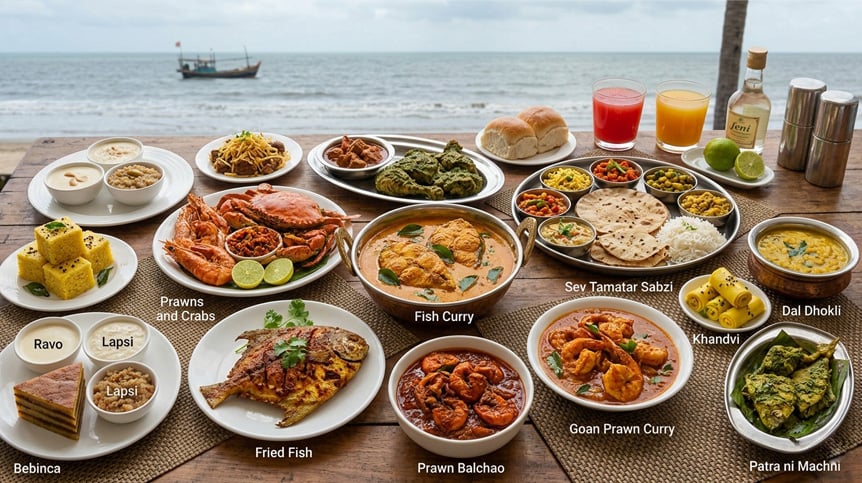

Food in Daman & Diu is best suited to travellers who enjoy coastal meals, relaxed beachside dining or cuisine with multiple flavours. The main element is the seafood, which draws all the attention, especially when meals are planned near the coast. Vegetarian travellers are not left out either, as Gujarati snacks, thalis and comfort dishes are there for them to relish.
The culinary scene will entice most couples, families, small groups and travellers curious about the Portuguese-Gujarati influence. This guide will introduce you to the famous cuisines of Daman & Diu and help you decide which dishes to try and who should try them.
What Makes Daman & Diu’s Food Worth Trying?
Daman and Diu cuisine is not built around one single signature style. It is better understood as a coastal mix shaped by fishing communities, Gujarati eating habits, Portuguese-era influences, and overlaps with nearby Goan and Parsi communities.
- Seafood is the most reliable food experience for many travellers, especially when you choose places that cook fresh catch simply and do not bury it under heavy sauces.
- Gujarati influence keeps the food scene comfortable for vegetarian travellers. Snacks like dhokla, khandvi, chaat, batata vada, and simple thalis are useful between sightseeing stops.
- Portuguese influence shows up more in spices, vinegar, grilled preparations, pork or chicken dishes, and coastal adaptations than in perfectly preserved restaurant traditions.
Local Dishes Worth Trying in Daman & Diu
1. Seafood Specialities
This food experience is built especially around beachside and coastal dining areas. Still, freshness and cooking style matter more than ordering the longest menu. A smaller meal with well-cooked fish is usually more satisfying than a crowded table of average seafood.
Fish Curry
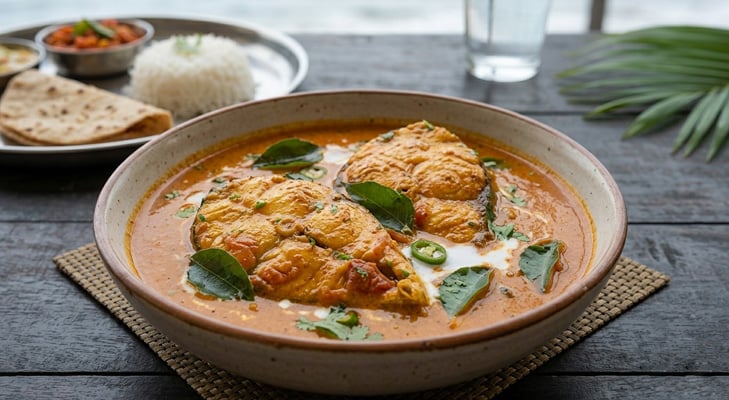
Fish curry is a coastal-style curry made with local fish, spices, and sometimes coconut or tangy elements depending on the kitchen. Expect a warm, mildly tangy to moderately spicy gravy rather than a delicate continental-style fish dish.
Who should try it: Travellers who want one proper local-style seafood meal without experimenting too much. It also suits those who prefer curry-and-rice comfort over fried seafood.
Best setting: Lunch at a casual restaurant after morning sightseeing. It can also work for an early dinner if you prefer a lighter order with rice.
Prawns and Crabs
Prawns and crabs are among the more satisfying seafood choices when cooked fresh. Prawns may come grilled, curried, butter-garlic style, or in a spicier masala. Crabs are richer and messier, so they need time and appetite.
Who should try it: Seafood lovers, couples, and groups who enjoy a slower coastal meal. Families may find prawns easier than crabs, especially with children.
Best setting: Dinner or a relaxed lunch at a seafood-focused casual restaurant. Crab is better for a sit-down meal, not a rushed beach stop.
Fried Fish
Fried fish is usually marinated in spices and fried until crisp on the outside while staying soft on the inside when prepared well. It is one of the easiest seafood dishes to try here.
Who should try it: First-time seafood eaters, families, and travellers who prefer familiar textures over strong curries.
Best setting: Beachside lunch, early dinner, or a shared starter at a casual restaurant.
Prawn Balchao
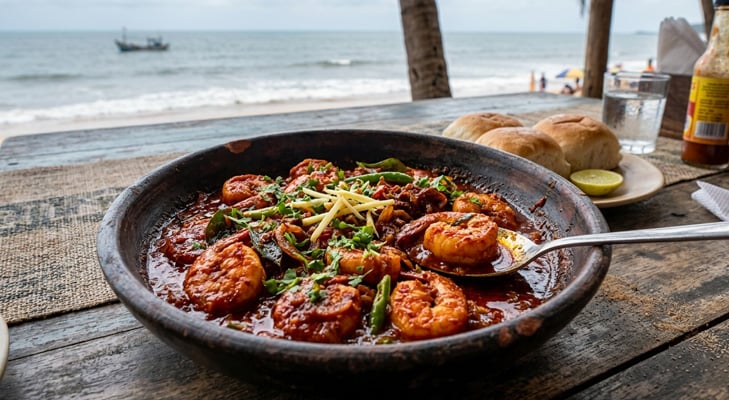
Prawn Balchao is a stronger, tangier prawn preparation associated with Goan-Portuguese food traditions. It usually has a vinegar-led sharpness, spice, and pickle-like intensity.
Who should try it: Travellers who enjoy bold, tangy, spice-led flavours and do not mind heat.
Best setting: Lunch or dinner with rice or bread. It is better as part of a proper meal than as a light beach snack.
Goan Prawn Curry
Goan prawn curry is usually coconut-based, gently tangy, and more rounded than Balchao. It offers a softer way to enjoy coastal prawns.
Who should try it: Couples, families, and travellers who prefer a comforting curry over very sharp or spicy seafood.
Best setting: Lunch with rice after sightseeing or a relaxed early dinner.
2. Portuguese-Influenced Dishes
Portuguese influence is visible mainly in spice, vinegar, pork and chicken preparations, grilled dishes, and coastal adaptations. These dishes are worth trying if you enjoy stronger flavours.
Vindaloo
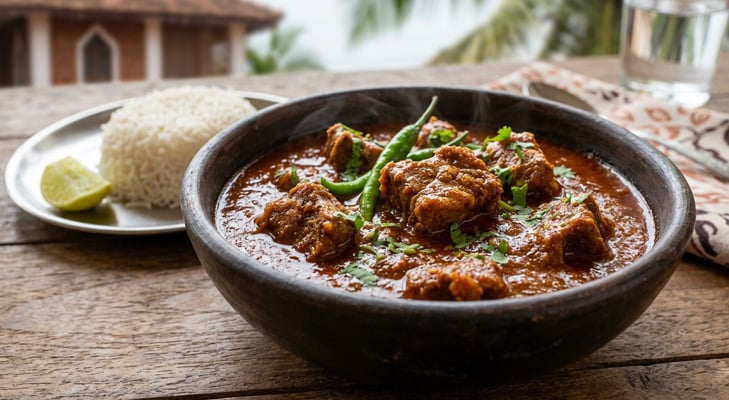
This is a vinegar-led, spice-heavy curry most often associated with pork, though chicken versions may be available in some places. The flavour is tangy, hot, and assertive.
Who should try it: Travellers who enjoy strong Goan-style or Portuguese-influenced Indian flavours.
Best setting: Lunch or dinner at a restaurant that clearly serves Goan or Portuguese-influenced dishes.
Sorpotel
It is a rich, tangy, spiced meat dish, traditionally associated with pork in Goan and Portuguese-influenced cooking. It is heavier than a regular curry.
Who should try it: Travellers who are comfortable with pork and enjoy deep, slow-cooked, robust flavours.
Best setting: Dinner or a slow lunch when you have time to sit properly.
Cafreal
This is a green masala chicken preparation with herbs, spices, and a grilled or pan-cooked style in many restaurants. It is usually aromatic, savoury, and moderately spicy.
Who should try it: Travellers who want a Portuguese-Goan-style dish without the sharp vinegar flavour of vindaloo or Balchao.
Best setting: Dinner or a relaxed lunch with bread, rice, or a simple side.
Farcha
A Parsi-style spiced fried chicken preparation, Farcha is sometimes coated with egg before frying. It is familiar, filling, and comfort-led.
Who should try it: Families, groups, and travellers who want something local-leaning but not too unfamiliar.
Best setting: Dinner starter, casual restaurant meal, or a filling snack if freshly prepared.
3. Vegetarian and Gujarati-Style Food Options
Daman & Diu is not only for seafood eaters. Vegetarian food is easier to manage than many first-time visitors expect, especially if you are comfortable with Gujarati snacks, thalis, and simple comfort dishes. Snacks are often easier to find than region-specific full meals in some areas.
Khaman Dhokla
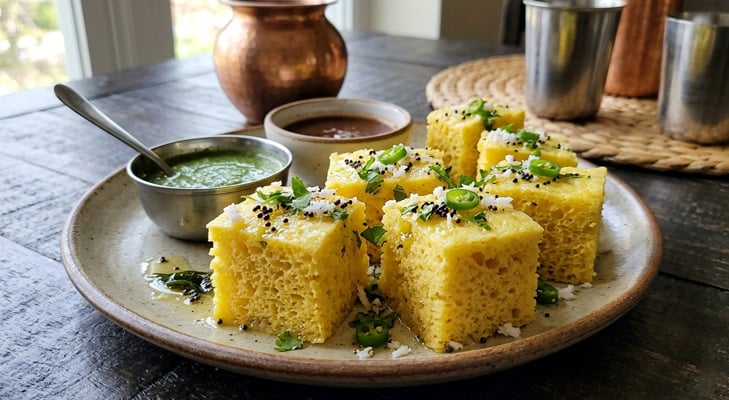
Khaman dhokla is a soft, steamed gram-flour snack, usually light, slightly sweet, and gently spiced.
Who should try it: Vegetarians, families, senior travellers, and anyone who wants a light start to the day.
Best setting: Breakfast, tea-time snack, or a quick stop before sightseeing.
Khandvi
A delicate Gujarati snack, Khandvi is made from gram flour and yoghurt, rolled into thin, soft layers and finished with mild tempering.
Who should try it: Light eaters, vegetarians, and travellers who prefer non-oily snacks.
Best setting: Mid-morning snack or evening tea-time bite.
Undhiyu
Undhiyu is a Gujarati mixed-vegetable preparation, usually rich, seasonal, and more substantial than most snacks.
Who should try it: Vegetarian travellers who want a proper meal rather than chaat or fried snacks.
Best setting: Lunch with puri, roti, or as part of a Gujarati-style meal.
Dal Dhokli
Dal dhokli is a Gujarati comfort dish made with wheat-flour pieces cooked in dal. It is soft, filling, and homely.
Who should try it: Families, senior travellers, vegetarians, and anyone avoiding seafood or heavy spice.
Best setting: Lunch or early dinner when you want something gentle and satisfying.
Sev Tamatar Sabzi
This is a simple Gujarati-style curry made with tomatoes and topped with crisp sev. It is tangy, mildly sweet, and quick to eat with roti or paratha.
Who should try it: Vegetarian travellers, families, and those looking for a simple comfort meal.
Best setting: Casual lunch or dinner with roti, paratha, or rice.
Papri Chaat
Papri chaat is a street-style snack made with crisp papri, yoghurt, chutneys, spices, and often potatoes or chickpeas.
Who should try it: Evening snackers, vegetarians, families, and travellers who enjoy sweet-tangy street food.
Best setting: Evening snack stop near a busy market or clean snack counter.
Batata Vada
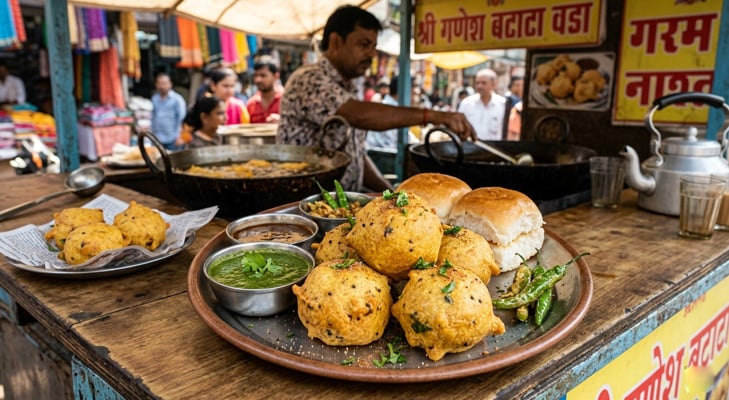
Batata vada is a fried potato snack usually served with chutney or bread. It is filling, familiar, and easy to find.
Who should try it: Groups, children, vegetarians, and travellers looking for a quick bite between sightseeing and beach time.
Best setting: Evening snack, late-morning bite, or casual roadside stop.
4. Parsi and Coastal Crossover Dishes
Some famous dishes of Daman and Diu sit in a crossover space rather than a strictly local category. Parsi and coastal preparations may appear in selected restaurants, but they should not be treated as guaranteed street-side finds.
Patra ni Machhi
Patra ni Machhi is a delicate Parsi fish preparation where fish is usually coated with green chutney and steamed in a banana leaf.
Who should try it: Travellers who prefer gentle fish dishes over fried seafood or heavy curries.
Best setting: Lunch or dinner at a restaurant with Parsi or coastal crossover dishes on the menu.
Salli Boti
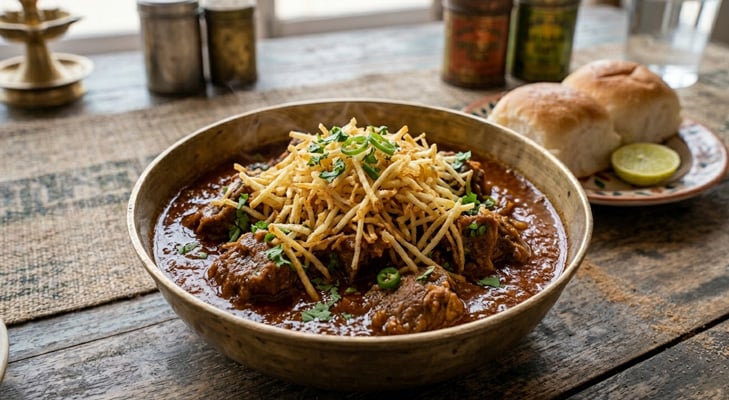
Salli Boti is a rich Parsi-style meat gravy usually topped with crisp potato straws. It is savoury, slightly sweet-tangy in some versions, and filling.
Who should try it: Travellers who enjoy richer meat gravies and do not mind a heavier meal.
Best setting: Dinner or a slow lunch with bread or rice.
5. Local Sweets and After-Meal Treats
You may find bakery items, ice creams, local sweets, and Goan-Portuguese-style desserts in selected places, but this is not a dessert-heavy destination where every meal ends with a signature sweet.
Bebinca
Bebinca is a layered dessert associated with Goan-Portuguese culinary influence. It is rich, sweet, egg-based, and usually eaten in small slices.
Who should try it: Travellers who enjoy dense, baked, pudding-like desserts.
Best setting: After dinner or with tea at a bakery, hotel restaurant, or place serving Goan-style dishes.
Ravo
Ravo is a creamy Parsi semolina dessert slow-cooked with milk, sugar, and often rose water. It is usually topped with fried raisins and almonds.
Who should try it: Travellers who enjoy warm, comforting desserts with a soft texture and mild aroma.
Best setting: After a lighter meal, especially at a restaurant or home-style menu with Parsi influence.
Lapsee/Lapsi
Lapsee, also written as Lapsi, is a Gujarati dessert made with coarse broken wheat roasted in ghee and sweetened with jaggery or sugar.
Who should try it: Vegetarian travellers, families, and those who enjoy traditional Gujarati comfort sweets.
Best setting: After lunch, with a Gujarati-style meal, or at a traditional sweet shop.
What the Food Scene May Not Offer
- Every dish to be available everywhere. Many dishes depend on the restaurant’s style, kitchen team, seafood supply, and local demand.
- All seafood places are to be equally good. A sea-facing table does not automatically mean fresher fish or better cooking.
- A polished fine-dining food trail at every beach. Some of the better meals may be simple, casual, and dependent on what is fresh that day.
- Do not treat the cuisine as only Portuguese or only Gujarati. The local food in Daman and Diu works because of overlap: coastal seafood, Gujarati comfort, Goan-style preparations, Parsi touches, and restaurant-led adaptations.
- Don’t rely only on viral or generic dish lists. They often mention dishes without explaining where they fit into an actual trip. A better approach is to choose one seafood meal, one vegetarian snack stop, and one stronger-flavoured dinner if that suits your palate.
- Do not over-order seafood without asking about portion size. Prawns, crabs, and whole fish can quickly become more than the table needs.
- Do not ignore hygiene for street snacks. Freshly prepared, high-turnover food is safer than something displayed for hours.
Final Takeaway
The best way to enjoy food in Daman and Diu is to keep it relaxed and selective. Prioritise fresh seafood from a kitchen you trust, leave space for Gujarati snacks and vegetarian comfort food, and choose Portuguese-influenced dishes only if you enjoy stronger spices, vinegar, or richer meat preparations. This is not a destination where every meal needs to be planned in advance, but a little judgement helps.