
Azerbaijan works best when planned as a route-based sightseeing destination rather than a simple list of attractions. Baku’s walled city, Caspian waterfront, Gobustan’s rock art, Absheron’s fire-related landmarks, Sheki’s Silk Road heritage, and the mountain regions around Quba, Khinalig, Gabala and Shahdag can be combined in one well-paced journey if the trip has enough days.
While first-time visitors often focus on Baku and its nearby attractions, travellers with additional time can explore mountain retreats, heritage towns, and lesser-known natural wonders that reveal a different side of the country. This guide highlights Azerbaijan’s most rewarding sightseeing destinations and helps you decide which attractions deserve a place on your itinerary.
Travel Verification Note
Attraction access, museum timings, guided-entry rules, mountain-road conditions, winter resort operations, weather, road closures and local site facilities can change. Treat this guide as planning advice, not a live operating notice.
Quick Planning Snapshot
- Ideal trip length: 6–8 days for Baku, Gobustan, Absheron Peninsula, and one or two regional destinations such as Sheki, Gabala, or Quba.
- Short trip priority: Baku Old City, Gobustan National Park, Ateshgah Fire Temple, and Yanardag.
- Best for: Historic landmarks, UNESCO sites, Silk Road heritage, mountain scenery, cultural experiences, unique geological attractions, and scenic road trips.
- Guided value: Useful for exploring Baku’s historic sites, understanding the significance of Gobustan’s rock carvings, and visiting heritage destinations such as Sheki and Lahij.
- Lower priority for short trips: Khinalig, Shahdag, and remote mountain villages that require longer travel times and route buffers.
- Family comfort: Best with Baku + Gobustan/Absheron + Gabala; avoid too many long mountain transfers
- Premium traveller fit: Strongest when planned with private transfers, curated guides, better hotel bases and fewer rushed stops
- Main planning rule: Azerbaijan is best explored by combining Baku with one or two regional destinations rather than attempting to cover the entire country in a single trip.
Which Azerbaijan Destination Should You Prioritise?
| Traveller Need | Best Choice | Planning Caution |
|---|---|---|
| First-time Azerbaijan trip | Baku + Gobustan + Absheron | Best for 4–5 days; keep hotel base in Baku |
| History and cultural heritage | Baku Old City + Sheki | Sheki works better as an overnight stop |
| UNESCO sites and historic architecture | Old City + Sheki Historic Centre + Khinalig cultural landscape | Requires route planning beyond Baku |
| Unique natural attractions | Gobustan + Mud Volcanoes + Yanardag | Terrain, road access and weather must be checked |
| Mountain scenery | Gabala + Shahdag | Seasonal activities and mountain access vary |
| Traditional culture and craftsmanship | Lahij + Sheki | Better with a guide and slower pacing |
| Scenic villages and rural landscapes | Quba + Khinalig | Not suitable for tight schedules or weak road tolerance |
| Family-friendly sightseeing | Baku + Gobustan + Gabala | Use private transfers and avoid overlong drives |
| Short 4–5 day trip | Baku + Gobustan + Absheron | Do not add Sheki/Quba unless extending the trip |
| Relaxed 7–8 day journey | Baku + Sheki + Gabala | Works best with overnight stays |
| Nature-focused itinerary | Quba + Khinalig + Shahdag | Needs weather, road and resort-operation checks |
| Photography and cultural exploration | Baku Old City + Sheki + Lahij | Best with early starts and flexible light/weather planning |
Top Tourist Attractions in Azerbaijan
-
Heritage and Historical Attractions
Azerbaijan’s heritage attractions span medieval walled cities, royal palaces, Silk Road settlements, and centuries-old cultural landmarks. These destinations offer the strongest insight into the country’s history and are often the highest-priority stops for first-time visitors. Most heritage-focused itineraries combine Baku’s UNESCO-listed sites with at least one historic town beyond the capital for a broader understanding of Azerbaijan’s cultural legacy.
UNESCO’s official title for the Baku site is Walled City of Baku with the Shirvanshah’s Palace and Maiden Tower, and its description highlights the city’s cultural layers and preserved 12th-century defensive walls.
- Why visit: Historic architecture, UNESCO sites, royal landmarks, and Silk Road heritage
- Time needed: 2–4 days, depending on the destinations included
- Best experiences: Medieval districts, palace complexes, historic streets, and traditional settlements
1. Old City (Icherisheher)
The UNESCO-listed Old City is Azerbaijan’s most important historic district and remains one of the country’s most rewarding sightseeing experiences. Its narrow lanes, stone buildings, caravanserais, and historic monuments provide insight into centuries of trade, culture, and urban life along the Silk Road.
Best for: First-time visitors, heritage travellers, photographers.
Time needed: Half day.
Pairs well with: Maiden Tower, Palace of the Shirvanshahs, Baku Boulevard.
Planning caution: Explore on foot and avoid treating it as a quick photo stop. A guide adds value if travellers want historical context.
2. Maiden Tower
One of Azerbaijan’s most recognisable landmarks, the Maiden Tower is known for its distinctive architecture and historical significance within Baku’s UNESCO-listed core. It remains a key stop for travellers exploring the city’s medieval heritage.
Best for: First-time visitors, history lovers, photography.
Time needed: 30–45 minutes, depending on access and queue.
Pairs well with: Old City lanes and Shirvanshahs Palace.
Planning caution: Verify current entry rules, ticketing and visiting hours beforehand.
3. Palace of the Shirvanshahs
This palace complex represents medieval Azerbaijani architecture within Baku’s UNESCO-listed old city and is an essential stop for travellers interested in the country’s royal and cultural history.
Best for: Heritage travellers, architecture interests, guided cultural walks.
Time needed: 45–90 minutes.
Pairs well with: Maiden Tower and Old City walking route.
4. Sheki Historic Centre
Located along historic trade routes, Sheki is one of Azerbaijan’s most atmospheric heritage destinations. The town is known for its traditional architecture, historic streets, and long association with the Silk Road.
Best for: Silk Road heritage, culture-focused travellers, slower itineraries.
Time needed: Overnight stay recommended.
Pairs well with: Sheki Khan’s Palace, Lahij, Gabala.
5. Sheki Khan’s Palace
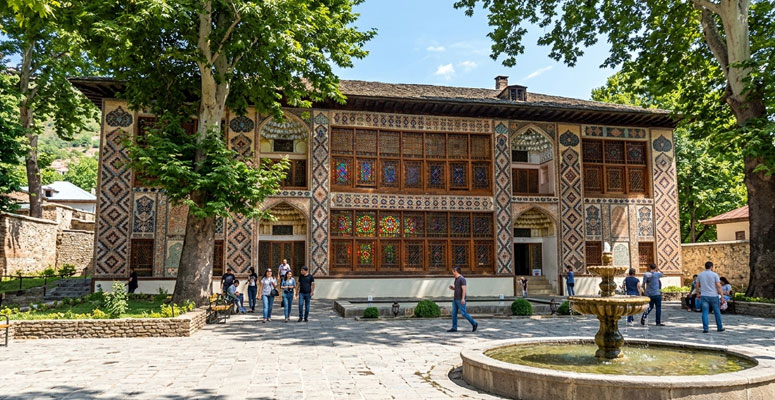
Famous for its intricate stained-glass windows and decorative interiors, Sheki Khan’s Palace is widely regarded as one of Azerbaijan’s most impressive historical landmarks, known for decorative interiors, stained-glass work and its link to Sheki’s Silk Road-era prosperity.
Best for: Architecture, heritage, photography.
Time needed: 45–60 minutes.
Pairs well with: Sheki Historic Centre and local craft/heritage walks.
Planning caution: Verify current entry rules, restoration status, photography restrictions and guide availability.
6. Lahij
Nestled in the mountains, Lahij is a historic settlement known for its stone-paved streets, traditional workshops, and centuries-old craft-making traditions. It appeals to travellers seeking a deeper connection with Azerbaijan’s cultural heritage beyond the country’s major cities.
Best for: Cultural travellers, crafts interests, and slow travel.
Time needed: Half day to one day.
Pairs well with: Sheki or Gabala route.
Planning caution: Road conditions and travel time should be checked, especially in poor weather.
-
Urban Attractions and Cultural Landmarks
Beyond its historic sites, Azerbaijan offers a dynamic urban experience shaped by contemporary architecture, waterfront districts, cultural institutions, and lively public spaces.
Many of the country’s best-known city attractions are concentrated in Baku, where modern development sits alongside centuries-old heritage.
These landmarks are ideal for travellers looking to balance historical sightseeing with local culture, architecture, shopping, and relaxed city exploration.
- Why visit: Modern architecture, museums, waterfront attractions, and cultural experiences
- Time needed: 1–2 days
- Best experiences: Urban sightseeing, public spaces, cultural venues, and city walks
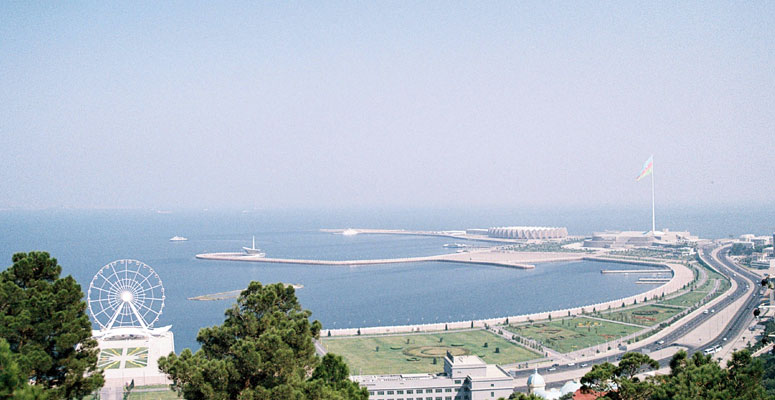
1. Baku Boulevard
Baku Boulevard is the city’s Caspian waterfront promenade, useful for relaxed evening walks, skyline views, cafés and low-effort downtime after heritage sightseeing.
Best for: Families, couples, evening walks, low-effort sightseeing.
Time needed: 1–2 hours.
Pairs well with: Carpet Museum, Little Venice area, Nizami Street.
Planning caution: Views and comfort depend on weather, wind and visibility. Choose one section instead of trying to walk the full boulevard.
2. Azerbaijan Carpet Museum
The Carpet Museum showcases one of Azerbaijan’s most important artistic traditions and provides insight into regional weaving styles, symbolism, and craftsmanship. The building itself, designed in the shape of a rolled carpet, is also a notable architectural landmark. It is useful for travellers who want to understand Baku’s contemporary identity alongside its UNESCO-listed heritage core.
Best for: Architecture lovers, photographers, first-time visitors.
Time needed: 1–2 hours, depending on exhibition access.
Pairs well with: Baku Boulevard, Carpet Museum or Nizami Street.
Planning caution: Verify current exhibition access, timings and ticketing before planning a visit.
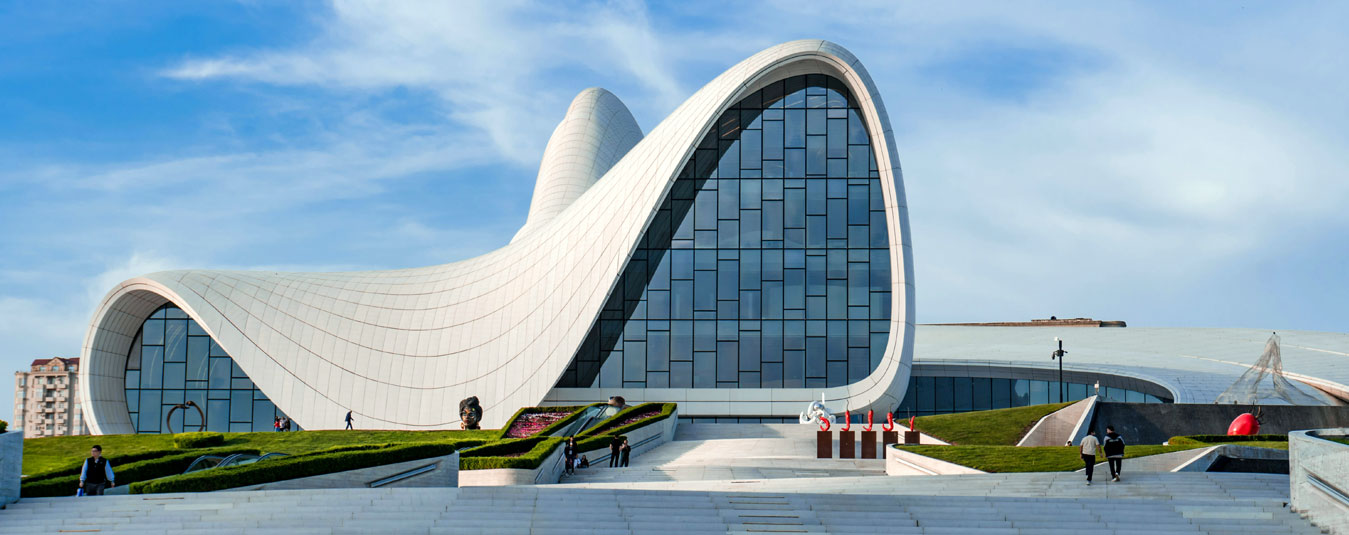
3. Heydar Aliyev Centre
The Heydar Aliyev Centre is one of Baku’s most recognised modern architectural landmarks and serves as a striking contrast to the Old City. It is useful for travellers who want to understand Baku’s contemporary identity alongside its UNESCO-listed heritage core.
Best for: Architecture lovers, photographers, first-time visitors.
Time needed: 1–2 hours, depending on exhibition access.
Pairs well with: Baku Boulevard, Carpet Museum or Nizami Street.
Planning caution: Verify current exhibition access, timings and ticketing beforehand
4. Nizami Street
One of Baku’s busiest pedestrian streets, Nizami Street blends historic architecture with modern retail, cafés, and street activity. It is most vibrant in the evening when locals and travellers gather for dining and leisure walks.
Fountain Square
Fountain Square serves as a central meeting point in Baku, surrounded by restaurants, cafés, and historic buildings. It connects naturally to Nizami Street and nearby city landmarks, making it a convenient base for informal exploration.
Suggested Urban Route Logic
A simple and efficient way to experience this belt is:
Fountain Square → Nizami Street → Azerbaijan Carpet Museum → Baku Boulevard
This flow works because it moves naturally from central-city activity to cultural exploration and ends at the Caspian waterfront. Travellers can adjust their pace, with cafés and rest stops easily available along the entire route.
-
Natural Wonders and Scenic Landscapes
Azerbaijan’s natural attractions are defined by rare geological formations, desert-like terrain, ancient rock carvings, fire-related phenomena, and sweeping mountain landscapes. Most of these sites are located within driving distance of Baku or along key regional routes, making them ideal for full-day or multi-day extensions to a city-based itinerary.
These attractions are best handled as a Baku-based day circuit because they combine outdoor archaeology, unusual geology and fire-related cultural sites. The route should not be planned as separate return trips from Baku.
- Why visit: Unique geology, prehistoric heritage, desert landscapes, and natural viewpoints
- Time needed: Full day (Baku-based) or 2–3 days if combined with mountain regions
- Best experiences: Gobustan rock art, mud volcano landscapes, fire phenomena, alpine scenery, and photography stops
Gobustan National Park
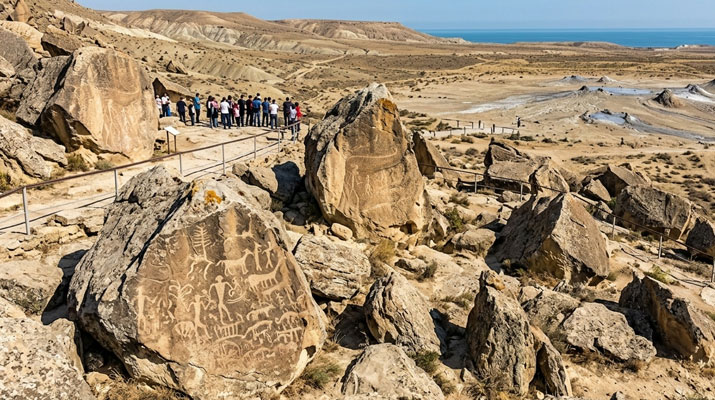
Gobustan is one of Azerbaijan’s most important archaeological landscapes, known for its ancient rock carvings and evidence of early human settlement. The site offers insight into prehistoric life and the region’s cultural development over thousands of years.
Best for: History, archaeology, photography, guided day trips.
Time needed: 1.5–2.5 hours on-site, depending on museum/rock art access.
Pairs well with: Mud volcanoes, Ateshgah and Yanardag.
Planning caution: Visit earlier in the day, as the site involves outdoor walking, open terrain, and limited shade.
Mud Volcanoes
Azerbaijan is widely cited for the world’s largest concentration of mud volcanoes, with official tourism material noting more than 400 across the country. These landscapes are valuable for geology, photography and unusual scenery.
Best for: Photography, geology interest, and unusual landscapes.
Time needed: 45–90 minutes, depending on access route.
Pairs well with: Gobustan National Park.
Planning caution: Do not visit independently without checking terrain, vehicle suitability and access conditions. Mud-volcano landscapes can be uneven, slippery, or weather-affected.
Ateshgah Fire Temple
The Ateshgah Fire Temple reflects Azerbaijan’s long-standing association with natural gas and fire worship traditions. The site provides cultural context to the country’s “Land of Fire” identity. This works best as a mid-circuit cultural stop after the more remote natural sites, breaking up the journey back toward Baku.
Best for: Culture, history, first-time visitors.
Time needed: 45–60 minutes.
Pairs well with: Yanardag and Absheron Peninsula route.
Planning caution: Works best as a mid-circuit cultural stop after Gobustan/mud volcanoes or before Yanardag.
Yanardag (Burning Mountain)
Yanardag features a continuously burning natural gas flame on a hillside, creating one of Azerbaijan’s most visually distinctive natural phenomena. It is particularly striking in low-light conditions. Yanardag is best visited toward the end of the circuit when returning to Baku, as it requires minimal walking and works well as a final short stop before heading back.
Best for: First-time visitors, photography, light walking.
Time needed: 30–45 minutes.
Pairs well with: Ateshgah Fire Temple.
Planning caution: Verify current access, ticketing and visibility conditions.
-
Mountain Towns and Traditional Villages
Azerbaijan’s mountain regions offer a different pace of travel compared to Baku and the Absheron Peninsula. These destinations are defined by alpine landscapes, forested valleys, traditional villages, and historic Silk Road towns. They are best suited for travellers who want to extend their itinerary beyond day trips and experience a slower, more scenic side of the country.
- Why visit: Mountain scenery, traditional culture, Silk Road heritage, and outdoor landscapes
- Best experiences: Alpine drives, heritage towns, village stays, hiking viewpoints, and cultural immersion
Suggested Mountain Circuit Logic
A practical way to experience this belt is to combine regions based on direction and elevation:
Baku → Quba → Khinalig → Shahdag → Gabala → Sheki → Baku
This route connects Azerbaijan’s northern mountain landscapes with its key heritage town, allowing travellers to experience both nature and culture in one extended journey. Most itineraries focus on selecting two or three stops from this circuit rather than covering it in full.
Sheki
Sheki is one of Azerbaijan’s most important historic towns, known for its Silk Road heritage, traditional architecture, and cultural depth. It offers a more atmospheric and slower-paced alternative to Baku’s urban environment.
Planning insight: Sheki works best as an overnight stop rather than a day trip, as early-morning and evening hours offer the most rewarding experience of its historic streets and surroundings.
Gabala
Gabala is a popular mountain destination known for its forests, resorts, and scenic viewpoints. It appeals to travellers seeking a balance among nature, leisure, and accessible mountain experiences.
Best for: Families, leisure travellers, nature-and-comfort mix.
Time needed: 1–2 nights.
Pairs well with: Sheki or Baku return route.
Khinalig
Khinalig is one of the highest and most remote mountain villages in Azerbaijan, known for its stone-built houses, preserved indigenous culture, and dramatic setting within the Greater Caucasus range and a part of the UNESCO-listed Cultural Landscape of Khinalig People and “Köç Yolu” Transhumance Route. The journey itself is as significant as the destination, with winding mountain roads and changing landscapes along the way.
Best for: Cultural landscapes, photography, mountain scenery, slow travel.
Time needed: Full day from Quba or overnight with careful routing.
Pairs well with: Quba and Shahdag.
Planning caution: Not ideal for short trips, weak road tolerance, winter uncertainty or travellers who prefer low-effort sightseeing. Verify road conditions before travel.
Shahdag
Shahdag is Azerbaijan’s primary mountain resort region, offering year-round outdoor activities, including winter skiing, cable car rides, hiking trails, and panoramic viewpoints in warmer months. The area is designed for accessible mountain tourism rather than remote exploration.
Best for: Families, resort-based mountain stays, winter/summer leisure.
Time needed: 1–2 nights if staying as a resort.
Pairs well with: Quba, Khinalig or Gabala route.
Key Planning Rules for Route Design
- Base all itineraries in Baku for better connectivity and flexibility
- Combine Gobustan and Absheron into a single day circuit wherever possible
- Treat northern destinations (Quba, Khinalig, Shahdag, Sheki, Gabala) as a connected loop rather than separate trips
- Avoid mixing mountain routes with short city breaks unless the itinerary exceeds 7 days
- Limit hotel changes by grouping destinations into clear regional blocks rather than alternating between zones.
- Use private transfers for Gobustan, Absheron and mountain routes if travelling with family or senior travellers.
- Avoid adding Khinalig, Shahdag or Sheki to a short 4–5 day Baku trip.
- Plan overnight stays for Sheki, Gabala, Quba and Shahdag instead of returning to Baku after long sightseeing days.
- Keep Old City and Baku Boulevard for lower-effort sightseeing days.
- Use guided context for Gobustan, Old City, Sheki and Lahij if travellers care about history and culture.
Best Time to Visit
The weather varies significantly between coastal Baku, inland cultural regions, and the northern mountain belt. Choosing the right season can improve accessibility, comfort, and overall quality of sightseeing across different regions.
| Season | Weather Conditions | Best Regions | Best Experiences |
|---|---|---|---|
| November to February | Cool and dry in Baku; colder in mountain areas | Baku, Absheron Peninsula | Old City exploration, museums, urban sightseeing, coastal walks |
| March to May | Mild temperatures with clear seasonal transition | Baku, Gabala, Sheki, Quba | Heritage travel, mixed city and nature itineraries |
| June to August | Hot in lowlands; cooler in higher-altitude regions | Shahdag, Gabala, Khinalig | Mountain escapes, hiking, resort stays, and outdoor activities |
| September to October | Often comfortable for multi-region travel, subject to mountain weather and road conditions. | All major destinations | Multi-region travel, photography, and combined heritage and nature trips |
Travel Tips for Visiting Azerbaijan Tourist Places
Azerbaijan is a relatively compact destination, but travel conditions vary between urban areas, coastal regions, and mountain zones. Planning with a few practical considerations helps ensure smoother movement between destinations and more efficient use of time on the ground.
Key Travel Tips
- Start sightseeing in Baku early in the day to avoid traffic and make better use of daylight hours for exploring the Old City.
- Combine nearby attractions into single-day circuits rather than treating each site as a separate stop.
- Plan at least one overnight stay if travelling to northern mountain regions such as Sheki, Quba, or Gabala.
- Include buffer time in itineraries, as travel times can increase in mountainous areas due to winding roads and changing conditions.
- Carry cash for smaller towns and rural regions where card payments may not be widely accepted.
- Dress in layers, especially when moving between Baku and higher-altitude destinations in a single trip.
- Respect local customs when visiting religious or memorial sites, particularly in heritage zones and museums.
Common Mistakes to Avoid
- Treating Azerbaijan as a single-city Baku trip when the traveller has 6–8 days.
- Adding Sheki, Quba, Khinalig and Shahdag to a short 4–5 day trip.
- Visiting Gobustan and mud volcanoes without checking terrain and vehicle suitability.
- Treating Shahdag activities as guaranteed year-round.
- Planning Sheki as a same-day return from Baku for premium or family travellers.
- Ignoring wind, heat and limited shade during outdoor sightseeing.
- Not using a guide for sites where historical context matters.
- Relying only on card payments in rural or mountain areas.
- Not checking Azerbaijan visa requirements before finalising travel. Indian travellers should also be routed to the Azerbaijan visa support page where available.
- Trying to cover all regions instead of choosing one clear circuit.
How to Plan Your Azerbaijan Journey
4–5 Day Core Itinerary (First-Time Visitors)
Baku → Old City → Absheron Peninsula → Gobustan → Return to Baku
This itinerary focuses on Azerbaijan’s essential experiences within easy reach of the capital. It combines heritage, urban sightseeing, and natural landscapes without requiring hotel changes.
- Best for: Short trips and first-time visitors
- Focus: Baku + nearby cultural and geological attractions
6–7 Day Balanced Itinerary (City + Nature)
Baku → Gobustan → Absheron → Gabala → Return to Baku
This route adds mountain scenery and forest landscapes to the core Baku experience, creating a balanced mix of city and nature travel.
- Best for: Mixed-interest travellers
- Focus: Urban sightseeing + accessible nature regions
7–8 Day Cultural + Mountain Circuit
Baku → Quba → Khinalig → Shahdag → Sheki → Return via Baku
This itinerary follows Azerbaijan’s northern mountain corridor and Silk Road heritage towns. It combines experiences in remote villages with historic cultural centres.
- Best for: Slow travel and immersive experiences
- Focus: Mountains, villages, and heritage towns
8–10 Day Premium Slow Azerbaijan Route
Route: Baku → Gobustan / Absheron → Gabala → Sheki → Quba / Khinalig or Shahdag → Baku
Best for: Premium cultural travellers, families wanting comfort, and photography-focused travellers.
Why it works: Reduces rushed transfers and allows stronger hotel-based planning.
Comfort note: Choose either Khinalig/Quba or Shahdag if you prefer comfort over road-heavy exploration.
Plan Your Azerbaijan Journey
Azerbaijan is best experienced through a structured route approach that combines Baku-based sightseeing with regional circuits into northern mountain and heritage zones. Planning around clear travel loops helps reduce backtracking and ensures each destination is experienced in the right order.
Our travel specialists can help you choose the right route, hotel base, private transfers, guided sightseeing and package type without overloading the trip.