
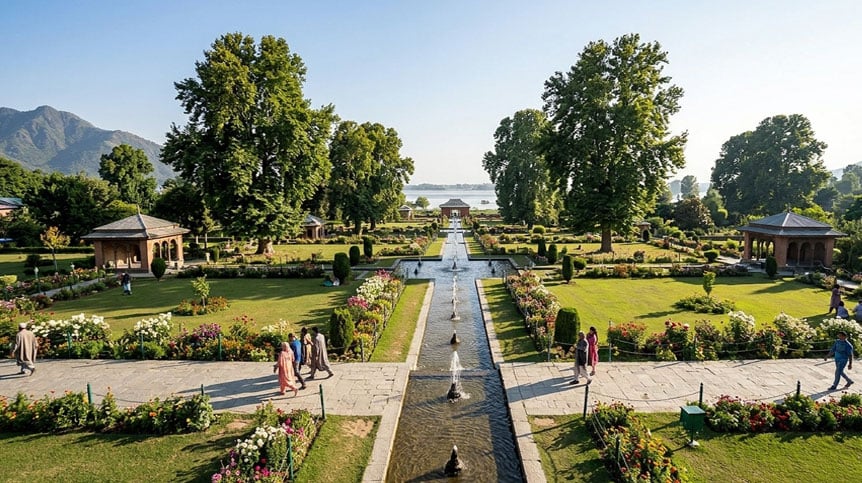

Gardens in Srinagar are best experienced as part of a slower, landscape-led Kashmir itinerary rather than as rushed “garden hopping” between multiple Mughal sites in a single afternoon. In practice, the value of Srinagar’s garden layer changes sharply depending on the month of travel, how much walking you are comfortable with, whether you prefer heritage-focused Mughal terraces or relaxed lakeside greenery, and how realistically you pace your sightseeing days.
For some travellers, Srinagar’s gardens become peaceful half-day pauses between heavier mountain drives and city exploration. For others, they become one of the strongest parts of the Kashmir experience as they combine Mughal-era landscaping, Dal Lake views, mountain backdrops, floral colour, and slower pacing in a way few destinations in India do.
This guide focuses on which Srinagar gardens are genuinely worth dedicated time, how they differ from one another, when they work best, what practical conditions shape the experience, and how to combine them naturally within a Srinagar itinerary rather than treating them as interchangeable scenic stops.
Understanding Srinagar’s Garden Landscape
Most of Srinagar’s major gardens sit along the eastern edge of Dal Lake beneath the Zabarwan Range. Rather than functioning as isolated attractions, they form a connected sightseeing corridor that combines Mughal heritage, lake views, mountain scenery, seasonal flowers, and sunset viewpoints.
For most travellers, the gardens are best approached as part of a single lakeside route rather than separate city excursions. Nishat Bagh, Shalimar Bagh, Chashme Shahi, Pari Mahal, the Botanical Garden, and the Tulip Garden all lie within the broader Dal Lake–Zabarwan zone, making it possible to combine multiple stops in a single day without repeatedly crossing Srinagar.
Which Travellers Will Enjoy Srinagar Gardens Most?
Best suited for
Slow-paced travellers
Families and couples
Photography enthusiasts
Senior travellers
Heritage and landscape lovers
Visitors wanting lighter sightseeing days
Less suited for
Adventure-focused travellers
Extremely rushed Kashmir itineraries
Visitors uninterested in walking or outdoor environments
How Srinagar’s Major Gardens Differ
Although they are often grouped together, the experience at each garden is quite different.
| Garden | Best For | Time Needed |
|---|---|---|
| Nishat Bagh | Dal Lake views, Mughal terraces, photography | 1–2 hours |
| Shalimar Bagh | Mughal architecture and heritage atmosphere | 1–1.5 hours |
| Chashme Shahi | Short scenic stop and elevated views | 30–45 minutes |
| Pari Mahal | Sunset views and city panoramas | 45–60 minutes |
| Tulip Garden | Seasonal flower displays | 1–2 hours during bloom |
| Botanical Garden | Relaxed walking and greenery | 1–1.5 hours |
Travellers with limited time usually gain the most value from Nishat Bagh, Shalimar Bagh, and either Pari Mahal or Chashme Shahi.
Mughal Heritage
Many of Srinagar’s best-known gardens were developed during the Mughal era and reflect Persian-influenced garden planning adapted to Kashmir’s geography. Terraced layouts, water channels, cascading fountains, chinar trees, and carefully aligned mountain backdrops were designed to create a balance between architecture, water, and landscape.
Even travellers who are not especially interested in history often find that understanding this design philosophy makes Nishat Bagh and Shalimar Bagh considerably more rewarding.
Nishat Bagh – Best Overall Mughal Garden Experience
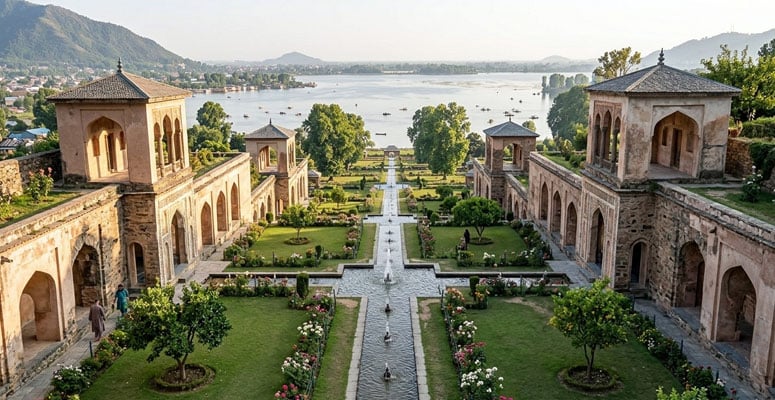
Among Srinagar’s Mughal gardens, Nishat Bagh is usually the strongest all-round experience because it balances terraced Mughal landscaping, open walking space, Dal Lake views, and mountain scenery more effectively than most other gardens.
Unlike some smaller or more formal gardens, Nishat feels visually layered and spacious, especially during the quieter morning hours when the terraces are cooler and crowd pressure is lower.
The garden suits:
First-time Srinagar visitors
Families
Landscape photographers
Travellers wanting one complete Mughal garden experience
A relaxed visit generally takes around one to two hours, depending on walking pace and photography stops.
Late afternoons often work particularly well here because the softer light improves Dal Lake-facing views and the gardens feel less harsh than during peak midday sunlight.
Shalimar Bagh – Best for Historical Mughal Atmosphere
Shalimar Bagh feels more formal and historically structured compared with Nishat Bagh. The experience here is less about wide-open scenery and more about Mughal symmetry, heritage atmosphere, water channels, and shaded walking sections.
Travellers interested specifically in Mughal-era garden planning often appreciate Shalimar more deeply than casual visitors focused mainly on floral photography.
The garden works best for:
Heritage-focused travellers
Mughal architecture enthusiasts
Slow-paced cultural sightseeing
Photography-oriented visitors
Most travellers spend around one to one-and-a-half hours here.
Shalimar usually works best when paired with Nishat Bagh on the same day rather than treated as a completely separate excursion.
Chashme Shahi – Best Short Scenic Addition
Chashme Shahi is much smaller than Nishat or Shalimar, although its elevated position and spring-water channels give it a calmer and more compact atmosphere.
In practical itinerary terms, Chashme Shahi functions best as a short scenic layer within a larger Mughal garden route rather than a major standalone destination.
It suits:
Travellers with limited time
Short photography stops
Garden-combination circuits
Dal Lake route extensions
Most visitors spend between 30 and 60 minutes here. The experience feels strongest in the quieter morning hours when the smaller terraces are less crowded.
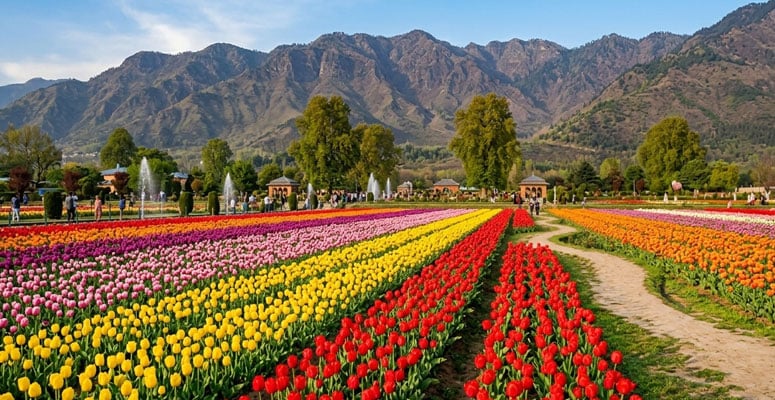
Indira Gandhi Memorial Tulip Garden – Best Seasonal Garden Experience
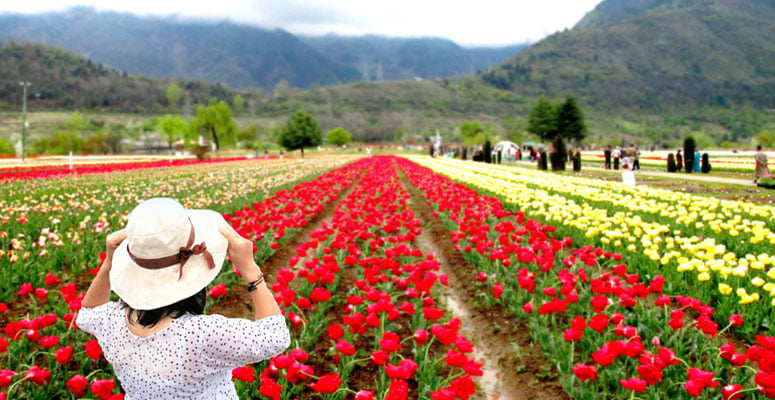
The Tulip Garden is Srinagar’s strongest flower-focused attraction, although only during its limited seasonal bloom window.
During late March and early April, the garden becomes one of the city’s visual centrepieces, attracting both photographers and high tourist movement. Outside bloom season, the experience changes dramatically and should not be oversold as a year-round floral attraction.
The Tulip Garden works best for:
Spring-season travellers
Flower photography
Families
First-time Kashmir visitors
Pari Mahal – Best Sunset and Elevated Viewpoint Experience
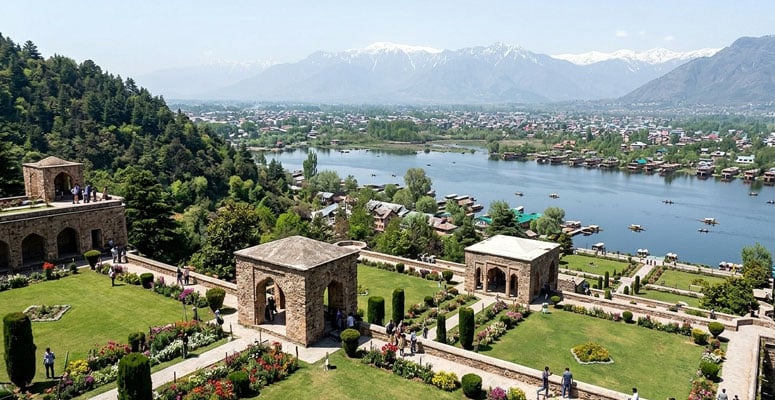
Pari Mahal functions more as a scenic hillside viewpoint and heritage terrace than a traditional flower-heavy garden.
The experience here is strongest during quieter late-afternoon and sunset periods when Dal Lake and Srinagar city views become softer and more atmospheric.
Pari Mahal suits:
Sunset-focused visitors
Photography enthusiasts
Couples
Travellers wanting a quieter evening stop
Most visitors spend around 45 minutes to 1.5 hours here, depending on photography and walking pace. Compared with Nishat or Shalimar, the payoff here is more about elevated scenery and atmosphere than floral landscaping.
Lesser-Known Garden Spaces Worth Including
Botanical Garden
The Botanical Garden works well for travellers wanting a calmer and less crowded greenery-focused outing.
It suits:
Families
Relaxed walking
Local-style park pacing
Visitors avoiding heavier Mughal-garden crowds
This is better treated as a secondary addition rather than a headline Srinagar attraction.
Nehru Park
Nehru Park works more as a Dal Lake-side pause than a major sightseeing destination.
It fits naturally into:
Shikara routes
Lakeside walking
Short rest stops
Evening Dal Lake pacing
Most travellers do not need to dedicate major standalone sightseeing time here.
Recommended Garden Circuits
Half-Day Mughal Garden Route
Dal Lake Boulevard → Chashme Shahi → Pari Mahal → Nishat Bagh → Shalimar Bagh
Best for travellers who want the strongest combination of heritage, views, and photography without rushing through every garden.
Scenic Photography Route
Early Morning Dal Lake → Nishat Bagh → Botanical Garden → Pari Mahal at Sunset
Best for photographers seeking softer light, fewer crowds, and layered mountain-lake compositions.
Spring Tulip Season Route
Tulip Garden → Botanical Garden → Chashme Shahi → Dal Lake Evening Walk
This route works best during peak bloom weeks when the Tulip Garden becomes the primary attraction.
Relaxed Family Route
Nishat Bagh → Dal Lake Promenade → Botanical Garden
Suitable for travellers who prefer fewer stair sections and longer breaks between sightseeing stops.
Because most major gardens lie along the same boulevard corridor, route efficiency usually improves when moving progressively north or south rather than repeatedly returning through central Srinagar.
Best Months to Visit Srinagar Gardens
March to April – Tulip and Early Spring Bloom
This is visually one of the strongest periods for Srinagar’s garden layer. The city feels fresh, colourful, and highly photography-focused during these months, especially around the Tulip Garden and Mughal terraces as spring flowers begin appearing.
This period works particularly well for:
Flower photography
Cooler daytime walking
Spring landscape contrast
First-time Srinagar visitors
The main limitation is crowd pressure. Tulip season especially can become extremely busy during weekends and holidays.
May to June – Most Balanced Overall Garden Experience
For many travellers, this is the best overall period for Srinagar gardens because the weather, greenery, and walking comfort balance well together.
The Mughal gardens feel especially rewarding during these months because:
Daylight hours are longer
Outdoor walking remains comfortable
Garden fountains and greenery look fuller
Dal Lake combinations work naturally alongside garden circuits
This is also one of the easiest periods for family sightseeing.
July to August – Lush Green Landscape Phase
The gardens become intensely green and atmospheric during these months, particularly after rainfall.
This period works well for:
Relaxed walking
Deep greenery photography
Cooler shaded garden sections
The trade-off is that rain showers can occasionally interrupt outdoor plans, and pathways may feel wetter or muddier in sections.
September to October – Softer and Less Crowded
This is one of the most underrated periods for Srinagar’s gardens. The atmosphere becomes calmer, crowd pressure reduces, and the softer light conditions make the Mughal terraces especially rewarding for photography and relaxed walks.
Travellers who prefer slower pacing over peak-season energy often enjoy this period the most.
November to February – Quiet but Less Floral
The gardens remain accessible in many cases, although the flower-heavy visual payoff reduces significantly.
Winter garden visits work better for:
Quiet walking
Snow-dusted scenery
Relaxed city pacing
They work less well for travellers expecting strong floral displays or lush landscape colour.
Crowd and Timing Reality Across Srinagar Gardens
Crowd pressure changes significantly depending on both season and time of day.
Quieter periods generally include
Early mornings
Weekdays
September and October
Non-holiday periods
Heaviest crowd pressure usually occurs during
Tulip season
May–June tourism peaks
Weekend afternoons
Sunset hours around major Mughal gardens
Midday periods during summer can also feel noticeably hotter and less comfortable for longer walking.
Transport and Traffic Reality
Distances between the major gardens are relatively short, but travel times can vary considerably depending on season and traffic conditions.
The Dal Lake Boulevard corridor often becomes slower during:
May–June tourism peaks
Tulip season weekends
Late afternoon sightseeing hours
Holiday periods
Travellers attempting to visit five or six gardens in a single afternoon often end up spending more time in traffic than expected.
Experiences That Pair Well with the Gardens
Many visitors combine garden sightseeing with:
Dal Lake shikara rides
Houseboat stays
Boulevard Road cafés
Pari Mahal sunset visits
Hazratbal Shrine
Old Srinagar heritage exploration
Because most garden sightseeing occurs along the eastern lakeside corridor, combining these experiences often creates a more efficient Srinagar day than splitting them across multiple days.
Onward Sightseeing and Journey Routing
Srinagar’s gardens work best as restorative and slower-paced layers within a broader Kashmir itinerary rather than as isolated sightseeing targets.
They combine especially well with:
In wider Kashmir routing, the gardens usually fit naturally:
At the beginning of a Kashmir itinerary for lighter acclimatisation-style pacing
Between heavier mountain days in Gulmarg, Sonamarg, or Pahalgam
On arrival or departure days, when travellers want gentler sightseeing
Travellers trying to combine all major gardens, old-city sightseeing, shopping, and Dal Lake activities in one day usually end up rushing through every layer without properly experiencing any of them.
Core Srinagar Garden Fit Rule
Srinagar’s gardens feel most rewarding when travellers:
Prioritise two or three strong gardens instead of covering everything
Match expectations realistically with the season
Treat the gardens as atmosphere-led experiences rather than checklist attractions
Allow enough time for walking, photography, and slower pacing
Combine garden visits naturally with Dal Lake or heritage exploration
Approached this way, Srinagar’s garden layer becomes one of the most restorative and visually balanced parts of a Kashmir itinerary rather than simply another sightseeing category.