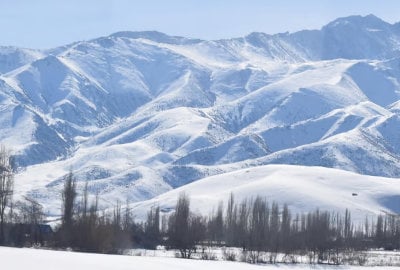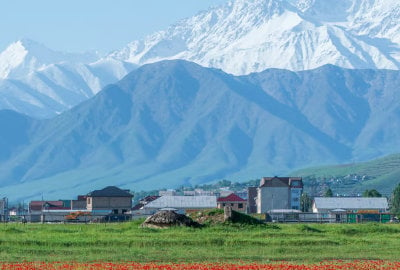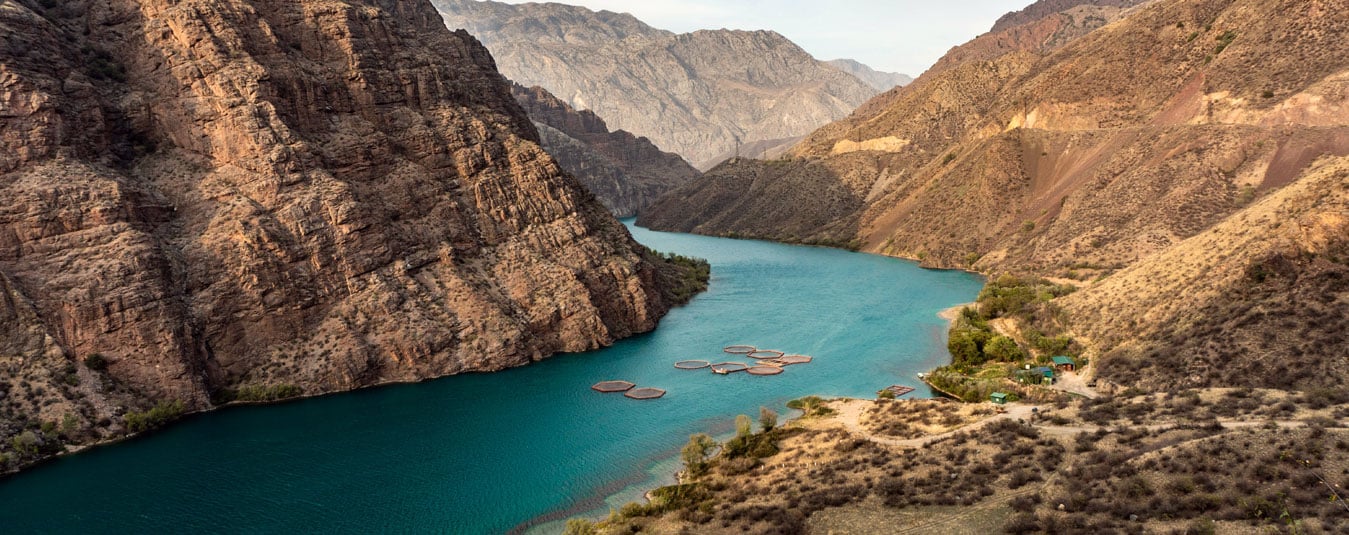
The best time to visit Kyrgyzstan depends on how you want to experience its mountains, lakes, and nomadic landscapes. Some travellers plan trips around alpine trekking routes such as Ala-Kul and Jyrgalan, while others focus on lake stays at Issyk-Kul, yurt camps at Song-Kul, or road journeys across the Tian Shan ranges.
This guide outlines Kyrgyzstan’s seasonal travel patterns, accessibility changes, and regional experience shifts to help you decide when to plan your trip.
Seasonal Impact on Travel in Kyrgyzstan
| Season | Suitable For | How to Plan |
|---|---|---|
| April – May | Early lake visits, cultural city breaks, and lower valley sightseeing | High mountain roads and alpine pastures are still opening; focus stays around Bishkek, Issyk-Kul edges, and southern valleys |
| June – August | Alpine lakes, yurt stays, horse trekking, road trips | All major mountain routes become accessible; demand peaks around Issyk-Kul and Song-Kul, so accommodation choice becomes limited in remote zones |
| September | Photography routes, soft trekking, mixed landscapes | Transition period where summer setups begin closing in high pastures while valley travel remains steady |
| October | Cultural travel, city exploration, short nature stops | Mountain tourism winds down; focus shifts to Bishkek, Osh, and lower elevation countryside circuits |
| November – March | Winter city stays, snow scenery near ski bases | Many alpine regions close due to snow; travel concentrates around cities and selected winter sport zones like Karakol ski area |
Best Season to Travel
Spring Season (April – May)
Snow still covers higher passes, while lower valleys begin to reopen for travel. Roads to alpine regions gradually become accessible, but many high-altitude camps are not yet operational.
What to Expect
Patchy snow in mountain corridors
Limited access to high pasture regions like Song-Kul
Active river flow from melting glaciers
Fewer operational yurt camps in remote zones
Best For
Cultural city travel (Bishkek, Osh)
Low-altitude valley exploration
Early-season photography with snow contrast
Summer Season (June – August)
This is the main travel window when most of the country’s mountain network opens, including lake basins and pasture routes used for nomadic stays.
What to Expect
Full access to Issyk-Kul, Song-Kul, Jyrgalan
Active yurt settlements across high meadows
Long daylight hours for road travel
Busy conditions in popular lake regions
Best For
Horse trekking across alpine pastures
Lake-based stays and nomadic camp experiences
Multi-region road journeys across Tian Shan
Autumn Season (September – October)
Temperature drops begin in mountain zones, and nomadic camps start winding down operations in higher elevations while valley regions remain accessible.
What to Expect
Seasonal closure of high pasture camps
Clear mountain air with sharper visibility
Reduced movement in remote trekking zones
More stable conditions in the lower valleys
Best For
Landscape photography across changing terrain
Historical sightseeing expedition in Bishkek and Osh
Short nature-based road trips
Winter Season (November – March)
Heavy snow restricts most high-altitude travel, restricting tourism to urban areas and select ski zones.
What to Expect
Mountain roads become largely inaccessible
Lake regions freeze in many areas
Strong cold conditions in open valleys
Limited operations in rural tourism zones
Best For
Ski travel near Karakol
City-based cultural exploration
Off-season stays in major towns
Planning Insights
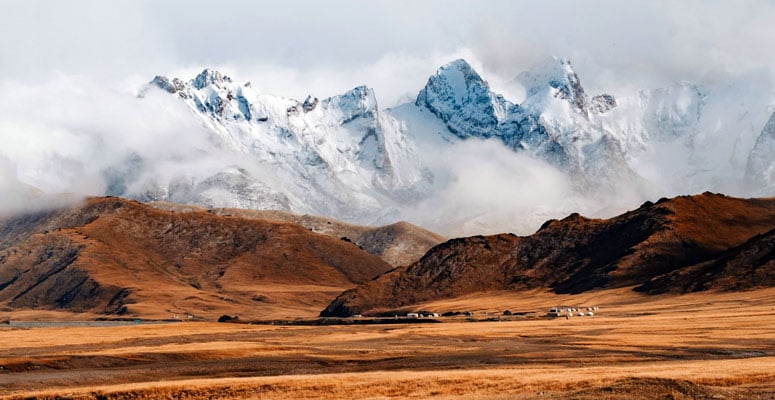
Booking Lead Time
Reserve stays 2–3 weeks in advance for Bishkek, Issyk-Kul, and Karakol during summer travel months. Demand rises sharply in peak season (July–August) when lakeside regions and yurt camps operate at full capacity. In remote alpine areas, accommodation is limited and often seasonal, so early confirmation of stays and guides becomes more important than last-minute booking flexibility.
Pricing Expectation
Costs rise mainly in Issyk-Kul during July–August, when domestic tourism peaks and demand for lakeside accommodation increases sharply. Bishkek and southern regions remain comparatively stable in pricing, with noticeable drops outside summer.
Crowd Footfall
Peak: July–August (Issyk-Kul north shore, Karakol region)
Moderate: June, September
Low: October–May (except ski activity in Karakol)
Crowding is regional, not nationwide, concentrated around lake tourism zones rather than cities like Bishkek or Osh.
Festival & Event Impact
Tourism flow can tighten during national events such as Independence Day and occasional Nomad Games periods (hosted intermittently). These events increase domestic movement in Bishkek and Issyk-Kul, affecting transport and stay availability.
Plan Your Kyrgyzstan Trip Around Seasons
Kyrgyzstan travel works best when aligned with seasonal access to mountain passes, lake regions, and nomadic pasture zones. Weather strongly affects road connectivity and yurt camp availability, especially outside summer months, so routes need to be shaped around region-wise accessibility rather than fixed city circuits.
IndianHoliday’s Kyrgyzstan specialists can assist with route mapping, seasonal stay selection, transport coordination, and realistic travel pacing across lakes, valleys, and alpine regions.