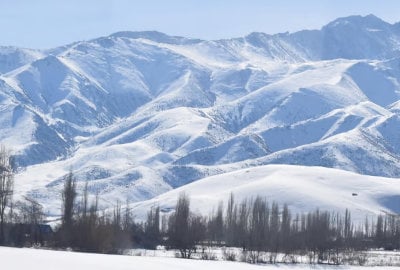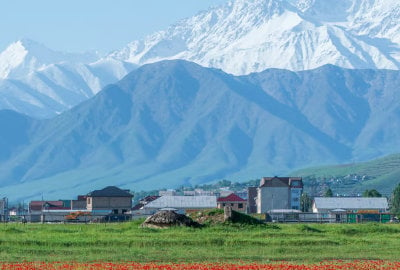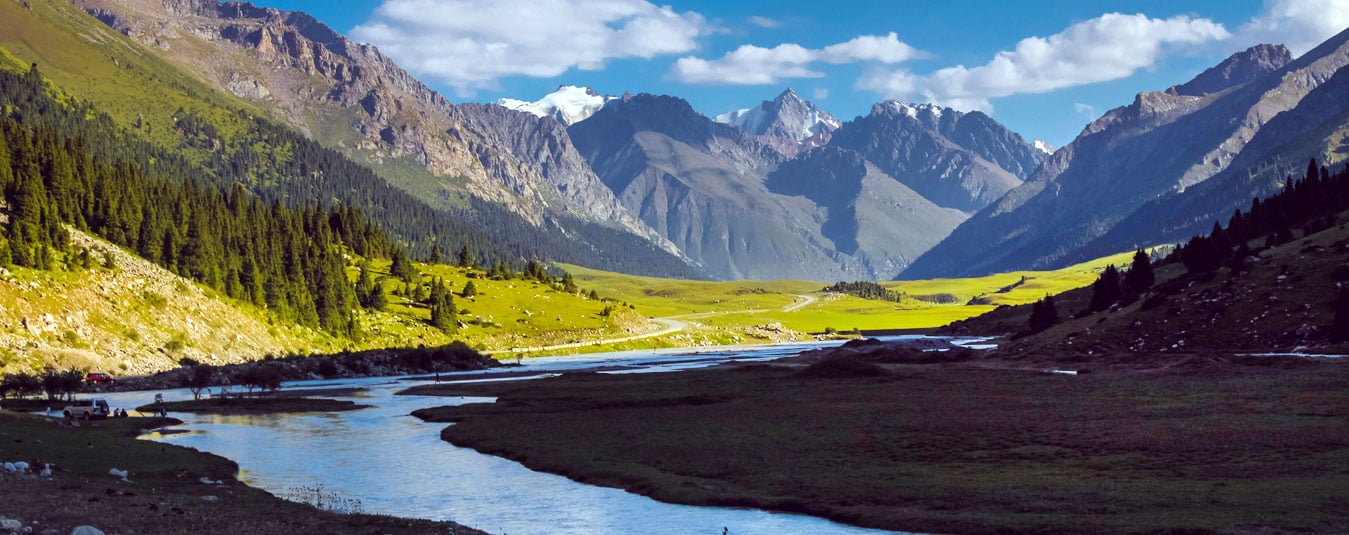
Kyrgyzstan is not a destination that can be approached with a simple point-to-point sightseeing plan. Its key experiences are spread across wide mountain regions, with long travel times between lakes, valleys, and historic towns, and access that often depends on season and road conditions. Its lakes, valleys, alpine passes, Silk Road sites and historic towns are spread across long mountain roads, with access shaped by season, weather, altitude and local transport.
For first-time travellers, the most practical route usually begins in Bishkek, adds Ala Archa or Burana Tower, continues toward Issyk-Kul Lake and Karakol, and then extends to Song-Kul, Osh or remote alpine areas only if the trip has enough days. Short trips should stay around Bishkek and Issyk-Kul, while 8–12 day journeys can include Karakol, Song-Kul or a southern cultural loop.
This guide brings together route ideas, seasonal insights, and practical planning notes to help trekkers, cultural explorers, families, and first-time visitors build realistic itineraries without overpacking travel days or missing key regions.
Before finalising a route, verify:
- Road and weather conditions for Song-Kul, Kel-Suu, Jyrgalan, Lenin Peak and high passes
- Border-zone permit requirements for Kel-Suu and other restricted areas
- Yurt-camp availability around Song-Kul and remote lake routes
- Trekking trail condition around Ala-Kul, Altyn Arashan and Karakol
- Transport availability for remote valleys and southern Kyrgyzstan
- Visa, e-Visa and entry requirements for Indian travellers
- Whether the route suits the traveller’s fitness, altitude tolerance and comfort level
Quick Travel Snapshot
Places to Prioritise for First-Time Travellers to Kyrgyzstan
| Attraction | Best For | Time Needed | Region | Effort Level | Combine with | Skip/Avoid if |
|---|---|---|---|---|---|---|
| Issyk-Kul Lake | Main lake experience, wide landscapes | 1 – 2 days | Issyk-Kul | Easy | Karakol, Jeti-Oguz, Skazka Canyon | On a trek-focused trips only |
| Bishkek | Arrival base, city orientation, museums, food, transfers | 1 day | Bishkek | Easy | Ala Archa, Burana Tower | You have only a pure nature/trekking route |
| Karakol | Eastern base town + culture | 1 – 2 days | Issyk-Kul | Easy | Jeti-Oguz, Altyn Arashan | If avoiding towns entirely |
| Jeti-Oguz Gorge | Red rock formations, a short nature stop | 2 – 3 hours | Issyk-Kul | Easy – Moderate | Karakol, Skazka Canyon | Have no short excursions planned |
| Skazka Canyon | Quick stop for rock formations | 1 – 2 hours | Issyk-Kul | Easy | Jeti-Oguz, Issyk-Kul soutrh shore drive | Expecting long hikes |
| Altyn Arashan | Hot springs + alpine valley access | Half day to 1 day | Karakol Region | Moderate | Ala-Kul, Karakol Valley | No mountain roads or 4×4 travel |
| Song-Kul Lake | Nomadic life, yurt stays | 1 – 2 days | Naryn Region | Moderate | Kochkor, Naryn | Low-altitude travel preference |
| Ala-Kul Lake | High-altitude trekking lake | 2 – 3 days | Karakol Region | Hard | Altyn Arashan, Karakol | No trekking experience |
| Ala Archa National Park | Easy mountain day trip near capital | Half day to 1 day | Near Bishkek | Easy – Moderate | Bishkek | Eastern Kyrgyzstan-only focus |
| Burana Tower | Silk Road history stop | 30 – 60 minutes | Chuy Region | Easy | Bishkek, Chon-Kemin | Nature-only itineraries |
| Osh + Sulaiman-Too | Southern culture + sacred mountain | 1 – 2 days | Osh region | Easy to moderate | Arslanbob, Fergana Valley | Focussed on mountain trekking trips only |
Top Places to Visit in Kyrgyzstan
1. Lakes and Alpine Landscapes
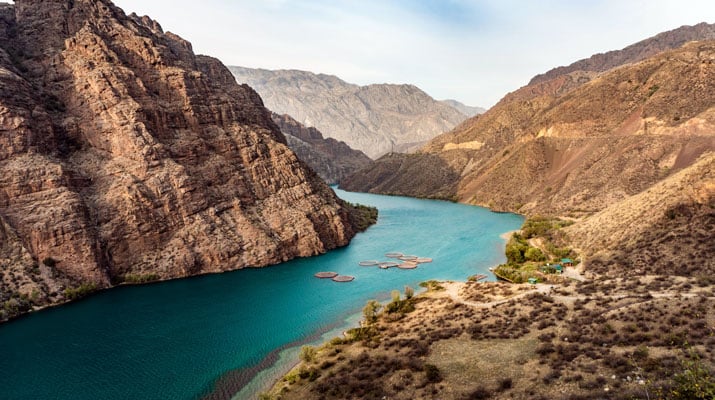
Kyrgyzstan’s lake routes are not all equal. Issyk-Kul works for first-time and family travellers, Song-Kul is better for yurt stays and summer pasture culture, while Kel-Suu and Ala-Kul require stronger route planning, altitude readiness, permits or trekking support.
• Issyk-Kul Lake
Issyk-Kul Lake is one of the world’s largest high-altitude alpine lakes. Surrounded by the Tian Shan Mountains, it is valued for its vast scale, deep blue waters, and the striking contrast between snowy peaks and a lake that rarely freezes despite its high-altitude setting. Surrounded by the Tian Shan Mountains, it works well as a scenic road route with access to Karakol, Jeti-Oguz, Skazka Canyon, Cholpon-Ata and south-shore viewpoints.
Surrounding Attractions: Karakol, Jeti-Oguz Gorge, Skazka (Fairy Tale) Canyon, Altyn Arashan, and Ala-Kul
Time to Spend: 2 – 4 days
Pairs well with: Karakol, Jeti-Oguz, Skazka Canyon, Altyn Arashan.
• Song-Kul Lake
Song-Kul Lake acts as the cultural centrepiece of a classic Kyrgyzstan itinerary, connecting northern loops with southern mountain routes. It offers the most practical option for travellers to experience authentic nomadic pasture life.
Song-Kul sits at around 3,016 m, so travellers should expect cooler conditions than Bishkek or Issyk-Kul and prepare for simple accommodation and basic facilities.
Surrounding Attractions: Kochkor, Naryn, Kalmak-Ashu Pass, Moldo-Ashu Pass, Song-Kul Flats
Time to spend: 1 – 2 days
Pairs well with: Kochkor, Naryn, Kalmak-Ashu Pass, Moldo-Ashu Pass.
• Kel-Suu Lake
Kel-Suu is a remote alpine lake near the China border and should be treated as a rugged expedition-style add-on, not a standard sightseeing stop. It suits travellers who want isolated landscapes, rough roads and a stronger adventure element.
Kel-Suu requires a border-zone permit and local route support. Permit lead times and checkpoint requirements can change, so travellers should apply well in advance and verify current rules before travel. Travel-permit resources list Kel-Suu among Kyrgyzstan’s permit-sensitive border-zone destinations.
Surrounding Attractions: Naryn, Kok-Kiya Valley, At-Bashy village, Kel-Suu Canyon, Border Outpost Trail
Time to spend: 2 days
Pairs well with: Naryn, At-Bashy, Kok-Kiya Valley.
• Altyn Arashan
Altyn Arashan is an alpine valley and hot-spring area near Karakol. It can be a moderate day trip or part of a longer trekking route, depending on transport and fitness.
Best for: Alpine scenery, hot springs, Karakol-based travellers.
Time needed: Half day to 1 day, longer if trekking.
Pairs well with: Karakol, Ala-Kul, Jyrgalan.
• Ala Archa National Park
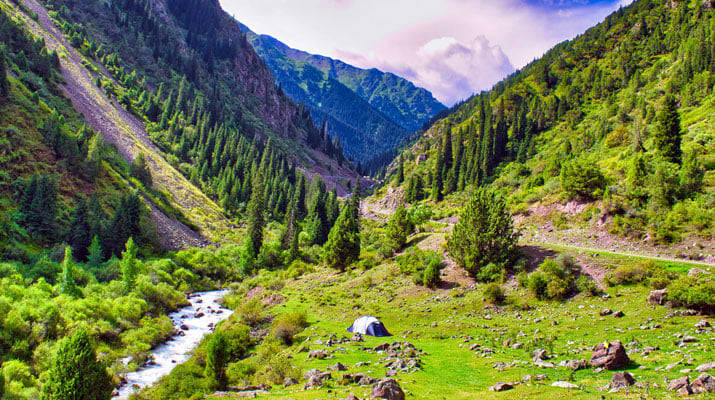
Ala Archa National Park is the easiest high-mountain experience from Bishkek and should be included by most first-time visitors who have one additional day in the capital. It offers river valleys, glacier viewpoints, picnic areas and multiple hiking options with varying difficulty.
Surrounding Attractions: Bishkek, Ala Archa River, Ak-Sai Glacier, Broken Heart Rock
Time to spend: Half day to 1 day
Best for: Families, first-time travellers, photographers, hikers.
Pairs well with: Bishkek, Burana Tower.
• Jeti-Oguz Gorge
Jeti-Oguz Gorge is known for its striking red sandstone formations, forest landscapes and easy access from Karakol. It works well as a short excursion rather than a standalone destination.
Surrounding Attractions: Karakol, Seven Bulls Rock, Broken Heart Rock, Kok-Jaiyk Valley
Time to spend: 2 – 4 hours
Best for: Families, photographers, road-trip travellers.
Pairs well with: Karakol, Issyk-Kul south shore, Skazka Canyon.
Who should visit the lakes and alpine meadows?
- First-time travellers wanting Kyrgyzstan’s signature landscapes
- Families with sufficient travel time
- Nature photographers
- Road-trip travellers
- Couples looking for scenic routes
- Adventure travellers with trekking experience (for Ala-Kul or Kel-Suu)
Avoid remote lake routes if you:
- Have only 3 – 4 days in Kyrgyzstan
- Dislike long mountain drives
- Need luxury accommodation throughout the trip
- Have difficulty with altitude
- Cannot keep weather flexibility in the itinerary
2. National Parks, Valleys, and Scenic Landscapes
• Ala Archa National Park
Ala Archa National Park is Kyrgyzstan’s most accessible mountain national park and is located about 40 km south of Bishkek. It offers dramatic alpine scenery, glacier-fed rivers, pine forests and hiking trails suitable for both beginners and experienced trekkers. Because of its proximity to the capital, it is the easiest way to experience the Tian Shan Mountains without committing to a multi-day expedition.
Surrounding Attractions: Ak-Sai Glacier, Ala Archa River, Broken Heart Rock, Bishkek
Time to spend: Half day to 1 day
Best for: First-time visitors, hikers, photographers, families.
Pairs well with: Bishkek and Burana Tower.
• Chon-Kemin Valley
Chon-Kemin Valley is one of the best destinations for travellers seeking traditional village life, horse riding and broad alpine landscapes without extreme trekking. It combines green valleys, forests and river scenery while remaining relatively close to Bishkek.
Surrounding Attractions: Burana Tower, Boom Gorge, village homestays
Time to spend: 1 day
Best for: Families, cultural travellers, horse riding and slow travel.
Pairs well with: Bishkek, Burana Tower, Issyk-Kul.
• Sary-Chelek Biosphere Reserve
Sary-Chelek Biosphere Reserve is one of Kyrgyzstan’s richest protected natural areas, known for alpine lakes, walnut forests, biodiversity and hiking opportunities. It lies in western Kyrgyzstan and is better suited to travellers with additional time beyond the classic Bishkek–Issyk-Kul route.
Surrounding Attractions: Sary-Chelek Lake, walnut forests, nearby villages
Time to spend: 1 – 2 days
Best for: Nature lovers, birdwatchers, photographers, slow travellers.
Pairs well with: Osh region and western Kyrgyzstan routes.
• Skazka Canyon (Fairy Tale Canyon)
Skazka Canyon is one of the easiest scenic stops on the southern shore of Issyk-Kul. The colourful sandstone formations resemble castles, animals and dramatic landscapes, making it popular with photographers and families.
Surrounding Attractions: Issyk-Kul south shore, Jeti-Oguz, Bokonbayevo
Time to spend: 1 – 2 hours
Best for: Families, photographers, road-trip travellers.
Pairs well with: Jeti-Oguz, Karakol, Issyk-Kul.
National Parks and Valleys are best suited for:
- Families wanting accessible mountain scenery
- Travellers who enjoy nature without difficult trekking
- Photographers
- Horse-riding enthusiasts
- Slow-travel itineraries
- Visitors combining Bishkek with Issyk-Kul
3. Trekking-Based Scenic Regions and Adventure Add-ons
These places are included because they are important scenic regions, but they should be treated as adventure add-ons, not standard sightseeing stops. Travellers need fitness, mountain-weather flexibility and local support.
• Eastern Tian Shan Region
Kyrgyzstan’s eastern Tian Shan and southern Pamir-Alay ranges contain many of the country’s premier trekking and mountaineering routes. These regions are suitable for experienced outdoor travellers who have sufficient time, fitness and preparation.
Famous Trekking Spots:
- Ala-Kul Lake
- Altyn Arashan
- Jyrgalan Valley
- Lenin Peak Base Camp
- Sary-Mogol
Best Season: July to early September – The snow melts off the high trails, making them safe to walk
• Pamir-Alay Region
The Pamir-Alay Region shifts the itinerary toward a starker scale of mountain scenery on the southern border of the country. It provides travellers with a direct look at giant, 7,000-meter peaks and massive arctic landscapes, accessible via wide, open tundra valleys that contrast with the forested gorges of the north.
Famous Trekking Spots:
- Lenin Peak Base Camp
- Sary-Mogul Pass
- Alay Valley trails
Best Season: July to August – The short summer window offers the most stable weather for high-elevation base camps
• Ala-Kul Lake
Ala-Kul Lake is one of Kyrgyzstan’s most famous alpine trekking destinations. Reaching the lake normally requires a demanding multi-day trek with significant elevation gain, making it suitable only for fit and prepared trekkers.
Best for: Experienced trekkers, adventure travellers, photographers.
Time needed: 2 – 3 days
Pairs well with: Altyn Arashan and Karakol.
• Jyrgalan Valley
Jyrgalan Valley has become one of Kyrgyzstan’s emerging trekking destinations, offering alpine meadows, mountain trails and village-based tourism with fewer crowds than Karakol.
Best for: Trekkers, photographers, slow travellers.
Time needed: 1 – 3 days
Pairs well with: Karakol, Issyk-Kul.
• Lenin Peak Base Camp
Lenin Peak Base Camp is one of Central Asia’s best-known mountaineering destinations. Even visitors who are not climbing the summit sometimes visit the base camp for the mountain scenery and high-altitude landscape.
Best for: Serious adventure travellers and mountaineering enthusiasts.
Time needed: 2 – 4 days
Pairs well with: Osh and Sary-Mogol.
4. Cities and Cultural Attractions
• Bishkek
Bishkek is the capital city and the main entry point for most travellers, known for its Soviet-era layout, wide boulevards, and easy access to nearby mountains like Ala Archa. It is the most practical arrival base for first-time travellers and the best place to organise vehicles, guides, supplies and permits before moving into mountain regions.
Best Time to Visit: May – September
• Karakol
Karakol is a key eastern Kyrgyzstan town used as a base for mountain valleys, trekking routes, and lake excursions around Issyk-Kul.
Best Time to Visit: June – September
Pairs well with: Issyk-Kul, Jeti-Oguz, Altyn Arashan, Ala-Kul.
• Osh
Osh is one of the oldest cities in Central Asia, known for its long history, busy bazaars, and role as a gateway to southern Kyrgyzstan.
Best Time to Visit: April – October
• Ala-Too Square
Ala-Too Square is the central public square of Bishkek, used for national events and surrounded by museums and government buildings.
Best Time to Visit: May – September
• Dungan Mosque
The Dungan Mosque is a 20th-century wooden mosque built without nails, reflecting Chinese architectural influence brought by the Dungan community.
Best Time to Visit: June – September
• Holy Trinity Cathedral
Holy Trinity Cathedral is a Russian Orthodox wooden church in Karakol, known for its detailed timber architecture, carved woodwork, and distinctive green-topped structure.
Best Time to Visit: June – September
5. Silk Road and Historical Sites
• Burana Tower
Burana Tower provides an easy historical side-trip directly on the road between Bishkek and Issyk-Kul Lake. It offers a quick chance to climb a 1,000-year-old minaret and see ancient stone grave markers without adding extra travel days to your route.
Surrounding Attractions: Balasagun City Ruins, Stone Balbals Garden, Small On-Site Museum
Time to spend: 1 – 2 hours
Who it suits: Families with children, solo travellers, and quick road-trippers.
Pairs well with: Bishkek, Chon-Kemin, Issyk-Kul drive.
• Tash Rabat
This is the place to be if you want to walk inside a perfectly preserved, 15th-century stone fortress that housed Silk Road merchants.
Surrounding Attractions: At-Bashy Range, Chatyr-Kul Lake Valley, Nomadic Pastures
Time to spend: 1 day
Who it suits: Couples, history enthusiasts, and offbeat adventurers.
Pairs well with: Naryn, At-Bashy, Kel-Suu route.
• Uzgen Historical and Architectural Complex
Uzgen Historical Complex is a short stop near Osh in southern Kyrgyzstan, containing well-preserved 11th – 12th century minarets and mausoleums from the Karakhanid period. It offers a quick look at early Islamic architecture in Central Asia.
Surrounding Attractions: Uzgen Bazaar, Uzgen Rice Fields, Kara-Darya River
Time to spend: 1 – 2 hours
Who it suits: Solo travellers, history lovers, photographers, and transit road-trippers.
• Saimaluu-Tash Petroglyphs
Saimaluu-Tash is one of the largest open-air collections of ancient rock carvings in Central Asia, located high in the mountains of the Jalal-Abad region. The site is only accessible in summer and involves a demanding hike, but it rewards visitors with thousands of petroglyphs dating back to the Bronze Age and early nomadic cultures.
Surrounding Attractions: Kazarman village, Fergana mountain foothills, Kök-Art valley viewpoints
Time to spend: 4–6 hours (plus hiking time)
Who it suits: Experienced hikers, archaeology enthusiasts, and adventure-focused travellers
• Shah-Fazil Complex
Shah-Fazil Complex is near Arslanbob in the Jalal-Abad region and dates back to the 11th–12th century. The site is known for its simple medieval brick architecture and early Islamic heritage in southern Kyrgyzstan.
Surrounding Attractions: Arslanbob walnut forests, Jalal-Abad villages, Kara-Unkur valley routes
Time to spend: 30–60 minutes
Who it suits: History-focused travellers and road-trippers between Osh and Jalal-Abad
6. Religious and Sacred Sites
• Sulaiman-Too Sacred Mountain
Sulaiman-Too Sacred Mountain is located in the centre of Osh and is a UNESCO-listed Islamic pilgrimage site. It features ancient prayer spots, caves, and shrines spread across a rocky hill that has been used for worship for centuries. The site is closely tied to local spiritual traditions and Islamic history in southern Kyrgyzstan.
Surrounding Attractions: Osh Bazaar, Osh city centre, Shahid Tepe viewpoints
Time to spend: 1 – 2 hours
Who it suits: Cultural travellers, pilgrims, and transit travellers in Osh
Seasonal Overview
| Category | Best Time to Visit | Why Visit Then | Planning Caution |
|---|---|---|---|
| Alpine Lakes (Issyk-Kul, Song-Kul, Kel-Suu) | June–September | Access to high-altitude lakes and stable mountain weather | Song-Kul and Kel-Suu can be inaccessible outside of summer due to snow |
| Trekking Routes (Ala-Kul, Jyrgalan, Altyn Arashan) | July–early September | Trails are open, river crossings are easier, and passes are snow-free | The weather can change quickly; some routes need guides |
| Cities (Bishkek, Osh, Karakol) | May–October | Comfortable temperatures for walking, markets, and sightseeing | Winters are cold with limited outdoor comfort |
| Cultural & Heritage Sites (Burana, Tash Rabat, Uzgen) | April–October | Easier road travel and better visibility for ruins and monuments | Remote sites may need long road transfers |
| National Parks & Nature Stops (Ala Archa, Chon-Kemin, Arslanbob) | May–September | Green landscapes, flowing rivers, and good hiking conditions | Heavy rain can make trails in Ala Archa National Park and Chon-Kemin Valley muddy and harder to walk on |
| Winter Travel (Lower valleys & cities only) | November–February | Snow scenery in cities and ski-friendly areas near Bishkek | High mountain regions are closed or difficult to reach |
| Shoulder Season Travel | April–May, September–October | Fewer crowds and balanced weather in the lower region | High-altitude areas may still be cold or partially closed |
Suggested Routes for Kyrgyzstan Exploration
Classic Issyk-Kul Circuit
Route: Bishkek → Burana Tower → Issyk-Kul Lake → Jeti-Oguz Gorge → Karakol → Skazka Canyon → Return to Bishkek
Best for: First-time visitors covering lakes, culture, and easy mountain scenery
Time needed: 5 – 7 days
Why it works: Combines Kyrgyzstan’s most accessible lake region with short nature stops and a strong base in Karakol
Karakol Trekking Loop
Route: Karakol → Jyrgalan Valley → Ala-Kul Lake → Altyn Arashan → Karakol
Best for: Trekkers, adventure travellers, and high-altitude hikers
Time needed: 4 – 6 days
Why it works: Focused trekking circuit with lakes, valleys, and hot springs in one mountain zone
Southern Cultural Route
Route: Osh → Sulaiman-Too → Uzgen → Arslanbob → Shah-Fazil → Return to Osh
Best for: Cultural travellers, history enthusiasts, and repeat visitors
Time needed: 4 – 5 days
Why it works: Covers southern Kyrgyzstan’s religious, Silk Road, and cultural highlights
Practical Comfort Guidance for Kyrgyzstan Sightseeing
- Keep Bishkek as the arrival and departure base whenever possible.
- Avoid combining Song-Kul, Kel-Suu and Osh in one rushed itinerary.
- Use private transport or organised tours for remote regions.
- Build buffer days into mountain itineraries because weather may delay travel.
- Carry warm clothing even in summer for high-altitude destinations.
- Download offline maps before entering remote regions.
- Carry cash in smaller towns where card acceptance is limited.
- Respect local customs in villages and sacred sites.
- Check road conditions before leaving for mountain destinations.
- Plan realistic driving distances because mountain roads are slower than expected.
Kyrgyzstan Sightseeing Mistakes to Avoid
Avoid combining:
- Bishkek, Issyk-Kul, Song-Kul and Osh in only 4–5 days.
- Ala-Kul trekking with tight international flight schedules.
- Kel-Suu without checking permits.
- Remote routes without weather flexibility.
- Long mountain drives immediately after arrival.
- High-altitude trekking without acclimatisation.
- Winter mountain routes without checking pass conditions.
- Expecting luxury accommodation in yurt camps.
Practical Notes for Smooth Travel
- Carry your passport during intercity travel.
- Buy a local SIM card in Bishkek for better connectivity.
- Keep some cash for villages and remote regions.
- Travel insurance is strongly recommended for trekking and mountain travel.
- Check border-zone permit requirements before leaving Bishkek.
- Book yurt camps in advance during peak summer.
- Pack layers because temperatures change rapidly with altitude.
Safety and Remote-Route Caution
Many of Kyrgyzstan’s most rewarding places lie in remote mountain regions where mobile coverage, medical facilities and public transport are limited.
Safer guidance:
- Use experienced local drivers for difficult mountain roads.
- Share your travel plans before entering remote trekking areas.
- Carry sufficient food, water and emergency supplies.
- Allow extra travel time for weather delays.
- Do not rely entirely on online navigation in remote valleys.
Plan Your Kyrgyzstan Travel Route
Planning a trip to Kyrgyzstan? The right route depends on your travel month, number of days, fitness level, altitude comfort, and whether you prefer lakes, trekking, culture, Silk Road history or remote mountain landscapes.
IndianHoliday can help you build a practical Kyrgyzstan itinerary that balances long mountain drives, sightseeing, trekking opportunities and seasonal access without making the journey too rushed.
Share these details before finalising your route:
- Travel month
- Number of days in Kyrgyzstan
- Traveller type: family, couple, solo traveller, group or trekker
- Preferred regions: Bishkek, Issyk-Kul, Karakol, Song-Kul, Osh or remote mountain routes
- Interest: lakes, trekking, culture, Silk Road history, photography or wildlife
- Fitness level and comfort with altitude
- Need for private transport, guides or trekking support
- Any permit-sensitive destinations such as Kel-Suu