The best time to visit the USA depends on the type of holiday you are planning and the regions you want to explore. As the country spans multiple climate zones, travel conditions can vary widely between destinations. A season that is perfect for a New York City break may not be ideal for visiting Yellowstone or the beaches of Florida.
For most first-time visitors, April to June and September to October offer the best balance of comfortable weather, manageable crowds, and flexible sightseeing. Other seasons are better suited to experiences such as autumn foliage, winter holidays, beach escapes, or national park adventures.
However, the USA is not a one-season destination. National parks, autumn foliage, winter holidays, beaches, cruises, theme parks, Alaska, and Hawaii all follow different planning windows. The right month should be chosen around your route first, not just the weather chart.
Best Time to Visit the USA at a Glance
| Travel Priority | Best Time | Planning Note |
|---|---|---|
| First-time visitors | April to June, September to October | Comfortable conditions for combining major cities, flexible multi-city routes and popular attractions. |
| East Coast city breaks | April to June, September to October | Comfortable for New York, Washington, D.C., Boston, Philadelphia, museums, walking tours, and waterfront areas. |
| California and West Coast | May to June, September to October | Better for San Francisco, Pacific Coast Highway, Los Angeles, San Diego, Yosemite extensions, and scenic drives. |
| City sightseeing | April to June, September to October | Ideal for walking tours, outdoor landmarks, and flexible multi-city itineraries. |
| National park holidays | May to September, with park-specific variation | Most parks are fully accessible, but road openings, shuttle rules, permits, and reservations vary by park and year. |
| Alaska | June to August, with May and September as shoulder months | Better for cruises, wildlife, long daylight hours, and scenic touring. Early/late season can be quieter but more weather-dependent. |
| Hawaii | Year-round, with spring and autumn often easier for crowd balance | Good throughout the year, but pricing, surf conditions, rainfall, and storm-season updates should be checked before booking. |
| Scenic road trips | May to October | Longer daylight hours and favourable driving conditions across many routes. |
| Autumn foliage | Late September to October | Best for New England, the Blue Ridge Parkway, and parts of the Midwest. |
| Winter holidays & festive travel | December | Perfect for Christmas markets, seasonal events, and ski destinations. |
| Beach holidays and cruises | Varies by region | Florida, Gulf Coast, Southeast beaches, Caribbean cruises, and Hawaii, though hurricane season affects parts of the Southeast. |
| Families | April to June, November to December | Good for city breaks, theme parks, and festive travel. Book earlier for school-holiday periods. |
| Heat-sensitive travellers | April to June, September to October | Avoids the intense summer heat common in the Southwest, desert parks and southern states. |
| Quieter travel | January to March (excluding holiday periods) | Lower visitor numbers in many cities, though winter weather, ski demand, Hawaii pricing, and long weekends can affect plans. |
How Seasonal Timing Fits into a USA Itinerary
1. As a Multi-City Holiday
Travellers planning to combine cities such as New York, Washington, D.C., Boston, Chicago, San Francisco, or Los Angeles generally find April to June and September to October the most practical time to visit. Comfortable conditions make it easier to spend long days exploring neighbourhoods, museums, and outdoor landmarks without the extremes of summer heat or winter snow.
2. As a National Parks Journey
National park holidays in the USA need more season-specific planning than city breaks. Late spring to early autumn is generally the most reliable period for many popular parks, but access varies widely by elevation, snowfall, shuttle systems, timed-entry rules, and road conditions.
Parks such as Zion, Bryce Canyon, Grand Canyon South Rim, Yosemite, Yellowstone, Glacier, Grand Teton, and Rocky Mountain do not all follow the same seasonal rhythm. A route that works well in June for one park may still face road closures or limited access in another. For peak months, travellers should also check whether timed-entry reservations, vehicle permits, shuttle access, or advance lodging bookings are required.
3. As a Scenic Road Trip
Road trips along the Pacific Coast Highway, Route 66, the Blue Ridge Parkway, or through the Rocky Mountains are generally best planned between May and October. Longer daylight hours and more predictable driving conditions make it easier to enjoy scenic stops without rushing.
4. As a Family Holiday
Families often travel during school holidays, making April to June and December popular periods for theme parks, national parks, and major cities. Spring generally offers a good balance of pleasant weather and manageable crowds, while winter suits festive holidays and ski trips.
The USA is easier to plan when you first choose a region or route style. These broad groupings help match the season with the right itinerary.
Choose Your USA Season by Region
| USA Region / Route Type | Better Travel Window | Good For | Planning Reality |
|---|---|---|---|
| East Coast: New York, Washington, D.C., Boston, Philadelphia | April to June, September to October | First-time visitors, families, city breaks, museums, history, and walking tours | Summer can be hot and crowded; winter can affect outdoor sightseeing and intercity travel. |
| California and the West Coast | May to June, September to October | San Francisco, Los Angeles, Pacific Coast Highway, Napa Valley, Yosemite extensions | Distances are larger than expected, so do not compress the route into too few days. |
| Southwest and Desert Parks | April to June, September to October | Grand Canyon, Zion, Bryce Canyon, Monument Valley, Las Vegas extensions | July and August can be intensely hot, especially for travellers uncomfortable with desert heat. |
| Yellowstone, Glacier, Rocky Mountains | June to September | Mountain landscapes, wildlife, scenic drives, and national parks | High-altitude roads and passes can open late or close early depending on snow and weather. |
| Alaska | June to August | Cruises, glaciers, wildlife, scenery, and long daylight hours | The travel season is shorter than in mainland USA; shoulder months need more flexibility. |
| Hawaii | Year-round, spring and autumn often balance crowds better | Beaches, scenic drives, family holidays, and honeymoon-style stays | Weather is relatively stable, but rainfall, surf, pricing, and storm-season updates vary by island and month. |
| Florida and Theme Parks | November to April, with school holidays busier | Orlando, Miami, beaches, theme parks, cruises | Summer is humid and can overlap with storm-season risks. Holiday periods need early planning. |
| USA + Canada combinations | May to October, depending on route | Niagara Falls, Toronto, East Coast extensions | Border documents, weather, and route direction should be planned before flights are booked. |
Best Time to Visit the USA by Travel Style
1. Best Time for First-Time Visitors
Best Months: April to June and September to October
For most first-time visitors, spring and autumn offer the best balance of comfortable weather, manageable crowds, and flexible travel conditions. These seasons make it easier to combine iconic cities, scenic landscapes, and popular attractions into a single itinerary without the challenges of peak summer heat or winter weather.
Whether you’re planning a classic East Coast journey through New York, Washington, D.C., and Boston, a California holiday, or a multi-city itinerary across different states, these months support a more relaxed sightseeing pace and longer days outdoors.
Suggested Itinerary: New York → Washington, D.C. → Niagara Falls, or San Francisco → Yosemite National Park → Los Angeles.
2. Best Time for Families
Best Months: April to June and November to December
The USA is a year-round family destination, although the best travel window depends on the experiences you want to include. April to June is ideal for combining city sightseeing, national parks, and outdoor attractions before the peak summer holiday rush.
November to December is well-suited to families planning festive city breaks, theme park holidays, or seasonal celebrations.
These periods make it easier to balance sightseeing with leisure time, whether you’re visiting iconic landmarks, exploring national parks, or spending several days at destinations such as Orlando or Southern California.
Suggested Itinerary: Orlando theme parks → Kennedy Space Center, or New York City → Washington, D.C. → Philadelphia for a family-friendly East Coast holiday.
3. Best Time for National Park Holidays
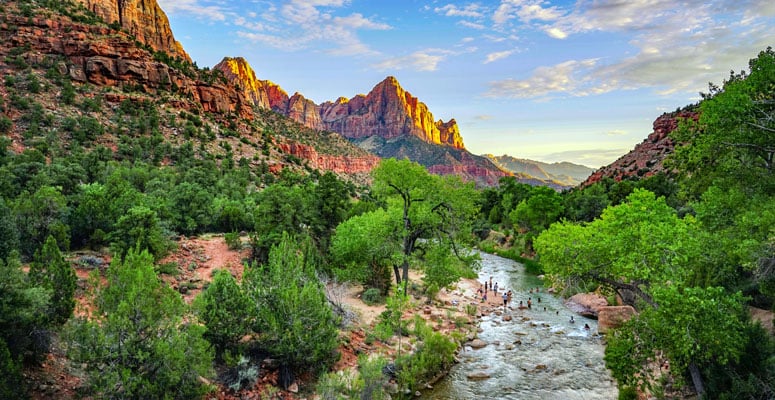
Best Months: May to September, with park-specific variation
From Yellowstone and Yosemite to Grand Teton, Zion, Bryce Canyon, and Glacier National Park, late spring through early autumn is generally the most reliable time to explore the USA’s iconic national parks. During these months, hiking trails, scenic drives, visitor centres, and outdoor activities are widely accessible, although conditions vary by park and elevation.
This season also allows travellers to combine multiple parks into a single itinerary, making it ideal for self-drive holidays across the American West. Longer daylight hours provide more flexibility for sightseeing, photography, and outdoor adventures without feeling rushed.
Suggested Itinerary: Las Vegas → Zion National Park → Bryce Canyon National Park, or San Francisco → Yosemite National Park → Sequoia National Park.
| National Park | Best Time & Planning Note |
|---|---|
| Yellowstone & Grand Teton | June to September. Better for park roads, wildlife viewing, and scenic drives, but always check current road status. |
| Glacier National Park | July to September for alpine road access. Lower elevation areas may open earlier, but the alpine portion of Going-to-the-Sun Road has no fixed opening date. |
| Rocky Mountain | June to September. Timed-entry rules may apply in peak season; Trail Ridge Road and high-elevation access depend on weather. |
| Yosemite | May to June, September to October. Waterfalls are stronger in late spring/early summer; autumn is better for lighter crowds. Check current entry and lodging rules. |
| Zion & Bryce Canyon | May to June, September to October. Better for avoiding peak desert heat. Shuttle schedules and crowd levels should be checked. |
| Grand Canyon (South Rim) | April to June, September to October. More comfortable than peak summer, especially for walking viewpoints and light hikes. |
| Alaska national parks / cruise-linked scenery | June to August. Better for long daylight hours, wildlife, cruises, and broader seasonal access. |
4. Best Time for East Coast City Breaks
Best Months: April to June and September to October
Spring and autumn are the most rewarding seasons for exploring the USA’s iconic East Coast cities, including New York, Washington, D.C., Boston, and Philadelphia.
Mild temperatures and longer daylight hours make it easier to enjoy walking tours, waterfront areas, museums, neighbourhoods, and outdoor landmarks without the humidity of midsummer or the disruptions that winter weather can bring.
These seasons also suit travellers planning a multi-city itinerary, as comfortable conditions allow you to move between destinations at a relaxed pace while making the most of each day.
Suggested Itinerary: New York City → Philadelphia → Washington, D.C. → Boston.
5. Best Time for West Coast Holidays & California Road Trips
Best Months: May to June and September to October
These shoulder-season months offer an excellent balance for exploring the USA’s West Coast. Whether you’re visiting San Francisco, driving the Pacific Coast Highway, relaxing in Santa Barbara, or ending your trip in Los Angeles or San Diego, the conditions are generally comfortable for both city sightseeing and scenic drives.
This period also makes it easier to combine coastal cities with nearby attractions such as Yosemite National Park, Napa Valley, or the Central Coast without the heavier holiday traffic seen during the peak summer months.
Suggested Itinerary: San Francisco → Monterey → Big Sur → Santa Barbara → Los Angeles, or San Francisco → Yosemite National Park → Los Angeles.
6. Best Time for Photographers & Scenic Landscapes
Best Months: September to October and April to May
The USA offers striking scenery throughout the year, although spring and autumn are particularly rewarding for photography. Autumn brings vibrant fall foliage across New England, the Blue Ridge Parkway, and parts of the Midwest, while spring showcases blooming gardens, desert wildflowers, and pleasant conditions for capturing national parks and cityscapes.
Whether you’re photographing mountain vistas, coastal highways, or iconic skylines, these seasons offer more opportunities to shoot outdoors without the extremes of summer heat or winter cold.
Top Photography Spots
- New England (Vermont, New Hampshire, and Maine) for autumn foliage.
- Blue Ridge Parkway for scenic mountain vistas.
- Yellowstone National Park for geothermal landscapes and wildlife.
- Yosemite National Park for its granite cliffs and waterfalls.
- Grand Canyon National Park for sunrise and sunset viewpoints.
- Big Sur along California’s Pacific Coast Highway.
- Monument Valley for dramatic desert scenery.
- New York City for skyline and street photography.
7. When to Avoid Crowds & Peak Pricing
Busiest Periods: Mid-June to August, Thanksgiving Week, and Late December
The USA experiences its highest visitor numbers during the summer school holidays and major holiday periods such as Thanksgiving, Christmas, and New Year’s. Popular cities, national parks, and theme parks become noticeably busier, while flights and accommodation often reach their highest prices.
Travellers looking for a quieter experience should consider the shoulder seasons of April to June and September to October. These months generally offer a better balance of comfortable weather, fewer crowds, and greater flexibility when planning multi-city holidays or road trips.
Peak Travel Periods
- Mid-June to August – Summer holidays and national park travel.
- Thanksgiving Week (late November) – One of the busiest domestic travel periods.
- Late December to early January – Christmas and New Year holidays.
- Spring Break (March to April) – Busy at beaches, theme parks, and some popular cities.
USA Travel Seasons
| Season | Best For | Planning Reality |
|---|---|---|
| Spring (March to May) | City breaks, national parks, gardens, road trips | Comfortable conditions across many regions. Some high-altitude parks may still have seasonal closures. |
| Summer (June to August) | Family holidays, national parks, Alaska, beaches | Peak travel season with higher prices, larger crowds, and bookings often required. |
| Autumn (September to November) | Fall foliage, road trips, city sightseeing, photography | One of the best all-round seasons, with pleasant weather and fewer crowds after summer. |
| Winter (December to February) | Christmas holidays, skiing, festive city breaks, Hawaii | Ideal for winter experiences, although snow and seasonal weather can affect travel in some regions. |
Suggested USA Route Circuits by Season
| Route Circuit | Best Months | Suggested Route | Best For | Planning Note |
|---|---|---|---|---|
| Classic East Coast | April–June, September–October | New York → Philadelphia → Washington, D.C. → Niagara Falls / Boston | First-time visitors, families, history/culture travellers | Keep at least 3 nights in New York and avoid rushing to too many cities. |
| California & West Coast | May–June, September–October | San Francisco → Monterey / Big Sur → Santa Barbara → Los Angeles / San Diego | Couples, families, scenic drives | Distances are larger than they look; build in coastal stopovers. |
| Southwest National Parks | April–June, September–October | Las Vegas → Grand Canyon → Zion → Bryce Canyon | Scenic landscapes, photography, and light adventure | Avoid peak summer heat if travellers are heat-sensitive. |
| Yellowstone / Grand Teton | June–September | Salt Lake City / Jackson → Grand Teton → Yellowstone | Wildlife, mountains, national parks | Check road status and lodging early; access can vary by snowfall. |
| Alaska Scenic / Cruise Route | June–August | Anchorage / Denali / Seward or Alaska cruise route | Cruises, wildlife, glaciers, and long daylight | Shorter season; book earlier for cruises and lodge availability. |
| Florida / Theme Parks | November–April, plus school holidays | Orlando → Kennedy Space Center → Miami / cruise extension | Families, theme parks, warm-weather breaks | Holiday dates need early booking; summer can be humid, and storm-risk planning is needed. |
| Coast-to-Coast USA | May–June, September–October | New York → Washington, D.C. → Las Vegas → Los Angeles / San Francisco | Travellers with 14+ days | Do not attempt this in less than two weeks unless expectations are very clear. |
| Hawaii Add-on | Year-round; spring/autumn for crowd balance | Oahu / Maui / Big Island / Kauai | Beach, nature, leisure | Choose the island and season by experience, not just weather. |
When the USA May Not Be Ideal
- You’re planning a cross-country holiday in less than 10 days, as long travel distances can leave limited time for sightseeing.
- You want to visit multiple national parks without checking their seasonal opening dates and reservation requirements.
- You’re travelling to the Southwest during July or August and are not comfortable with extreme daytime temperatures.
- Your trip falls during Thanksgiving, Christmas, or New Year’s, and you haven’t booked flights and accommodation well in advance.
- You’re expecting to cover both the East Coast and West Coast in a single short itinerary.
- You’re relying on spontaneous bookings for popular attractions, national parks, or theme parks during peak travel periods.
USA Travel Planning Tips
- Avoid changing hotels every night. Staying at least two nights in most destinations gives you more time to explore and reduces time spent checking in, checking out, and travelling.
- Don’t judge driving times by distance alone. Scenic routes such as the Pacific Coast Highway, Blue Ridge Parkway, and national park roads often take much longer than maps suggest because of viewpoints, traffic, and slower speed limits.
- Keep buffer days between regions. If your itinerary includes flights between the East Coast and West Coast or onward travel to Alaska or Hawaii, avoid scheduling major sightseeing immediately after arrival.
- Use gateway cities strategically. Cities such as Las Vegas, Salt Lake City, Denver, and San Francisco are often the best starting points for nearby national park circuits rather than destinations to simply fly in and out of.
- Balance cities with nature. After several days in large cities like New York or Chicago, adding a national park, scenic drive, or smaller town creates a more varied and enjoyable itinerary.
- Check seasonal access before planning scenic drives. Mountain passes, park roads, and some viewpoints may not be fully accessible year-round, even when nearby cities remain easy to visit.
- Plan around weekends in popular destinations. National parks, coastal towns, and theme parks are generally busiest on Saturdays and Sundays. Visiting midweek often provides a more relaxed experience.
- Leave room for regional experiences. Whether it’s a baseball game, a local food market, a jazz performance in New Orleans, or a sunset along the Pacific Coast, some of the most memorable moments aren’t the headline attractions.
Practical Planning Signals
Booking Window:
- 3–6 months: Summer holidays, national park road trips, Alaska, and multi-city itineraries.
- 6–9 months: Christmas, New Year, Thanksgiving, and peak autumn foliage trips.
- 2–4 months: Spring and autumn city breaks, depending on the destinations and flight availability.
Peak Pricing:
- Highest: Mid-June to August, Thanksgiving week, Christmas, New Year, major holiday weekends, popular national park dates, and peak theme-park periods.
- Moderate: March to May and September to October, though popular foliage and park routes can still be priced high.
- Lowest: January to early March, excluding ski resorts, Hawaii, warm-weather destinations, holiday weekends, and major events.
Crowd Levels:
- High: Summer holidays, Thanksgiving, Christmas, and New Year’s, Spring Break, major theme-park dates, and popular national park weekends.
- Moderate: Spring and autumn, depending on the region.
- Low: January to early March (except ski resorts and holiday weekends). Though winter resorts and warm-weather escapes can remain busy.
Ideal Trip Duration
- One major city: 3–5 days
- East or West Coast itinerary: 7–10 days
- National park road trip: 7–12 days
- Multi-city USA holiday: 10–14 days
- Coast-to-coast journey: 14–21 days
- Alaska scenic or cruise-linked holiday: 7–10 days
- Autumn foliage holiday: 7–10 days
- Theme park holiday: 5–7 days
Comfort Guidance for Travellers from India
A USA holiday from India usually involves long-haul flights, jet lag, wide time-zone changes, and large internal distances. Seasonal planning should therefore consider comfort, not just weather.
- Avoid scheduling major sightseeing on the first morning after arrival, especially if landing late in the evening.
- If travelling with children or senior family members, keep the first two nights in the arrival city instead of moving immediately to another state.
- For coast-to-coast journeys, keep at least 14 days; otherwise, choose either the East Coast or West Coast.
- Avoid changing hotels every night on road trips. Two-night stays make the holiday more comfortable and reduce packing fatigue.
- For national park trips, book stays inside or near the park early, especially in summer and autumn.
- If combining cities and national parks, place slower scenic days after high-energy city sightseeing.
- In winter, keep extra buffer time for flights through cities that may face snow or weather-related delays.
- For theme parks, avoid peak holiday weekends where possible and include rest time between long park days.
Suggested Trip Length by Travel Style
| Travel Style | Recommended Duration | Suggested Focus |
|---|---|---|
| First-time city holiday | 7–10 days | East Coast or California |
| Family holiday | 8–12 days | Florida, California, or East Coast |
| National park holiday | 8–14 days | Southwest, Yellowstone, or Yosemite region |
| Scenic road trip | 10–14 days | California Coast, Southwest, or Rocky Mountains |
| Luxury multi-region holiday | 14–18 days | East Coast + West Coast or Cities + National Parks |
| Hawaii or Alaska extension | 5–8 additional days | Island or wilderness experience |
Plan Your USA Holiday by Season
Choosing the right time to visit the USA depends on the destinations and experiences you want to include. Whether you’re planning an East Coast city break, a California road trip, a national park adventure, a family holiday, or a festive winter escape, matching your itinerary to the right season can make your journey more comfortable and rewarding.
Our travel specialists can help you plan a USA itinerary based on your preferred travel dates, regional weather patterns, national park access, and sightseeing priorities.
Share these details before planning your USA holiday:
- Preferred travel month
- Number of travel days
- Cities, states, or regions you wish to visit
- Interest in national parks, road trips, theme parks, beaches, or seasonal experiences
- Number of adults and children travelling
- Preferred hotel category
- Self-drive or guided holiday preference
- Arrival and departure city