
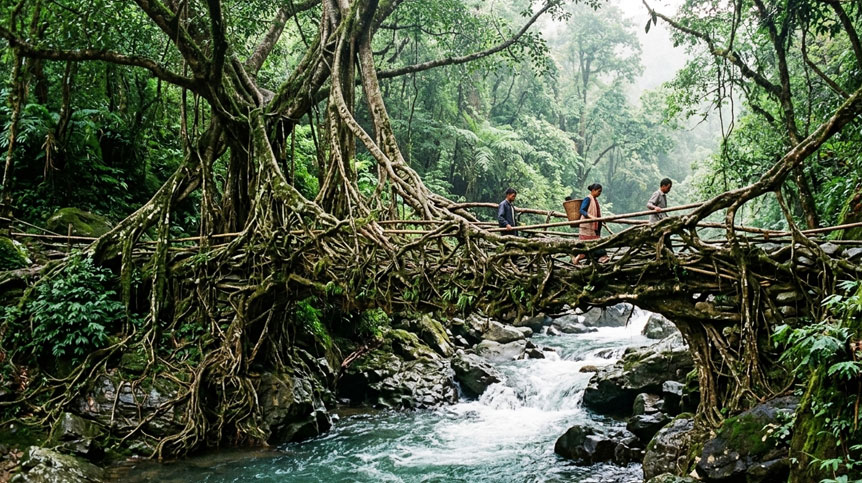

Living Root is best experienced as part of a Meghalaya journey, especially for travellers who want to understand how nature, local communities, and slow travel come together in the Khasi Hills. It is not a quick stop to tick off between waterfalls. The experience becomes meaningful when it is placed within a well-paced route through Shillong, Sohra, village trails, forested valleys, and the quieter corners of Meghalaya, where daily life still follows the rhythm of the land.
Why Living Root Matters in a Meghalaya Journey
Living Root adds a different layer to a Meghalaya itinerary. While the state is often remembered for rain-fed cliffs, caves, waterfalls, and cloud-covered roads, the living root bridges show how local knowledge has shaped the landscape over generations.
These natural formations are closely linked with the communities that maintain and use them. They are not built in the conventional sense, and they are not meant to be treated only as scenic backdrops. They reflect patience, ecological understanding, and a practical way of living with dense forests, streams, and heavy rainfall.
What Travellers Can Expect
A visit to Living Root usually involves walking through village surroundings, shaded paths, steps, slopes, and green forest sections. Depending on the specific bridge or root formation included in your itinerary, the walk may be short and manageable or longer and more physically demanding.
The setting is part of the experience. You may pass homes, small farms, betel nut trees, forest edges, streams, and viewpoints that reveal how closely village life is connected to the landscape. The root formations themselves are best appreciated slowly, with time to observe their structure, setting, and continued use.
Who Will Appreciate This Experience Most
Living Root will appeal most to travellers who enjoy nature-led experiences with cultural depth. It suits slow travellers who prefer walking, local interaction, and landscape-based discovery over tightly packed sightseeing days.
Culture-focused travellers will find it especially rewarding because the experience offers a window into Khasi community traditions and how local people have adapted to Meghalaya’s terrain. Couples, families, and small private groups can include it comfortably if they are prepared for walking and rural paths.
It is better suited to travellers who prefer meaningful experiences over quick photo stops. For elderly travellers, very young children, or anyone with mobility concerns, the exact route should be selected carefully. Some root bridge walks are easier than others, and access conditions can vary after rain.
Best Time and Ideal Duration
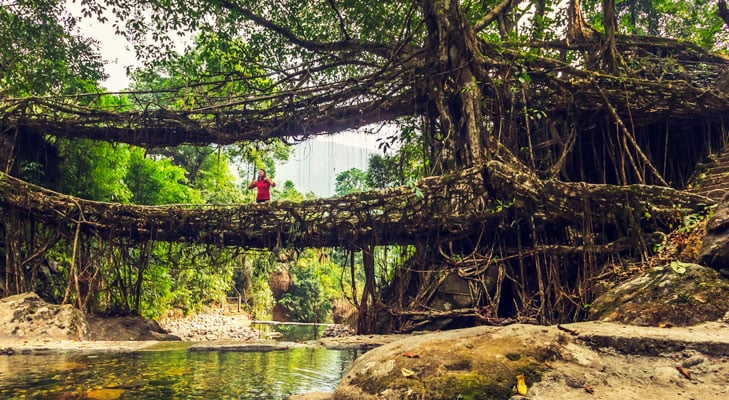
The most comfortable period to visit Living Root is generally from October to April, when the weather is clearer, walking conditions are usually easier, and the surrounding landscapes remain green without the full intensity of the monsoon.
The monsoon months bring Meghalaya to life in a dramatic way, but rain can make steps, slopes, and forest paths slippery. For travellers who prefer comfort, photography, and a calmer walking pace, the post-monsoon and winter months are usually more practical.
An early start is often better, especially during popular travel periods, as it allows a quieter visit and a more relaxed pace. A simple visit may take around 1–2 hours, while a deeper village walk or a route involving more demanding terrain may require half a day or more.
Guided or Self-Guided Visit
A self-guided visit may be possible in some areas, but a local guide often improves the experience. The guide helps with route clarity, walking pace, local etiquette, and community context.
More importantly, a good local guide helps travellers understand what they are seeing. Without that context, the visit can become only visual. With it, the experience feels connected to Meghalaya’s ecology, village life, and traditional knowledge.
Planning Tips Before You Visit
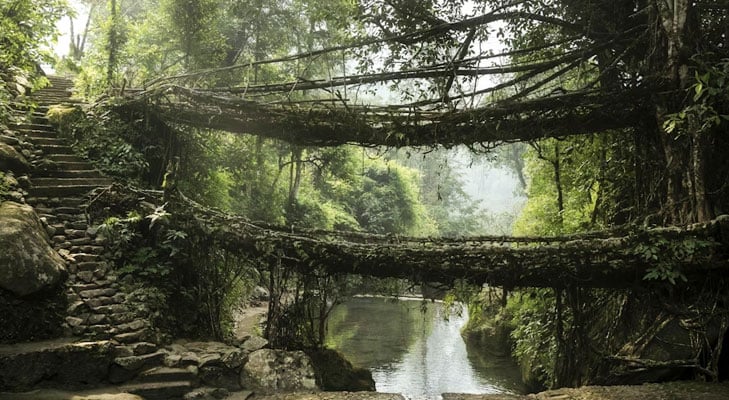
Wear comfortable walking shoes with good grip, as paths may include steps, slopes, damp stones, or uneven village trails.
Carry water, but avoid bringing unnecessary plastic and leave nothing behind.
Keep the visit unhurried. Allow time for pauses, especially if travelling with children or senior family members.
Avoid pulling, climbing on, or damaging the roots, and follow marked paths wherever available.
Photography is welcome in many places, but it should be respectful. Ask before photographing local residents, homes, or private spaces.
Access conditions, route rules, and local arrangements can change due to weather or community decisions, so it is sensible to check current conditions.
How to Include Living Root in Your Itinerary
For a well-paced journey, consider combining Living Root with 3–5 days in Meghalaya rather than treating it as a rushed day excursion. This allows time for scenic drives, weather flexibility, and a more comfortable rhythm.


