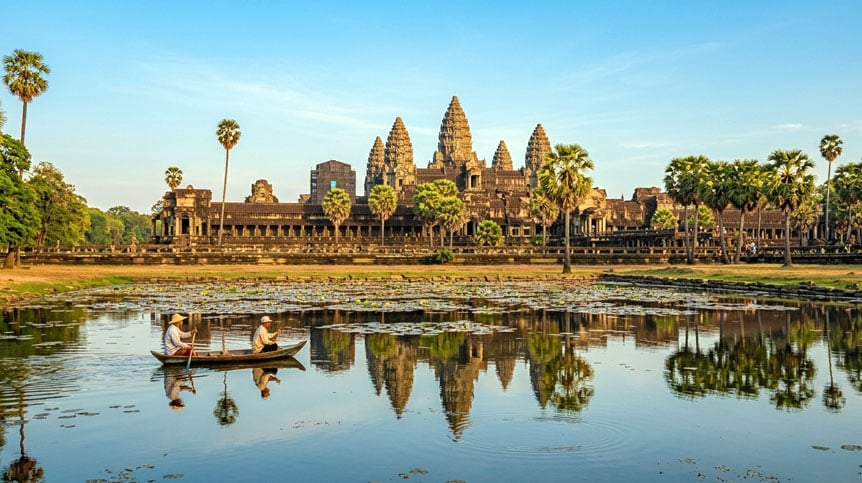
Reaching Cambodia from India requires connecting through major Southeast Asian aviation hubs, as there are no direct flights. Travellers transit via cities such as Bangkok, Kuala Lumpur, Singapore, or Ho Chi Minh City before arriving in Cambodia.
The country is primarily accessed through three main international gateways: Phnom Penh, Siem Reap, and Sihanoukville. Phnom Penh is commonly used for itineraries focused on the capital and central regions. At the same time, Siem Reap is the preferred entry point for travellers heading to Angkor Wat and the temple circuits.
Sihanoukville is generally chosen by those continuing towards Cambodia’s coastal and island destinations. Cambodia can also be accessed overland through neighbouring countries such as Thailand, Vietnam, and Laos, particularly when it forms part of a broader Southeast Asia travel route.
Best Ways to Reach Cambodia from India
| If You Want To | Best Route |
|---|---|
| Visit Angkor Wat first | Fly to Siem Reap via Bangkok, Singapore, Kuala Lumpur, or Ho Chi Minh City |
| Explore Cambodia’s capital and culture | Fly to Phnom Penh via Bangkok, Singapore, Kuala Lumpur, or Ho Chi Minh City |
| Combine Vietnam and Cambodia | Fly into Hanoi/Ho Chi Minh City and continue overland or by short regional flight |
| Combine Thailand and Cambodia | Enter via Bangkok and continue through Poipet border crossing |
| Visit Cambodia’s coast and islands | Fly to Phnom Penh or Sihanoukville and continue by road/ferry |
Which Arrival Route is Best for Your Cambodia Trip?
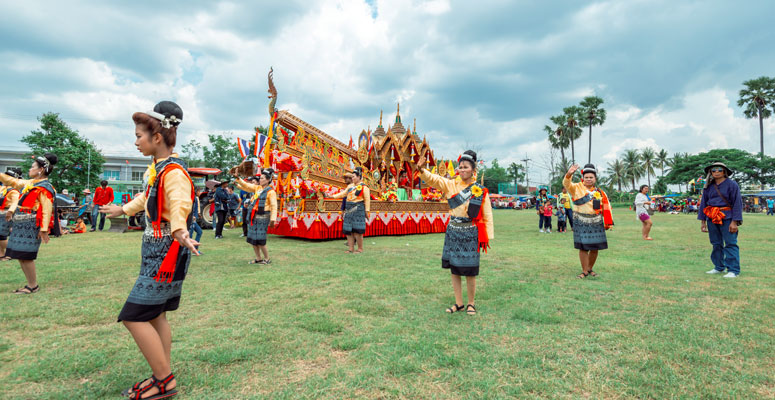
1. First-Time Cambodia Visitors
Fly directly into Siem Reap if Angkor Wat is the main reason for your trip.
2. Culture-Focused Travellers
Arrive in Phnom Penh, spend 2–3 days exploring the capital, then continue to Siem Reap.
3. Multi-Country Southeast Asia Travellers
Combine Cambodia with Thailand or Vietnam via regional flights or land border crossings.
4. Luxury and Comfort-Focused Travellers
Choose a single-ticket itinerary through Singapore, Bangkok, or Kuala Lumpur rather than combining separate flight bookings.
5. Cambodia Beach Travellers
Fly into Phnom Penh or Sihanoukville before continuing to Koh Rong or nearby island destinations.
How to Reach Cambodia by Air
Air travel is the most practical way to reach Cambodia from India due to the absence of direct flights. The journey involves one or more stopovers at major Southeast Asian aviation hubs, including Bangkok, Kuala Lumpur, Singapore, and Ho Chi Minh City, which serve as primary connection points for onward flights to Cambodia.
1. Major Transit Hubs for Connecting Flights in Cambodia
- Bangkok: The highest frequency of onwards connectivity to Cambodia, offering flexible routing options.
- Kuala Lumpur: Strong regional connectivity with both low-cost and full-service carriers.
- Singapore: Structured schedules with reliable international connections.
- Ho Chi Minh City: An efficient option for shorter regional hops into Phnom Penh.
2. Entry Airports in Cambodia
- Phnom Penh International Airport: The primary gateway to the capital and central Cambodia, with the most consistent international connectivity.
- Siem Reap International Airport: Main entry point for Angkor Wat and the temple circuit with frequent regional flights.
- Sihanoukville International Airport: Used for coastal and island access, with limited, seasonal connectivity.
Which Airport Should You Choose?
| Airport | Best For |
|---|---|
| Siem Reap Angkor International Airport | Angkor Wat and northern Cambodia itineraries |
| Phnom Penh International Airport | Capital-city-focused trips and broader Cambodia exploration |
| Sihanoukville International Airport | Coastal holidays and island extensions |
Route Planning Strategy
Route efficiency improves when the entry airport is selected first, and the transit hub is aligned accordingly. This reduces unnecessary layovers and ensures smoother onward connections within Cambodia.
Bangkok pairs well with Siem Reap due to frequent regional flights, while Singapore and Kuala Lumpur often support more structured connections into Phnom Penh, depending on schedule availability.
Practical Flight Planning Notes
- Flight schedules vary by season, affecting availability and connection timing.
- Some itineraries require separate bookings between the India–hub and the hub–Cambodia segments.
- Layover time should be planned carefully when changing airlines or terminals.
- Longer buffers are recommended during peak travel periods to avoid missed connections.
- Multi-carrier routes may require re-checking baggage at transit hubs.
How to Reach Cambodia by Land
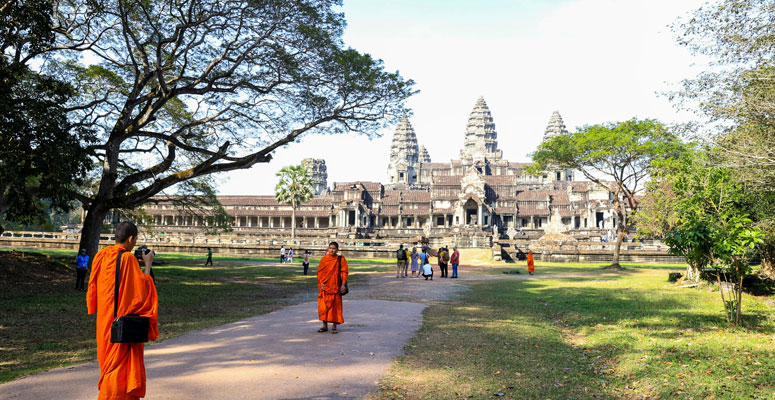
Cambodia can be accessed overland from neighbouring Southeast Asian countries, mainly Thailand, Vietnam, and Laos. These routes are typically used when Cambodia is part of a wider regional itinerary, as land entry is not a direct option from India.
1. Thailand to Cambodia
The Thailand–Cambodia border is the most commonly used land route, especially for travel between Bangkok and Siem Reap. The main crossing point is Poipet, which connects Thailand’s Aranyaprathet region with north-western Cambodia. This route is often chosen for travel into Siem Reap and the Angkor temple region due to relatively direct road connectivity.
2. Vietnam to Cambodia
Entry from Vietnam is primarily through the Bavet border crossing, which links Ho Chi Minh City with Phnom Penh. This route is particularly useful for access to Cambodia’s capital and central regions and is a key corridor for combined Vietnam–Cambodia travel plans.
3. Laos to Cambodia
Land access from Laos is more limited and is generally used for extended regional travel. The Stung Treng route is the main connection point, though the infrastructure and travel frequency are lower than those of crossings to Thailand and Vietnam.
Practical Land Travel Notes
- Land routes are best suited for multi-country travel in Southeast Asia rather than for a standalone entry into Cambodia.
- Travel times can vary depending on border processing and road conditions.
- Route selection is usually based on the onward itinerary rather than speed alone.
Important: Border regulations, visa policies, operating hours, and permitted entry points may change. Always verify current immigration requirements through official Cambodian government sources before planning an overland entry.
How to Reach Cambodia by Sea
Sea routes to Cambodia are limited and not a primary mode of international entry. Cambodia’s coastline along the Gulf of Thailand is mainly accessed through regional cruise services rather than regular passenger ferry networks.
Occasional cruise itineraries in Southeast Asia include Sihanoukville as a port of call, depending on seasonal schedules and cruise operators. These routes are not fixed transport services and vary throughout the year.
Sea travel is generally not suitable for time-sensitive trips to Cambodia, as schedules are irregular and availability is limited. Air and land routes remain the most reliable and commonly used options for entry.
Practical Sea Travel Notes
- Sea travel is not a primary entry method for Cambodia and is not suitable for time-sensitive travel planning.
- It is generally relevant only for cruise passengers or travellers combining multiple coastal destinations in a single Southeast Asia circuit.
- Overland and air routes remain the standard and reliable options for entry.
Route Planning Strategy for Reaching Cambodia
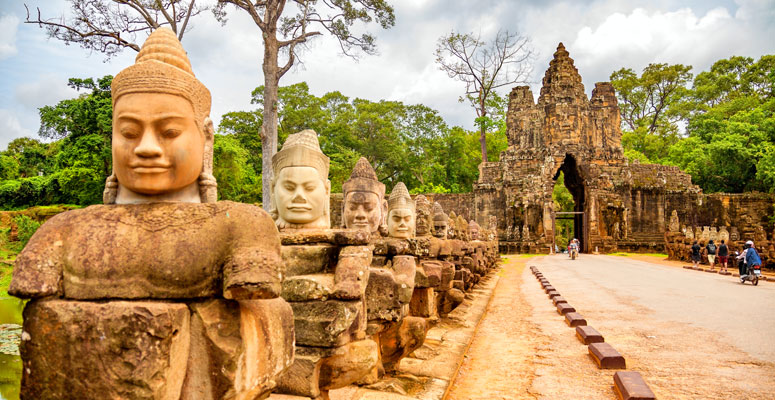
Route planning for Cambodia can be simplified by breaking it into clear hub-to-entry combinations based on travel flow and connection efficiency.
India → Bangkok → Siem Reap
This is one of the most practical routes due to the high frequency of flights between Bangkok and Siem Reap. It works well when the itinerary begins with the Angkor temple region and requires minimal internal travel on arrival.
India → Bangkok → Phnom Penh
This route offers strong flexibility for capital-first itineraries. Bangkok offers frequent onward connections, and Phnom Penh serves as a central base for travel across Cambodia.
India → Kuala Lumpur → Phnom Penh / Siem Reap
This option balances cost and connectivity, with multiple daily regional flights from Kuala Lumpur into both major Cambodian airports. It is suitable for flexible travel planning.
India → Singapore → Phnom Penh
This route is more structured and time-predictable, with well-managed transit connections. It is generally chosen for smoother airport transitions and reliable schedules.
India → Ho Chi Minh City → Phnom Penh
This is a shorter regional connection option that works well when prioritising faster access into Cambodia’s capital. It is one of the quickest routing paths within Southeast Asia.
Travel Planner’s Insight
For most first-time visitors, the most efficient Cambodia itinerary is:
Arrive in Siem Reap → Explore Angkor Wat → Continue to Phnom Penh → Depart from Phnom Penh
This route reduces backtracking, minimises internal travel time, and allows travellers to experience Cambodia’s two most important destinations in a logical sequence.
Visa and Entry Requirements
Most international travellers should review the current Cambodian visa requirements before departure.
Cambodia periodically updates e-visa and e-arrival procedures. Entry rules may vary depending on nationality, arrival airport, and land-border crossing used.
Always consult official Cambodian immigration sources before finalising travel plans.
Common Transit Mistakes When Flying to Cambodia
- Tight layovers at transit hubs such as Bangkok, Kuala Lumpur, Singapore, or Ho Chi Minh City can lead to missed connections on onward flights to Phnom Penh, Siem Reap, or Sihanoukville.
- Booking separate tickets for the India–Southeast Asia hub and hub–Cambodia sectors increases risk, as delays on the first leg are not covered for Cambodia-bound connections.
- Baggage may need to be rechecked at transit airports, depending on the airline combination, which can reduce connection time for flights into Cambodia’s main airports.
- Underestimating transit time at busy hubs can cause issues when connecting to shorter regional flights to Cambodia, especially on Siem Reap and Phnom Penh routes.
- Misreading seasonal schedule changes can limit onward options to Cambodia during peak-demand periods, even though core routes remain operational year-round.
Continue Planning Your Cambodia Journey
You may also find these guides useful:
- Best Time to Visit Cambodia
- Places to Visit in Cambodia
- Cambodia Travel Guide
- Angkor Wat Travel Guide
- Cambodia Tour Packages
- Vietnam and Cambodia Tour Packages
- Thailand and Cambodia Holiday Packages