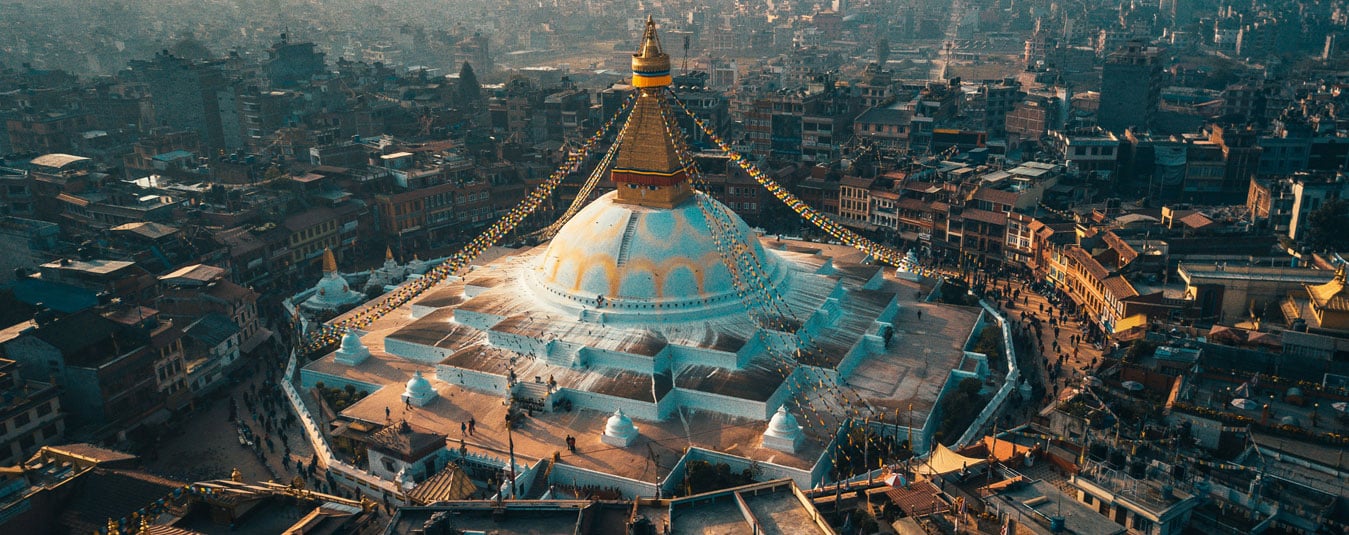
Reaching Nepal is best planned around Kathmandu as the primary entry point, with Tribhuvan International Airport serving as the main gateway. The choice usually depends on where you are starting from and whether you value the fastest air access, smoother regional connections, or a more flexible multi-stop journey that can include nearby border crossings from India.
For long-distance travellers, flying into Kathmandu is typically the most efficient and straightforward option, offering direct access to the capital and easy onward travel to Pokhara, Chitwan, and other key regions. For travellers from northern and eastern India, road entry points into Nepal can be practical, especially when combining Lumbini, Janakpur, or the Terai belt within a broader cross-border itinerary. Internal travel then connects major destinations through a mix of short flights and scenic road routes, depending on terrain and season.
Best Way to Reach Nepal
| Traveller Type | Recommended Access | Why it works | Planning caution |
|---|---|---|---|
| North / East India travellers | Road entry via Sunauli, Raxaul, Panitanki, Kakarbhitta | Closest and most practical cross-border access into Nepal | Border queues, ID checks, and crossing hours can vary |
| West / Central India travellers | Fly to Kathmandu (Tribhuvan International Airport) via Delhi or other metro hubs | Fastest option for long-distance travel within India–Nepal routes | Limited direct flights; check layover timing |
| South India travellers | Fly via Delhi, Kolkata, or Hyderabad to Kathmandu | Most efficient routing for long-haul domestic connections | Usually involves at least one stop; plan connections carefully |
| Families with children | Flight to Kathmandu + pre-booked hotel transfer | Smooth arrival with minimal fatigue after travel | Choose buffer-friendly layovers if there are flight connections |
| Senior travellers | Flight to Kathmandu or road entry from nearby border towns | Easier access with short onward transfers in Kathmandu Valley | Prefer daytime arrivals and confirmed pickup arrangements |
| Pilgrimage Travellers | Road access to Lumbini via the Sunauli border | Direct entry to the major spiritual circuit in Nepal | Expect congestion during peak pilgrimage seasons |
| Multi-destination travellers | Fly into Kathmandu and return via road border or the same airport | Flexible routing for Kathmandu–Pokhara–Chitwan circuits | Road travel times vary with terrain and weather conditions |
By Air
Airport: Tribhuvan International Airport (KTM)
Tribhuvan International Airport is one of the main international gateways to Nepal, located in Kathmandu Valley. It sits close to the city core, so most travellers can reach key areas such as Thamel, Durbar Marg, Lazimpat, Boudha, Patan, and nearby hotel zones within a short road transfer.
Comfort note: Daytime arrivals are generally easier for hotel transfers and local movement. Late arrivals are better managed with pre-arranged pickup, especially for families, senior travellers, and those continuing to other cities on the same day.
Practical insight: Kathmandu airport is centrally positioned for Valley-based sightseeing, but onward travel to Pokhara, Chitwan, Lumbini, and hill regions depends heavily on road conditions and travel time variability.
By Rail
Unlike Nepal’s internal city rail networks, Nepal does not have a passenger railway system for international travellers. Rail-based access is therefore used only up to border-adjacent Indian railway stations, followed by a short road crossing into Nepal.
Rail works well for travellers from North and East India who prefer to reach the border region first and then continue into Nepal by road. It is especially practical for flexible itineraries where exact arrival timing is not critical.
Rail to Border Entry Points
| Station Zone | Best For | Planning Note |
|---|---|---|
| Gorakhpur (UP) | Sunauli border → Lumbini / Kathmandu route | Most commonly used rail gateway for Nepal entry |
| Raxaul (Bihar) | Birgunj border → Kathmandu / central Nepal | Closest rail access to the central Nepal crossing |
| Jogbani (Bihar) | Kakarbhitta border → eastern Nepal | Best for eastern Nepal entry points |
| New Jalpaiguri (West Bengal) | Panitanki border → eastern hill regions | Ideal for the Darjeeling – eastern Nepal circuit |
By Road
The road is the most widely used and flexible way to enter Nepal from India, especially for travellers from Uttar Pradesh, Bihar, West Bengal, and Uttarakhand. Entry is through designated land borders, followed by onward travel to major destinations in Nepal, such as Kathmandu, Pokhara, Lumbini, and Chitwan.
Travellers cross the border with a valid ID (passport or voter ID for Indian citizens), complete basic immigration checks, and continue into Nepal via taxi, shared jeep, or private vehicle.
Nepal Road Entry Points
| Border Point | Best Access To | Planning Note |
|---|---|---|
| Sunauli (UP) | Lumbini, Kathmandu, western Nepal | Most used and busiest crossing |
| Raxaul (Bihar) | Birgunj, Kathmandu, central Nepal | Strong road link to the capital |
| Panitanki (WB) | Kakarbhitta, eastern Nepal | Useful for eastern hill routes |
| Banbasa (Uttarakhand) | Mahendranagar, western Nepal | Quieter entry with regional access |
| Jogbani (Bihar) | Biratnagar, eastern Nepal | Suitable for eastern Nepal circuits |
| Rupaidiha (UP) | Nepalgunj, western Nepal | Key access for western Nepal routes and flight connections from Nepalgunj |
Getting Around Nepal
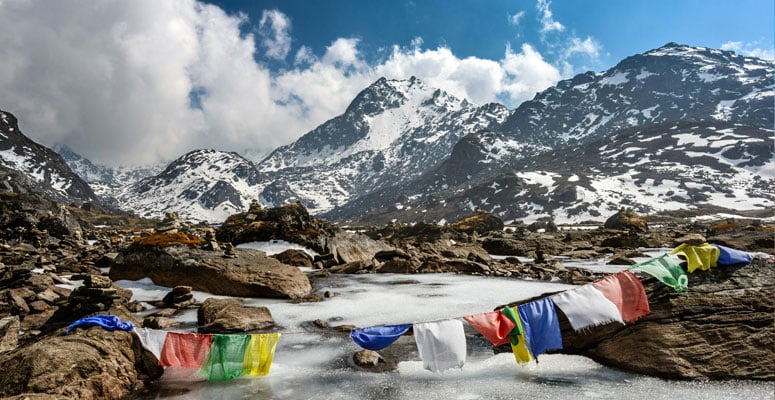
Nepal’s transport network combines domestic flights, tourist buses, private vehicles, local buses, and short taxi rides. The best option depends on distance, terrain, and the time available. Mountainous regions often make road journeys longer than they appear on a map, while flights significantly reduce travel time between major destinations.
Domestic Flights
Domestic flights are the fastest way to travel between Kathmandu and destinations such as Pokhara, Bharatpur, Nepalgunj, Bhairahawa (Lumbini), and Lukla.
Suitable for:
- Short itineraries
- Everest and Annapurna travellers
- Senior travellers
- Families with children
Domestic Airports
These are commonly preferred for onward travel:
- Pokhara International Airport (PKR) – flights connecting Kathmandu with Pokhara and the Annapurna region.
- Gautam Buddha International Airport (BWA), Bhairahawa – Access to Lumbini and western Nepal from Kathmandu.
- Bharatpur Airport (BHR) – Short flights between Kathmandu and Chitwan National Park.
- Tenzing-Hillary Airport (LUA), Lukla – Primary air link from Kathmandu for Everest Base Camp and Khumbu treks.
- Biratnagar / Nepalgunj Airports – connections to eastern Nepal and nearby hill districts via Kathmandu.
- Nepalgunj Airport (KEP) – Gateway to western Nepal with onward flights to remote Himalayan destinations such as Dolpa, Jumla, Rara (Talcha), and Simikot.
Transfer guidance: Most domestic flights depart from Kathmandu’s domestic terminal, located beside the international terminal. Allow sufficient time if connecting from an international arrival.
Operational Passenger Railway
Route: Janakpur → Kurtha
Nepal has a single operational rail route that is useful only for entering the Janakpur region. It does not connect to Nepal’s main tourism circuit.
Rail works best for:
- Janakpur pilgrims
- Cross-border travellers from Bihar
- Short regional journeys near the India–Nepal border
Private Cars & Jeeps
Hiring a private vehicle offers the greatest flexibility for travelling between cities, hill stations, and national parks.
Suitable for:
- Families
- Small groups
- Couples
- Multi-stop itineraries
Taxis & Ride-hailing
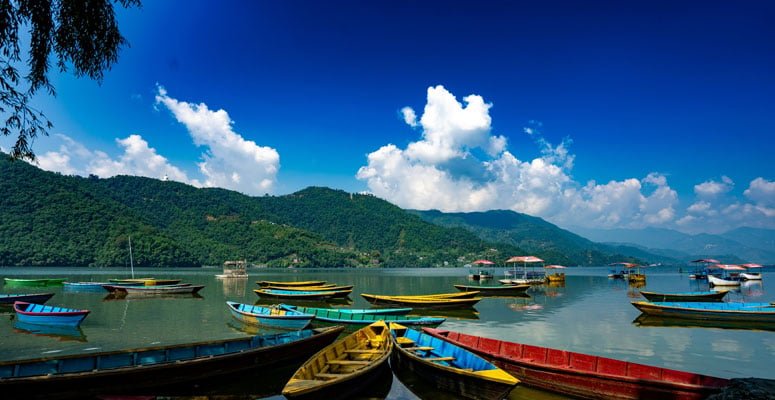
Taxis are the primary mode of transportation in Kathmandu and Pokhara. Ride-hailing services are available in parts of Kathmandu Valley.
Suitable for:
- Airport transfers
- City sightseeing
- Short-distance travel
Travel insight: Distances in Nepal can be deceptive. A 150-200 km route may still take several hours. Avoid scheduling tight same-day flight or activity connections after long road journeys.
Common Mistakes Travellers Make
- Assuming mountain travel times are short because distances appear small on maps.
- Planning tight schedules without allowing buffer time for weather-related flight or road delays.
- Carrying only Indian currency without checking where INR denominations are accepted.
- Underestimating altitude and temperature changes while visiting hill stations or trekking regions.
- Booking the cheapest road transport without considering long travel durations on mountain highways.
- Assuming digital payments are accepted everywhere, especially outside major cities.
- Missing the last domestic flight or tourist bus by scheduling international arrivals too close to onward departures.
Plan Your Journey From India to Nepal
Build your Nepal itinerary around your preferred entry point from India and the destinations you want to visit, arriving in Kathmandu, entering through a land border, or combining heritage cities, wildlife reserves, mountain viewpoints, and pilgrimage centres in a single journey.
IndianHoliday’s Nepal travel specialists can assist with selecting the most suitable arrival route, coordinating domestic flights and road transfers, choosing well-located stays, and creating a comfortable travel flow across multiple destinations.