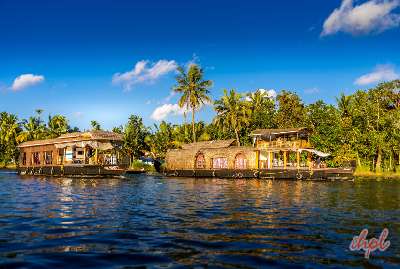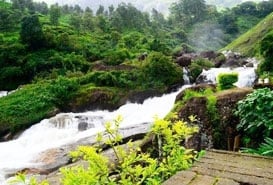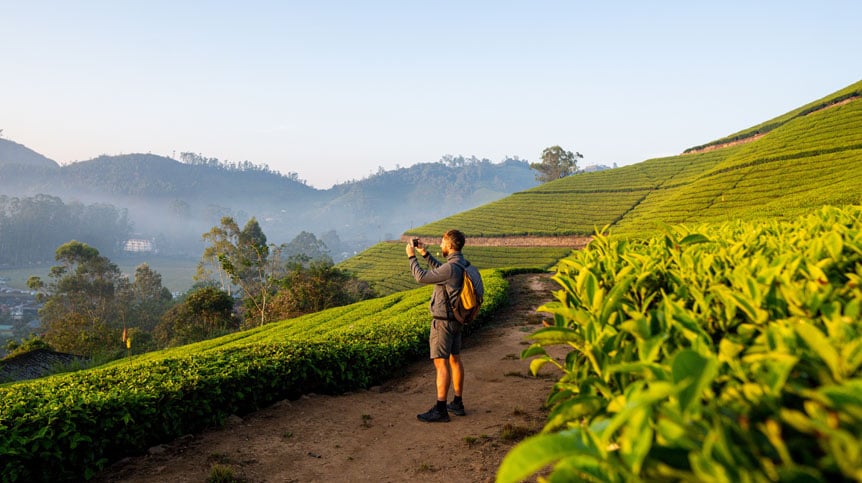

Munnar is best known for its tea estates, high-altitude viewpoints, waterfalls and the wildlife landscapes of Eravikulam National Park. Its main attractions include tea experiences, dams and lakes, waterfalls, viewpoints, protected nature areas and heritage stops around Marayoor. Popular places include the Tea Museum, Eravikulam National Park, Mattupetty Dam, Kundala Lake, Top Station, Attukad Waterfalls and Kolukkumalai. Most travellers can cover the main sightseeing routes in two full days. A third day allows longer add-ons such as Kolukkumalai, Marayoor or additional nature routes, depending on weather and road conditions.
Quick Planning Snapshot for Munnar Days
| Planning Point | Recommended Guidance |
|---|---|
| Ideal stay | 2 full days for Tea Museum / tea views, Mattupetty–Kundala–Top Station and one waterfall or Eravikulam block |
| One-day route | Tea Museum or tea viewpoint + Attukad / Pothamedu + town-side sightseeing |
| Two-day route | Day 1: Tea / waterfall / Pothamedu. Day 2: Mattupetty + Kundala + Top Station or Eravikulam |
| Three-day route | Add Kolukkumalai sunrise, Marayoor / Muniyara Dolmens, or a longer waterfall/nature add-on |
| Best for families | Mattupetty, Kundala, Tea Museum, Pothamedu, easier waterfall stops |
| Best for couples | Tea estates, Top Station, Pothamedu, Kolukkumalai sunrise if road comfort allows |
| Best for nature lovers | Eravikulam, Lakkom, Top Station, Marayoor side, selected waterfall routes |
| Needs early start | Kolukkumalai, Top Station, Eravikulam, sunrise viewpoints |
| Needs caution | Waterfalls during/after heavy rain, Kolukkumalai jeep road, Anamudi/trekking permissions |
| Main planning rule | Do not combine Kolukkumalai, Eravikulam, Top Station and multiple waterfalls in one rushed day |
Tea Estate Museum and Plantation Views
Tea landscapes form Munnar’s primary sightseeing identity.
1. Tata Tea Museum (Kannan Devan Tea Production and Tasting)
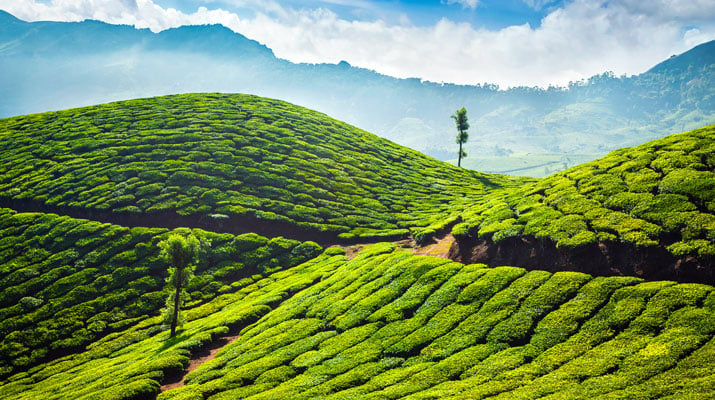
Tata Tea Museum, also known as KDHP Tea Museum, is useful for travellers who want to understand Munnar’s tea history and the basic journey from leaf to cup. It works best as a short, low-effort stop before or after a nearby viewpoint or waterfall.
Best for: First-time visitors, families, tea-curious travellers, light indoor sightseeing.
Time needed: Around 1 hour.
Best timing: Morning or early afternoon, subject to current opening hours.
Pairs well with: Pothamedu View Point, Attukad Waterfalls, Munnar town.
Skip if: You are not interested in tea history or have only one viewpoint-focused day.
2. Kolukkumalai Tea Estate (World’s Highest Organic Tea Plantation)
Kolukkumalai is a high-altitude tea estate route known for sunrise views, misty slopes and a rough jeep approach from the Munnar side. It suits travellers who want a more adventurous tea landscape rather than a simple museum or roadside viewpoint.
Who it suits: Adventure seekers, sunrise lovers, couples, photographers, and tea enthusiasts.
Time needed: 3 hours, including a two-hour jeep ride each way.
Best timing: Early morning sunrise departure, subject to local jeep timings and weather.
Guide value: High; jeep drivers act as guides. Self-drive not permitted.
Pairing logic: Tea Museum later in the day, rest block, light town sightseeing.
Skip if: You have motion sickness, back issues, low road tolerance, young children, senior travellers with mobility issues, or poor weather.
3. Eravikulam National Park (Nilgiri Tahr Habitat and Neelakurinji Bloom)
Eravikulam National Park is one of Munnar’s key nature attractions, known for Rajamalai grasslands, Nilgiri Tahr habitat and views toward Anamudi. It should be planned as a protected-area visit, not a casual roadside stop.
It is home to the endangered Nilgiri Tahr, with Rajamalai viewpoint, Anamudi Peak views, and the rare Neelakurinji bloom (next bloom 2030).
Who it suits: Wildlife enthusiasts, trekkers, nature lovers, families with older children, photography enthusiasts
Time needed: 2-3 hours, depending on entry process, shuttle/park movement and crowd levels.
Best timing: Morning, subject to current official entry hours.
Guide value: Moderate; rangers explain ecology.
Pairing logic: Mattupetty route, Lakkom Falls, or a light Munnar town afternoon.
Skip if: The park is closed for the annual calving-season closure, tickets are unavailable, or the group has very limited time.
Dams, Lakes and Family-Friendly Stops
1. Mattupetty Dam (Boating and Grazing Lands)
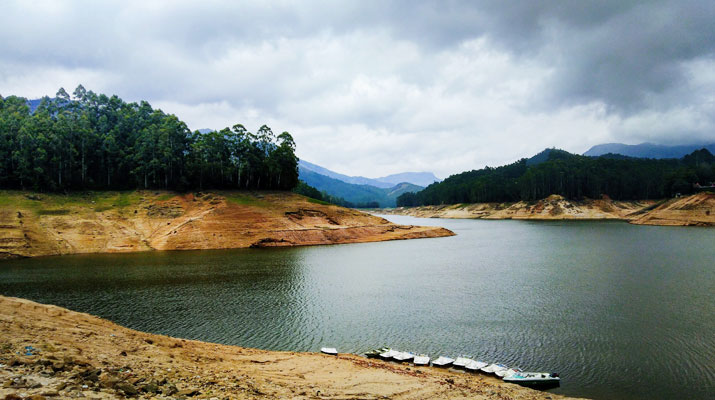
Why it anchors: Built in the 1950s, 13 km from Munnar, this concrete gravity dam offers boating (speed, paddle, row), grazing lands of the India Cattle Farm, and three lakes nearby. Mist often hangs low around the dam.
Who it suits: Families, boaters, couples, photographers.
Time needed: 1-1.5 hours, more if boating.
Best timing: Morning or late afternoon
Guide value: Low.
Pairing logic: Dam → Kundala Lake (8 km) → Top Station (18 km). Skip if the monsoon restricts boating.
Skip if: Weather is poor, boating is suspended, or the route is too crowded.
2. Kundala Lake (Paddle Boating and Dam Views)
Why it stands out: An artificial lake 8 km from Mattupetty, surrounded by tea estates. Quieter than Mattupetty, with paddle boating and fishing.
Who it suits: Couples and quiet-seeking travellers, families, slow sightseeing and photographers.
Time needed: 45 minutes to 1 hour.
Best timing: Morning to noon
Pairing logic: Mattupetty Dam and Top Station.
Skip if: You are short on time or visibility is poor.
Waterfalls Around Munnar and Approach Routes
Munnar waterfall stops should be planned by route. Some work as quick stops near town or on the Kochi–Munnar road, while others need more time, better road checks or trekking comfort. During and after heavy rain, waterfall paths can become slippery and unsafe.
1. Attukad Waterfalls (Seven-Tier Cascade near Munnar Town)
Attukad Waterfalls lies on the Munnar–Pallivasal side and are known for waterfall views, greenery and trekking-route potential. It works best as a short nature stop close to the main Munnar sightseeing flow. Kerala Tourism locates Attukad between Munnar and Pallivasal and highlights the area’s trekking trails and scenic setting.
Who it suits: First-timers and quick-stop visitors, photographers.
Time needed: 45 – 60 minutes.
Best timing: 9–11 AM.
Guide value: Low.
Pairing logic: Tea Museum, Pothamedu and Pallivasal side.. Skip during the monsoon due to slippery rocks.
Skip if: Heavy rain, slippery paths, poor road conditions, or travellers have mobility concerns.
2. Thommankuthu Falls (Seven-Step Cascade 15 km Away)
Thommankuthu Falls is better treated as a longer Idukki-side waterfall and trekking add-on, not a quick Munnar town stop. It suits travellers who have extra time and specifically want a waterfall-and-nature route beyond the standard Munnar sightseeing loop.
Who it suits: Trekking fans, repeat visitors, and photographers.
Time needed: Half day or longer, depending on route and access
Best timing: Morning to noon
Guide value: Low.
Pairing logic: Idukki / Thodupuzha-side routing, not a rushed Munnar half-day.
Skip if: You have only one or two days in Munnar, are travelling in heavy rain, or want low-effort sightseeing.
3. Cheeyappara Falls (Three-Tier Fall on Kochi–Munnar Road)
Cheeyappara Falls is best treated as an approach-route stop on the Kochi–Munnar road, not as a core Munnar town attraction. It works well when travellers are driving from Kochi toward Munnar and want a short scenic break.
Who it suits: Road travellers, short photo stops.
Time needed: 20 – 30 minutes.
Timing: Morning to mid-morning
Pairs well with: Kochi–Munnar transfer day.
Skip if: Traffic, rain, crowding or road conditions make stopping uncomfortable.
4. Lakkom Falls (Remote Forest Fall 25 km Away)
Lakkom Falls should be framed as a nature add-on near the Eravikulam / Marayoor side rather than a casual town stop.
Who it suits: Trekkers and solitude seekers, photographers, Marayoor / Eravikulam route extensions.
Time needed: 1 – 2 hours, depending on access.
Pairs well with: Eravikulam National Park, Marayoor route.
Skip if: Heavy rain, slippery paths, limited time, or no interest in a longer nature add-on.
Viewpoint, Peaks High Altitude Landscapes
1. Top Station (Munnar–Madurai Valley Panorama)
Top Station is one of the strongest viewpoint stops on the Mattupetty–Kundala route. It works best early in the day, but the experience depends heavily on mist, visibility and weather.
Who it suits: Photography, couples and sunrise lovers.
Time needed: Around 1 hour at the viewpoint, plus drive time.
Best timing: 5:30–7 AM. Open 6 AM–6 PM.
Guide value: Low.
Pairing logic: Mattupetty Dam and Kundala Lake.
Skip if: Fog blocks views, the group dislikes early starts, or the route is too crowded.
2. Pothamedu View Point (Sunrise Over Tea Valleys)
Pothamedu is a practical viewpoint near Munnar town and works well for travellers who want tea valley views without a long drive.
Who it suits: Short stays, photographers, couples, light sightseeing
Time needed: Around 1 hour.
Timing: Early morning
Pairing logic: Tea Museum, Attukad / Pallivasal side.
Skip if: Visibility is poor or the traveller already has Top Station / Kolukkumalai planned.
3. Anamudi Peak (Kerala’s Highest at 2,695 m)
Anamudi is the highest peak in South India and is best understood as part of Munnar’s high-altitude landscape, especially from the Eravikulam / Rajamalai side. Travellers should not assume casual trekking access.
Who it suits: Nature context, peak-view interest, landscape photography.
Time needed: Usually seen as part of Eravikulam / surrounding viewpoint routes unless a permitted trek is officially arranged.
Timing: Morning onward
Guide value: Essential.
Pairs well with: Eravikulam National Park.
Skip if: You expect an easy viewpoint or a guaranteed trek.
4. Muniyara Dolmens (Ancient Stone Burial Monuments in Marayoor)
Muniyara Dolmens near Marayoor add a heritage layer to a Munnar trip, especially for travellers interested in megalithic remains, prehistoric burial chambers, rock paintings and the Marayoor sandalwood landscape.
Who it suits: History enthusiasts, repeat visitors, Marayoor route travellers.
Time needed: Around 1 hour plus drive time
Timing: morning to mid-morning
Pairs well with: Marayoor, sandalwood forest route, Lakkom / Eravikulam side.
Skip if: You have only a short Munnar stay, that’s focused on tea estates and viewpoints.
Best Munnar Attractions by Route and Time
| Route / Cluster | Time Needed | Best For | Pairing Logic | Skip / Caution |
|---|---|---|---|---|
| Tea Museum + Pothamedu + Attukad | Half day | First-timers, short stays | Tea history + tea valley views + nearby waterfall stop | Avoid waterfall paths after heavy rain |
| Mattupetty + Kundala + Top Station | Half to full day | Families, couples, viewpoint travellers | Dam/lake stops build naturally toward Top Station | Views depend on fog and weather |
| Eravikulam + Lakkom / Marayoor side | Half to full day | Nature lovers, repeat visitors | Protected landscape + high-altitude / heritage add-ons | Check park closure, tickets and weather |
| Kolukkumalai Sunrise + Rest / Tea Museum | Half day + light afternoon | Couples, photographers, adventure travellers | Early rough-road sunrise followed by low-effort sightseeing | Not ideal for seniors, young children or poor road/weather days |
| Kochi–Munnar Approach Falls | Transfer-day stop | Road travellers | Cheeyappara / Valara style stops fit arrival route | Do not force into Munnar town sightseeing day |
| Marayoor / Muniyara Heritage Add-on | Full-day extension | History and landscape travellers | Marayoor + dolmens + sandalwood landscape context | Skip in short Munnar stays |
Suggested Munnar Sightseeing Circuits
1-Day Munnar Short-Stay Circuit
Route: Tea Museum or Pothamedu → Attukad / Pallivasal side → Munnar town / easy viewpoint
Best for: One-night stopovers, families, travellers arriving early.
2-Day Classic Munnar Circuit
Route:
Day 1: Tea Museum → Pothamedu → Attukad / nearby waterfall stop
Day 2: Mattupetty Dam → Kundala Lake → Top Station
Best for: First-time travellers, families, couples.
2-Day Nature-Focused Circuit
Route:
Day 1: Eravikulam National Park → Lakkom / Marayoor side if time allows
Day 2: Mattupetty → Kundala → Top Station
Best for: Nature lovers, photographers, travellers who prefer landscapes over town stops.
3-Day Slow Munnar Circuit
Route:
Day 1: Tea Museum → Pothamedu → Attukad
Day 2: Mattupetty → Kundala → Top Station
Day 3: Kolukkumalai sunrise or Marayoor / Muniyara Dolmens or Eravikulam National Park
Best for: Couples, premium slow travellers, families wanting lower fatigue.
Practical Comfort Guidance for Munnar Sightseeing
- Keep Munnar sightseeing route-based; do not jump between opposite sides of town in one day.
- Use a private cab for Mattupetty–Kundala–Top Station and Marayoor-side routes.
- Autos may work for short town-side hops, but longer routes need a cab or jeep.
- Carry a light sweater even outside winter because evenings and viewpoints can feel cool.
- During the monsoon, avoid stepping onto wet rocks near waterfalls.
- Check road condition before Kolukkumalai, Lakkom, Top Station and Marayoor routes.
- Keep early starts for Top Station, Kolukkumalai and Eravikulam.
- Families with young children should prefer Mattupetty, Kundala, Tea Museum and easy viewpoints over long, rough road routes.
- Senior travellers should avoid overpacked days with steep steps, rough jeep rides and slippery waterfall approaches.
- Carry water, snacks and basic medication because facilities can be limited at viewpoints and remote stops.
- Do not plan a heavy sightseeing day immediately after a long Kochi–Munnar drive.
- Verify park tickets and closure dates before assigning Eravikulam as a fixed itinerary anchor.
Best Time and Weather Notes for Munnar Attractions
| Season | Better For | Planning Reality |
|---|---|---|
| September to February | Tea estates, viewpoints, family sightseeing, waterfalls after the monsoon | Good broad window, but mist and fog can still affect views |
| March to May | Tea landscapes, dams/lakes, early morning viewpoints | Warmer days; keep outdoor sightseeing to morning/late afternoon |
| June to August | Monsoon greenery, waterfalls, and misty landscapes | Roads can be slippery; waterfall access and visibility need caution |
| Neelakurinji bloom years | Selected high-altitude landscapes | Bloom timing/location must be verified before publishing or selling |
Common Mistakes to Avoid
- Trying to cover Tea Museum, Eravikulam, Mattupetty, Top Station, Kolukkumalai and multiple waterfalls in one day.
- Treating Kolukkumalai as a normal cab-access viewpoint.
- Mentioning Eravikulam timings, fees or closures without checking the official site.
- Promising Nilgiri Tahr sightings at Eravikulam.
- Saying Tea Museum entry is free unless verified.
- Adding Thommankuthu as a quick Munnar half-day waterfall.
- Walking close to waterfalls during or after heavy rain.
- Overloading families or seniors with steep steps, rough jeep roads and early departures.
- Publishing exact fares for autos, jeeps, boats or guides without current verification.
- Promising clear Top Station views during foggy or rainy conditions.
- Treating Anamudi as an easy trek or guaranteed-access attraction.
- Skipping internal links to Munnar/Kerala package pages.
Plan Your Munnar Sightseeing Route
Planning Munnar? The right sightseeing route depends on your travel month, number of days, traveller type, road comfort, interest in tea estates, waterfalls, viewpoints, Eravikulam, Kolukkumalai or Marayoor, and whether you are combining Munnar with Thekkady, Alleppey, Kochi or Kumarakom.
IndianHoliday can help you choose a realistic Munnar route that balances tea landscapes, viewpoints, waterfalls, family comfort, road time and Kerala package flow without making the trip too rushed.
Share these details before finalising your plan:
- Travel month
- Number of days in Munnar
- Traveller type: family, couple, honeymoon, senior travellers or group
- Preferred experience: tea estates, waterfalls, viewpoints, Eravikulam, Kolukkumalai, Marayoor or soft trekking
- Comfort with early starts and rough roads
- Whether you want Munnar with Thekkady, Alleppey, Kochi, Kumarakom or Kovalam
- Need for private cab, premium hotel, honeymoon pacing or family-friendly routing
- Any mobility, motion sickness or senior-travel concerns