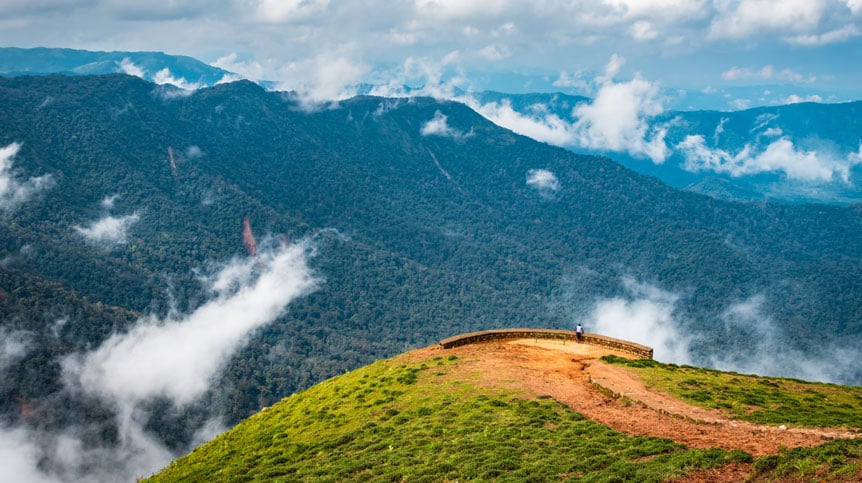

Chikmagalur’s attractions are spread across mountain circuits, coffee estates, waterfalls, and forest areas rather than being concentrated in a single central zone. This affects how the destination is explored, how much travel time is needed, and what the road conditions are.
Nature lovers, couples, families, road-trip travellers, and coffee-estate stay guests will enjoy Chikmagalur most when the day has breathing space. This guide breaks down key circuits, practical routes, and planning essentials to help structure the most worthwhile trip.
Quick Planning Snapshot
Top Attractions to Explore in Chikmagalur
1. Heritage & Cultural Landmarks
• Chikmagalur Coffee Museum
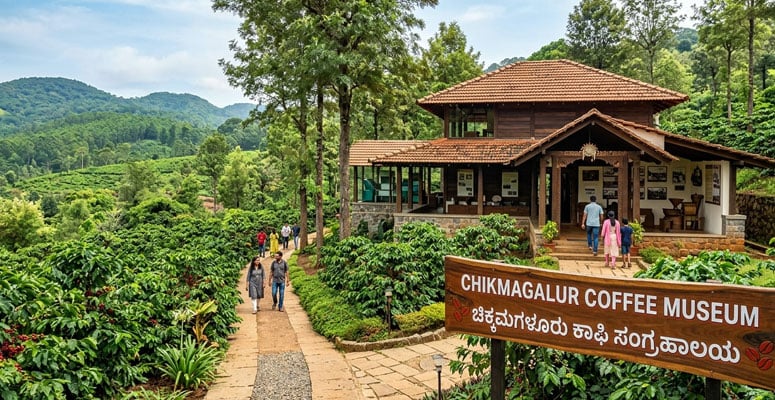
The museum provides an overview of coffee cultivation and processing, as well as the role of coffee estates in Chikmagalur’s development. It is most relevant for visitors interested in the region’s plantation economy and agricultural history.
Ideal duration: 30 – 45 minutes.
Combine with: Central Market Area, Kodandarama Temple, and Mahatma Gandhi Park.
Best season: Year-round.
• Kere Anjaneya Temple
Dedicated to Lord Hanuman, Kere Anjaneya Temple is known for its lakeside setting and for being an active local place of worship rather than a major pilgrimage centre. The combination of religious significance and a relatively quiet environment makes it suitable for spiritual travellers, families, senior travellers, and visitors interested in local cultural landmarks.
Ideal duration: 20 – 30 minutes.
Combine with: Hirekolale Lake and the Coffee Estate Belt.
Best season: October – February; December – January (Hanuman Jayanti celebrations)
• Kodandarama Temple
Among the principal temples in Chikmagalur town, Kodandarama Temple is frequently included in heritage and cultural itineraries for its religious importance and traditional temple architecture. It is most suitable for spiritual travellers, families, senior travellers, and visitors looking to combine cultural landmarks with the town’s market and museum attractions.
Ideal duration: 20 – 30 minutes.
Combine with: Coffee Museum, Old Town Market Zone, and Central Market Area.
Best season: Year-round; March – April (Sri Rama Navami festivities)
2. Gardens, Shopping & Urban Leisure
• Mahatma Gandhi Park
This public park serves as a convenient recreational space with walking paths, landscaped areas, and open spaces for relaxation. It is best suited to families, senior travellers, and visitors looking for a short break between sightseeing stops.
Ideal duration: 20 – 40 minutes.
Combine with: Coffee Museum and Central Market Area.
Best season: July – February
• Chikmagalur Central Market Area
The town’s main market area offers a glimpse into everyday life in Chikmagalur, with shops selling coffee, spices, local produce, household goods, and regional snacks. It is most relevant for cultural travellers, shoppers, photographers, and visitors interested in local products.
Ideal duration: 30 – 60 minutes.
Combine with: Coffee Museum, Old Town Market Zone, and Kodandarama Temple.
Best season: Year-round; mornings are generally the best time for fruitful bargains.
Most of Chikmagalur’s best-known attractions lie outside the town centre, spread across mountain ranges, coffee-growing valleys, forest zones, and waterfall corridors. As a result, sightseeing is typically organised around a few major circuits rather than individual attractions.
3. Waterfalls & Scenic Landscapes
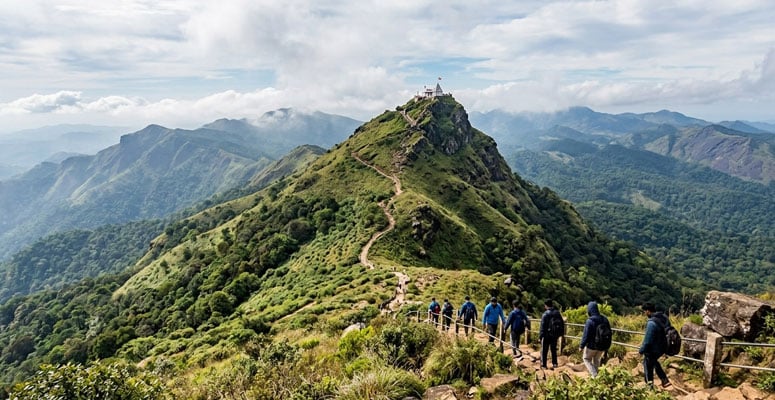
• Mullayanagiri Peak
Mullayanagiri is the highest peak in Karnataka and one of the principal reasons many travellers visit Chikmagalur. The summit area offers wide views of the surrounding Western Ghats and serves as the region’s most accessible high-altitude viewpoint. It is best suited to nature lovers, photographers, road-trip travellers, and visitors looking to experience Chikmagalur’s mountain landscapes.
Ideal duration: 45 minutes – 1.5 hours.
Combine with: Seethalayyanagiri viewpoints and Baba Budangiri.
Best season: October – February; June – September
• Seethalayyanagiri viewpoints
Located along the road between Mullayanagiri and Baba Budangiri, these roadside viewpoints provide some of the clearest views of the surrounding valleys and ridgelines without requiring a trek. They will appeal to families, photographers, senior travellers, and visitors exploring the hill circuit by vehicle.
Ideal duration: 15 – 30 minutes.
Combine with: Mullayanagiri Peak and Baba Budangiri.
Best season: October – March
• Baba Budangiri – Dattatreya Peetha hill complex
Baba Budangiri is a pilgrimage centre associated with the shrine of the Sufi saint Baba Budan and the Dattatreya Peetha cave shrine, making it one of the few religious sites in the region linked to both Islamic and Hindu traditions. Beyond its religious significance, the hill complex also attracts cultural travellers, photographers, and visitors exploring the Mullayanagiri mountain route.
Ideal duration: 45 minutes – 1 hour.
Combine with: Mullayanagiri, Seethalayyanagiri, and Manikyadhara Falls.
Best season: October – March
• Manikyadhara Falls
Located below the Baba Budangiri shrine complex, Manikyadhara is a perennial spring of religious significance to pilgrims visiting Dattatreya Peetha. Travellers generally stop here for its association with the pilgrimage route rather than for a waterfall experience. It is most suitable for spiritual travellers, families, and visitors already exploring the Baba Budangiri section of the circuit.
Ideal duration: 15 – 30 minutes.
Combine with: Baba Budangiri and Seethalayyanagiri.
Best season: Year-round
• Jhari Falls
Jhari Falls is one of the principal waterfall stops on the Mullayanagiri–Baba Budangiri route and is typically reached via local jeep transport through coffee-growing terrain. The attraction lies in combining a waterfall visit with the surrounding plantation and hill landscape, making it enticing for nature lovers, photographers, families, and road-trip travellers.
Ideal duration: 45 minutes – 1.5 hours.
Combine with: Mullayanagiri, Baba Budangiri, and Seethalayyanagiri.
Best season: July – December
• Kemmangundi Hill Station
Originally developed as a hill retreat during the Mysore royal era, Kemmangundi combines mountain viewpoints, gardens, and walking trails within a single hill-station setting. The nearby Z Point trek is the circuit’s main viewpoint and attracts nature lovers, photographers, trekkers, and travellers seeking a quieter alternative to the busier Mullayanagiri route.
Ideal duration: 2 – 3 hours.
Combine with: Hebbe Falls and Kallathigiri Falls.
Best season: September – February; June – August
• Hebbe Falls
Hebbe Falls requires a jeep ride and a short walk to reach, making it one of the more time-intensive attractions in Chikmagalur. It is best suited to nature lovers, younger families, photographers, and travellers who are comfortable with uneven access routes.
Ideal duration: 2 – 3 hours.
Combine with: Kemmangundi and Kallathigiri Falls.
Best season: July – January
• Kallathigiri Falls (Kalhatti Falls)
Unlike Hebbe Falls, which requires deeper forest access, Kallathigiri Falls is located close to the roadside and can be visited with relatively little effort. The waterfall is also associated with the nearby Veerabhadreshwara Temple, making it relevant to both nature-focused and spiritual travellers.
Ideal duration: 30 – 45 minutes.
Combine with: Kemmangundi and Hebbe Falls.
Best season: July – December; February – March
4. Lake & Plantation
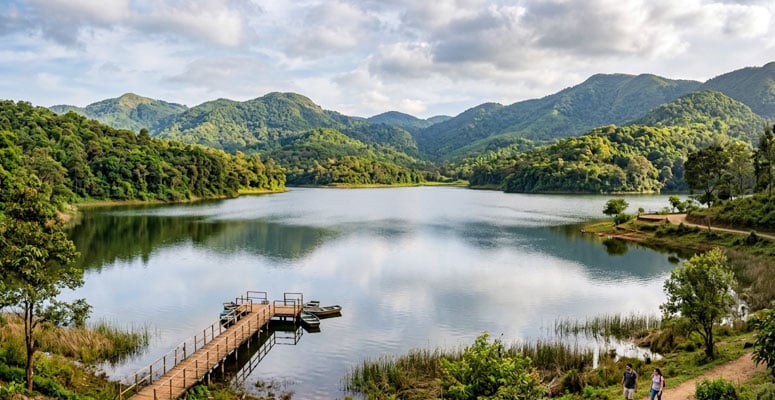
• Hirekolale Lake
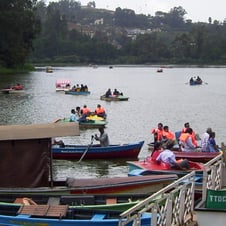
Hirekolale Lake is valued for its uninterrupted views of the surrounding hills, especially during sunset. It is an ideal stop for travellers who prefer a short scenic outing without committing to a full-day mountain circuit.
Ideal duration: 30 – 60 minutes.
Combine with: Hirekolale–Mallandur Coffee Estate Belt
Best season: October – February; July – September
• Hirekolale–Mallandur Coffee Estate
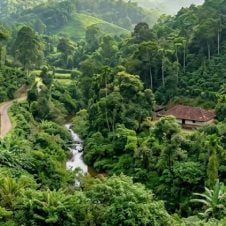
The corridor offers a closer look at estate life, shade-grown coffee cultivation, and the region’s characteristic plantation scenery. Photographers, couples, road-trip travellers, and guests staying at plantation properties are likely to get the most value from this route.
Ideal duration: 1 – 2 hours.
Combine with: Hirekolale Lake and nearby estate stays.
Best season: November – February; June – September
5. Wildlife & Forest
• Bhadra Wildlife Sanctuary
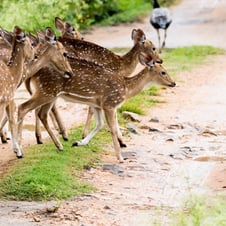
Wildlife enthusiasts, birdwatchers, photographers, families, and travellers spending several days in Chikmagalur are likely to enjoy their time at the sanctuary. One of the largest protected areas in the region, it encompasses forests, grasslands, river corridors, and reservoir ecosystems that support a diverse range of flora and fauna within the Western Ghats.
Animals to see: Indian gaur, Asian elephant, sambar deer, spotted deer, wild boar, sloth bear, dhole (Indian wild dog), leopard.
Birds to see: Malabar grey hornbill, great hornbill, crested serpent eagle, changeable hawk-eagle, Malabar parakeet, oriental dwarf kingfisher, white-bellied treepie, emerald dove.
Combine with: Bhadra Reservoir and nearby eco-tourism zones.
Best season: October – March
Ideal duration: Half-day to Full day.
Effort & Accessibility
| Effort Level | Attractions |
|---|---|
| Easy Access | Coffee Museum, Kodandarama Temple, Kare Anjaneya Temple, Mahatma Gandhi Park, Central Market Area, Kallathigiri Falls |
| Moderate Effort | Mullayanagiri Peak, Baba Budangiri, Manikyadhara Falls, Jhari Falls, Seethalayyanagiri Viewpoints, Hirekolale Lake-Mallandur Coffee Estate Belt |
| High Effort | Z Point (Kemmangundi), Hebbe Falls, Bhadra Wildlife Sanctuary (full-day safari focus) |
Understanding Chikmagalur Sightseeing
You Will Enjoy Chikmagalur More If
- You prefer landscapes over city attractions.
- Scenic road journeys are part of the experience for you.
- You enjoy spending time outdoors.
- Plantation stays and quiet surroundings appeal to you.
- A slower travel pace suits your itinerary.
Not The Best Fit If
- Explorers focused on historical landmarks and heritage sites.
- Those looking for nightlife or shopping districts.
- If you prefer to have attractions within walking distance.
- Travellers with a fast-paced sightseeing schedule.
Seasonal Impact on Attractions in Chikmagalur
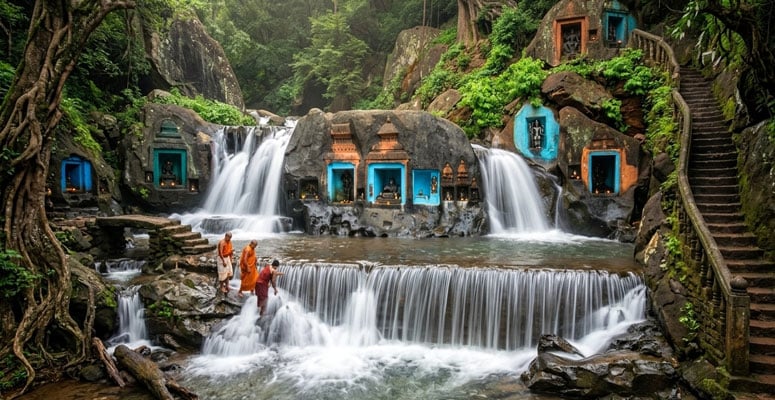
• Visibility-dependent
Mountain views vary with fog, cloud cover, and rainfall.
Places: Mullayanagiri Peak, Seethalayanagiri Viewpoints, Baba Budangiri
When to prioritise: October – March
• Waterflow-dependent
Waterfalls are strongest after the monsoon and gradually decrease in volume during the dry season.
Places: Jhari Falls, Hebbe Falls, Kallathigiri Falls, Manikyadhara Falls
When to prioritise: July – December
• Weather-access dependent
Heavy rain and fog can affect visibility, road conditions, and travel times.
Places: Mullayanagiri Circuit, Baba Budangiri Circuit, Kemmangundi Circuit, Hebbe Falls
When to prioritise: October–March
• Harvest-season dependent
Coffee picking, drying, and processing activities are more visible in the estate areas.
Places: Hirekolale – Mallandur Coffee Estate Belt
When to prioritise: November – February
• Wildlife Spotting and Birdwatching
Wildlife is generally easier to spot as vegetation becomes less dense after the monsoon. Bird activity and sighting opportunities are higher during cooler months.
Places: Bhadra Wildlife Sanctuary
When to prioritise: October – March (wildlife); November – February (Birdwatching)
• Festival Season
Pilgrim numbers increase, and temple activity becomes more prominent during religious celebrations.
Places: Kodandarama Temple, Baba Budangiri–Dattatreya Peetha
When to prioritise: Datta Jayanti (November – December), Sri Rama Navami (March – April), Urs (August – October)
Route Plans To Cover Most of Chikmagalur
1. Half-Day Excursions
Route 1: Chikmagalur Town → Coffee Museum → Kodandarama Temple → Central Market Area → return
Route 2: Chikmagalur → Hirekolale Lake → Hirekolale–Mallandur Coffee Estate Belt → return
Route 3: Chikmagalur → Bhadra Wildlife Sanctuary Safari Zone → return
2. Full-Day Excursions
Route 1: Chikmagalur → Mullayanagiri Peak → Seethalayyanagiri Viewpoints → Baba Budangiri–Dattatreya Peetha → Manikyadhara Falls → Jhari Falls → return
Route 2: Chikmagalur → Kallathigiri Falls → Kemmangundi Hill Station → Z Point Area → Hebbe Falls → return
Route 3: Chikmagalur → Hirekolale Lake → Hirekolale–Mallandur Coffee Estate Belt → Mullayanagiri Peak → Seethalayyanagiri Viewpoints → return
Route 4: Chikmagalur → Bhadra Wildlife Sanctuary → Hirekolale Lake → Hirekolale–Mallandur Coffee Estate Belt → return
3. If You Have Limited Time
1 Day in Chikmagalur: Hirekolale Lake + Mullayanagiri + Baba Budangiri + Jhari Falls
2 Days in Chikmagalur: Mullayanagiri–Baba Budangiri Circuit + Hirekolale Lake + Coffee Estate Belt
Hill Landscapes: Mullayanagiri + Seethalayyanagiri + Baba Budangiri + Manikyadhara Falls
Waterfalls: Jhari Falls + Hebbe Falls + Kallathigiri Falls
Nature & Wildlife: Bhadra Wildlife Sanctuary + Hirekolale Lake + Coffee Estate Belt
Culture & Local Life: Coffee Museum + Central Market Area + Kere Anjaneya Temple + Kodandarama Temple
Kemmangundi loop: Kemmangundi + Z Point + Hebbe Falls + Kallathigiri Falls
Multi-Destination Karnataka Trips With Chikmagalur
Many travellers visit Chikmagalur as part of a larger journey through Karnataka. Explore itineraries that combine it with other destinations across the state
For help with itinerary planning, explore the guides below –