
Pattadakal is a UNESCO World Heritage Site known for its collection of Early Chalukyan temples and its role as a historic ceremonial centre. Unlike standalone tourist destinations, Pattadakal is usually visited as part of the Badami–Pattadakal–Aihole heritage circuit, with most travellers using Badami as their base and extending their trip to Pattadakal.
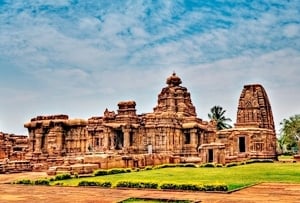
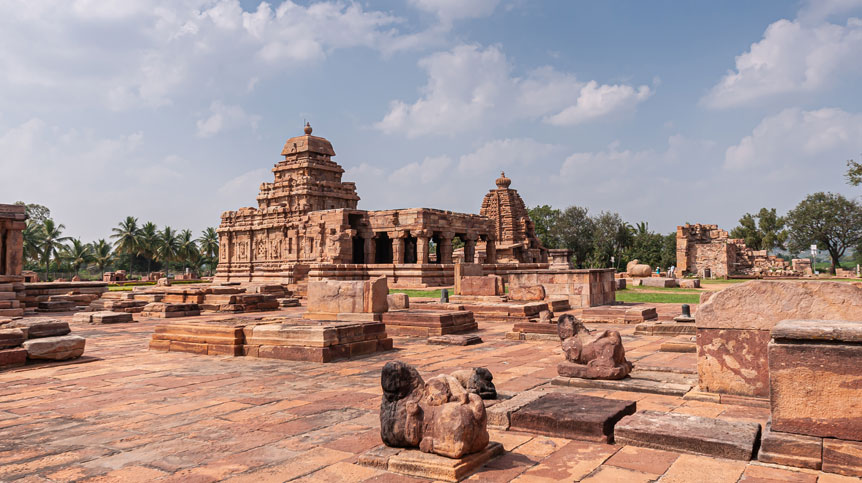
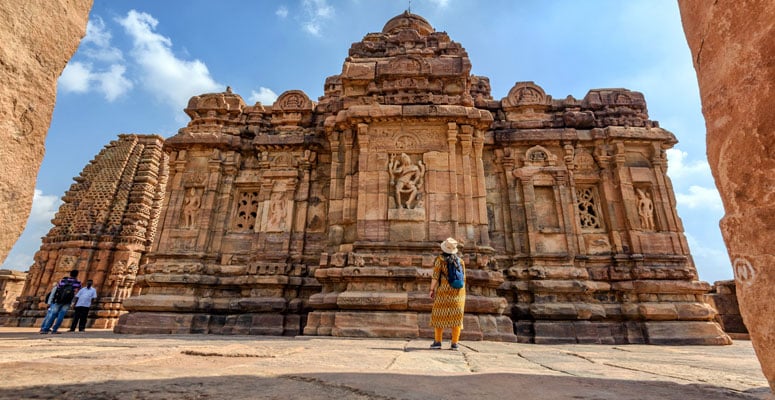
UNESCO describes Pattadakal as a 7th–8th century Chalukyan site with a harmonious blend of architectural forms from northern and southern India, including nine Hindu temples and one Jain sanctuary. Virupaksha Temple, built around 740 by Queen Lokamahadevi, is identified by UNESCO as the masterpiece of the group.
The destination is best suited to history enthusiasts, architecture lovers, heritage travellers, and students interested in ancient Indian art and culture.
This guide helps you decide which temples to prioritise, how to move through the site, what to combine with Badami and Aihole, and how to plan the visit comfortably in open, sun-exposed terrain.
Quick Travel Snapshot
Pattadakal’s tourist attractions are concentrated within a relatively small area. The main UNESCO temple complex can be explored in 2 – 3 hours at a comfortable pace, while adding the Jain Narayana Temple and ASI Site Museum typically extends the visit to around 3 – 5 hours. Even visitors with a strong interest in history and architecture rarely need more than half a day to cover the site’s major attractions.
Who may consider staying longer?
A longer stay may appeal to researchers, architecture enthusiasts, photographers, or travellers seeking an in-depth exploration of Chalukyan heritage. However, even these visitors typically base themselves in Badami and make multiple visits to Pattadakal rather than staying in the village itself.
Distance Between Badami, Pattadakal, and Aihole
| Route | Approximate Distance | Travel Time |
|---|---|---|
| Badami → Pattadakal | 22 km | 30 – 40 minutes |
| Pattadakal → Aihole | 14 km | 20 – 25 minutes |
| Badami → Aihole | 35 km | 45 – 60 minutes |
Which Pattadakal Attractions Should You Prioritise?
| Attraction / Stop | Best For | Time Needed | Route Zone | Effort Level | Best Paired With | Keep Short / Avoid If |
|---|---|---|---|---|---|---|
| Virupaksha Temple | First-time visitors, architecture, guided heritage | 30–45 min | Main UNESCO cluster | Easy to moderate | Mallikarjuna, Sangameshwara | Crowded worship/festival period |
| Mallikarjuna Temple | Sculpture detail, Chalukyan royal patronage | 20–30 min | Main UNESCO cluster | Easy | Virupaksha, Kashi Vishwanatha | Very short visit under 1 hour |
| Sangameshwara Temple | Early structural temple evolution | 15–25 min | Main UNESCO cluster | Easy | Virupaksha, Galaganatha | Low interest in architectural history |
| Galaganatha Temple | Nagara-style shikhara comparison | 10–15 min | Main UNESCO cluster | Easy | Kashi Vishwanatha, Jambulingeshwara | Rushed family visit |
| Kashi Vishwanatha Temple | Compact shrine, stonework, quieter pause | 10–15 min | Main UNESCO cluster | Easy | Galaganatha, Mallikarjuna | Very limited time |
| Jambulingeshwara + Kadasiddheshwara | Early forms and style comparison | 15–20 min combined | Main UNESCO cluster | Easy | Chandrashekhara, Sangameshwara | Not using a guide / no architecture interest |
| Chandrashekhara Temple | Short context stop | 5–10 min | Main UNESCO cluster | Easy | Early-shrine sequence | Time under 90 minutes |
| Papanatha Temple | Mixed architectural forms, quieter extension | 20–30 min | Southern extension | Moderate; short walk/transfer | Main cluster | Heat fatigue or mobility concerns |
| Jain Narayana Temple | Jain layer of the site, cultural diversity | 15–25 min | Separate extension | Moderate; depends on access | Papanatha / museum | Very short visit or fatigue |
| ASI Site Museum | Context before temple walk | 30–45 min | Entry / site zone | Easy | Main cluster | Museum closed or short visit |
Key Tourist Attractions in Pattadakal
The main tourism value of Pattadakal lies in its cluster of Early Chalukyan temples, which form a UNESCO World Heritage Site. The destination is almost entirely defined by its temple architecture and historical significance.
1. Main UNESCO Temple Cluster – Northern Side
• Virupaksha Temple
The Virupaksha Temple is the largest and most detailed structure in Pattadakal and remains an active place of worship. It is known for its richly carved walls, narrative panels, and well-preserved Dravidian architecture.
Time to spend: 30 – 40 minutes
Best for: First-time visitors, architecture lovers, guided heritage travellers, photographers.
Best paired with: Mallikarjuna Temple and Sangameshwara Temple.
• Mallikarjuna Temple
The Mallikarjuna Temple is a slightly smaller counterpart to Virupaksha and offers a quieter experience with refined sculptural detail. It follows a similar architectural style but feels less crowded and more open.
Time to spend: 20 – 30 minutes
Best for: Architecture students, heritage travellers, travellers using a guide.
Best paired with: Virupaksha and Sangameshwara.
• Sangameshwara Temple
Sangameshwara Temple is important for understanding the early development of structural temple architecture at Pattadakal. ASI identifies Sangameshwara as the earliest of the three major Dravidian-type temples, associated with Chalukya Vijayaditya.
Time to spend: 15 – 25 minutes
Best for: Travellers interested in architectural progression, not just visual highlights.
Best paired with: Virupaksha and Mallikarjuna.
• Galaganatha Temple
The Galaganatha Temple stands out for its distinctive Nagara-style shikhara, which is different from the Dravidian style seen in most other temples here. The Dharwad ASI circle describes Galaganatha among the Rekha-Nagara Prasada type temples at Pattadakal.
Time to spend: 10 – 15 minutes
Best for: Architecture comparison, students, photographers.
Best paired with: Kashi Vishwanatha and Jambulingeshwara.
• Kashi Vishwanatha Temple
Kashi Vishwanatha Temple is a compact but elegant shrine known for its finely carved exterior and balanced architectural proportions. It forms an important part of the UNESCO temple group and is best appreciated alongside the neighbouring Nagara-style temples.
Time to spend: 10 – 15 minutes
Best for: Architecture enthusiasts, photographers and heritage travellers.
Best paired with: Galaganatha Temple and Mallikarjuna Temple.
• Jambulingeshwara Temple
Jambulingeshwara Temple represents one of the earlier Chalukyan temple forms and is often visited together with nearby shrines for architectural comparison. Its modest scale allows visitors to appreciate design evolution within the Pattadakal complex.
Time to spend: 10 – 15 minutes
Best for: Heritage enthusiasts and architecture students.
Best paired with: Kadasiddheshwara Temple and Galaganatha Temple.
• Kadasiddheshwara Temple
Kadasiddheshwara Temple is among the smaller monuments within the complex but remains significant for understanding the architectural diversity of Pattadakal’s Early Chalukyan temples.
Time to spend: 5 – 10 minutes
Best for: Travellers interested in completing the UNESCO temple circuit.
Best paired with: Jambulingeshwara Temple and Chandrashekhara Temple.
• Chandrashekhara Temple
Chandrashekhara Temple is one of the later additions to the temple cluster and serves as a short heritage stop while moving through the northern monuments.
Time to spend: 5 – 10 minutes
Best for: Visitors completing the entire UNESCO complex.
Best paired with: Jambulingeshwara Temple and Sangameshwara Temple.
2. Southern Side Shrines
• Papanatha Temple
Papanatha Temple lies slightly away from the main UNESCO cluster and is recognised for combining both Nagara and Dravidian architectural influences. Its sculptural panels and quieter surroundings make it rewarding for travellers who have sufficient time after exploring the principal temples.
Time to spend: 20 – 30 minutes
Best for: Architecture enthusiasts, photographers and repeat visitors.
Best paired with: Main UNESCO Temple Cluster.
3. Eastern Side Temples
• Jain Narayana Temple
Jain Narayana Temple represents the Jain contribution to Pattadakal’s architectural heritage and is located slightly away from the principal temple cluster. Although smaller than the major Hindu temples, it adds an important cultural dimension to the UNESCO site.
Time to spend: 15 – 25 minutes
Best for: Heritage travellers, history enthusiasts and visitors interested in religious diversity.
Best paired with: Papanatha Temple and the ASI Site Museum.
4. Museums and History
• ASI Site Museum
The ASI Site Museum provides historical context for the Pattadakal monuments through sculptures, inscriptions, architectural fragments and interpretive displays recovered from the surrounding temple complex. It is particularly useful for visitors who want to understand the artistic evolution of Early Chalukyan architecture before or after exploring the monuments.
Time Required: 30 – 45 minutes
Best for: History enthusiasts, students, researchers and visitors interested in temple iconography.
Best paired with: Main UNESCO Temple Cluster.
Who Will the Temple Complexes Appeal To?
- History enthusiasts
- Architecture students
- UNESCO World Heritage travellers
- Photographers
- Cultural travellers
- Researchers
- Families with older children interested in heritage
Best Time to Visit the Complex
Ideal Season: October to February / March is usually more comfortable than summer for walking through the open temple complex, but crowd and festival dates should still be checked
Peak festive months and crowd periods
- March to April during the Mahashivratri season at Virupaksha Temple
- Major Hindu festival days also bring local pilgrim crowds and increased footfall
- For the Jain Narayana Temple, noticeable visitor presence can be seen during Mahavir Jayanti (March or April, depending on the lunar calendar) and Paryushana (August or September)
Shoulder months for quieter visits
- October to early December and January to early February
- These months offer more open space, easier photography conditions, and less congestion
Museums and History
ASI Site Museum, Pattadakal
The ASI Site Museum is useful as an interpretation stop before entering the temple cluster, especially for travellers who want to understand Chalukyan sculpture, iconography and architectural fragments before seeing the monuments in context.
The site museum stands near the entrance of the UNESCO World Heritage temple complex along the Malaprabha River. It functions primarily as a sculpture gallery, displaying intricate stone carvings, royal inscriptions, architectural elements, and loose sculptures linked to the Early Chalukyan monument zone and surrounding archaeological context.
Best for:
- Archaeology enthusiasts
- Art history lovers
- Iconography researchers
Best paired with: Main UNESCO temple cluster.
Time Required: 30 – 45 minutes
Best time to visit: October – February.
Best Time to Visit Pattadakal Temples
| Season | Travel Experience | Planning Reality |
|---|---|---|
| October – February | Most comfortable weather | Best overall season for heritage exploration |
| March | Warm afternoons | Start early in the day |
| April – June | Very hot daytime conditions | Outdoor exploration becomes tiring |
| July – September | Greener surroundings with occasional rain | Carry rain protection and allow flexible timing |
Temple Visit Route Map
1. Quick Heritage Route (1.5–2 Hours)
Route: Virupaksha Temple → Mallikarjuna Temple → Sangameshwara Temple → Galaganatha Temple → Kashi Vishwanatha Temple
2. Complete Temple Circuit (3–5 Hours)
Route: Main UNESCO Temple Cluster → Papanatha Temple → Jain Narayana Temple → ASI Site Museum
3. Photography and Architecture Route
Route: Virupaksha Temple → Mallikarjuna Temple → Galaganatha Temple → Papanatha Temple → Jain Narayana Temple
Pattadakal As a Part of a Broader Regional Circuit
Circuit 1: Pattadakal + Badami
Suggested Duration: 1 day for detailed exploration of caves, temples, fort, and museum stops at both places
Best season to visit: October to March offers the most comfortable weather for outdoor temple visits and fort exploration
Tourist spots include
- Badami Cave Temples
- Agastya Lake
- Bhutanatha Temples
- Pattadakal UNESCO Temple Complex
Best For:
- History enthusiasts
- Architecture and heritage travellers
- Photographers
- Students of Indian art and culture
Not ideal for: Travellers expecting modern sightseeing infrastructure or entertainment activities.
Circuit 2: Pattadakal + Aihole
Suggested Duration: 6-8 hours, depending on the depth of exploration at the Aihole temple clusters
Best season to visit: October to March for comfortable walking conditions across open archaeological sites
Tourist Spots Include:
- Durga Temple
- Lad Khan Temple
- Ravana Phadi Cave Temple
- Huchappayyagudi Temple
- Meguti Jain Temple
- Aihole Archaeological Museum
Best For:
- Heritage and archaeology enthusiasts
- Architecture students and researchers
- Slow cultural travellers
- Photographers Solo Travellers
Not ideal for: Visitors with only a few hours available.
- Travellers seeking compact sightseeing experiences
- Visitors preferring structured attractions with high visitor facilities
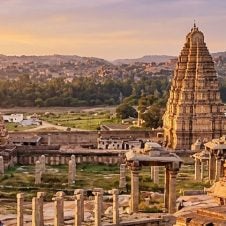
Circuit 3: Pattadakal + Hampi / Wider Karnataka Heritage Route
Best for: Inbound premium cultural travellers and deeper Karnataka heritage itineraries
Route logic: Pattadakal introduces Early Chalukyan temple architecture, while Hampi adds Vijayanagara-era scale and landscape
Important Practical Notes
• Stay and base location
Badami remains the preferred accommodation base for most visitors because it offers better hotel choices and easier access to Pattadakal and Aihole.
• Site structure
The UNESCO monuments are spread across an open archaeological complex with multiple temple groups connected by walking paths.
• Entry and ticketing
Verify current ASI ticket prices, opening hours and combined ticket options before your visit.
• Walking conditions
Expect uneven stone pathways and continuous walking throughout the temple complex.
• Shade and weather
Large sections of the monument complex have very limited shade. Carry drinking water, sun protection and comfortable footwear.
• Time planning
Begin your visit during the morning or late afternoon to avoid the hottest part of the day.
• Visitor facilities
Facilities around the monuments remain limited compared with larger tourist destinations, so plan accordingly.
• Senior travellers
Visitors with limited mobility should allow additional time because the archaeological site involves regular walking over uneven surfaces.
Route Plan: Badami + Pattadakal + Aihole in a Circuit
Practical itinerary: 2 nights/3 days
Stay Base: Badami
What Each Destination is Best Known For
How to Go About the Circuit
- Use Badami as the primary overnight base.
- Visit Pattadakal during the cooler morning hours.
- Continue to Aihole after completing Pattadakal or dedicate a separate half-day.
- Avoid rushing through all three heritage sites in a single day.
If You Have Limited Time in the Region
Prioritise exploring the tourist attractions in Pattadakal, as visits to Badami and Aihole require separate time blocks due to their larger scale and wider geographical spread, making them distinct day-long explorations when clubbed together.
| Available Time | What to Cover | Priority Flow | What to expect |
|---|---|---|---|
| 1 – 1.5 hours | Core UNESCO highlights only | Virupaksha → Mallikarjuna → Sangameshwara | Quick overview of the most important and representative temples |
| 2 hours | Core cluster + Museum/1 comparison shrine | Museum→ Virupaksha → Mallikarjuna → Sangameshwara → Galaganatha / Kashi Vishwanatha | Adds clear architectural contrast within a short time |
| 3 hours | Main temple complex + Museum | Museum → UNESCO complex | Better understanding of stylistic progression and historical context |
| 4 – 5 hours | Standard full site coverage | Museum → North Temple Complex → Papanatha → Jain Narayana | Most complete standard visitor experience, subject to access and energy |
Common Mistakes Travellers Make
- Trying to cover all three destinations without prioritising, resulting in equal time spent everywhere instead of a deeper exploration of key sites like Virupaksha Temple or Badami Cave Temples.
- Planning the Pattadakal visit after heavy travel fatigue from Badami, which reduces attention to detail in reading inscriptions and observing temple layouts.
- Relying only on self-guided exploration in Aihole, where the lack of directional clarity between scattered temples often leads to skipped structures.
- Not aligning the sequence of sites with architectural progression, which makes it harder to understand how temple styles evolve from Badami to Pattadakal to Aihole.
Plan Your Pattadakal and Karnataka Heritage Route
Planning Pattadakal as part of a Badami–Aihole heritage circuit? The right route depends on your travel month, number of days, starting city, interest in temple architecture, walking comfort and whether you want a quick UNESCO visit or a deeper guided Karnataka heritage journey.
IndianHoliday’s Karnataka specialists can help you plan Pattadakal with Badami, Aihole, Hampi, Bijapur or a wider North Karnataka route, including private transfers, guide support, realistic pacing and comfort breaks.
Share the following details before planning your trip:
- Travel month
- Number of days
- Starting city
- Interest level: quick sightseeing, architecture, photography, pilgrimage or academic heritage
- Whether you want Pattadakal only or Badami–Pattadakal–Aihole
- Whether you want to add Hampi, Bijapur or other Karnataka heritage sites
- Traveller age profile
- Walking comfort and heat tolerance
- Guide requirement
- Private vehicle requirement