
Mawlynnong is best experienced as part of a Meghalaya journey, especially when your route includes Shillong, Cherrapunji, Dawki, or the quieter village landscapes. It brings a slower rhythm shaped by Khasi community values, clean surroundings, a sense of local responsibility, and everyday village life.
The village is globally known as Asia’s cleanest village and is often called “God’s Own Garden.” But its real value is not in the label alone. Mawlynnong works best when travellers see it as a living Khasi settlement where cleanliness, literacy, sanitation, and community discipline are part of daily life rather than a tourism display.
Why Mawlynnong belongs in a Meghalaya journey
Mawlynnong adds a cultural element to a Meghalaya itinerary that may otherwise focus mainly on waterfalls, caves, rivers, and viewpoints. It helps travellers see another side of the state, where community systems and local habits shape the travel experience.
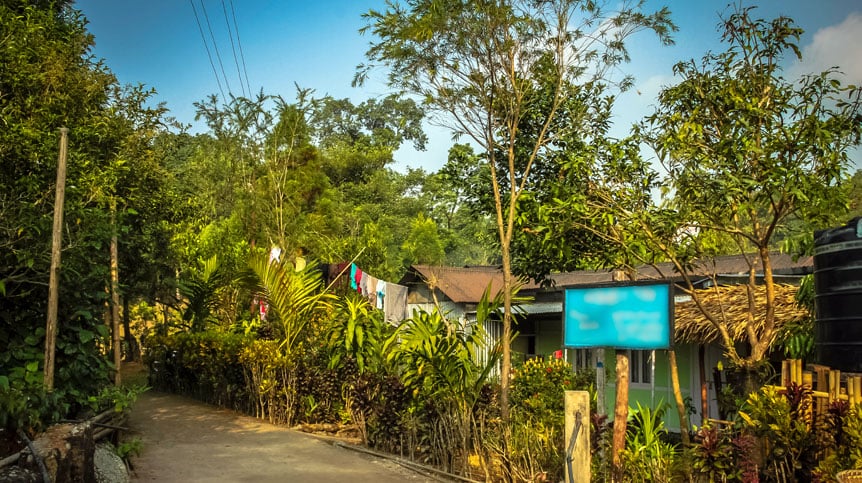
Most travellers include Mawlynnong on a Shillong–Dawki–Cherrapunji route because it fits naturally between stronger nature-led stops. Here, you’ll notice bamboo waste bins, clean walking lanes, flower-lined homes, sanitation awareness, and local rules that residents take seriously.
Who will value this visit most?
Mawlynnong is best suited to travellers who prefer village experiences over rushed sightseeing. It works especially well for:
- Travellers interested in Khasi culture and community-led living.
- Families and couples who want a calm, walkable stop.
- Eco-conscious travellers who appreciate responsible local systems.
- Senior travellers looking for a gentle cultural experience.
- Visitors combining Shillong, Dawki, Cherrapunji, and nearby root bridge sites.
Cleanliness, Khasi culture, and community-led village life
Mawlynnong is inhabited by the indigenous Khasi community, and its identity is closely tied to a sense of shared responsibility. The village is also known for its 100% literacy rate, which helps explain how local discipline and community awareness are maintained. Cleanliness here is not treated as a slogan. It is built into daily village behaviour. You will notice:
- Bamboo waste bins are placed around the village.
- Clean public walking areas.
- Local sanitation habits are followed by residents.
- Rules against littering and careless visitor behaviour.
- A strong sense of community responsibility.
Places to see in and around Mawlynnong
Mawlynnong does not need a packed sightseeing list. The better approach is to experience the village slowly and combine it with a few nearby stops that enrich the route.
Nohwet Living Root Bridge
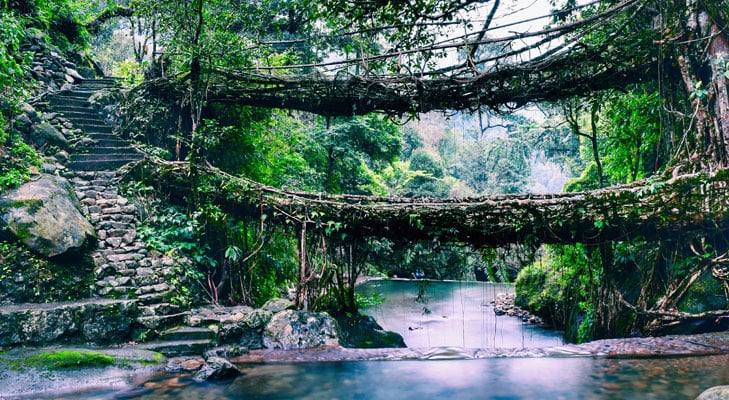
The Nohwet Living Root Bridge connects Mawlynnong with one of Meghalaya’s most distinctive ecological traditions. These bridges have been shaped over the years by guiding the roots of rubber trees, reflecting local knowledge.
Things to know
- Best for travellers interested in Khasi ecological knowledge.
- Requires walking and some steps.
- Paths may be slippery during or after rain.
- Comfortable footwear is important.
Sky View Point
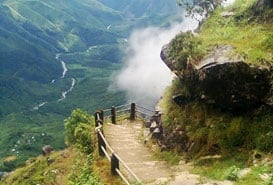
Sky View Point offers a higher vantage point over the surrounding countryside. On clear days, it also helps travellers better understand Mawlynnong’s setting near the India-Bangladesh border.
Things to know
- Best visited when visibility is clear.
- Morning light often works better.
- Mist or rain can reduce the view.
- Treat it as a short viewpoint stop, not the main reason to visit.
Church of the Epiphany
The Church of the Epiphany is a quiet cultural stop within the village experience. Its value lies in its calm setting and local character rather than in grand architecture.
Things to know
- Keep the visit quiet and respectful.
- Avoid intrusive photography.
- Works well as part of a village walk.
Natural Balancing Rock
The Natural Balancing Rock is a short nearby stop that can be added if time allows. It is more of a brief curiosity than a major attraction.
Things to know
- Takes very little time.
- Easy to combine with the village visit.
- Should not be treated as the central experience.
Best time to visit & Ideal duration
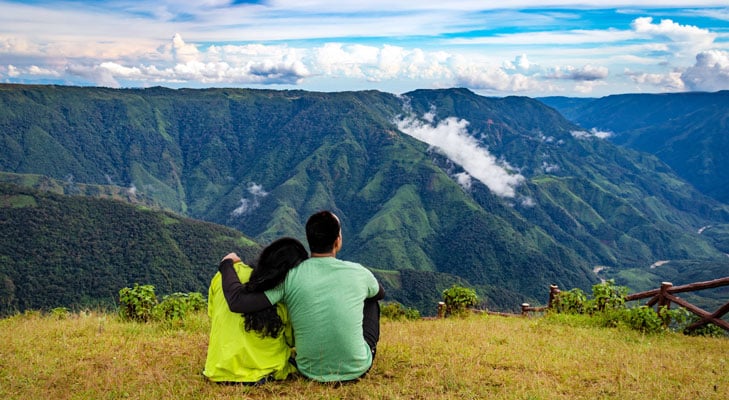
The best time to visit Mawlynnong is usually from October to April, when walking conditions are more comfortable, and visibility around viewpoints is generally better. The post-monsoon months bring fresh greenery, while winter offers a calmer and clearer travel experience.
The monsoon season can be beautiful in Meghalaya, but rain can make village paths and root-bridge trails slippery. Road travel can also slow down, so avoid overloading the day with too many stops.
For most travellers, the ideal visit duration is:
How to reach
Mawlynnong is located in Meghalaya’s East Khasi Hills region, close to the India–Bangladesh border belt. It is usually visited by road from Shillong, Dawki, or Cherrapunji/Sohra.
Travel distances:
- Shillong to Mawlynnong: around 75–80 km, usually 2.5 to 3.5 hours by road
- Dawki to Mawlynnong: around 30–35 km, usually 1 to 1.5 hours by road
- Cherrapunji/Sohra to Mawlynnong: around 80–90 km or more, depending on route conditions
The most practical way to reach Mawlynnong is by private vehicle with a local driver. This is especially useful if you are combining the village with Dawki, Shnongpdeng, Riwai, or the Nohwet Living Root Bridge.
Travel Tips
- Arrive earlier in the day to avoid busier visitor hours.
- Wear comfortable walking shoes.
- Carry a light rain layer, especially in winter.
- Keep plastic use to a minimum.
- Use waste bins and avoid leaving anything behind.
- Ask before photographing people or private homes.
- Keep noise levels low inside the village.
Nearby excursions

Mawlynnong combines well with a few nearby places, but the route should not be overstuffed.
Dawki
Dawki is often paired with Mawlynnong for its Umngot River and border-region landscape. It works well as part of a full-day route from Shillong.
Shnongpdeng
Shnongpdeng is better for travellers who want a quieter river setting and more time near the water. It can feel more relaxed than a rushed stop in Dawki.
Riwai and Nohwet
Riwai and Nohwet are useful additions for travellers interested in living root bridges and Khasi ecological practices. They fit naturally into the Mawlynnong route.
Cherrapunji / Sohra
Cherrapunji can be combined with a wider Meghalaya itinerary, but it is better to plan it on separate days if you want to avoid long road trips.
Shillong
Shillong remains the most practical base for many travellers because of better hotel options, road access, and day-trip flexibility.
Plan Mawlynnong with Meghalaya itinerary
Mawlynnong is most rewarding when planned as part of a Meghalaya holiday, rather than as an isolated stop. Travellers can combine it with Shillong, Cherrapunji, Dawki, Shnongpdeng, living root bridges, waterfalls, caves, and other culture-led experiences across the state.