

Uttarakhand is often called Devbhoomi, but for travellers, its religious landscape is not one single experience. Some places are part of major pilgrimage circuits, some involve high-altitude trekking, some are river-confluence stops, and others are quieter heritage or meditation-led sites in Kumaon and Garhwal.
So, choosing religious places is not only about popularity. It depends on how much time you have, the season you are travelling in, your comfort with mountain roads, your needs as a senior traveller, and your experience type.
This guide helps you understand which temples in Uttarakhand are worth including, how each one differs, and how to plan the visit.
Top Religious Places in Uttarakhand
Char Dham Circuit
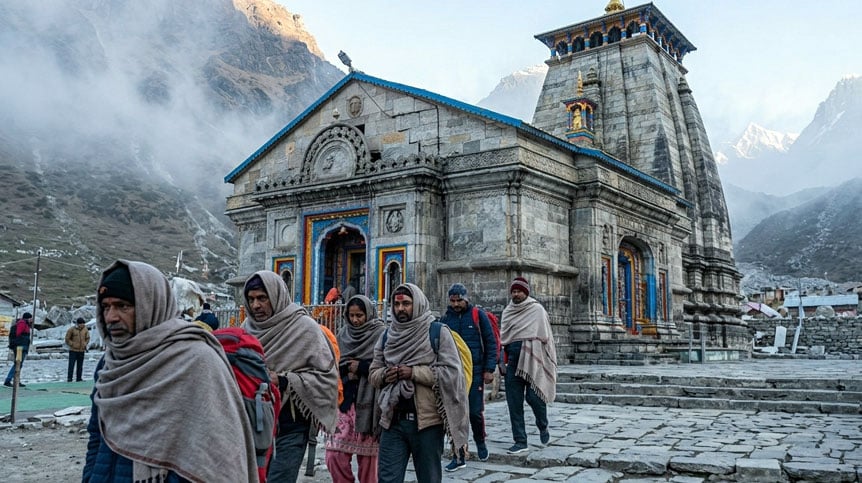
1. Kedarnath
This is one of the most significant Shiva pilgrimage sites and one of the most demanding Char Dham sites. The temple lies at a high altitude, and the journey requires physical readiness and weather awareness. Pilgrims begin from the Gaurikund side and continue by trek or assisted access, depending on current arrangements and personal fitness.
Best Suited For: Shiva devotees, physically fit travellers, and those ready for trekking.
Comfort and Etiquette: Carry warm layers, respect queue discipline, follow footwear rules, and avoid rushing senior travellers. Kedarnath should not be treated as a quick sightseeing stop.
Route Fit: Best planned as part of Char Dham, Do Dham, or a Kedarnath-focused pilgrimage route.
2. Badrinath
It is one of the most important Vishnu pilgrimage sites and a major part of Char Dham. Compared with Kedarnath, the physical effort is usually lower, but the road journey, altitude, seasonal access, and crowd pressure still require planning.
Best Suited For: Char Dham pilgrims, families, and senior travellers if road and weather conditions are suitable.
Comfort and Etiquette: Dress modestly, follow temple rules, manage footwear carefully, and avoid photography where restricted.
Route Fit: Usually paired with Joshimath, Mana village, and the broader Char Dham or Do Dham route.
3. Gangotri
Gangotri is associated with the worship of the River Ganga and is well-suited to pilgrims as well as travellers interested in Uttarakhand’s sacred river geography. The setting is more nature-linked than urban temple-led, with the river, road journey, and mountain atmosphere shaping the visit.
Best Suited For: Pilgrims, sacred-river travellers, and those combining devotion with Himalayan landscapes.
Comfort and Etiquette: Dress modestly, follow temple rules, manage footwear carefully, and avoid photography where restricted.
Route Fit: Often paired with Yamunotri or included in the full Char Dham route.
4. Yamunotri
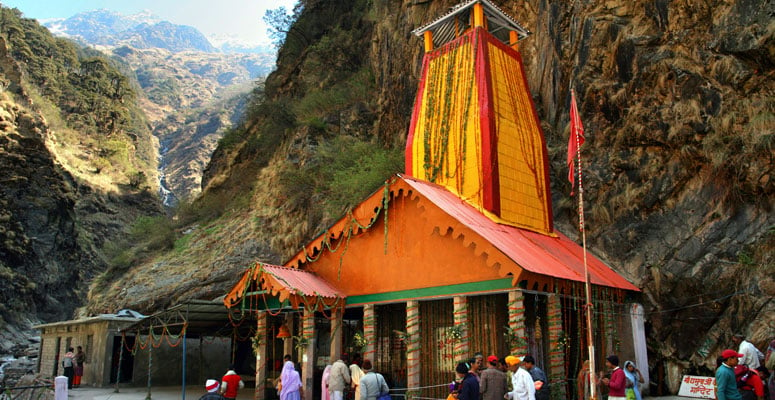
Yamunotri is associated with the worship of the River Yamuna and is usually the first shrine on the traditional Char Dham route. It feels smaller than some other Char Dham sites, but the access is physically demanding.
Best Suited For: Char Dham pilgrims and travellers comfortable with mountain access.
Comfort and Etiquette: Carry basic rain protection, wear sturdy footwear, and plan carefully if travelling with seniors.
Route Fit: Best planned as part of the full Char Dham route rather than a standalone visit.
Panch Kedar
1. Kedarnath
Kedarnath is both a Char Dham site and part of Panch Kedar. Within the Panch Kedar route, it is the most recognised shrine. That said, it remains physically demanding. Altitude, cold, crowd pressure, and long movement days need to be taken seriously.
2. Tungnath
Tungnath is one of the highest Shiva temples and is reached through the Chopta side. Many travellers combine it with Chandrashila, but the temple visit itself should still be planned with proper footwear, early timing, and weather awareness.
3. Rudranath
Rudranath is one of the more remote Panch Kedar temples. It should be planned only by travellers who are ready for a demanding trek and basic mountain conditions. This is not a short detour. It needs time, fitness, local guidance, and a realistic trekking plan.
4. Madhmaheshwar
Madhmaheshwar has a quieter mountain-pilgrimage character compared with Kedarnath. The journey is trek-led and better suited to travellers who prefer a less commercialised route. Expect simpler stays, physical effort, and limited flexibility during bad weather.
5. Kalpeshwar
Kalpeshwar is generally easier to access compared with some other Panch Kedar shrines, though road and walking conditions should still be checked before travel. Its cave-temple setting makes it appealing to travellers seeking a quieter Shiva shrine.
Major Spiritual Hubs
1. Haridwar
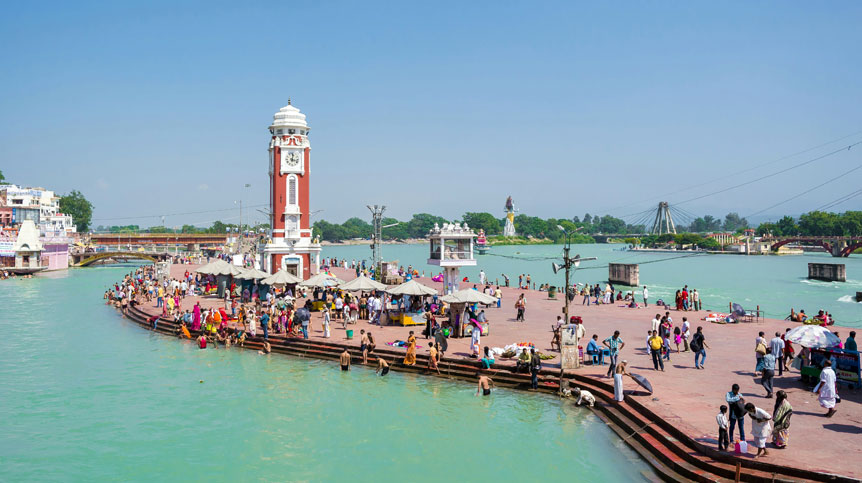
Haridwar is one of the most accessible spiritual places, known for the Ganga aarti, ghats, old temples, and its role as a gateway to the Char Dham route. The main experience is ritual-led. Har Ki Pauri, evening aarti, Mansa Devi, Chandi Devi, and Maya Devi Temple form the core spiritual circuit for most travellers.
Best Suited For: First-time spiritual travellers, families, senior travellers, and pilgrims beginning Char Dham.
Route Fit: Haridwar works well with Rishikesh, Devprayag, and Char Dham departures.
2. Rishikesh
This is a softer spiritual rhythm than Haridwar. Ashrams, Ganga ghats, yoga centres, aarti spaces, and temple routes shape the experience. It is a good choice for travellers who want a spiritual atmosphere without the pressure of a major pilgrimage circuit.
Best Suited For: Cultural-spiritual travellers, wellness travellers, families, and international visitors.
Route Fit: Rishikesh pairs well with Haridwar, Devprayag, Kunjapuri Devi, and Neelkanth Mahadev.
3. Triyuginarayan Temple
Triyuginarayan Temple is associated with the marriage legend of Shiva and Parvati. It is quieter than the main Char Dham shrines and works best when planned with the Kedarnath-region route.
Best Suited For: Spiritual travellers, couples, and pilgrims already visiting the Kedarnath side.
Route Fit: Best added with the Badrinath/Kedarnath routes.
4. Hemkund Sahib
Hemkund Sahib is a high-altitude Sikh pilgrimage reached via Govindghat and Ghangaria. The journey involves a demanding trek and requires fitness, altitude awareness, and careful seasonal planning. Weather changes, cold, early starts, and trekking effort must be planned in advance.
Best Suited For: Sikh pilgrims, fit travellers, and those comfortable with high-altitude trekking.
Route Fit: Govindghat – Ghangaria – Hemkund Sahib. Valley of Flowers can be added only if the season and fitness level allow.
5. Kainchi Dham
Kainchi Dham, associated with Neem Karoli Baba, has become a major spiritual stop on the Kumaon route. The ashram setting can feel calm, but crowds and traffic increase during peak periods and special dates.
Best Suited For: Spiritual travellers, Kumaon visitors, and travelers staying near Nainital or Bhowali.
Route Fit: Nainital–Bhowali–Almora.
Ancient Temple and Heritage
1. Jageshwar Dham
Jageshwar Dham is known for its large cluster of old stone temples, mainly associated with Shiva worship. The experience is heritage-led and calmer than major yatra shrines, especially if visited early or late in the day.
Best Suited For: Cultural travellers, Shiva devotees, architecture lovers, and slow travellers in Kumaon.
2. Chitai Golu Devta Temple
Chitai Golu Devta Temple is known for its distinctive bell-filled atmosphere and strong local devotion. It is usually a shorter visit, but it feels very different from large pilgrimage shrines.
Best Suited For: Cultural travellers and Kumaon spiritual-route planners.
3. Kasar Devi Temple
Kasar Devi is known for its hilltop setting and meditation-linked appeal near Almora. The visit is more reflective than ritual-heavy, making it suitable for slower travellers.
Best Suited For: Slow travellers, cultural travellers, and meditation-oriented visitors.
4. Baijnath Temple
Baijnath Temple is an old temple complex in Kumaon and works well for travellers exploring the Kausani–Bageshwar side. The experience is quieter, heritage-led, and suitable for those interested in older temple architecture.
Best Suited For: Architecture lovers, cultural travellers, and temple-route travellers in Kumaon.
5. Bageshwar
Bageshwar is a sacred town with temple and river-confluence associations. It is more local in character than tourist-heavy and often works as part of a deeper Kumaon route.
Best Suited For: Kumaon route travellers and pilgrims heading deeper into the mountains.
6. Joshimath and Narsingh Temple
Joshimath is an important halt on the Badrinath route and has both religious and practical route value. Narsingh Temple is often included by pilgrims using Joshimath as a base or stopover.
Best Suited For: Badrinath travellers and pilgrims needing a meaningful halt.
Shakti Temples and Devi Shrines
1. Maya Devi Temple
Maya Devi Temple is one of Haridwar’s important Devi temples and works well within the old-city pilgrimage circuit.
Best Suited For: Haridwar pilgrims, Shakti worshippers, and first-time visitors.
2. Mansa Devi Temple
Mansa Devi is a hilltop Devi temple in Haridwar, reached by ropeway or walking route. It is accessible but can become crowded during peak pilgrimage periods.
Best Suited For: Families, first-time pilgrims, and visitors to Haridwar.
3. Chandi Devi Temple
Chandi Devi is another major hilltop Devi shrine in Haridwar. Like Mansa Devi, it can be reached by ropeway or walking, depending on current access and traveller preference.
Best Suited For: Haridwar pilgrims and visitors to Shakti temples.
4. Naina Devi / Naini Devi Temple
Naina Devi Temple is a lakeside Devi temple in Nainital. It is accessible and town-based, but crowds and traffic around the lake area can affect the visit.
Best Suited For: Families, Nainital travellers, and cultural and spiritual visitors.
5. Chandrabadni Temple
Chandrabadni Temple is a hilltop Devi shrine on the Garhwal side. It is quieter than Haridwar’s Shakti temples and more route-specific.
Best Suited For: Travellers exploring Tehri or Devprayag-side routes.
6. Kunjapuri Devi Temple
Kunjapuri Devi Temple near Rishikesh is often visited around sunrise. It works well as a short spiritual detour with views, but the visit still needs early-morning road and stair planning.
Best Suited For: Rishikesh travellers, cultural and spiritual visitors, and soft-adventure travellers.
7. Purnagiri Temple
Purnagiri Temple in Champawat district is an important Devi pilgrimage with strong local devotion. It can see heavy seasonal crowds, especially around mela periods.
Best Suited For: Shakti devotees, Kumaon pilgrims, and travellers comfortable with crowds and walking.
8. Surkanda Devi Temple
Surkanda Devi Temple near Dhanaulti and Chamba is a hilltop Devi shrine. Access may involve walking or ropeway support depending on current arrangements, so timings and operations should be checked before travel.
Best Suited For: Mussoorie–Dhanaulti travellers, Shakti devotees, and cultural travellers.
9. Kalimath Temple
Kalimath is an important Kali/Shakti worship site in the Rudraprayag district. It feels more local and route-led than Haridwar’s famous Shakti temples.
Best Suited For: Devi worshippers, Kedarnath-region travellers, and pilgrims interested in deeper Garhwal routes.
10. Dhari Devi Temple
Dhari Devi Temple is known for its location on the Alaknanda side and for the strong local belief in it as a guardian deity of the region. It is often visited by travellers moving along the Srinagar Garhwal–Rudraprayag route.
Best Suited For: Pilgrims heading to the Badrinath or Kedarnath side and cultural-spiritual travellers.
Panch Prayag
1. Vishnuprayag
Vishnuprayag is where the Alaknanda meets the Dhauliganga. It is usually a short halt rather than an overnight destination.
Why Stop: River-confluence worship and route context on the Badrinath side.
Route Fit: Joshimath – Badrinath side.
2. Nandprayag
Nandprayag is the confluence of the Alaknanda and Nandakini. It is quieter and often works as a brief halt during longer Garhwal road journeys.
Why Stop: A short river-confluence visit and route break.
Route Fit: Chamoli – Karnaprayag side.
3. Karnaprayag
Karnaprayag is where the Alaknanda meets the Pindar. It is more of a route town than a destination that needs a long stay for most travellers.
Why Stop: Confluence visit, rest point, and route connection.
Route Fit: Garhwal routes connecting toward Kumaon or deeper Chamoli.
4. Rudraprayag
Rudraprayag is where the Alaknanda meets the Mandakini. It is significant for travellers heading to the Kedarnath and Badrinath routes.
Why Stop: River-confluence worship and route orientation before the Kedarnath side.
Route Fit: Srinagar Garhwal – Kedarnath/Badrinath route split.
5. Devprayag
Devprayag, where the Bhagirathi and Alaknanda meet to form the Ganga, is the most widely recognised of the Panch Prayag stops for many travellers.
Why Stop: Sacred river geography, photography with respect, and a meaningful pause between Rishikesh and higher Garhwal.
Route Fit: Rishikesh – Srinagar Garhwal route.
Plan your Uttarakhand Spiritual Journey with IndianHoliday!
A well-planned spiritual journey in Uttarakhand depends on choosing the right route, season, and comfort level. IndianHoliday can help you choose the right pilgrimage circuit, wisely combine nearby temples, plan senior-friendly travel where needed, and create a comfortable Uttarakhand tour tailored to your season, pace, family needs, and spiritual interests.


