
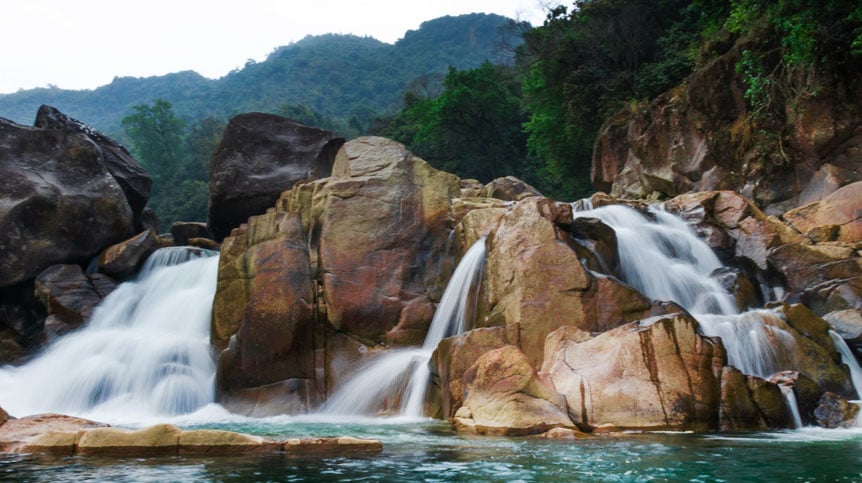

Meghalaya’s waterfalls are not all the same experience. Some are quick roadside viewpoints with dramatic valley depth, while others demand steep descents, slippery trails, or half-day detours before they feel rewarding. The real value lies in understanding which waterfalls fit your route, energy level, season, and travel style rather than trying to cover everything blindly.
Travellers staying around Shillong and Sohra can comfortably combine major waterfalls into scenic driving circuits. At the same time, places like Krang Suri, Nongriat, and Langshiang work better as dedicated excursions with buffer time. Visibility, cloud movement, water flow, and physical effort vary dramatically across seasons, especially during the monsoon and post-monsoon months.
Which Meghalaya Waterfalls Fit Your Travel Style?
| Experience Type | Best Waterfalls | Best For | Effort Level |
|---|---|---|---|
| Easy viewpoint stops | Nohkalikai, Seven Sisters, Dainthlen | Slow-paced sightseeing | Very low |
| Waterfalls with short descents | Elephant Falls, Wei Sawdong, Krang Suri | Moderate activity | Moderate |
| Trek-heavy waterfall experiences | Nongriat, Lyngkhoi | Active travellers | High |
| Photography-focused waterfalls | Wei Sawdong, Nohkalikai, Langshiang | Landscape photography | Medium |
| Monsoon power waterfalls | Seven Sisters, Kynrem, Langshiang | Rain-season travellers | Low–Moderate |
| Senior-friendly waterfall stops | Umiam, Dainthlen, Seven Sisters | Comfort-focused travellers | Easy |
Major Waterfalls in Meghalaya by Route & Experience Type
Sohra / Cherrapunji Waterfall Circuit Visitors
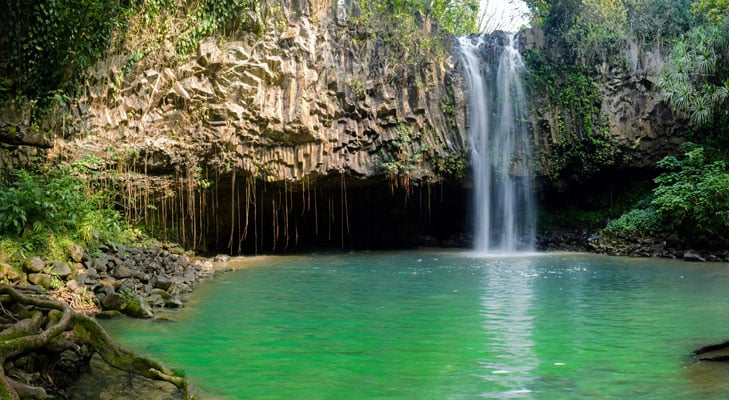
1. Nohkalikai Falls
This waterfall has India’s tallest plunge. It sits right on a gorge rim, so the entire experience depends on visibility into the valley below. On clear days, the water column is sharply defined. If there’s mist, only the drop zone is visible. Railings restrict movement, so viewing happens from a fixed edge with quick photo rotation.
Best timing: Early morning for clearer depth
2. Seven Sisters Falls
Seven Sisters is at a wide cliff face with multiple segmented streams. Waterfall’s full spread depends heavily on monsoon intensity. When the flow is strong, all segments appear together, and in lean months, only partial streams remain visible. Considering Seven Sisters’ popularity, you only get short standing time with quick turnover to make space for other tourists.
Best timing: Late morning to early afternoon for a brighter view
3. Dainthlen Falls
This waterfall is easiest to visit as a roadside stop with only a short walk to the viewpoint. Water volume increases during the monsoon, but mist and slippery edges can reduce visibility and movement near viewing areas. It pairs well with nearby Sohra attractions rather than needing dedicated time.
Best timing: Morning or late afternoon for clearer views and softer light
4. Wei Sawdong Falls
Wei Sawdong is one of Meghalaya’s most visually striking waterfalls because of its layered turquoise pools and three-step cascade structure. Unlike large roadside viewpoints, the experience here depends on descending into the valley through steep bamboo stairways and uneven paths. The lower levels offer the best visual payoff, especially post-monsoon when the water turns clearer and more vibrant.
The trail becomes slippery during monsoon months, and the descent can feel demanding while climbing back up. It works best for travellers comfortable with moderate physical effort rather than quick sightseeing stops.
Best timing: Late morning to early afternoon for stable light on the pools
Best combined with: Dainthlen Falls + Nohkalikai Falls + Mawsmai Cave
5. Kynrem Falls
Kynrem Falls is one of Meghalaya’s tallest waterfalls and works best during peak and late monsoon when all three waterfall tiers become clearly visible. Located near Thangkharang Park, the waterfall is usually experienced as a scenic valley-view stop rather than a trekking destination. Visibility depends heavily on cloud cover, so post-rain fog can reduce the overall impact even when water volume is strong.
Best timing: Midday to early afternoon during clearer weather windows
6. Thangkharang Falls
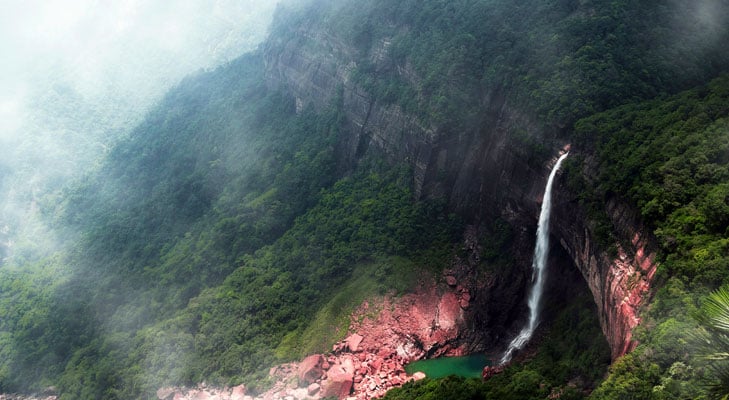
This waterfall sits slightly off the main circuit and faces a wide valley stretching into the Bangladesh plains. The viewing experience depends more on how far and clearly you can see across the valley than on the waterfall’s size. The tourist footfall is low here, so you can spend more time amidst nature.
Best timing: Afternoon for clearer long-range views
7. Saimika Falls
The waterfall is known for its layered rock setting and close-up viewpoints. The path can become slippery during rains, while post-monsoon offers safer footing and clearer views of water flow. Better suited for travellers comfortable with steps and uneven terrain.
Best timing: Early morning for easier descent in cooler weather
Trek & Descent-Based Experiences
1. Nongriat Falls
Nongriat sits deep in a valley and is reached via a long descent of 3,000+ steps from Tyrna village, with the return climb being the main challenge. Most travellers combine the waterfall with a visit to the Double Decker Living Root Bridge. Water flow is strongest in the monsoon, but the steps get slippery. Post-monsoon weather offers safer conditions. Note that the falls are a full-day commitment, not a quick add-on.
The descent itself is manageable for most active travellers, but the return climb is what makes Nongriat physically demanding. Humidity, stair repetition, and limited recovery points can slow the ascent significantly, especially during warmer months. Carry water, pace the climb carefully, and avoid starting late in the afternoon.
Best timing: Start early to avoid heat and ensure return before dark
2. Lyngkhoi Falls
Lyngkhoi Falls involves a steady downhill walk to reach the base, followed by a noticeable climb back up. The waterfall is narrower compared to others in the region. The return effort makes it less suitable for tight itineraries, families with seniors and children, or on low-energy travel days.
Best timing: Early afternoon
3. Krang Suri Falls
Krang Suri is defined by its clear blue pool at the base, where the water settles into a wide, calm basin rather than just flowing past. The colour and clarity improve post-monsoon when sediment drops, making the pool the main visual draw, not just the fall itself. Reaching it involves a stepped descent, and the return climb adds effort, so this works best as a half-day excursion rather than a quick stop.
Best timing: Early afternoon for stable light on the pool
Jaintia Hills & Jowai Waterfalls
Syntu Ksair Falls
Located near Jowai, this stop works best when planned on a West Jaintia Hills route rather than as a detour. Travellers usually visit it while covering nearby riverside viewpoints and local attractions, mostly owing to its spiritual importance to the local residents.
Best timing: Early evening for softer light by the riverside
West Khasi Hills & Offbeat Waterfalls
1. Langshiang Falls
Langshiang Falls works best for travellers exploring beyond the standard Shillong–Sohra circuit into the West Khasi Hills. The waterfall sits deep inside a dramatic valley landscape and feels more remote compared to crowded Sohra viewpoints. Reaching the best views requires additional driving and short walking sections, so it is better treated as a dedicated excursion instead of a quick detour.
Best timing: Post-monsoon mornings for clearer valley visibility
2. Bojong Falls
Bojong Falls is a quiet rural waterfall stop where there’s no fixed viewpoint or defined layout. In monsoons, it feels like a quiet rural waterfall. During the dry periods, it can reduce to a thin stream with limited visual impact. It’s only worth adding if you have buffer time or are exploring nearby routes, not as a primary stop.
Best timing: Late morning after visibility improves
3. Rangthylliang Falls
Rangthylliang Falls requires a short detour off the main Sohra – Mawsynram road, followed by a brief walk to an open edge rather than a built viewpoint. The waterfall is seen from a side angle across a valley, so you’re not limited to a single railing point. Flow improves during monsoon, but post-monsoon offers clearer visibility across the valley, making the overall view more defined.
Best timing: Afternoon for clearer conditions
4. Mawphlang Falls
Mawphlang Falls sits inside the Sacred Forest zone and is reached via a guided forest walk. The fall spreads across gentle tiers into a pool, but the main draw is the setting, dense canopy, controlled entry, and silence maintained by local customs. It’s not a quick stop and only makes sense if you’re already visiting the Sacred Grove as part of your Meghalaya itinerary.
Best timing: Midday
Planning a wider Meghalaya trip? Check out these Meghalaya tour packages to see how these waterfalls fit into your itinerary.
5. Mawlynnong Falls
A small waterfall near Mawlynnong village is usually visited as a quick stop while exploring the village and nearby attractions. Water flow varies seasonally and may feel underwhelming during summer. It is best treated as a brief add-on rather than a standalone visit.
Best timing: Late morning while visiting Mawlynnong village
Shillong Waterfall Circuit
1. Elephant Falls
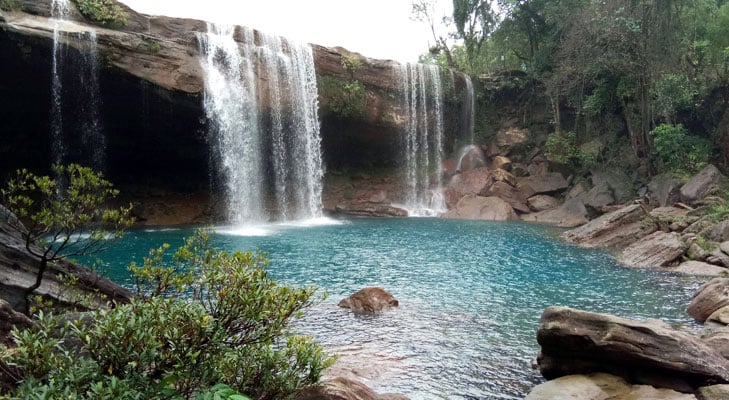
Elephant Falls is a tiered waterfall accessed through a stepped pathway, with each level offering a closer view. The descent is gradual but continuous, and you need to climb back up the same way. Surfaces can get slippery during the monsoon, and visitor movement is steady, so you won’t stay long at any one level.
Best timing: Late morning before peak crowd build-up
2. Sweet Falls
Sweet Falls is one of the steepest drops in the region, but access is tightly controlled due to safety concerns. You view it from a designated edge with barriers, and most of the drop is visible only in clear weather. The stop is short and restricted, with no option to move around for alternate angles. It is thrilling and beautiful, but you need to be extra cautious with children here.
Best timing: Late morning when the mist reduces
Visitors should remain within designated viewing areas and avoid attempting unofficial descents or edge access. The terrain around Sweet Falls has a history of accidents during wet conditions.
3. Bishop & Beadon Falls
These paired Shillong waterfalls are best visited together because both are viewed from nearby observation areas rather than separate long excursions. The waterfalls gain volume during the monsoon but are easier to appreciate post-monsoon when visibility improves across the valley.
Best timing: Morning or late afternoon
Best combined with: Elephant Falls + Shillong viewpoints
4. Umiam Falls
Umiam Falls is a short roadside halt along the Shillong–Cherrapunji drive. A visit to this spot works best as a mid-route break rather than a standalone destination. The cascade is modest, and its impact depends on recent rainfall instead of monsoons. There’s minimal walking involved, making it a great choice for those travelling with seniors.
Best timing: Midday during transit
Experience Seven Sisters Falls up close on this Meghalaya cycling tour.
Practical Notes
- Good grip shoes are essential
- Avoid after heavy rainfall
- Keep buffer time
- Carry water
- Not ideal for seniors or knee issues
Waterfalls by Comfort & Accessibility
| Easy Access | Moderate Effort | High Effort |
|---|---|---|
| Seven Sisters | Krang Suri | Nongriat |
| Dainthlen | Wei Sawdong | Lyngkhoi |
| Umiam | Elephant Falls | Saimika |
| Nohkalikai | Rangthylliang |
Travellers with seniors, knee issues, or tight itineraries should focus on viewpoint-based waterfalls rather than descent-heavy routes.
Seasonal Impact on the Waterfalls
| Type | Waterfalls | What Changes | When to Prioritise |
|---|---|---|---|
| Flow-dependent | Seven Sisters Falls, Bojong Falls, Mawlynnong Falls | Volume defines the experience. Falls look fragmented in dry months | Peak to late monsoon |
| Visibility-dependent | Nohkalikai Falls, Thangkharang Falls, Sweet Falls | Mist/cloud cover affects how much of the drop you can actually see | Post-monsoon |
| Access-sensitive | Nongriat Falls, Krang Suri Falls, Lyngkhoi Falls, and Saimika Falls. | Steps, trails, and descents become slippery in the monsoon | Post-monsoon |
| Low sensitivity | Elephant Falls, Umiam Falls, Dainthlen Falls, Syntu Ksair Falls | Experience remains fairly consistent, with only minor variation in flow. | Year-round |
Suggested Waterfall Circuits in Meghalaya
Half-Day Sohra Circuit
Nohkalikai → Seven Sisters → Dainthlen
Best for:
Active Waterfall Day
Wei Sawdong → Dainthlen → Krang Suri
Best for:
- active travelers
- photography-focused trips
Shillong Scenic Waterfall Route
Umiam → Elephant Falls → Sweet Falls → Shillong viewpoints
Best for:
Full-Day Jowai Waterfall Extension
Krang Suri → Syntu Ksair → riverside viewpoints
Best for:
- offbeat Meghalaya travel
West Khasi Hills Scenic Circuit
Langshiang Falls → Nongstoin landscapes → rural valley viewpoints
Best for:
This is a major missed opportunity.
Monsoon Travel Realities
Meghalaya’s waterfalls are most powerful during the monsoon, but movement becomes slower and more unpredictable. Trails, stairways, and roadside viewpoints can become slippery, visibility may collapse quickly under cloud cover, and travel buffers become important for longer circuits.
During heavy rainfall:
- avoid rushing multi-stop itineraries,
- carry waterproof footwear,
- keep backup indoor attractions,
- and avoid late-evening hill driving.
Visibility & Photography Conditions
Meghalaya waterfalls change dramatically depending on visibility rather than just water flow. During the heavy monsoon, waterfalls become more powerful, but mist and low clouds can hide the valley’s depth entirely. Post-monsoon months usually offer the best balance between water volume and visibility.
Photography conditions vary significantly:
How To Plan Your Travel Route?
Quick Stops
You can accommodate these falls within your driving route.
- Nohkalikai Falls – On the main Sohra circuit. Combine with Seven Sisters
- Thangkharang Falls – Very short detour off the Sohra – Mawsynram road
- Umiam Falls – Shillong – Sohra highway stop
- Sweet Falls – Shillong-side stop, pair with Elephant Falls
Half-day Excursions
Full-day excursion
These routes help you avoid backtracking –
- Route 1 (toward Mawsynram side): Nohkalikai Falls → Seven Sisters Falls → Thangkharang Falls → Rangthylliang Falls
- Route 2 (Shillong-side extension): Seven Sisters Falls → Nohkalikai Falls → Elephant Falls → Umiam Falls
- Route 3 (Jowai side – separate loop): Krang Suri Falls as a standalone extension; start early and return before dark due to longer travel time.
What to Carry for Meghalaya Waterfall Trips
- good-grip footwear,
- rain layer,
- drinking water,
- microfiber cloth for camera/phone lenses,
- extra socks during monsoon,
- cash for parking/local fees.
Especially important for:
- Wei Sawdong,
- Nongriat,
- Krang Suri.
Browse Meghalaya Packages Featuring Waterfalls
Here are some of the itineraries that are planned around the Shillong → Cherrapunji → Dawki/Mawlynnong → Jowai loop, so most major waterfalls fall naturally along the route without detours.


