
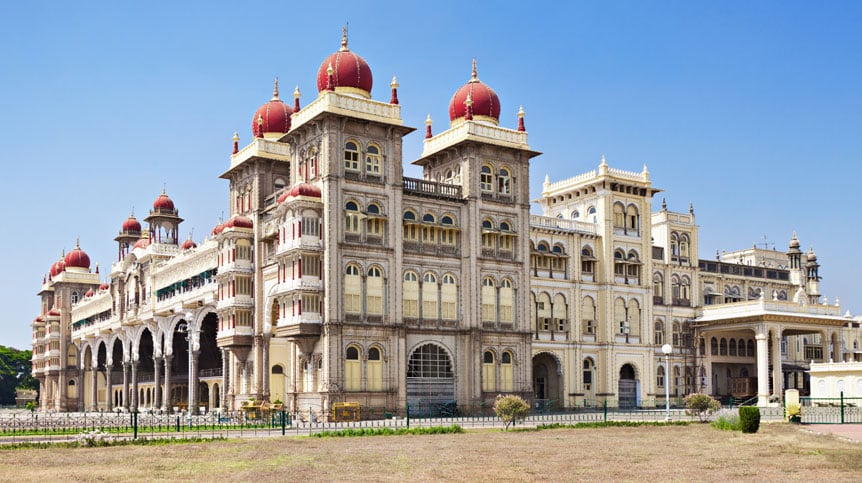

For travellers planning a visit to Bengaluru, the city is best explored through a few well-defined sightseeing circuits rather than attempting to cover its attractions in a single continuous route. Most itineraries work best when built around a specific theme, such as heritage landmarks, gardens and parks, museums, temples, or shopping districts, with nearby attractions grouped within the same part of the city.
This approach reduces travel time across Bengaluru’s busy urban landscape while allowing you to experience a balanced mix of history, culture, nature, and contemporary city life.
This guide groups Bengaluru’s attractions by theme, route, and travel relevance, helping tourists build efficient sightseeing itineraries based on their interests.
Quick Planning Snapshot
Which Places to Visit in Bangalore Should You Prioritise?
| Attraction / Area | Best For | Time Needed | Route Zone | Effort Level | Keep Short / Avoid If |
|---|---|---|---|---|---|
| Bengaluru Palace | Architecture, royal history, photography | 45–60 min | North / Central | Easy | You prefer deeper heritage over palace exteriors/interiors |
| Bengaluru Fort + Tipu Sultan’s Summer Palace | Old Bangalore history | 1–1.5 hrs together | Old city | Easy to moderate | You dislike crowded old-city routes |
| Vidhana Soudha + Attara Kacheri | Architecture, civic landmarks, photography | 20–30 min exterior viewing | Central | Easy | You expect interior access |
| Lalbagh Botanical Garden | Gardens, families, photography | 1.5–2 hrs | South | Easy to moderate | Midday heat is high or flower-show crowds are heavy |
| Cubbon Park | Green break, heritage buildings, families | 1–2 hrs | Central | Easy | You want a structured museum/monument visit |
| Visvesvaraya Museum / Planetarium | Children, science, indoor sightseeing | 1–2 hrs each | Central | Easy | You have only outdoor sightseeing time |
| Bannerghatta National Park | Wildlife, families, longer outing | Half to full day | South outer city | Moderate; transfer-heavy | You have only one city-centre day |
| ISKCON Bangalore | Temple, views, spiritual stop | 1–1.5 hrs | North / Rajajinagar | Easy to moderate | Temple crowds are high or group wants secular sightseeing |
| Bull Temple + Gavi Gangadhareshwara | South Bangalore temple circuit | 1–1.5 hrs together | South | Moderate | Tight spaces or temple restrictions are an issue |
| MG Road + Church Street | Cafés, books, urban culture | 1–2 hrs | Central / East | Easy | You want heritage depth |
| Commercial Street | Shopping, festive wear, accessories | 2–3 hrs | Central / East | High walking/crowds | Senior travellers or comfort-led guests dislike crowds |
A Guide to Bangalore Attractions by Category, Travel Style & Routes
1. Palace, Fort & Administrative Heritage
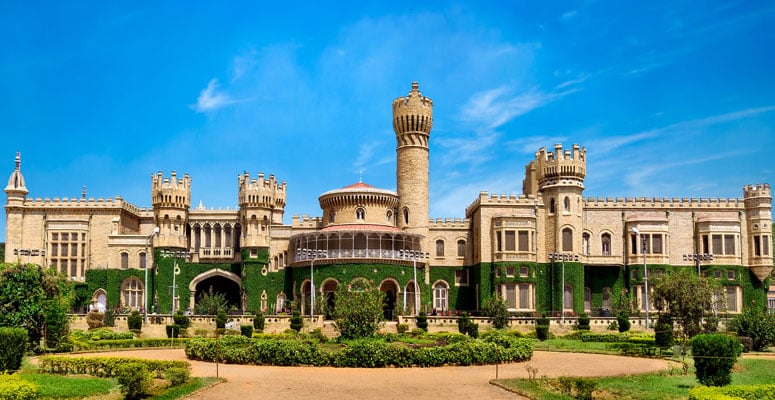
• Bengaluru Palace
Core appeal: Tudor-style royal palace known for its turrets, wood interiors, and castle-like silhouette, making it one of India’s most recognisable palace residences outside Rajasthan.
Who it suits: Families with children, Architecture enthusiasts, photographers, history-focused travellers, and first-time visitors.
Combine with: National Gallery of Modern Art, Sankey Tank, Indira Gandhi Musical Fountain Park.
Best season: October – February.
Ideal duration: 45 – 60 minutes.
• Bengaluru Fort
Core appeal: One of the few surviving remnants of Bengaluru’s early fortifications, reflecting the city’s evolution from a fortified settlement into a major urban centre.
Who it suits: Urban history enthusiasts, heritage walkers, cultural travellers, and solo travellers.
Combine with: Tipu Sultan’s Summer Palace, Kote Venkataramana Temple, and Bull Temple.
Best season: October – March
Ideal duration: 20 – 30 minutes.
• Tipu Sultan’s Summer Palace
Core appeal: Indo-Islamic palace celebrated for its teak pillars, arches, and painted interiors, preserving the residential architecture associated with Tipu Sultan’s court.
Who it suits: History enthusiasts, architecture lovers, heritage photographers, and cultural travellers.
Combine with: Bengaluru Fort, Kote Venkataramana Temple, Lalbagh Botanical Garden.
Best season: October – February.
Ideal duration: 30 – 45 minutes.
• Vidhana Soudha
Core appeal: Landmark seat of Karnataka’s legislature and one of the largest Neo-Dravidian government buildings in India.
Who it suits: Architecture enthusiasts, photographers, people interested in civic history, senior citizens, and first-time Bangalore visitors.
Combine with: Cubbon Park, Attara Kacheri, Visvesvaraya Industrial and Technological Museum.
Best season: Year-round
Ideal duration: 15–20 minutes (only exterior viewing is allowed).
2 Parks & Garden Attractions
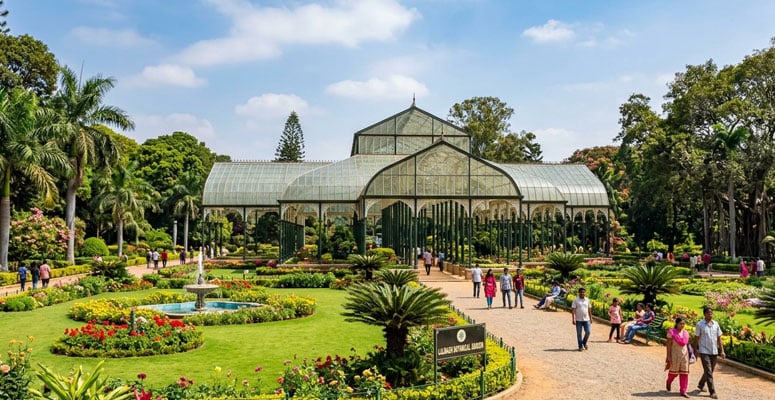
• Lalbagh Botanical Garden
Core appeal: Historic botanical garden famous for its glasshouse, centuries-old trees, and extensive plant collection that helped shape Bengaluru’s reputation as the Garden City.
Who it suits: Nature lovers, photographers, families, and botanical enthusiasts.
Combine with: Bull Temple, Gavi Gangadhareshwara Temple, Tipu Sultan’s Summer Palace in a half-day circuit of South Bangalore.
Best season: Year-round; especially rewarding during January and August flower-show periods.
Best paired with: Bull Temple, Gavi Gangadhareshwara Temple, Tipu Sultan’s Summer Palace, or Indian Music Experience Museum, depending on traveller type.
Ideal duration: 1.5 – 2 hours.
• Cubbon Park
Core appeal: Expansive urban park that combines shaded avenues, heritage buildings, and open green spaces in the heart of the city, with Attara Kacheri adding a prominent colonial-era landmark.
Who it suits: Active travellers, families, photographers, and those seeking a break from the city’s hustle and bustle.
Combine with: Vidhana Soudha, Visvesvaraya Industrial and Technological Museum, Government Museum Bengaluru.
Best season: Year-round
Ideal duration: 1 – 2 hours.
• Indira Gandhi Musical Fountain Park
Core appeal: Evening attraction featuring synchronised water, light, and music displays in a compact urban setting.
Who it suits: Families with children, evening strollers, senior citizens, and travellers seeking a short sightseeing stop without extensive walking.
Combine with: Bengaluru Palace, Vidhana Soudha, Jawaharlal Nehru Planetarium.
Best season: October – February.
Ideal duration: 30 – 45 minutes.
3. Museums, Art & Science
Bangalore’s museums work best as afternoon anchors, especially during summer or rain. Do not try to cover every museum in one trip. Choose one major museum based on the traveller’s interest: science for families, art for culture-led travellers, aerospace for aviation interest, music for experience-led travellers, and archaeology for history-focused visitors.
• Visvesvaraya Industrial and Technological Museum
Core appeal: One of India’s leading science museums, featuring interactive exhibits that explain engineering, technology, space science, and scientific principles through hands-on displays.
Who it suits: Families with children, students, science enthusiasts, and curious learners of all ages.
Combine with: Cubbon Park, Government Museum Bengaluru, Vidhana Soudha.
Best season: Year-round
Ideal duration: 1.5–2 hours.
• Government Museum Bengaluru
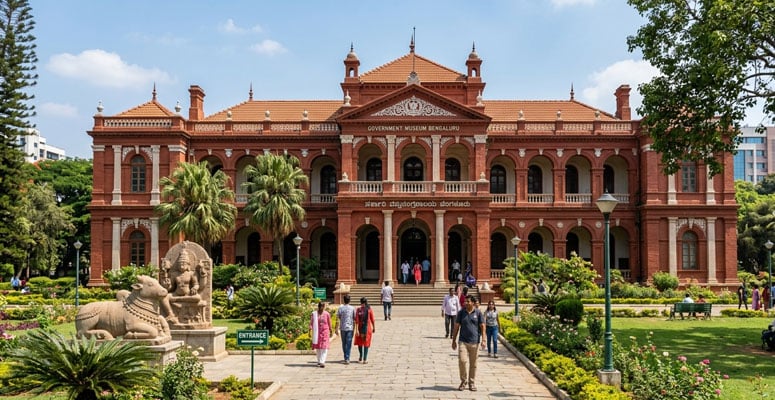
Core appeal: Houses archaeological artifacts, sculptures, inscriptions, coins, and historical collections spanning multiple periods of South Indian history.
Who it suits: History and archaeology enthusiasts, researchers, and cultural travellers.
Combine with: Cubbon Park, Visvesvaraya Industrial and Technological Museum, Vidhana Soudha.
Best season: Year-round
Ideal duration: 45–60 minutes.
• National Gallery of Modern Art
Core appeal: Art museum set within a heritage mansion, showcasing modern and contemporary Indian artworks across paintings, sculptures, and curated exhibitions.
Who it suits: Art lovers, cultural travellers, photographers, and solo travellers.
Combine with: Bengaluru Palace, Sankey Tank, and Indira Gandhi Musical Fountain Park.
Best season: Year-round
Ideal duration: 1 – 1.5 hours.
• HAL Heritage Centre and Aerospace Museum
Core appeal: India’s first aerospace museum, documenting the country’s aviation history through aircraft displays, flight simulators, engines, and aerospace exhibits.
Who it suits: Aviation enthusiasts, families with children, senior citizens, students, and technology-focused travellers.
Combine with: Ulsoor Lake, MG Road, Church Street.
Best season: October – February.
Ideal duration: 1.5 – 2 hours.
• Jawaharlal Nehru Planetarium
Core appeal: The astronomy centre is known for its immersive sky theatre shows, astronomy exhibits, and educational programmes focused on space and celestial science.
Who it suits: Families with children, students, science enthusiasts, and travellers who prefer an indoor sightseeing experience.
Combine with: Indira Gandhi Musical Fountain Park, Cubbon Park, Vidhana Soudha.
Best season: Year-round
Ideal duration: 1 – 1.5 hours.
• Indian Music Experience Museum
Core appeal: Interactive museum dedicated to the history, instruments, traditions, and evolution of Indian music across different regions and genres.
Who it suits: Music lovers, cultural travellers, families with older children, and those seeking experiences beyond conventional sightseeing.
Combine with: Lalbagh Botanical Garden, Bull Temple.
Best season: Year-round.
Ideal duration: 1 – 1.5 hours.
4. Nature, Wildlife & Lakes
• Bannerghatta National Park
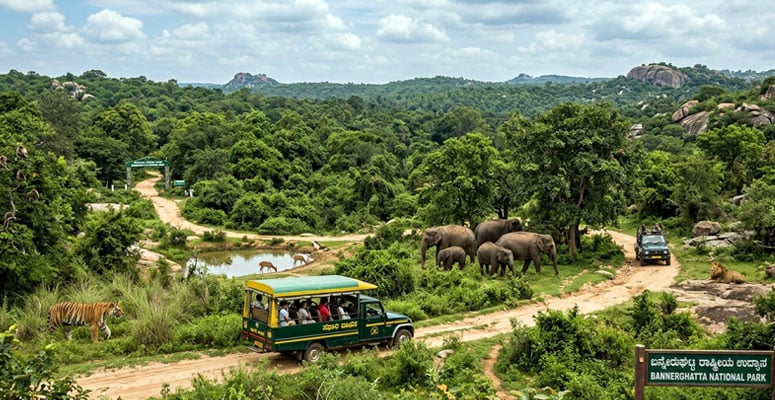
Located on Bengaluru’s southern edge, Bannerghatta National Park offers one of the few opportunities within a major Indian city to experience wildlife, safari zones, and conservation-focused attractions in a single visit. It is often treated as a standalone half-day or full-day excursion rather than being combined with central-city sightseeing.
Animals to see: Bengal tigers, Asiatic lions, leopards, sloth bears, elephants, spotted deer, sambar deer, crocodiles, and various reptile species.
Best season: October – March.
• Ulsoor Lake
Ulsoor Lake provides a convenient break from the surrounding commercial districts and is often included alongside MG Road, Church Street, and Halasuru Someshwara Temple. The lake is best suited to relaxed walks, photography, and short pauses between other city attractions.
Birds to see: Egrets, herons, cormorants, kingfishers, and seasonal migratory waterbirds.
Best season: October – February.
• Sankey Tank
Sankey Tank is a popular recreational space in North Bengaluru. It fits naturally into itineraries that include Bengaluru Palace, ISKCON Bangalore, or the National Gallery of Modern Art, and is particularly popular for morning walks and birdwatching.
Birds to see: Spot-billed pelicans, cormorants, egrets, pond herons, kingfishers, and other urban wetland birds.
Best season: November – February.
5. Temple & Spiritual
These sites are particularly relevant for cultural travellers, architecture enthusiasts, photographers, pilgrims, and those looking to balance Bengaluru’s parks, museums, and urban attractions with heritage experiences.
Bangalore’s temples are best added as short cultural stops within wider route circuits. They are not all equal in visit value: ISKCON is stronger for families and panoramic city context, Bull Temple and Gavi Gangadhareshwara work well as a South Bangalore pair, Halasuru Someshwara fits the Ulsoor / MG Road side, and Kote Venkataramana is best for deeper old-city heritage.
• ISKCON Bangalore
Why visit: One of India’s largest ISKCON temple complexes, combining contemporary temple architecture, spiritual programmes, and elevated views across parts of the city.
Festivals celebrated: Janmashtami (August–September), Rama Navami (March–April), Narasimha Jayanti (April–May), Diwali (October–November).
Combine with: Sankey Tank, Bengaluru Palace.
Ideal duration: 1 – 1.5 hours.
• Bull Temple
Why visit: Home to one of India’s largest monolithic Nandi statues, carved from a single granite boulder and closely associated with Bengaluru’s historic Basavanagudi neighbourhood.
Festivals celebrated: Kadalekai Parishe (November – December), Maha Shivaratri (February – March).
Combine with: Gavi Gangadhareshwara Temple, Lalbagh Botanical Garden.
Ideal duration: 20–30 minutes.
• Gavi Gangadhareshwara Temple
Why visit: Cave-like temple built within a natural rock formation, best known for the annual Makara Sankranti sunlight alignment that illuminates the shrine.
Festivals celebrated: Makara Sankranti (January), Maha Shivaratri (February – March).
Combine with: Bull Temple, Lalbagh Botanical Garden.
Ideal duration: 30 – 45 minutes.
• Halasuru Someshwara Temple
Why visit: One of Bengaluru’s oldest temples, recognised for its towering gopuram, detailed stone carvings, and Vijayanagara-era architectural features.
Festivals celebrated: Maha Shivaratri (February – March), Brahmotsavam (March – April).
Combine with: Ulsoor Lake, MG Road, Church Street.
Ideal duration: 30 – 45 minutes.
• Kote Venkataramana Temple
Why visit: Historic Vaishnavite temple located within Bengaluru’s former fort area, preserving links to the city’s early settlement and pre-colonial history.
Festivals celebrated: Vaikuntha Ekadashi (December – January), Brahmotsavam (dates vary annually).
Combine with: Bengaluru Fort, Tipu Sultan’s Summer Palace.
Ideal duration: 20 – 30 minutes.
6. Urban Culture and Shopping
• Church Street
This is a well-known cultural high street, lined with independent bookstores, cafés, art spaces, and heritage-era commercial buildings.
Best for buying: Books, vinyl records, board games, speciality stationery, independent fashion labels, and lifestyle products.
Shopping notes: Prices are generally fixed. The area focuses more on curated retail and branded outlets than bargain shopping.
Combine with: MG Road, Cubbon Park, Ulsoor Lake.
Ideal duration: 1 – 2 hours.
• MG Road
Bengaluru’s historic commercial boulevard, known for its mix of established retail addresses, city landmarks, and modern shopping centres.
Best for buying: Branded apparel, footwear, electronics, watches, cosmetics, and premium retail products.
Shopping notes: Fixed pricing; ideal for branded and organised retail.
Combine with: Church Street, Ulsoor Lake, Halasuru Someshwara Temple.
Ideal duration: 1 – 2 hours.
• Commercial Street
This is one of the busiest shopping districts, offering a dense concentration of independent retailers across multiple interconnected market lanes.
Best for buying: Clothing, footwear, fashion accessories, jewellery, fabrics, handbags, and festive wear.
Shopping notes: Bargaining is common in smaller shops. You’ll find better value than most central-city retail districts.
Combine with: MG Road, Church Street, Halasuru Someshwara Temple.
Ideal duration: 2 – 3 hours.
What to Prioritise and What to Keep Short?
| Travel Category | Prioritise | Keep Short / Skip If Time Is Limited |
|---|---|---|
| Families with children | Bannerghatta National Park, Visvesvaraya Museum, Jawaharlal Nehru Planetarium, Lalbagh, Musical Fountain if operational | Bengaluru Fort and Kote Venkataramana Temple, unless children enjoy history; Gavi Gangadhareshwara if tight spaces are uncomfortable |
| Senior citizens | Cubbon Park, Lalbagh, ISKCON Bangalore, HAL Museum, Vidhana Soudha exterior | Commercial Street during peak crowd hours; Bengaluru Fort if uneven walking is difficult |
| Photographers | Lalbagh, Cubbon Park, Vidhana Soudha, Attara Kacheri, Ulsoor Lake, Sankey Tank, Bengaluru Palace | Commercial Street if clean frames are important; indoor museums where photography is restricted |
| Wildlife / nature travellers | Bannerghatta, Lalbagh, Sankey Tank, Ulsoor Lake | Central heritage stops if the trip has only one nature-focused day |
| Culture and history travellers | Bengaluru Palace, Bengaluru Fort, Tipu Sultan’s Summer Palace, Vidhana Soudha, Government Museum, temples | Shopping streets, unless urban culture is part of the brief |
| Solo travellers | Cubbon Park, Church Street, MG Road, NGMA, Ulsoor Lake, ISKCON | Isolated late-evening lake walks or crowded markets without local comfort |
| Road trippers | Bannerghatta via the south corridor, HAL Museum near the airport-side route | Old-city heritage detours during peak traffic |
Post-monsoon (October – November): This is when the city feels most balanced, greenery is at its peak, the weather is comfortable, and movement is easy. Expect slightly higher crowds as conditions are ideal for sightseeing.
Suggested Sightseeing Circuits in Bangalore
1. Central Bengaluru Culture Circuit
Route: Cubbon Park → Attara Kacheri / Vidhana Soudha exterior → Visvesvaraya Museum → MG Road / Church Street
Best for: First-time visitors, families, short stays and metro-friendly exploration.
Why it works: Keeps movement compact around the central city and combines green space, civic architecture, science, and urban culture.
Time needed: Half day to full day.
2. South Bangalore Heritage and Garden Circuit
Route: Lalbagh → Bull Temple → Gavi Gangadhareshwara Temple → Tipu Sultan’s Summer Palace / Bengaluru Fort
Best for: Heritage travellers, temple interest, photography, families with moderate walking comfort.
Why it works: Keeps the route within the south/old-city side and avoids unnecessary cross-city movement.
Time needed: Half day to full day.
3. North Bangalore Palace and Leisure Circuit
Route: Bengaluru Palace → NGMA → Sankey Tank → ISKCON Bangalore
Best for: Architecture, art, relaxed sightseeing and families.
Why it works: Combines palace, art, lake, and temple in a manageable northern arc.
Time needed: Half day to full day.
4. Science and Family Circuit
Route: Visvesvaraya Museum → Jawaharlal Nehru Planetarium → Indira Gandhi Musical Fountain Park if operational
Best for: Families with children, students, indoor sightseeing and summer/monsoon days.
Why it works: Reduces outdoor fatigue and clusters science-led stops around the central city.
Time needed: Half day.
5. Bannerghatta Nature Circuit
Route: Bannerghatta National Park → optional Lalbagh / Sankey Tank if energy allows
Best for: Wildlife interest, children and slower family travel.
Why it works: Bannerghatta is transfer-heavy and works better as a dedicated outer-city outing.
Time needed: Half to full day.
6. MG Road, Church Street and Commercial Street Shopping Circuit
Route: MG Road → Church Street → Commercial Street
Best for: Shopping, cafés, books, urban culture and evening city life.
Why it works: Keeps shopping and food exploration in one central/east-side zone.
Time needed: 3–5 hours.
Bangalore Sightseeing Mistakes to Avoid
Avoid combining:
- Bannerghatta National Park with a full central-city sightseeing day.
- Bengaluru Palace, Lalbagh, Bannerghatta and Commercial Street in one day.
- Too many museums in one half day unless the group specifically wants indoor sightseeing.
- Old-city heritage stops during peak traffic if the group has a flight/train deadline.
- Commercial Street with senior travellers during weekends or festive crowd periods.
- Lalbagh flower-show visit with a tightly packed city circuit.
- Musical Fountain Park is a guaranteed evening plan without checking the current show status.
- Temple festivals have tight schedules unless crowd tolerance is high.
A better rule is to choose one route theme per half day: central culture, South Bangalore heritage, palace and art, science/family, Bannerghatta nature, or shopping/urban culture.
Best Time to Visit Bangalore Attractions
| Season | Best For | Planning Caution |
|---|---|---|
| December–February | Outdoor sightseeing, gardens, heritage walks, lakes | Popular spots are busier on weekends; start early for Lalbagh, Cubbon Park and Palace. |
| March–May | Indoor museums, temples, and short morning garden visits | Midday heat makes parks, lakes and heritage walks tiring. Use museums and galleries in the afternoon. |
| June–September | Green parks, lakes, and moody photography | Rain can interrupt walking plans. Keep indoor backups such as museums, galleries and planetarium shows. |
| October–November | Balanced weather, greenery, and city sightseeing | Good period for mixed circuits, but expect higher crowds in popular parks and shopping districts. |
| Flower-show periods | Lalbagh-focused trips | Verify dates, crowd levels, tickets and access before positioning Lalbagh as the main anchor. |
Plan Your Bangalore Sightseeing Route
Planning Bangalore as a city break or as part of a Karnataka journey? The right sightseeing route depends on your travel month, number of days, interests, group comfort and whether you want heritage, gardens, museums, temples, shopping, wildlife or family-friendly attractions.
IndianHoliday’s Karnataka specialists can help you build a private Bangalore route that reduces cross-city travel and connects the city with Mysore, Coorg, Hampi or other Karnataka extensions.
Share these details before finalising your plan:
- Travel month
- Number of days in Bangalore / Karnataka
- Interest: heritage, gardens, museums, temples, shopping, wildlife, food or family sightseeing
- Children or senior travellers in the group
- Walking comfort and crowd tolerance
- Private vehicle requirement
- Whether Bangalore is standalone or part of a Mysore, Coorg, Hampi or Karnataka circuit
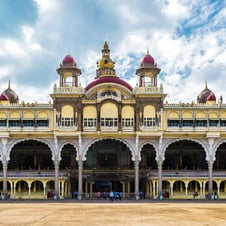
 Bangalore Palace
 Cubbon Park
 Tipu Sultan’s Palace
 ISKCON
 Art of Living International Center
 Innovative Film City