
Agra begins with the Taj Mahal for most travellers, but the city is best enjoyed when planned as a set of well-matched heritage zones. A short visit can focus on the Taj Mahal and Agra Fort, while a slower trip allows time for Fatehpur Sikri, riverside viewpoints, Mughal tombs, old bazaars, and garden stops.
This guide is meant for heritage travellers, couples, families, photographers, Golden Triangle travellers, and visitors planning Agra as part of a North India or Uttar Pradesh holiday.
Planning Snapshot
Ideal Stay: Half a day for the Taj Mahal and Agra Fort; 1 full day for the core heritage circuit; 2 days if you want Fatehpur Sikri, Mughal tombs, and nearby extensions.
Best Pacing: Start early, keep the main monuments for cooler hours, and use the second half of the day for riverside views, quieter tombs, or local culture.
Guided Context: Helpful for the Taj Mahal, Agra Fort, Fatehpur Sikri, Itimad-ud-Daulah, and Akbar’s Tomb at Sikandra.
Best Suited For: Heritage travellers, architecture lovers, couples, families, photographers, and Golden Triangle travellers.
Short-Stay Advice: If you have limited time, prioritise the Taj Mahal, Agra Fort, and either Mehtab Bagh or Itimad-ud-Daulah.
Practical Note: Agra sightseeing needs time for security checks, walking, queues, photography, heat, and traffic. Do not overload the Taj Mahal day.
Top attractions to explore in Agra
Iconic Mughal Landmarks
These are the places most first-time visitors should plan around. They carry Agra’s heritage value and form the most practical sightseeing route.
1. Taj Mahal
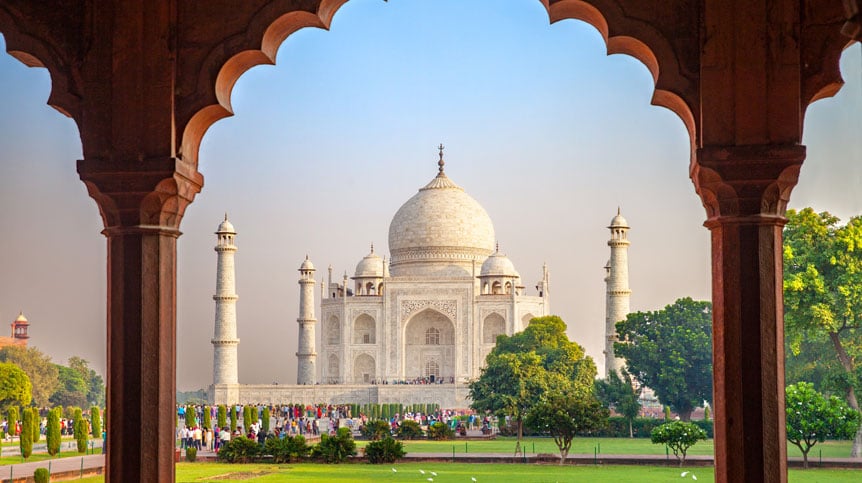
The Taj Mahal matters not only because it is Agra’s most recognised monument but also because it shapes the entire rhythm of Agra sightseeing. The marble work, riverside setting, symmetry, gardens, and changing light all need time. A rushed visit between too many other monuments usually weakens the experience.
Time Needed: 2 to 3 hours.
Best Timing: Early morning or soft-light hours.
Best Paired With: Agra Fort, Mehtab Bagh, or Taj Nature Walk.
Traveller Fit: First-time visitors, couples, photographers, heritage travellers, and Golden Triangle travellers.
2. Agra Fort
Agra Fort is not just a defensive structure. It was a royal and political centre of the Mughal period, with palaces, audience halls, courtyards, river-facing sections, and garden spaces that help travellers understand Agra beyond the Taj Mahal. It pairs naturally with the Taj because both reveal different sides of Mughal power and design.
Time Needed: 1.5 to 2 hours.
Best Timing: Morning after the Taj Mahal or late afternoon in cooler weather.
Best Paired With: Taj Mahal, Anguri Bagh, and Mehtab Bagh.
Traveller Fit: History travellers, architecture-focused visitors, families, and guided heritage guests.
3. Anguri Bagh
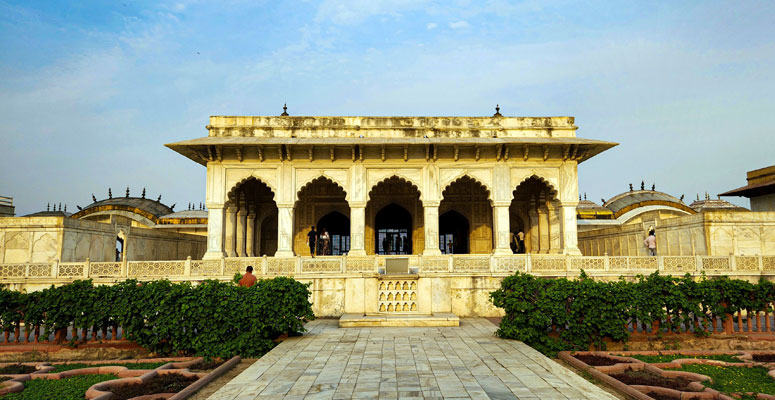
Anguri Bagh is best treated as part of the Agra Fort experience. This garden court adds softness to the fort’s palace sections and helps travellers understand that the fort was not only a military space but also a royal complex with residential, ceremonial, and garden areas.
Time Needed: Included within the Agra Fort visit.
Best Timing: While touring Agra Fort.
Best Paired With: Agra Fort’s palace sections and nearby courtyards.
Traveller Fit: Architecture lovers, guided heritage travellers, and visitors who enjoy palace layouts.
Riverside Views & Gardens
These places help travellers see Agra beyond the main monument entrances. They are useful for photographers, couples, relaxed travellers, and those who want breathing space between heavier heritage stops.
1. Mehtab Bagh
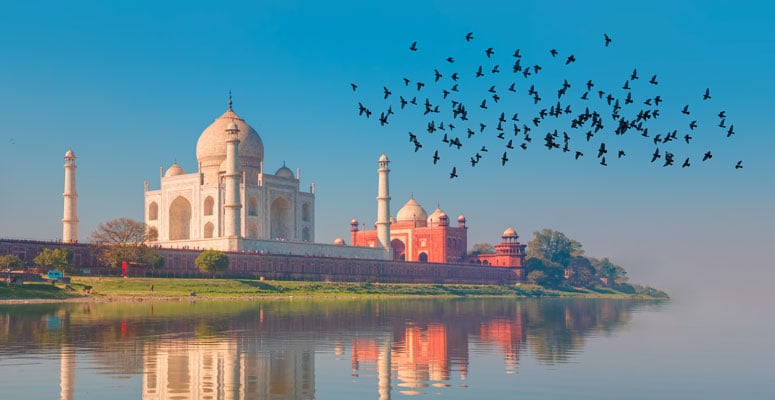
Mehtab Bagh is one of the most useful riverside viewpoints for seeing the Taj Mahal from across the Yamuna. It changes the way travellers experience the Taj: less as a close-up monument visit and more as part of a river-and-garden setting.
Time Needed: 45 minutes to 1 hour.
Best Timing: Late afternoon or sunset light.
Best Paired With: Taj Mahal, Itimad-ud-Daulah, and Chini ka Rauza.
Traveller Fit: Photographers, couples, relaxed travellers, and second-time Agra visitors.
2. Taj Nature Walk
Taj Nature Walk works as a lighter break near the Taj area. It is best understood as a nature-and-viewpoint pause rather than an adventure activity. Travellers who have already visited the Taj Mahal may enjoy the softer setting, occasional framed views, and slower pace.
Time Needed: 45 minutes to 1 hour.
Best Timing: Morning or late afternoon.
Best Paired With: Taj Mahal and Mehtab Bagh.
Traveller Fit: Photographers, slow travellers, repeat visitors, and couples.
3. Itimad-ud-Daulah / Baby Taj
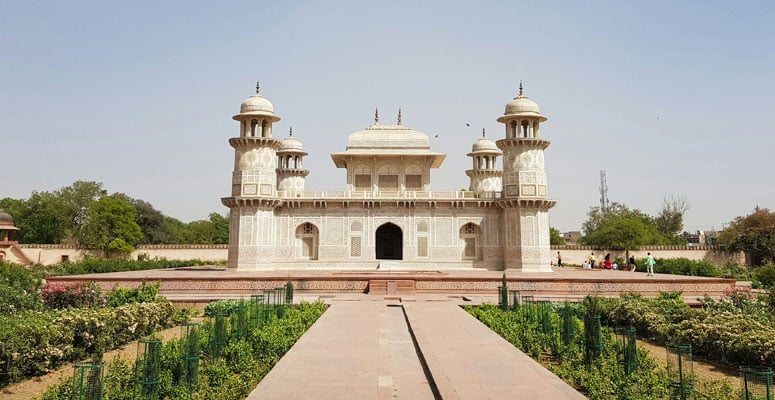
Itimad-ud-Daulah is often called Baby Taj, but its value is not only in comparison with the Taj Mahal. The refined marble work, detailed inlay, riverside setting, and quieter atmosphere make it one of Agra’s most rewarding smaller Mughal sites.
Time Needed: 45 minutes to 1 hour.
Best Timing: Morning or late afternoon.
Best Paired With: Mehtab Bagh, Chini ka Rauza, and Agra Fort.
Traveller Fit: Architecture lovers, photographers, heritage travellers, and second-day visitors.
4. Chini ka Rauza
Chini ka Rauza is a quieter, more specialist stop on the riverside heritage side of Agra. Its tilework and Mughal-era character make it interesting for travellers who enjoy less-crowded historic places, but it is not a priority for every first-time visitor.
Time Needed: 30 to 45 minutes.
Best Timing: Morning or late afternoon.
Best Paired With: Itimad-ud-Daulah and Mehtab Bagh.
Traveller Fit: Heritage enthusiasts, repeat visitors, architecture-focused travellers, and slow travellers.
Mughal Tombs and Heritage Stops
These places are best for travellers staying longer or those who want Agra beyond the Taj-Fort circuit. They add scale, variety, and quieter heritage value, but they are not essential for every short visit.
Akbar’s Tomb, Sikandra
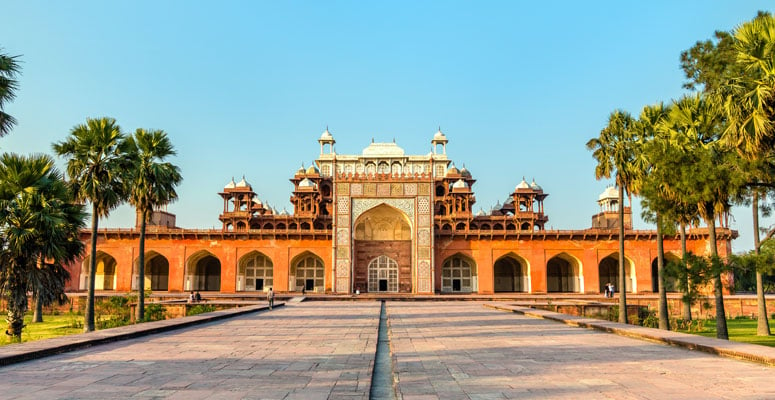
Akbar’s Tomb at Sikandra is a spacious imperial tomb complex with a different rhythm from the crowded Taj Mahal area. The grounds, gateways, and tomb architecture make it worthwhile for travellers interested in Mughal history beyond Shah Jahan’s Agra.
Time Needed: 1 to 1.5 hours.
Best Timing: Morning or late afternoon.
Best Paired With: A second-day Agra plan or onward road movement.
Traveller Fit: History travellers, architecture lovers, families, and repeat visitors.
Old Agra, Bazaars, and Local Culture
This works best as an add-on after sightseeing. Old Agra’s bazaars and local food help travellers understand the city’s living character, but this page remains focused on attractions and heritage planning rather than shopping or food trails.
Kinari Bazaar
Kinari Bazaar is an old-city cultural add-on, not a main heritage monument. Its lanes are known for wedding-related shopping, fabrics, trims, crafts, small shops, and local street atmosphere. It suits travellers who enjoy markets and do not mind crowds or slow movement.
Time Needed: 1 hour or more, depending on interest.
Best Timing: Late afternoon or evening, avoiding peak heat.
Best Paired With: Jama Masjid area or an old-city local walk.
Traveller Fit: Market lovers, culture-focused travellers, families interested in local shopping, and repeat visitors.
Food and Culture
Agra’s food culture is best treated as a local add-on after sightseeing. If food is a priority, plan it around your sightseeing route instead of making long detours in the middle of a heritage day. A short evening food stop after Agra Fort, Mehtab Bagh, or Kinari Bazaar usually works better than squeezing it between the Taj Mahal and Fatehpur Sikri.
Time Needed: 30 minutes to 1.5 hours, depending on interest.
Best Timing: Evening or after the main sightseeing is complete.
Best Paired With: Kinari Bazaar, old-city movement, or a relaxed second-day plan.
Traveller Fit: Families, culture-focused travellers, and visitors interested in local food.
Nearby Places from Agra
This is for travellers who want to understand what can be added to their trip around Agra without rushing. These places should not be treated as automatic add-ons. Add them only when your route, time, and interest support them.
Fatehpur Sikri
Fatehpur Sikri sits outside the main Agra city circuit and needs separate planning. It is a former Mughal imperial city with grand gateways, palace structures, courtyards, and religious spaces and a scale that feels distinct from that of the Taj Mahal and Agra Fort. Its value lies in understanding Mughal urban planning and court life, not simply seeing another monument.
Wildlife SOS
Wildlife SOS near Agra is an ethical, pre-planned conservation visit rather than a casual zoo-style attraction. It suits families, animal welfare-conscious travellers, students, and educational travel groups who want a meaningful detour beyond monuments.
Visits should be checked and arranged in advance through official channels. The experience should be approached with respect for rescue and conservation work, not as entertainment.
Mathura and Vrindavan
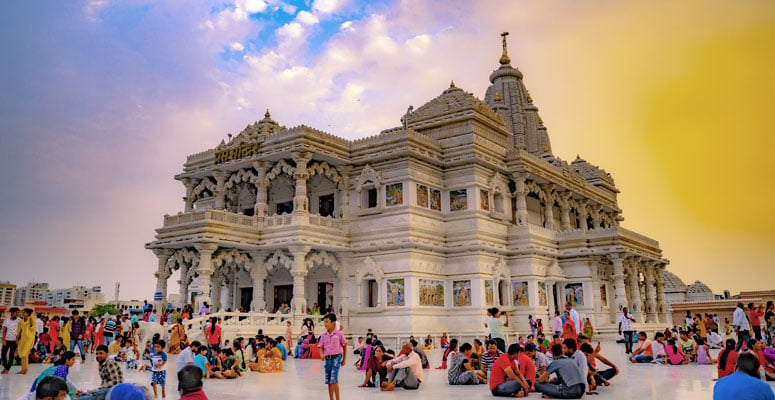
Mathura and Vrindavan can be added from Agra when the traveller wants to extend the trip into the Braj region. This works best for pilgrims, families, and travellers interested in Krishna-related temples and devotional towns.
This pairing should not be added casually after a packed Agra sightseeing day. Mathura and Vrindavan need their own temple timing, crowd, and traffic planning, especially during Holi, Janmashtami, and weekends.
Bharatpur
Bharatpur can work as a practical extension from Agra for travellers interested in birdlife and a slower nature break. It is especially useful when the route is moving toward Rajasthan or when the traveller wants a softer contrast after monument-heavy sightseeing.
It suits birders, families, photographers, and travellers who want a nature-led pause. It should be added only when the route makes sense, not as a random extra stop.
How to Plan Agra Sightseeing
If you have half a day
Prioritise:
Taj Mahal
Agra Fort
Optional add-on:
Mehtab Bagh, if timing and energy allow
This is the cleanest short Agra plan. It covers the city’s essential heritage pair without turning the visit into a race. Skip Fatehpur Sikri, Sikandra, Chini ka Rauza, Kinari Bazaar, Wildlife SOS, Mathura, Vrindavan, and Bharatpur unless your visit extends.
If you have one full day
Use the day in two clear parts.
Morning:
Taj Mahal
Agra Fort
Afternoon / Evening:
Itimad-ud-Daulah
Mehtab Bagh
Kinari Bazaar or local food, if your group still has energy
If you have two days
Day 1 focus:
Taj Mahal
Agra Fort
Mehtab Bagh
Itimad-ud-Daulah
Day 2 focus, depending on interest:
Fatehpur Sikri for Mughal heritage depth
Akbar’s Tomb, Sikandra for a quieter imperial tomb visit
Chini ka Rauza for specialist riverside heritage
Kinari Bazaar for old-city culture
Wildlife SOS for a conservation-based detour
Mathura/Vrindavan only if the trip has a Braj pilgrimage focus
Best Time to Visit
October to March is generally the most comfortable period for sightseeing in Agra. This season works better for long monument visits, walking, photography, and nearby extensions such as Fatehpur Sikri or Mathura.
Summer can be harsh, especially around open monuments and stone surfaces. If travelling between April and June, keep the Taj Mahal and Agra Fort for early morning and avoid heavy sightseeing in the afternoon.
Monsoon can bring softer skies and fewer crowds on some days, but rain may affect outdoor movement and photography plans. Keep flexibility if your visit includes Mehtab Bagh, Taj Nature Walk, or Fatehpur Sikri.
Travel Tips for Visiting
Plan Your Agra Sightseeing with IndianHoliday!
Agra is easiest to enjoy when sightseeing is planned through clear circuits: the Taj Mahal and Agra Fort for the essential visit, riverside gardens and tombs for a slower Mughal layer, Fatehpur Sikri for deeper heritage, and nearby extensions only when the route supports them. A well-paced plan helps travellers experience Agra’s main monuments without turning the trip into a tiring checklist.