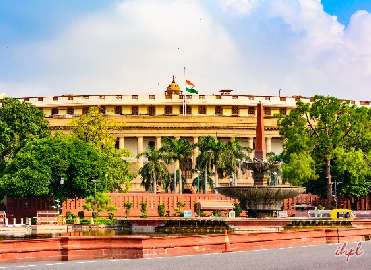

Uttar Pradesh is best planned by travel theme rather than as a single long sightseeing checklist. The state brings together Mughal and Nawabi heritage, living spiritual cities, Krishna and Ramayana pilgrimage routes, Buddhist sites, Bundelkhand forts, and Terai wildlife. Each route needs a different pace. The value is not in adding every famous name to one trip, but in choosing the right places and combining them sensibly.
Top attractions to explore in Uttar Pradesh
Heritage and Mughal Architecture
1. Agra
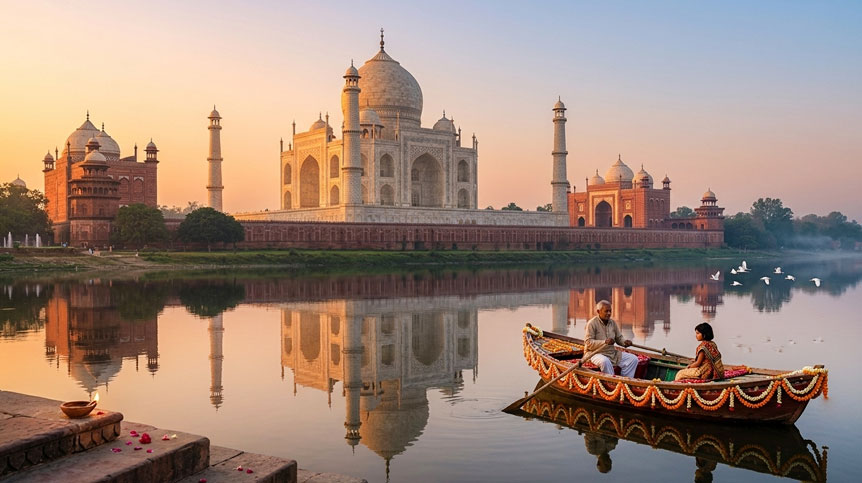
Agra is the strongest heritage stop in Uttar Pradesh. The Taj Mahal is the main reason many travellers come, but Agra Fort, Mehtab Bagh, and other Mughal-era sites give the city more depth than a single-monument visit. It works well for travellers who want architecture, photography, and a compact but high-impact heritage experience.
2. Fatehpur Sikri
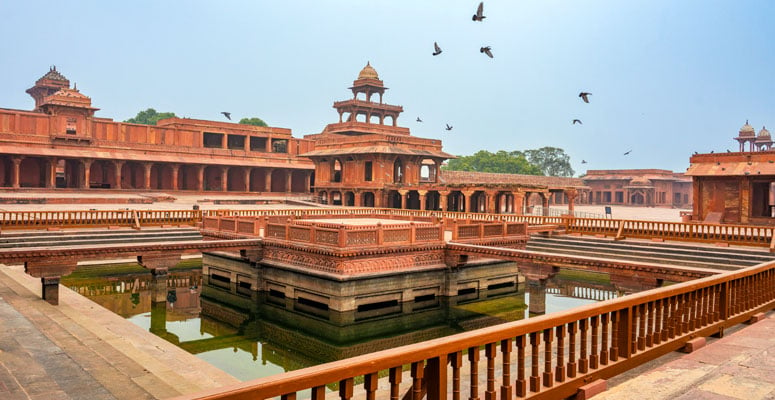
Fatehpur Sikri is one of the heritage extensions from Agra. The former Mughal capital complex adds context through Buland Darwaza, Jama Masjid, palace structures, courtyards, and the larger imperial layout. It is especially useful for travellers who want architectural storytelling beyond the Taj Mahal.
3. Lucknow
Lucknow gives Uttar Pradesh a very different heritage layer. Bara Imambara, Chota Imambara, Rumi Darwaza, the Residency, and the old-city lanes reflect Nawabi architecture, colonial-era memory, and a slower city character. It suits travellers who enjoy heritage with atmosphere rather than only monument-to-monument sightseeing.
4. Jhansi
Jhansi is most useful for travellers following Bundelkhand history. Jhansi Fort, the association with Rani Lakshmibai, and its role as a gateway to nearby heritage make it a practical stop on a longer Bundelkhand route. It is better as part of a circuit than as a long standalone detour.
5. Deogarh
Deogarh is a selective heritage stop for travellers going deeper into Bundelkhand. It is useful for those interested in older temple architecture, quiet heritage settings, and a slower route away from the main tourist circuit. It should not be forced into a short first-time trip to Uttar Pradesh.
Spiritual and Pilgrimage Places
1. Varanasi
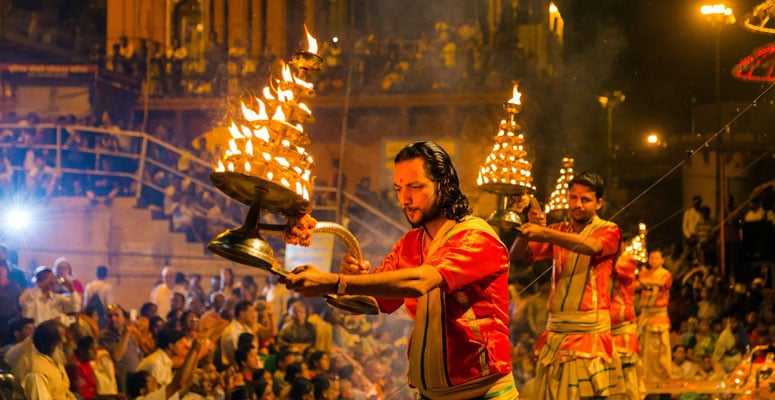
Varanasi is one of the most important places to visit in Uttar Pradesh for travellers who want spiritual depth, riverfront life, old lanes, and living temple traditions. The ghats, Shri Kashi Vishwanath Temple, Ganga Aarti, and nearby Sarnath need time and sensitivity. This is not a city to rush in one short transfer window.
2. Ayodhya
Ayodhya is a focused Ramayana pilgrimage destination. Ram Janmabhoomi Temple, Hanuman Garhi, Kanak Bhawan, and the Saryu riverfront make it especially meaningful for faith-led travellers, families, and senior pilgrims. It works best as a dedicated pilgrimage stop rather than a rushed halt.
3. Mathura
Mathura is the core starting point for the Braj region. Krishna Janmabhoomi, Vishram Ghat, and the wider Braj Bhoomi association make it meaningful for Krishna devotees and family pilgrims. It can be done as a short stop, but it feels more complete when paired with Vrindavan and nearby Braj towns.
4. Vrindavan
For many travellers, Vrindavan has a softer devotional rhythm than Mathura. Banke Bihari Temple, ISKCON Temple, Prem Mandir, and the town’s devotional atmosphere make it one of the strongest places in UP for Krishna-focused travel. It is best planned with temple timings and local crowd flow in mind.
5. Prayagraj
Prayagraj is strongest around the Triveni Sangam, Akshayavat, the exterior of the Allahabad Fort, and the religious atmosphere of the Kumbh and Magh Mela periods. Outside major gatherings, one day is enough for most travellers. During mela periods, the city becomes a completely different place to visit.
6. Chitrakoot
Chitrakoot is a quieter pilgrimage destination linked with the Ramayana, riverfront ghats, Kamadgiri, and a slower devotional atmosphere. It suits travellers looking beyond the most crowded pilgrimage cities and works better when the trip has a clear spiritual or Bundelkhand route.
Buddhist Circuit
1. Sarnath
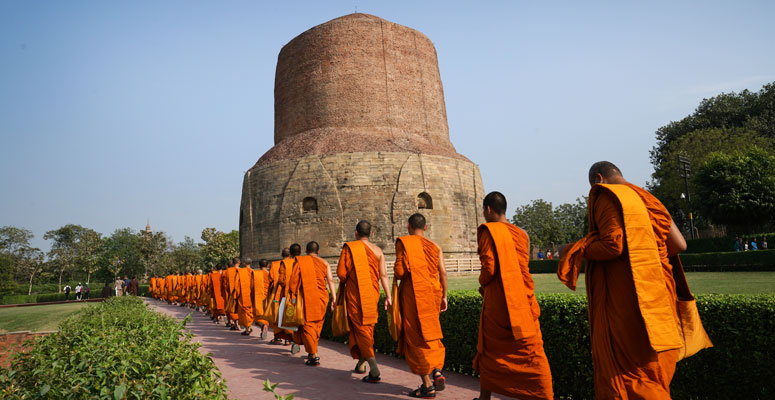
Sarnath is the easiest addition to the Buddhist Circuit for many travellers because it is close to Varanasi. It is associated with the Buddha’s first sermon and includes the Dhamek Stupa, archaeological remains, monasteries, and, where access allows, a museum experience. It works best when travellers give it context and time.
2. Kushinagar
Kushinagar is central to Buddhist pilgrimage because of the Mahaparinirvana Temple, reclining Buddha statue, Ramabhar Stupa, and international Buddhist temples. It has a quieter pace than Varanasi and is best approached as part of a planned Buddhist Circuit.
3. Shravasti
Shravasti is valuable for travellers following Buddha’s monastic-life associations and the Jetavana Monastery area. It is best suited to serious Buddhist pilgrims rather than travellers looking for quick sightseeing. The stop adds depth only when the route has enough time.
4. Kapilvastu, Sankisa, and Kaushambi
These are selective Buddhist Circuit additions. Kapilvastu is useful for deeper Buddha-life context, Sankisa suits focused Buddhist pilgrimage routing, and Kaushambi works for travellers interested in ancient Buddhist and archaeological layers. Add them only when the route has time and purpose.
Wildlife, Forest, and Nature Escapes
1. Dudhwa National Park
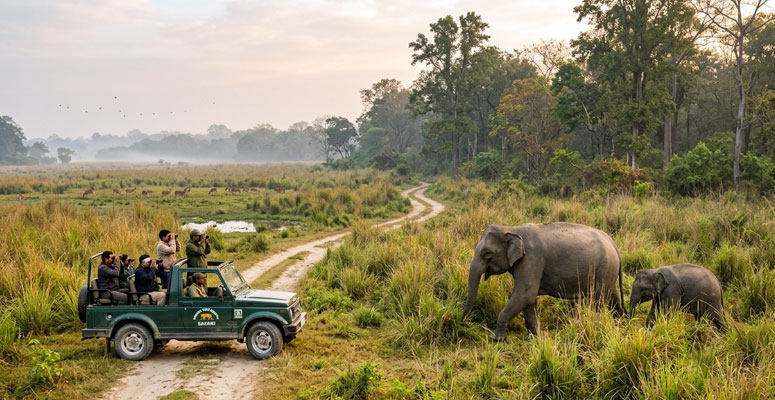
Dudhwa is a wildlife destination with terai forest, grasslands, a tiger reserve landscape, a rhino reintroduction area, swamp deer, and birdlife that make it a serious nature escape rather than a quick sightseeing stop. It suits travellers who can give the forest enough time.
2. Katarniaghat Wildlife Sanctuary
Katarniaghat is a quieter nature extension within the wider Terai landscape. Its riverine forest setting appeals to serious wildlife travellers, birders, and those who prefer less conventional nature routes. It works best when combined with Dudhwa.
3. Pilibhit Tiger Reserve
Pilibhit Tiger Reserve is another Terai wildlife option for travellers looking beyond the more common heritage and pilgrimage circuits. It suits visitors who want a less conventional wildlife extension and have enough route flexibility.
How to combine places in Uttar Pradesh
1. Agra + Fatehpur Sikri + Mathura/Vrindavan
- Best for: Short heritage break, first-time visitors, Agra–Braj route travellers.
- Suggested duration: 3 to 5 days.
- Why it works: Agra gives Mughal architecture, Fatehpur Sikri adds heritage context, and Mathura/Vrindavan add a devotional layer if time allows.
- Avoid rushing: Add too many Braj towns after a packed day in Agra.
2. Varanasi + Sarnath
- Best for: First-time travellers to Uttar Pradesh, spiritual travellers, and culture-focused visitors.
- Suggested duration: 3 to 4 days.
- Why it works: Varanasi gives ghats, temples, old lanes, and riverfront life; Sarnath adds Buddhist heritage and a calmer half-day contrast.
- Avoid rushing: Treat Sarnath as a late-evening photo stop.
3. Varanasi + Prayagraj + Ayodhya
- Best for: Spiritual Uttar Pradesh route, senior pilgrims, faith-led family trips.
- Suggested duration: 5 to 7 days.
- Why it works: It follows a clear pilgrimage logic through ghats, Sangam, and Ramayana-linked sites.
- Avoid rushing: Trying to cover the route without buffers for crowds, temple queues, and road movement.
4. Mathura + Vrindavan + Govardhan + Barsana + Gokul
- Best for: Krishna-focused pilgrimage, travel in the Braj region, family devotional trips.
- Suggested duration: 3 to 5 days.
- Why it works: The places share one devotional theme and can be planned as a focused Braj route.
- Avoid rushing: Visiting during Holi or Janmashtami without advance planning.
5. Lucknow + Ayodhya
- Best for: Nawabi heritage with Ramayana pilgrimage.
- Suggested duration: 3 to 4 days.
- Why it works: Lucknow gives old-city and Nawabi architecture, while Ayodhya adds a pilgrimage element.
- Avoid rushing: Treating Ayodhya as a short roadside stop without time for queues or security checks.
6. Lucknow + Dudhwa + Katarniaghat/Kishanpur
- Best for: Heritage plus wildlife extension.
- Suggested duration: 5 to 6 days.
- Why it works: Lucknow gives a comfortable city base, while Dudhwa and nearby forest areas add serious Terai wildlife.
- Avoid rushing: Adding Dudhwa without at least 2 nights.
7. Buddhist Circuit Route
- Best for: Buddhist pilgrims, history travellers, reflective cultural trips.
- Suggested duration: 7 to 10 days or more, depending on the number of sites included.
- Why it works: Sarnath, Kushinagar, Shravasti, Kapilvastu, Sankisa, and Kaushambi follow a focused Buddhist heritage route.
- Avoid rushing: Treating distant Buddhist sites as casual day trips.
Which place should you choose?
- For first-time travellers: Agra, Lucknow, Varanasi, Sarnath.
- For spiritual trips: Varanasi, Ayodhya, Prayagraj, Mathura, Vrindavan.
- For Krishna-focused pilgrimage: Mathura, Vrindavan, Govardhan, Barsana, Gokul.
- For Buddhist Circuit travel: Sarnath, Kushinagar, Shravasti, Kapilvastu, Sankisa, and Kaushambi.
- For heritage-focused travellers: Agra, Fatehpur Sikri, Lucknow, Jhansi, Deogarh, and Chunar Fort.
- For families: Agra, Lucknow, Varanasi, Mathura, Vrindavan, Ayodhya.
- For wildlife: Dudhwa, Katarniaghat, Pilibhit.
- For senior pilgrims: Varanasi, Ayodhya, Prayagraj, Mathura, Vrindavan with comfortable pacing.
- For longer cultural trips: Agra, Lucknow, Varanasi, Sarnath, Ayodhya, Braj region.
- For slow-specialist routes: Buddhist Circuit, Bundelkhand, and Dudhwa regions.
Best time to visit
- October to March is the best overall window for sightseeing in Uttar Pradesh. The weather is more comfortable for monuments, ghats, pilgrimage towns, old-city walks, and wildlife regions.
- April to June can be hot and tiring, especially around forts, ghats, open monuments, and long walking-heavy city days. If travelling in summer, keep outdoor sightseeing for early morning or late afternoon.
- July to September brings a monsoon atmosphere, which can affect outdoor pacing, road conditions, and walking-heavy sightseeing days.
Travel Tips for Uttar Pradesh
Plan Uttar Pradesh with IndianHoliday!
Uttar Pradesh becomes easier to plan once destinations are not treated as equals. Choose heritage if you want Agra, Fatehpur Sikri, Lucknow, and Bundelkhand. Choose pilgrimage if the trip centres on Varanasi, Ayodhya, Prayagraj, Mathura, and Vrindavan. Choose the Buddhist Circuit if Sarnath, Kushinagar, Shravasti, Kapilvastu, Sankisa, and Kaushambi are the focus. Choose wildlife only when you can dedicate time to Dudhwa and nearby forests.