







Badrinath works best when it is planned, not as a rushed checklist. Most short trips should begin at the temple and then head toward Mana Village, where several mythological, cultural, and riverside stops are close together.
Travellers with more time, stable weather, and suitable fitness can add nature-led extensions. For most pilgrims and family travellers, the best plan is simple: keep the temple visit unhurried and add longer walks only if the route, weather, and group comfort allow.
Planning Snapshot
Sacred Places Around Badrinath Temple
First-time Travellers
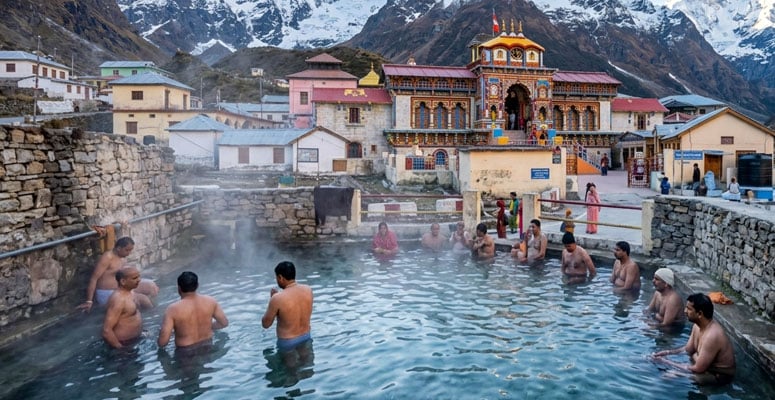
This is the core spiritual zone of Badrinath and should be the first priority for most travellers. Pilgrims, senior family travellers, and short-stay visitors usually consider this before heading to Mana.
1. Badrinath Temple
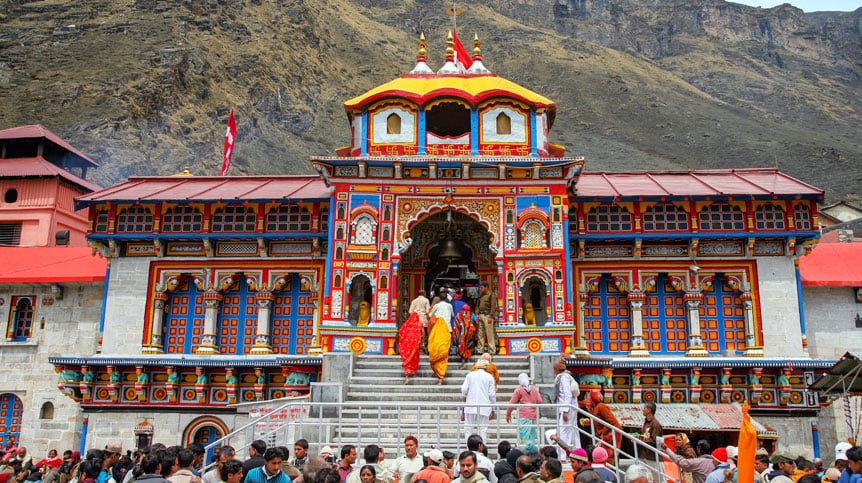
Badrinath Temple is the main anchor of the town and the reason most travellers come here. The visit is not only about darshan; the Alaknanda riverside setting and the movement around the town all shape the experience.
Keep enough buffer for queues, especially during peak yatra weeks. If you are travelling with elders, avoid combining a rushed temple visit with a long walk later in the day.
Best for: First-time visitors, pilgrims, Char Dham travellers, and families.
Time to keep: 1.5 to 3 hours, depending on queues and season.
Best pairing: Tapt Kund, Narad Kund, Brahma Kapal, Surya Kund, and Panch Shila.
2. Tapt Kund
Tapt Kund is best understood as part of the traditional Badrinath Temple visit, not as a separate sightseeing stop. It is located near the temple and is usually visited before darshan.
Travellers who are not participating in the bathing tradition can still pause here briefly to understand the flow of the temple precinct. During crowded periods, this area can feel busy, so keep the visit practical and brief.
Best for: Pilgrims following the traditional temple sequence.
Time to keep: 15 to 30 minutes.
Best pairing: Badrinath Temple, Narad Kund, and Brahma Kapal.
3. Narad Kund
Narad Kund is closely connected to the temple precinct and should be viewed alongside Tapt Kund and Badrinath Temple. It usually does not require a separate detour or a dedicated sightseeing stop.
For travellers interested in Badrinath’s religious setting, this is a meaningful short stop before or after darshan.
Best for: Pilgrims and culture-focused travellers.
Time to keep: 10 to 20 minutes.
Best pairing: Tapt Kund and the main temple visit.
4. Brahma Kapal
Brahma Kapal is one of the most meaningful places near Badrinath Temple for pilgrims, especially those performing ancestral rituals. It sits close to the temple area, so it can be covered without planning a separate excursion.
Some travellers come here specifically for rituals, while others may visit briefly as part of the temple-side circuit. If rituals are part of your plan, keep extra time and avoid scheduling a rushed departure immediately afterwards.
Best for: Pilgrims, families performing ancestral rites, and travellers seeking deeper spiritual context.
Time to keep: 20 minutes to 1 hour, depending on whether rituals are performed.
Best pairing: Badrinath Temple, Tapt Kund, and Narad Kund.
5. Sheshnetra Temple
Sheshnetra Temple suits travellers who want to go slightly beyond the immediate temple area without committing to a long excursion. It works well after the main darshan, especially for those staying in Badrinath rather than leaving the same day.
This is not usually a first-priority stop for a very short visit. Add it if the group has time, energy, and interest in quieter sacred places around Badrinath.
Best for: Pilgrims with extra time, repeat visitors, and travellers who prefer quieter spiritual stops.
Time to keep: 30 to 45 minutes.
Best pairing: A relaxed temple-side circuit or second half of the day.
6. Mata Murti Temple
A quieter spiritual stop near Badrinath, it is better suited to travellers who have already completed the main temple visit and are not rushing back toward Joshimath the same day.
The visit works especially well for those who prefer a calmer setting away from the main temple crowd. If your day already includes Mana Village, keep this as an optional stop rather than forcing it into a tight schedule.
Best for: Pilgrims, slow travellers, and families looking for a quieter temple visit.
Time to keep: 30 to 45 minutes.
Best pairing: Mana Village route or a relaxed second-day plan.
Mana Village and Mythological Stops
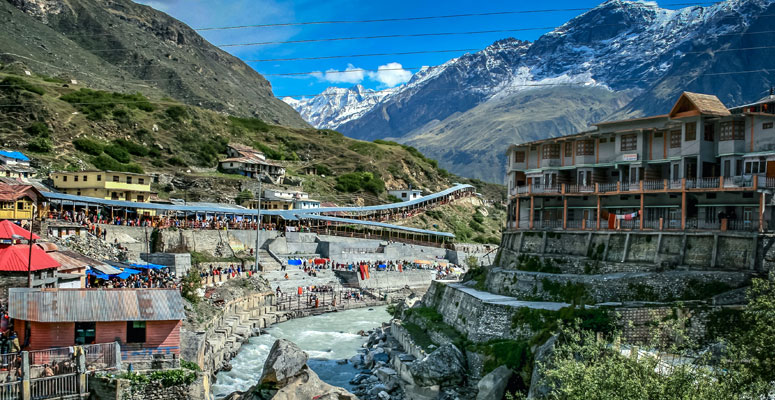
Mana Village works best as a half-day circuit from Badrinath. It combines village lanes, mythological associations, short walks, river views, and several important stops in one compact zone.
1. Mana Village
Mana Village is worth more than a quick “last village” photo. Its narrow lanes, traditional houses, local stalls, and high-altitude setting give travellers a different experience from the temple town.
It also serves as the base for several nearby attractions, including Bheem Pul, Vyas Gufa, Ganesh Gufa, and the Saraswati Riverbank. Plan it as a circuit rather than a single stop.
Best for: First-time visitors, families, culture-focused travellers, mythology-led travellers, and photographers.
Time to keep: 2 to 3 hours with nearby stops.
Best pairing: Bheem Pul, Vyas Gufa, Ganesh Gufa, Saraswati River, and Keshav Prayag route context.
2. Bheem Pul
Bheem Pul pairs naturally with Mana Village and the Saraswati River. The stone bridge, river setting, and Mahabharata-linked associations make it one of the most memorable short stops near Badrinath.
The walk here is part of the experience, but it should be paced carefully for elders. Give yourself time to take in the river setting rather than treating it only as a photo spot.
Best for: Mythology-led travellers, families, and visitors covering Mana Village.
Time to keep: 20 to 30 minutes once near the site.
Best pairing: Saraswati River, Vyas Gufa, Ganesh Gufa, and Mana Village lanes.
3. Vyas Gufa
Vyas Gufa will appeal most to travellers interested in mythology, storytelling, and cultural context. The stop becomes more meaningful when visited with a guide or someone who can explain the cave’s stories.
It is best covered as part of the Mana circuit rather than as a standalone visit. Travellers who enjoy context-led sightseeing will find it more rewarding than those simply moving through Mana for photographs.
Best for: Culture-focused travellers, pilgrims, families with older children, and mythology-led visitors.
Time to keep: 20 to 30 minutes.
Best pairing: Ganesh Gufa and Bheem Pul.
4. Ganesh Gufa
Ganesh Gufa should be covered together with Vyas Gufa. The two caves sit naturally within the same Mana Village circuit and should not be treated as separate long visits. The stop is short, but it adds depth to the mythological side of Mana.
Best for: Travellers already visiting Vyas Gufa and those interested in Mahabharata-linked sites.
Time to keep: 15 to 20 minutes.
Best pairing: Vyas Gufa, Mana Village, and Saraswati River.
5. Saraswati River / Saraswati Udgam
The Saraswati River side is one of the strongest reasons to walk beyond the main village lanes. If you are already heading toward Bheem Pul, you should not skip this stop.
The river setting adds energy to the Mana circuit. It is especially worthwhile for travellers interested in sacred geography, Himalayan rivers, and photography.
Best for: Mythology-led travellers, photographers, and anyone covering Bheem Pul.
Time to keep: 20 to 30 minutes.
Best pairing: Bheem Pul, Vyas Gufa, Ganesh Gufa, and Keshav Prayag route context.
6. Keshav Prayag
Keshav Prayag is best understood as a short route-context stop near Mana, where the Saraswati and Alaknanda rivers meet. It does not need to be treated as a major standalone attraction for most short-stay visitors.
Best for: Travellers interested in river confluences and sacred geography.
Time to keep: Short route-context stop.
Best pairing: Saraswati River and Bheem Pul.
Short Treks, Viewpoints, and Himalayan Nature Spots
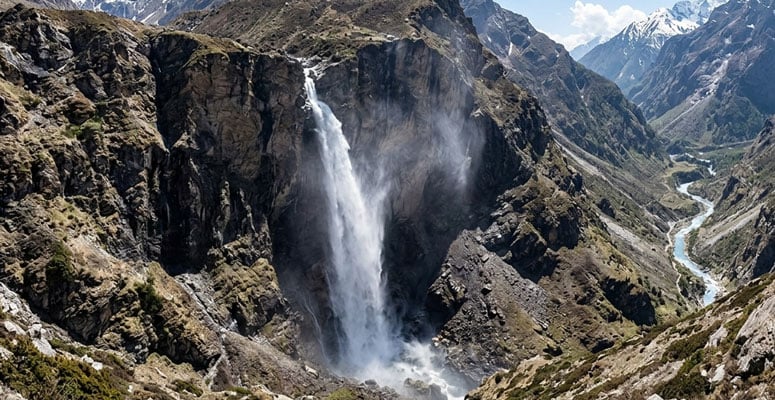
These places are for travellers who want more than the temple-town and Mana Village circuit. They need extra time, stable weather, suitable fitness, and realistic pacing.
The focus here is on sightseeing value, not on adventure activities. Add these only when the group is comfortable with walking, altitude, and changing mountain conditions.
1. Vasudhara Falls
Vasudhara Falls is one of the strongest nature-led extensions from Mana Village. It needs a separate time block and should not be added casually to a rushed pilgrimage day.
The route suits travellers who are comfortable walking at altitude and have enough daylight. It is not ideal for elderly travellers with mobility concerns, young children unused to mountain walks, or pilgrims returning from Badrinath the same day.
Best for: Fit travellers, photographers, slow travellers, and those staying long enough for a weather buffer.
Time to keep: Half a day, including approach and return.
Best pairing: Mana Village, but only with enough time and energy.
2. Charan Paduka
Charan Paduka is a short but steep spiritual-nature stop above Badrinath. It suits travellers who can manage a climb and want a quieter, view-led experience close to town.
This is not the best option for rushed visitors or groups with limited mobility. For travellers staying overnight in Badrinath, it can work well when the weather is clear.
Best for: Pilgrims with fitness levels, view-seekers, and travellers seeking a quieter extension near Badrinath.
Time to keep: 2 to 3 hours, depending on pace.
Best pairing: A second-day morning plan or a light sightseeing day after the main temple visit.
3. Neelkanth Peak
Neelkanth Peak is better treated as a visual landmark than a place most travellers visit directly. Its presence shapes the Badrinath landscape, especially during clear weather windows.
The best way to experience it is from suitable viewpoints around Badrinath. Morning and late-afternoon light usually offer better chances for clear views.
Best for: Photographers, Himalayan landscape lovers, and slow travellers.
Time to keep: No separate sightseeing slot required.
Best pairing: Badrinath Temple surroundings, Mana route views, and early morning photography.
4. Satopanth Lake
Satopanth Lake is a serious high-altitude extension, not a casual sightseeing point near Badrinath. It should only be considered by experienced trekkers or travellers planning a dedicated multi-day extension.
This is not suitable for standard short Badrinath trips, senior-heavy family groups, or pilgrims following a fixed Char Dham schedule. It requires fitness, time, a weather buffer, and proper local support.
Best for: Experienced trekkers and travellers planning a dedicated high-altitude extension.
Time to keep: Multi-day extension, not a day sightseeing add-on.
Best pairing: A longer Badrinath-based nature plan.
5. Alkapuri
Alkapuri is a remote, nature- and mythology-linked extension near the glacier. It is not part of the regular Badrinath sightseeing circuit. Including it in a standard one- or two-day Badrinath itinerary would make it unrealistic.
Best for: Extended explorers, experienced walkers, and travellers with proper local support.
Time to keep: Dedicated extension with preparation.
Best pairing: Longer high-altitude routes beyond the usual Badrinath circuit.
Nearby Temple Extensions
These places work better for travellers arriving from or returning toward Joshimath. They should be planned into the road journey rather than treated as walking-based sightseeing in Badrinath town.
1. Pandukeshwar
Pandukeshwar works well as a route-side pilgrimage stop on the Joshimath-Badrinath road. It should not be forced into the same half-day as Mana if the schedule is already tight.
For travellers interested in the wider sacred geography of the Badrinath route, Pandukeshwar adds value without needing a major detour.
Best for: Pilgrims, Badri circuit travellers, and route-side sightseeing plans.
Time to keep: 30 to 45 minutes.
Best pairing: Yog Dhyan Badri Temple and the Joshimath-Badrinath road journey.
2. Yog Dhyan Badri Temple
Yog Dhyan Badri Temple is connected with the wider Badri circuit and fits naturally with Pandukeshwar. It is best included when arriving in Badrinath or when returning toward Joshimath.
Travellers interested in Panch Badri or a deeper pilgrimage route should include this stop in their plans. For short-stay visitors focused only on Badrinath Temple and Mana Village, it can remain optional.
Best for: Pilgrimage-focused travellers, Panch Badri followers, and visitors interested in route-side sacred stops.
Time to keep: 30 to 45 minutes.
Best pairing: Pandukeshwar and the wider Joshimath-Badrinath route.
How to Plan Badrinath Sightseeing Based on Time
If You Have Half a Day
Cover Badrinath Temple, Tapt Kund, Narad Kund, Brahma Kapal, and a short walk around the temple-side area. This works best for pilgrims arriving late, travellers continuing the same day onwards, or families with elderly members.
If darshan queues are long, drop smaller stops rather than rushing the temple visit.
If You Have One Full Day
Use the morning for Badrinath Temple, Tapt Kund, Narad Kund, and Brahma Kapal. Keep the afternoon for Mana Village, Bheem Pul, Vyas Gufa, Ganesh Gufa, Saraswati River, and a slow walk through the village side. This is the most balanced Badrinath sightseeing plan for most travellers.
Mata Murti Temple can be added if the group still has energy and daylight. Avoid adding Vasudhara Falls unless the day has been planned around it from the beginning.
If You Have Two Days
Keep Day 1 for the temple and Mana Village circuit.
Use Day 2 for either Charan Paduka or Vasudhara Falls, depending on group fitness, weather, and local advice. Neelkanth Peak views can be enjoyed whenever the sky is clear, especially in the morning or late afternoon.
Things to Keep in Mind While Visiting
Start early because darshan queues, afternoon weather changes, and mountain light can affect the day’s flow.
Do not overload the itinerary if you are travelling with elderly family members.
Keep Mana Village, Bheem Pul, the caves, and the Saraswati River as a single circuit.
Keep Vasudhara Falls, Charan Paduka, Satopanth Lake, and Alkapuri weather-dependent.
Check local route conditions before planning longer walks.
Avoid treating every attraction as equal. Prioritise based on time, fitness, and purpose of travel.
Plan Your Badrinath Trip!
Places to visit in Badrinath are best planned in four layers: the temple, the Mana Village circuit, nature and walk-based extensions, and nearby Badri-route temples. This approach helps travellers avoid a rushed checklist and choose stops that match their time, fitness, and purpose.