
Monasteries in Himachal Pradesh are most meaningful for travellers who see them as part of a larger cultural journey across Himachal’s valleys, rather than isolated stops for sightseeing. The experience changes noticeably with altitude, road conditions, and how each site functions as a living space for learning, ritual, and retreat.
In practice, Spiti and Lahaul monasteries feel shaped by terrain and season, Kangra’s centres reflect active teaching traditions, and village monasteries in Pin and Kinnaur sit closely within daily community life. Timing, access routes, and local prayer cycles often matter as much as the monastery itself in shaping your cultural experience. This guide serves both cultural and spiritual travellers, with a route-based planning focus.
Who Benefits Most from Exploring These Monasteries?
| Travel Style | Monasteries to Choose |
|---|---|
| Spiti heritage circuit travellers | Tabo, Lhalung |
| Kaza–Pin Valley explorers | Key, Dhankar, Kungri |
| Kinnaur entry-route travellers | Nako |
| Dharamshala Buddhist circuit visitors | Namgyal, Gyuto |
| Retreat & meditation Enthusiasts | Palpung Sherabling |
| Lahaul valley road-trippers | Kardang, Shashur, Gemur |
| Keylong monastery loop visitors | Kardang, Shashur, Tayul |
| Photography & cultural documentation travellers | Lhalung, Nako, Dhankar |
| Senior & low-effort travellers | Namgyal, Gyuto, Palpung Sherabling, Tayul |
Ancient Heritage Monasteries – Spiti Valley
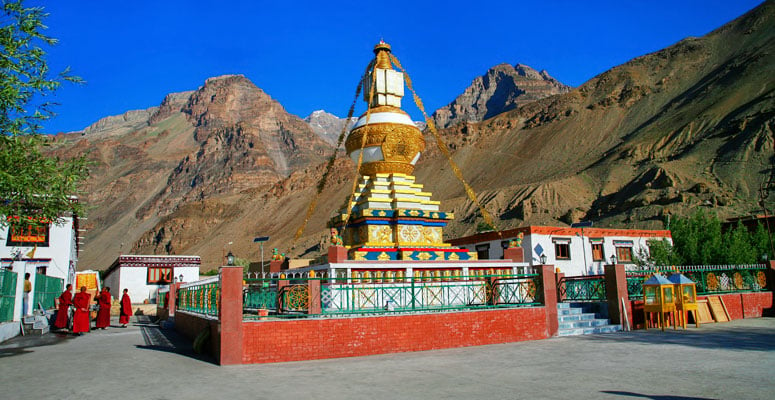
1. Tabo Monastery
Core Appeal: One of the oldest continuously functioning Buddhist complexes in the Himalayas, known for its mud-plastered prayer halls that preserve original 10th–11th century murals depicting Buddhist cosmology, lineage scenes, and didactic cycles still used in teaching.
Best For: Travellers interested in early Himalayan Buddhist art systems, slow cultural study visits, and those combining Spiti heritage circuits with nearby villages like Dhankar and Pin Valley.
Route Fit: Works naturally on the Kaza–Dhankar–Pin Valley heritage loop, best planned as a grounded stop rather than a quick photo halt.
2. Lhalung Monastery
Core Appeal: A secluded monastic settlement, known for its dual-hall structure where one section is used for regular prayers and the other preserved for restricted ritual objects and older iconography. The monastery is also associated with oral accounts of Rinchen Zangpo’s influence.
Best For: Solo travellers, slow cultural travellers, Spiti circuit explorers avoiding Kaza crowds, and photography-led village itineraries.
Route Fit: Best added as a short detour from Tabo or Kaza via village roads rather than a standalone stop.
High-Altitude Landmarks – Spiti/Pin/Kinnaur Valley
3. Key Monastery
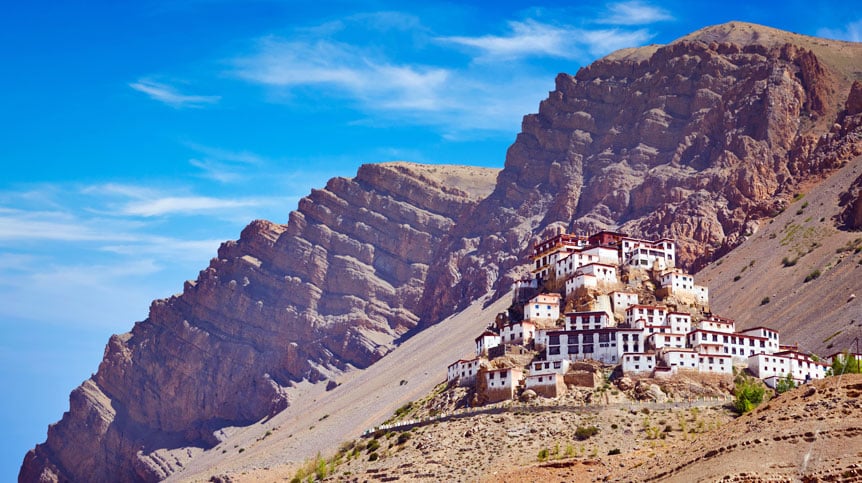
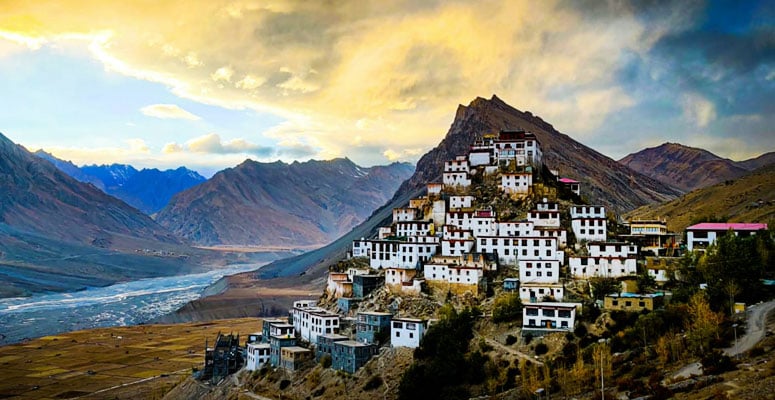
Core Appeal: A hilltop monastery built in a stacked fortress style, still functioning as a major Gelug training centre where large assembly halls host structured debate sessions and winter ritual cycles.
Best For: Cultural travellers, monastery architecture enthusiasts, Spiti circuit travellers based in Kaza, and visitors interested in live monastic debate traditions.
Route Fit: Best placed on the Kaza–Kibber–Gette loop; usually visited as part of a half-day circuit from Kaza.
The upper prayer rooms of this monastery preserve ancient murals and manuscripts not regularly displayed to visitors.
4. Dhankar Monastery
Core Appeal: Perched above the confluence of the Spiti and Pin rivers, this monastery preserves a rare combination of meditation caves used by earlier monks.
Best For: Slow trekkers, heritage-focused travellers, cliff-settlement explorers, and those combining Spiti’s lake hike to Dhankar Tso with monastery visits.
Route Fit: Fits naturally on the Kaza–Tabo corridor with a short uphill diversion. It is best combined with the Dhankar Lake trek.
Dhankar Monastery has a museum room holding local thangka fragments and ritual objects recovered from the old fort site above it.
5. Kungri Monastery
Core Appeal: A key Nyingma monastery in Pin Valley, known for its preserved tantric ritual traditions, including Cham dances during Kungri’s annual festival cycle, which are linked to protective deities and performed alongside Losar-period monastic rites.
Best For: Pin Valley explorers, cultural anthropology travellers, festival-focused visitors, and those moving beyond Kaza’s main monastery circuit.
Route Fit: A full-day central stop on the Pin Valley road from Kaza towards Mud village.
Best Time to Visit: Travellers interested in ritual traditions and monastery festivals should consider visiting during festival periods when Cham dance performances and ceremonial activities offer deeper cultural context. Outside festival periods, the monastery provides a quieter village-based experience.
6. Nako Monastery
Core Appeal: A village-edge monastery overlooking Nako Lake, known for its compact prayer halls, ancient chorten structures, and restored murals believed to reflect early trans-Himalayan artistic exchange routes.
Best For: Trans-Himalayan circuit travellers, visitors who prefer slow village stays, Kinnaur entry-route explorers, and photography-led cultural itineraries.
Route Fit: Works best on the Khab–Nako–Reckong Peo entry corridor into Kinnaur, typically a night halt rather than a quick stop.
Many travellers use Nako as a strategic overnight stop when entering or leaving Kinnaur and Spiti. Staying overnight allows time to experience both the monastery and the lakeside village atmosphere without rushing through the route.
Active Buddhist Learning Centres – Dharamshala/Kangra Regions
7. Namgyal Monastery
Core Appeal: The Dalai Lama’s personal monastery, where advanced debate training and ritual instruction continue alongside public prayer halls used for teachings and large congregational events.
Best For: Dharamshala pilgrims, Tibetan culture learners, solo travellers attending teachings, and McLeodganj-based monastery circuit visitors.
Route Fit: Best explored within the McLeodganj–Dharamshala monastery cluster, walkable from the main Tibetan temple circuit.
You’ll see that select scriptural classes and initiation cycles remain closed, giving it a dual public–restricted structure rarely visible in smaller monasteries.
8. Gyuto Monastery
Core Appeal: A tantric training monastery known for multi-tone ritual chanting traditions and large ceremonial halls where empowerment rituals and teaching sessions are occasionally open to visitors.
Best For: Solo cultural travellers, Dharamshala circuit explorers, spiritual music and chanting interest groups, and short-stay visitors from McLeodganj or Sidhbari.
Route Fit: Best combined with the Sidhbari–Norbulingka–Dharamshala lower-valley cultural loop.
9. Palpung Sherabling Monastery
Core Appeal: A major Kagyu retreat centre where long-duration meditation training is conducted in structured isolation units.
Best For: Solo meditation travellers, retreat-oriented visitors, Kangra valley explorers, and travellers seeking quieter alternatives to McLeodganj’s crowded monastery circuit.
Route Fit: Fits into Bir–Baijnath–Palampur cultural corridor as a half-day detour, best for slow-paced valley itineraries.
Suggested Monastery Circuits in Himachal Pradesh
1-Day Keylong Monastery Circuit
Kardang → Shashur → Gemur → Tayul
Best for:
- road-trippers
- photographers
- travellers staying in Keylong
2-Day Spiti Heritage Circuit
Tabo → Dhankar → Key → Lhalung
Best for:
- heritage travellers
- monastery-focused visitors
- photographers
Pin Valley Cultural Circuit
Key → Dhankar → Kungri → Mud Village
Best for:
- cultural travellers
- slow exploration
- village experiences
Dharamshala Buddhist Circuit
Namgyal → Nechung → Dip Tse Chok Ling → Gyuto → Norbulingka
Best for:
- first-time Buddhist culture visitors
- short-stay travellers
Remote Valley Monasteries – Lahaul Valley Region
10. Kardang Monastery
Core Appeal: One of Lahaul’s largest monasteries, rebuilt after flood damage, with restored prayer halls, relic stupas, and preserved ritual instruments. The site also reflects influences from older trans-Himalayan trade routes in its layout and iconography.
Best For: Lahaul road-trippers, solo travellers on Spiti–Lahaul circuits, Buddhist heritage explorers, and photography-focused visitors covering monasteries in the Keylong region.
Route Fit: Works best as part of the Keylong–Tandi–Udaipur valley loop with short road hops between monastic sites.
11. Shashur Monastery
Core Appeal: A hillside monastery known for its preserved wall paintings and annual Cham dance tradition. It has strong links with early Drukpa lineage practices in Lahaul.
Best For: Cultural travellers, festival-focused visitors, group travellers passing through Keylong, and those combining monastery visits with local village stays.
Route Fit: Easily accessed from Keylong town, usually combined with Kardang and Gemur in a half-day circuit.
12. Gemur Monastery
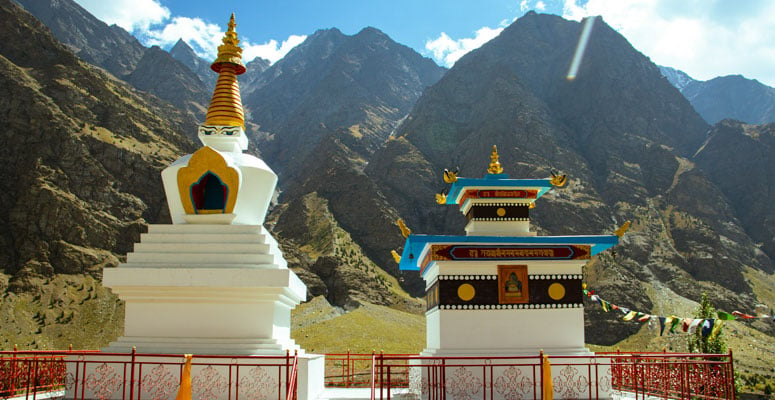
Core Appeal: A village monastery with preserved wall paintings and older thangka fragments used in daily ritual learning, reflecting a quiet Drukpa tradition closely tied to local household worship and seasonal village cycles.
Best For: Lahaul circuit road-trippers, cultural trekkers moving between valleys, village-stay travellers, and visitors exploring Keylong’s monastery cluster at a slow pace.
Route Fit: Works on the Keylong–Gemur–Shashur loop, best included as a short halt within a wider Lahaul valley drive.
13. Tayul Monastery
Core Appeal: Recognised for its large prayer wheel and detailed murals depicting Padmasambhava narratives and protective deities, alongside preserved ritual artefacts still used in daily worship routines within the monastery complex.
Best For: Senior travellers covering Keylong at a relaxed pace, adventure travellers on Spiti–Lahaul overland routes, cultural trekkers exploring valley monasteries, and heritage-focused road trip groups.
Route Fit: Fits easily into a short Keylong monastery circuit with Kardang and Shashur as a same-day cultural loop.
Other Notable Monasteries To Visit in The State
1. Rewalsar–Kangra Devotional Route
This circuit revolves around living Buddhist practice, especially devotion to Guru Padmasambhava at Rewalsar and Gelug–Nyingma monastic activity in the Kangra–McLeodganj belt.
Monasteries on this route:
- Tso Pema Monastery (Rewalsar)
- Urgyen Dzong Monastery (Rewalsar)
- Tashijong Monastery (Kangra Valley)
- Nechung Monastery (McLeodganj)
- Dip Tse Chok Ling Monastery (McLeodganj)
These monasteries contain active prayer halls, Buddha statues, Guru Rinpoche shrines, thangka paintings, and ritual instruments used in daily pujas. Tashijong is also known for its artisan work, including wood carving and printing. Nechung preserves oracle traditions linked to Tibetan state rituals.
2. Lahaul–Trans-Himalayan Monastic Route
This route covers high-altitude Buddhist centres linked through Lahaul, Zanskar, and adjoining Indus valley corridors. Monasteries here serve isolated villages and seasonal pilgrimage circuits.
Monasteries on this route:
- Triloknath Monastery (Lahaul Valley)
- Sissu Monastery (Lahaul Valley)
- Lingshed Monastery (Zanskar region)
- Stakmo Monastery (Leh–Himachal linkage belt)
- Shashur Gompa extension sites (Lahaul region)
You’ll come across mural cycles depicting Buddha’s life and protector deities. The place also preserves handwritten manuscripts, ritual masks used in cham dances, and ceremonial instruments like artistic drums and horns.
Seasonal Travel Overview
| Season | Monasteries to Visit | Experience |
|---|---|---|
| October – May (Winter – Spring) | Tabo, Key, Dhankar, Nako, Kardang, Shashur | Best road-access window: clear views and regular monastery activity. |
| March – May (Spring) | Namgyal, Gyuto, Palpung Sherabling, Dechen Choekhor | Teaching sessions are active; easier access to prayer halls and courtyards. |
| June to September (Summer) | Kungri, Gemur, Tayul | Remote valleys open; travel may be slower, but all routes are accessible. |
| October to November (Post-Monsoon) | Tabo, Nako, Kardang, Dhankar | Best time to visit for murals and clear mountain vantage views. |
Avoid monsoon spells in lower valleys (July – August) and peak winter closures in Spiti–Lahaul (January – February), as landslides, snow blockages, and limited road access can restrict monastery circuits and disrupt travel plans.
To know more: Read the Himachal Pradesh Travel Guide to structure monastery travel across Himachal using seasonal and route-based planning.
Etiquette and Practice Guidelines in Himachal’s Monasteries
- Remove footwear before entering inner halls
Shoes are not allowed inside the main prayer rooms. Some monasteries also restrict entry beyond verandas during active rituals or teaching sessions. - No handling of ritual objects or offerings
Butter lamps, thangkas, and ritual instruments are not for visitor interaction unless explicitly guided by monks. - Clockwise movement is the standard ritual flow
Walk clockwise around stupas, mani walls, and prayer wheels unless locally marked otherwise; do not spin wheels aggressively or continuously. - Keep movement minimal during prayer cycles
Do not cross or walk between monks during chanting or debate sessions. You must wait for breaks if the passage is blocked. - Photography rules vary by monastery
Outer courtyards are usually open, but access to murals, statues, and teaching halls may be restricted without permission, especially at Namgyal and Key Monastery. - Avoid disruption during debate or chanting sessions
Monastic debate at places like Key Monastery and chanting at Gyuto are active learning practices. Disrupting them is highly disrespectful. - Respect restricted monastery zones
Retreat cells, teaching quarters, and manuscript rooms are closed spaces in most monasteries (notably Tabo and Palpung Sherabling). Do not enter them without permission.
Access & Comfort: Practical Notes That Travellers Need To Know
- Spiti/Lahaul monasteries involve long, high-altitude drives. Kangra/Dharamshala sites are road-linked with short walks.
- Key, Dhankar, and Nako involve steps or uphill walks. Namgyal and Palpung Sherabling are mostly level-access complexes.
- Single landslides or snow patches can delay entire monastery circuits in Spiti and Lahaul during winter (Dec–Mar) and monsoon months (Jul–early Sep), when routes are either snow-blocked or landslide-prone.
- Most sites have no ticket queues, only crowd clustering during rituals or teaching events.
- Peak crowd windows – Losar, Hemis-style Cham periods, Kullu–Dharamshala teaching events, and summer weekends in hill towns.
- Morning and early evening prayer sessions can temporarily limit entry into the main halls.
- Senior traveller suitability is uneven. It is easier at Namgyal, Gyuto, Palpung Sherabling, and Tabo base areas; more effort is needed at Dhankar, Key upper sections, and Kardang hill approach.
- Inter-monastery travel often takes longer than the mapped road distance suggests.
Should You Travel With a Guide?
Not required in most monasteries – Namgyal, Gyuto, Palpung Sherabling, Tabo, Key, Shashur, Tayul can be explored independently.
Optional in remote valleys – Kungri, Gemur, and Lhalung, where access is simple but local ritual timing and village-linked practices vary.
Useful in heritage-heavy sites – Dhankar, Tabo murals, and Key Monastery, where murals, debate systems, and history are easy to miss without context.
Recommended for complex terrain routes – Nako approach, Dhankar Lake extension, and Spiti–Lahaul multi-monastery circuits where timing, altitude, and road conditions matter more than the sites themselves.
A ready route to experience Himachal’s monasteries through a balanced, organised travel circuit. Book the Complete Himachal Tour.
How to Plan a Monastery Circuit in Himachal Pradesh?
Half-Day Monastic Circuits
Kaza Local Monastery Loop : Key → Dhankar → Lhalung
A short Spiti circuit combining cliff monastery views, debate halls, and a secluded village monastery without long inter-valley travel.
McLeodganj Learning Walk : Namgyal → Gyuto
The compact Dharamshala route links teaching monastery spaces with tantric chanting centres within easy driving distance.
Keylong Cluster Loop : Kardang → Shashur → Gemur
Short Lahaul drive circuit covering restored monasteries, village mural sites, and active prayer halls near Keylong.
Full-Day Monastic Excursions
Spiti Heritage Circuit Day : Tabo → Dhankar → Key
Full Spiti Valley run linking ancient mural heritage, cliffside monastery settlements, and active monastic debate centres.
Pin Valley Extension Day : Kaza → Kungri → Mud Village
Dedicated valley detour into Pin for isolated monastery culture and slower village-integrated monastic life.
Kinnaur Entry Circuit Day : Tabo/Kaza → Nako → Reckong Peo approach
Transitional route from Spiti into Kinnaur with the lake-side monastery halt and changing valley landscapes.
Kangra Monastic Learning Day : Namgyal → Gyuto → Palpung Sherabling
The full Kangra Valley circuit connects major Buddhist learning institutions and retreat centres across two cultural zones.
Himalayan Monastic Routes That Match How You Travel
These itineraries break down Himachal’s monastic landscape into clear travel segments. Each route balances road distance, altitude gain, and cultural density, making it easier to experience monasteries realistically without rush.
Travellers exploring these monasteries often combine them with broader Himalayan journeys:
Tour Planning
Travellers covering multiple monastery regions often benefit from structured Himachal Pradesh tour packages that combine Spiti, Dharamshala, Kinnaur, and Lahaul routes into a single itinerary. – Click here