
Himachal’s temples add far more value than a pilgrimage stop to a trip. They bring together mountain routes, regional architecture, folklore, quiet village settings, and high-altitude traditions that many travellers otherwise miss. This layer of travel offers the most value to pilgrimage seekers, culture-focused visitors, slow road trippers, and heritage enthusiasts, looking beyond standard hill stations.
These temples appeal differently depending on your travel style. Pilgrimage-focused travellers often prioritise the Shakti Peeth circuit across Kangra and Bilaspur, while cultural travellers may find greater value in Himachal’s stone temples, Kath-Kuni wooden shrines, and heritage temple complexes. The experience also varies significantly based on festival periods, crowd levels, road accessibility, and altitude. Understanding these differences helps travellers choose sites that fit their itinerary rather than attempting to visit every major shrine.
Which Himachal Temples Should You Visit Based on Travel Preference?
Himachal’s temples range from busy pilgrimage centres and sacred trekking shrines to quiet heritage sites shaped by stone and wooden mountain architecture. Most travellers choose temples based on pilgrimage interest, scenery, effort level, or architectural appeal.
| Traveller Type | Best Temple |
|---|---|
| First-time on the Shakti pilgrimage circuit | Naina Devi, Chintpurni, and Bajreshwari Devi |
| Ritual atmosphere & active temple energy | Jwalamukhi and Jakhoo Temples |
| Scenic riverside / calmer devotional setting | Prashar Rishi, Chamundi Devi, and Manu Temples |
| Himalayan Stone Temple Architecture | Baijnath Shiv and Basheshwar Mahadev Temples |
| Heritage temple complexes | Laxmi Narayan Complex |
| Rare architecture & archaeological interest | Masrur Rock-Cut Temples |
| Wooden pagoda / Kath-Kuni architecture lovers | Hadimba Devi, Tripura Sundari, and Bhimakali Temples |
| Pahari royal-temple heritage | Kartik Swami / Kelang Wazir Temple |
| High-altitude pilgrimage & physical challenge | Mani Mahesh and Shrikhand Mahadev Temples |
| Remote shrine seekers & offbeat trekking routes | Bhimakali Temple |
Draft the most worthwhile Pahari itinerary with insights from this Himachal Pradesh Travel Guide.
If You Have Limited Time
1 Day in Kangra: Jwalamukhi + Bajreshwari Devi + Chamunda Devi
1 Day in Kullu-Manali: Hadimba Devi + Basheshwar Mahadev
2 Days in Chamba: Laxmi Narayan Complex + Chamba heritage walk
Kinnaur Route: Bhimakali Temple + Sangla + Kalpa
Pilgrimage Focus: Naina Devi → Chintpurni → Jwalamukhi → Bajreshwari → Chamunda
Famous Temples in Himachal Pradesh By Significance, Architecture & Access
The Foothill Shakti Peethas (Devi Circuit)
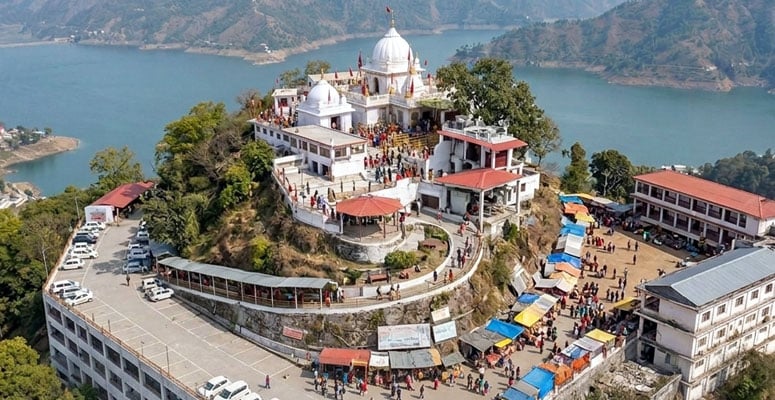
1. Mata Naina Devi Temple – Bilaspur
Core Appeal – A high cliff-top mountain citadel centred around the eye manifestation (Naina) of Sati, offering sweeping 360-degree views of the massive Gobind Sagar reservoir lake.
Best For: Multi-generational family groups and travellers seeking panoramic mountain landscapes and religious architecture.
Route Fit: Acts as a convenient diversion from the NH205 en route to the Chandigarh–Kiratpur–Bilaspur corridor.
Ideal Time to Visit: October to March – clear winter skies, stable weather, Navratri/Ashtami rush, but best visibility outside the peak festival-crowd weeks.
2. Mata Chintpurni Temple – Una
Core Appeal: A foothill shrine focusing on the Pindi (headless stone form) of Chhinnamastika Devi.
Best For: Family Circuit pilgrims (with Jawala Ji–Naina Devi loop), senior-friendly spiritual trips, short-duration devotional stops.
Route Fit: Located right on the border of Punjab and Himachal, serving as the absolute natural gateway stop when driving into the hills from Chandigarh, Hoshiarpur, or Jalandhar.
Ideal Time to Visit: February – April (post-Magh/peak winter dip, lighter crowds); September – October (Navratri season for rituals).
3. Jwalamukhi Temple – Kangra
Core Appeal: Unique Shakti shrine with a continuously burning natural flame (no idol).
Best For: Circuit pilgrims linking Kangra–Kangra Valley temples and travellers interested in active ritual spaces with quick darshan.
Route Fit: Falls on the central Kangra valley road network, easily connected with Nadaun–Kangra–Palampur routes.
Ideal Time to Visit: October – March (easier travel conditions); March – April (Navratri peak rituals, high devotional activity).
4. Mata Bajreshwari Devi Temple – Kangra Town
Core Appeal: A fortified temple-city shrine associated with Sati’s breast manifestation.
Best For: Pilgrims combining the Kangra Devi triad (Jwala Ji–Bajreshwari–Chamunda), families preferring easy town access, and short-stay travellers avoiding steep climbs.
Route Fit: Functions as the logical anchor stop inside Kangra town, pairing naturally with Kangra Fort, Dharamshala, or Palampur-bound itineraries.
Ideal Time to Visit: October – March.
5. Chamunda Devi Temple – Kangra
Core Appeal: A riverside Devi shrine framed by forested foothills, combining Shakti worship with calm mountain surroundings.
Best For: Senior-friendly spiritual trips, solo travellers seeking quieter temple settings, Dharamshala–Palampur circuit pilgrims, and families wanting a less crowded devotional stop.
Route Fit: Sits directly on the Dharamshala–Palampur corridor, making it an efficient half-day inclusion alongside tea estates, monasteries, or Kangra Valley drives.
Ideal Time to Visit: October – April.
Classical Stone Nagara Temples
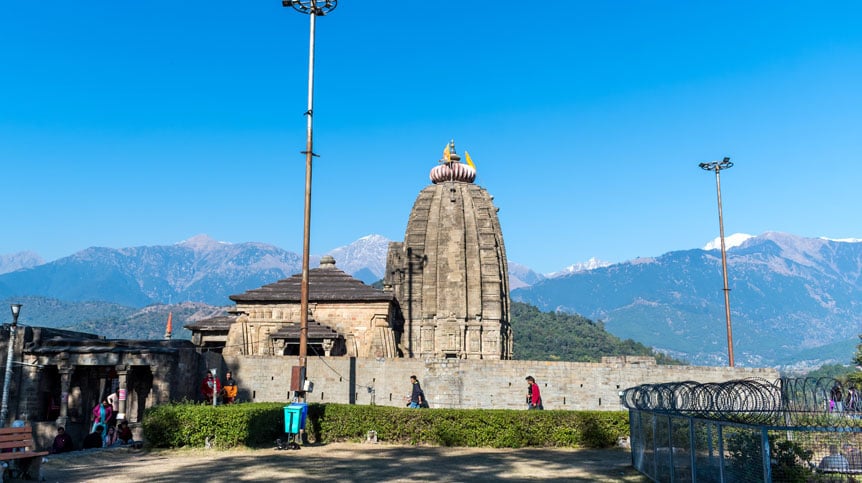
6. Baijnath Shiv Temple – Kangra Valley
Core Appeal: A finely preserved medieval Shiva temple known for elegant Nagara stone carvings and a mountain-valley setting.
Best For: Temple architecture enthusiasts, slow travellers on the Palampur–Bir route, and solo travellers preferring quieter cultural stops.
Route Fit: Fits naturally into Dharamshala–Palampur–Bir–Baijnath itineraries alongside the artistic village of Andretta.
Ideal Time to Visit: March – June; October – November.
7. Laxmi Narayan Temple Complex – Chamba
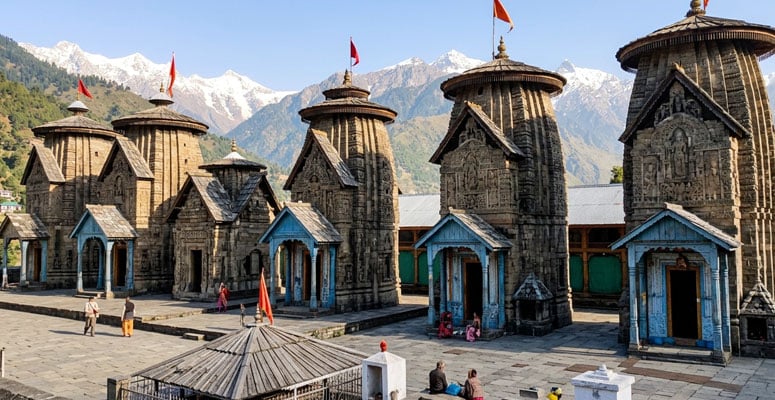
Core Appeal: A compact cluster of medieval stone temples blending classical Nagara design with Himalayan wooden roofing adaptations.
Best For: Heritage-focused travellers, photographers, families exploring Chamba town, and culture-led itineraries.
Route Fit: Serves as a central stop within Chamba town and pairs well with museums, markets, and Dalhousie-bound plans.
Ideal Time to Visit: April – June; September – October.
8. Masrur Rock-Cut Temples – Kangra
Core Appeal: A monolithic rock-cut temple complex known for symmetry, cliff carving, and reservoir reflections.
Best For: Photographers, solo explorers, architecture enthusiasts, and scenic road-trip itineraries.
Route Fit: Best planned as a half-day detour between Kangra, Jawalamukhi, Dharamshala, or Pong Dam sectors.
Ideal Time to Visit: November – February.
9. Basheshwar Mahadev Temple – Bajaura, Kullu
Core Appeal: A quiet 9th-century stone Shiva temple with intricate carvings, often overlooked on the Kullu highway.
Best For: Heritage travellers, solo travellers, senior-friendly stopovers, and self-drive visitors heading toward Kullu or Manali.
Route Fit: Works as an efficient short halt on the Bhuntar–Kullu–Manali corridor.
Ideal Time to Visit: September – November; December – February.
Wooden Pagoda & Kath-Kuni Shrines (Pahari Style)
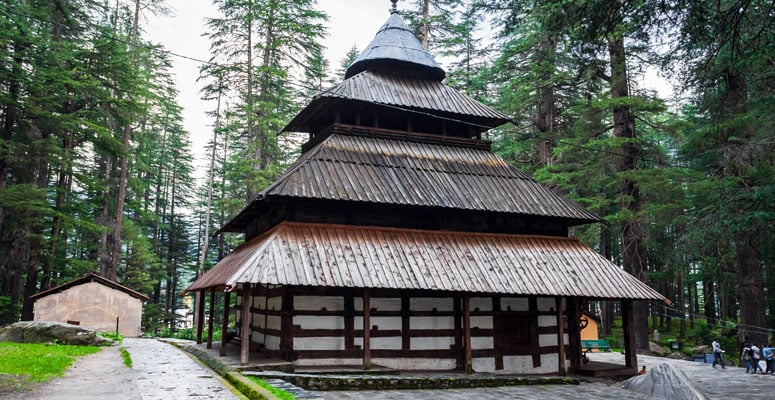
10. Hadimba Devi Temple – Manali
Core Appeal: A forest-framed wooden pagoda shrine known for cedar architecture and strong Pahari character.
Best For: Families with children, first-time visitors to Himachal, architecture enthusiasts, and wildlife or nature travellers who combine their visit with nearby forest walks.
Route Fit: Fits easily into Manali local sightseeing and pairs naturally with Old Manali, Vashisht, or short forest detours.
Ideal Time to Visit: April – June; October – November.
Seek blessings at Hadimba Temple, Manikaran, and other smaller shrines across Manali with this Magical Manali Tour.
11. Bhimakali Temple – Sarahan, Shimla District
Core Appeal: A striking multi-storey Kath-Kuni temple complex blending fort-like Himalayan wood-stone construction with deep royal history.
Best For: Circuit pilgrims en route to Kinnaur–Sangla, heritage travellers, photographers, and those on slow mountain itineraries.
Route Fit: Functions as a strategic overnight or cultural stop between Shimla, Rampur, Sangla, and Kalpa circuits.
Ideal Time to Visit: April – June; September – November.
12. Tripura Sundari Temple – Naggar, Kullu Valley
Core Appeal: A rare Kullu-style pagoda temple dedicated to Tripura Sundari, known for intricate woodwork and local Devi traditions.
Best For: Slow travellers, culture-focused visitors, photographers.
Route Fit: Pairs efficiently with Naggar Castle, art galleries, orchard routes, and Kullu Valley day drives.
Ideal Time to Visit: March – June; September – November.
13. Prashar Rishi Temple – Mandi
Core Appeal: A distinctive three-tier wooden pagoda shrine linked to sage Prashar and known for traditional Himalayan craftsmanship.
Best For: Solo travellers, spiritual retreats, photographers, birdwatchers, and scenic road-trip itineraries.
Route Fit: Works best as a dedicated excursion from Mandi or a slow-stop break between Kullu and Shimla sectors.
Ideal Time to Visit: April – June; October – December.
14. Manu Temple – Old Manali
Core Appeal: One of the few temples in India dedicated to sage Manu, associated with origin mythology and early human settlement traditions.
Best For: Backpackers, solo travellers, culture-led walkers, and visitors exploring Old Manali’s slower side.
Route Fit: Best combined with Old Manali cafés, village walks, Hadimba Temple, and short local sightseeing circuits.
Ideal Time to Visit: April – June; September – November.
High-Altitude & High-Exertion Shrines
15. Mani Mahesh Temple – Chamba
Core Appeal: A revered Shiva shrine tied to the sacred Mani Mahesh Yatra and high-altitude lake pilgrimage tradition.
Best For: Pilgrimage trekkers, spiritually motivated endurance travellers, experienced mountain walkers.
Route Fit: Requires a dedicated Chamba–Bharmour–Hadsar pilgrimage plan and works best as a multi-day extension after Dalhousie–Chamba or Chamba heritage circuits.
Ideal Time to Visit: August – September.
16. Shrikhand Mahadev – Kullu District
Core Appeal: An extreme-altitude Shiva pilgrimage centred around a towering natural rock Shivling reached through one of Himachal’s toughest religious treks.
Best For: High-endurance trekkers, adventure pilgrims, mountaineering communities, and repeat visitors to Himachal seeking physically demanding routes.
Route Fit: Standalone trekking itinerary via Nirmand–Jaon rather than inclusion in standard Kullu circuits.
Ideal Time to Visit: July – August.
17. Bijli Mahadev Temple – Kullu Valley
Core Appeal: A hilltop Shiva temple known for its periodically lightning-struck Shivling and commanding valley position.
Best For: Active families with older children, beginner trekkers, fitness-orientated travellers, and short-hike seekers around Kullu.
Route Fit: Fits easily into Kullu–Naggar–Manali plans as a half-day active detour.
Ideal Time to Visit: March – June; September – November.
18. Kartik Swami / Kelang Wazir Temple – Kugti, Chamba District
Core Appeal: A remote highland shrine dedicated to Kartikeya, closely linked with Gaddi pastoral traditions and seasonal mountain worship.
Best For: Experienced hikers, anthropology- or culture-focused travellers, remote-village explorers.
Route Fit: Best attempted through Bharmour–Kugti village itineraries and often paired with longer tribal-region exploration.
Ideal Time to Visit: May – June; September – October.
19. Jakhoo Temple – Shimla
Core Appeal: A Hanuman temple associated with the Ramayana, known for its hilltop setting and towering Lord Hanuman statue.
Best For: Senior pilgrims (has ropeway access), families with children, first-time Shimla visitors, and short spiritual stopovers.
Route Fit: Integrates smoothly into Shimla heritage walks, Mall Road plans, and same-day local sightseeing.
Ideal Time to Visit: March – June; October – December.
Temple Circuits in Himachal Pradesh
Shakti Peeth Circuit (2–3 Days)
Naina Devi → Chintpurni → Jwalamukhi → Bajreshwari Devi → Chamunda Devi
Best For: Pilgrims, Families, Senior travellers.
Kangra Heritage Temple Circuit
Masrur Rock-Cut Temples → Baijnath Temple → Chamunda Devi → Kangra Fort
Best For: Architecture enthusiasts, History travellers.
Kullu–Manali Temple Circuit
Hadimba Devi Temple → Basheshwar Mahadev → Tripura Sundari → Manu Temple
Best For: First-time Himachal visitors.
Kinnaur Spiritual Heritage Circuit
Bhimakali Temple → Sangla Valley → Kalpa
Best For: Cultural travellers, Photographers, Slow road trips.
High-Altitude Pilgrimage Circuit
Mani Mahesh → Shrikhand Mahadev
Best For: Experienced trekkers, Pilgrims seeking physically demanding routes.
Planning a dedicated Shimla tour? Book this Scenic Shimla Tour.
Practical Notes for Visiting Himachal’s Temples & Shrines
Dress modestly at active shrines. Covered shoulders and comfortable clothing work best.
Wear easy slip-on footwear. Shoes are removed in all temples, and the stone floors get cold.
Photography is often restricted inside sanctums. Exterior shots are allowed.
Expect long queues during Navratri, Shivratri, local fairs, weekends, and holidays.
Reach early in the morning for easier parking, lighter crowds, and smoother darshan, especially in the Shakti Peethas.
Hill driving takes longer than maps suggest due to bends, traffic, weather, and roadwork.
Even road-access temples may involve steep walks or stair climbs, especially hilltop shrines.
Senior travellers should check ropeways, stair counts, railings, or vehicle drop-off access in advance.
Carry small cash for parking, prasad, lockers, shoe counters, and local stalls.
Monkeys are common at hill shrines like Jakhoo Temple (Shimla) and Hadimba Devi Temple (Manali). Avoid carrying visible snacks or loose valuables.
High-altitude temples such as Mani Mahesh, Shrikhand Mahadev, and Kelang Wazir need warm layers even in summer.
Start high-exertion shrine visits early to avoid weather shifts and late descents.
Parking is often below the temple. Allow extra time for stairs, markets, or shuttle access.
Darshan does not require expensive puja baskets despite market pressure near entrances.
Use washrooms in towns, hotels, or fuel stations before venturing into remote stretches.
Download offline maps for Chamba, Kugti, or remote Kullu routes where signal can be weak.
Comfort and Experience Guidance For Travellers
| Aspect | Foothill Shakti Peethas | Stone & Pahari Temples | High-Altitude Shrines |
|---|---|---|---|
| Crowd Peaks | Navratri, Ashtami, weekends, and holidays; queues rise sharply at major Devi shrines. | Summer weekends, local fairs, and holiday traffic in Manali, Shimla, and Chamba. | — |
| Best Time of Day | Earlier visits mean smoother darshan, lighter parking pressure, and calmer temple grounds. | Early- to late-morning visits help avoid tour groups and bus traffic. | Early starts matter most due to weather shifts and longer return routes. |
| Ceremony Timings | Morning (5–8 AM) and evening aarti (6–8 PM) feel more atmospheric but usually mean longer waits. | Ritual timing matters less than the flow of sightseeing in your itineraries. | Rituals limited. Trails, daylight, and weather conditions are more crucial. |
| Senior-Traveller Fit | Easier access and shorter walking distances at most shrines. | Mixed — easier at Baijnath, Basheshwar, Hadimba; more walking at Bhimakali or Prashar. | Limited suitability, except for the Jakhoo Temple. |
| Families with Children | Strong fit for multi-generational trips and shorter temple halts. | Best at Hadimba, Manu, and Baijnath with easier pacing and open surroundings. | Better for older children comfortable with walking or altitude. |
| Guide Necessity | Usually not needed; optional for mythology or Devi-circuit context. | Most useful here, especially at Masrur, Bhimakali, Baijnath, and Chamba for architecture and history. | Not necessary. |
| Access | Stairs are common despite road access. | Uneven stone paths and sloped temple compounds at older sites. | Uphill walks, altitude, or trekking effort should be expected. |
| Queue Strategy | Avoid festival afternoons and long weekends. | Queues are usually manageable except during fair and festival periods. | Usually no long queues. |
| When to Skip | Festival days if seeking calm or fast darshan. | Heavy rain periods (July – August). | Poor weather, low fitness, or tight itineraries significantly reduce the experience. |
How to Plan Your Temple Route?
Foothill Devi Circuit (2–3 Days | Easy Access)
Route: Chandigarh → Naina Devi → Chintpurni → Jwalamukhi → Bajreshwari Devi (Kangra) → Chamunda Devi → Dharamshala / Palampur
Why This Route Works: Follows the natural foothill progression into Kangra with manageable drive times and minimal backtracking.
Kangra Heritage Temple Circuit (2 Days | Temple + History Mix)
Route: Dharamshala / Kangra → Masrur Rock-Cut Temples → Jwalamukhi → Bajreshwari Devi → Chamunda Devi → Baijnath Shiv Temple → Palampur / Bir
Why This Route Works: Combines Kangra’s major temple clusters with architecture-focused stops and smoother valley driving.
Kullu–Manali Sacred Circuit (1–2 Days | Short Drives)
Route: Kullu → Basheshwar Mahadev (Bajaura) → Bijli Mahadev → Naggar (Tripura Sundari Temple) → Hadimba Devi → Manu Temple (Old Manali)
Why This Route Works: Designed around short detours from the Kullu–Manali highway without long excursion days.
Kath-Kuni & Pahari Temple Circuit (4–5 Days | Architecture Route)
Route: Shimla → Sarahan (Bhimakali Temple) → Mandi (Prashar Rishi Temple excursion) → Naggar (Tripura Sundari Temple) → Hadimba Devi → Manu Temple (Manali)
Why This Route Works: Links Himachal’s strongest wooden temple traditions while naturally progressing toward the Kullu Valley.
Chamba–Bharmour Pilgrimage Circuit (3–5 Days | Mountain Pilgrimage)
Route: Dalhousie / Chamba → Laxmi Narayan Temple Complex → Bharmour → Mani Mahesh (seasonal trek) → Kugti / Kelang Wazir Temple
Why This Route Works: Groups Chamba district’s major pilgrimage sites into one practical mountain route.
High-Altitude Shiva Circuit (5–8 Days | High Exertion)
Route: Kullu → Bijli Mahadev → Nirmand / Jaon (Shrikhand Mahadev base) → Chamba–Bharmour → Mani Mahesh → Kugti / Kelang Wazir Temple
Why This Route Works: Focuses on Himachal’s physically demanding Shiva pilgrimages with time for acclimatisation and trekking.
Shimla–Kinnaur Sacred Corridor (2–4 Days | Road Journey)
Route: Shimla → Jakhoo Temple → Sarahan (Bhimakali Temple) → Sangla / Kalpa onward
Why This Route Works: Fits naturally into the classic Shimla–Kinnaur drive with minimal detours.
Himachal Temple Journey That Fits Your Travel Style
From easy-access foothill shrines to remote Himalayan pilgrimage routes, these itineraries help you experience Himachal’s temples in a practical, well-paced way. Each plan balances driving time, altitude, temple clusters, and nearby cultural stops to simplify route planning.
The most rewarding temple experiences in Himachal Pradesh come from matching the right sites with your travel style rather than attempting to visit every famous shrine. Pilgrims often prioritise the Shakti Peeth circuit, while architecture enthusiasts may find greater value in Baijnath, Masrur, Basheshwar Mahadev, and Bhimakali. Combining temple visits with broader regional journeys across Kangra, Kullu, Chamba, and Kinnaur yields a far richer understanding of Himachal’s cultural landscape.