Planning a trip to the Maldives in 2026? Whether you’re staying at a luxury resort or exploring local islands, getting to know the culture of the Maldives can transform your holiday from a beach escape to a truly meaningful journey. We sat down with a local cultural expert to answer the most frequently asked questions by Indian travellers — from etiquette and dress codes to food habits and festivals.
What Makes Maldivian Culture Unique?
The Maldives is more than a chain of tropical islands — it’s a crossroads of civilisations that once sailed the Indian Ocean. For centuries, traders from South India, Arabia, East Africa, and Southeast Asia stopped here to barter spices, silks, and shells. Each wave of visitors left a cultural imprint, resulting in a rich, hybrid heritage.
South Indian Influence: Seen in the use of coconut, rice, and spices in food, and in the ancient Tamil-Sinhala script that preceded modern Dhivehi writing.
Arab Influence: Islam arrived in 1153 AD and shaped the nation’s laws, clothing, and community customs. You’ll also see Arabic calligraphy on buildings and traditional prayer caps worn by elders.
African Rhythms: The signature Bodu Beru drumming has unmistakable roots in East Africa, carried by early African settlers and slaves.
Sri Lankan & Southeast Asian Craftsmanship: From carved lacquerware to traditional wooden boats (dhonis), Maldivian artistry draws from its neighbours while remaining uniquely its own.
Language: Dhivehi is an Indo-Aryan language with Sinhala influence, written in the Thaana script. English is commonly spoken, especially in resorts and tourist zones.
Religion: Islam is the official religion — all citizens are Muslim by law, and many traditions revolve around Islamic principles such as modesty, fasting, prayer, and community.
Lifestyle: Islanders live a simple, ocean-centric life rooted in community bonds, environmental respect, and sukun — a local concept of inner peace and calm.
Discover paradise spots with our guide to Places to Visit in Maldives.
What Are the Religious Customs Tourists Should Respect?
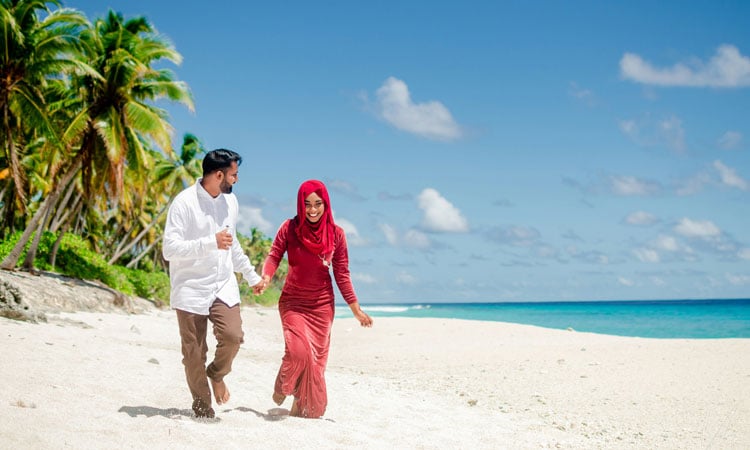
The Maldives is a devout Islamic country, and religion is deeply integrated into both private and public life. As a visitor, you’re not expected to practice, but you are expected to show awareness and respect.
Key Religious Norms
No Alcohol or Pork on Local Islands: Both are haram (forbidden) under Islamic law. These items are only served at private resorts and liveaboards, which are licensed tourist zones.
Mosques Are Off-Limits to Non-Muslims: Tourists cannot enter most mosques, though you can admire their architecture from the outside. Dress modestly if walking near mosques, especially during prayer hours.
Prayer Time Observance: The adhan (call to prayer) echoes five times daily from mosque loudspeakers. Locals may pause work or close shops briefly during this time, especially on Fridays.
Tourist Etiquette Checklist
Dress modestly: Shoulders and knees must be covered on local islands. Avoid tight or see-through clothes.
Remove shoes when entering homes, mosques, or guesthouses.
Avoid PDA: Kissing or hugging in public (outside resorts) is considered inappropriate.
No topless sunbathing: Even on resort beaches, this is prohibited by national law.
Explore water sports, marine life & more through Things to Do in Maldives.
What Is the Traditional Clothing of the Maldives?
Maldivian attire beautifully reflects Islamic modesty blended with island aesthetics — breathable fabrics, flowing cuts, and bright colors are common.
Traditional Male Dress
Mundu (Sarong): Worn as a lower garment, often paired with a short-sleeved shirt.
Headwear: Older men sometimes wear embroidered taqiyah caps during prayer.
Traditional Female Dress
Libaas: A long tunic stitched from silk or cotton, adorned with gold or silver embroidery — typically worn during weddings or Eid.
Hijab: Worn by many women in daily life, though styles vary by age and island.
Modern Adaptations
Urban locals now wear Western-style clothing, especially in Malé.
Resort staff often don island-inspired uniforms with batik prints, shell jewellery, or tropical colour palettes — blending tourism with tradition.
Also Read: Best Resorts in the Maldives for Couples
What Are Some Must-Try Traditional Maldivian Dishes?
Maldivian cuisine is a celebration of the sea. With limited agricultural land, the locals depend on fresh tuna, coconut, and starches like breadfruit or rice to create nourishing meals that are simple yet flavorful.
Must-Try Dishes
Mas Huni – The Maldivian breakfast essential
Garudhiya – Healing Fish Broth
Fihunu Mas – Grilled Spiced Fish
Hedhikaa – Short Eats/Snacks (Bajiya, Gulha, Keemia)
Where to Try
Seagull Café (Malé)
Island Kitchen (Soneva Fushi)
Thila Restaurant (Bandos)
What Are the Traditional Music and Dance Forms?
Music in the Maldives isn’t just entertainment — it’s a cultural pulse, echoing the rhythms of migration, devotion, and island life.
Key Traditions
Bodu Beru (Big Drum)
Thaara
Dhandi Jehun
Also Read: Mauritius vs Maldives
What Are the Biggest Festivals in the Maldives?

While many holidays revolve around the Islamic calendar, they’re celebrated with local flair — food, music, and community gatherings.
Major Celebrations
Eid al-Fitr & Eid al-Adha
Maldivian Independence Day (July 26)
National Day (varies)
Plan a hassle-free vacation with complete details on Maldives Visa.
When’s the Best Time to Experience Local Culture?
The Maldives is a year-round tropical destination, but if you’d like to truly immerse yourself in its cultural rhythm, time your visit around its festive calendar.
Between February and August, the islands come alive with national pride, music, and community gatherings. This is when you’ll see locals celebrating everything from Eid festivals to Independence Day (July 26) with passion and joy.
During Eid al-Fitr and Eid al-Adha, local islands host open-air feasts, community prayers, and traditional Bodu Beru drumming sessions that stretch late into the night. Visitors are often welcomed to join in the festivities, sharing food and stories with islanders — a rare glimpse into the Maldivian spirit of togetherness.
If you’re travelling in July or August, don’t miss Independence Day parades in Malé or local islands, featuring school bands, cultural dances, and brightly lit streets adorned with national flags. Resorts also host cultural nights showcasing local music, traditional crafts, and live cooking of Maldivian delicacies.
Know all routes and flights in our guide on How to Reach Maldives.
Final Thoughts: A Culture That’s As Warm As Its Waters
The culture and traditions of the Maldives aren’t just about etiquette or clothing — they’re about a warm, welcoming people shaped by centuries of seafaring, spirituality, and simplicity. Whether you’re toasting with a fresh coconut under the stars, swaying to Bodu Beru, or learning to cook Mas Huni, these immersive moments become the real soul of your trip.
Ready to explore beyond the postcard beaches?
Craft your Maldives holiday with the perfect blend of luxury, authenticity, and cultural immersion. – Click here.
FAQs about Maldives Culture & Traditions
Q: What is the main religion in the Maldives?
Ans: Islam is the official and only religion of the Maldives. All citizens are Muslim by law, and Islamic customs heavily influence daily life, festivals, dress codes, and dietary rules on local islands.
Q: Can tourists wear bikinis in the Maldives?
Ans: Yes, but only at resorts and designated “bikini beaches” on local islands. Outside those areas, modest clothing covering shoulders and thighs is required. Always carry a sarong or scarf for walking around town.
Q: Is alcohol allowed in the Maldives?
Ans: Alcohol is prohibited on inhabited local islands but is freely available at resorts, liveaboards, and private islands. You cannot carry alcohol into the country or buy it in Malé.
Q: What souvenirs should I bring from the Maldives?
Ans: Top cultural souvenirs include:
Lacquerware boxes made from coconut wood
Handwoven mats (Thundu Kunaa)
Miniature dhonis (traditional boats)
Maldivian snacks like dried fish blends or coconut sweets.
Q: What is the traditional food of the Maldives?
Ans: Traditional Maldivian food includes Mas Huni (tuna & coconut), Garudhiya (fish broth), Fihunu Mas (grilled fish), and snack items called Hedhikaa. Most dishes revolve around tuna, coconut, and spices, offering a light yet flavorful island cuisine.