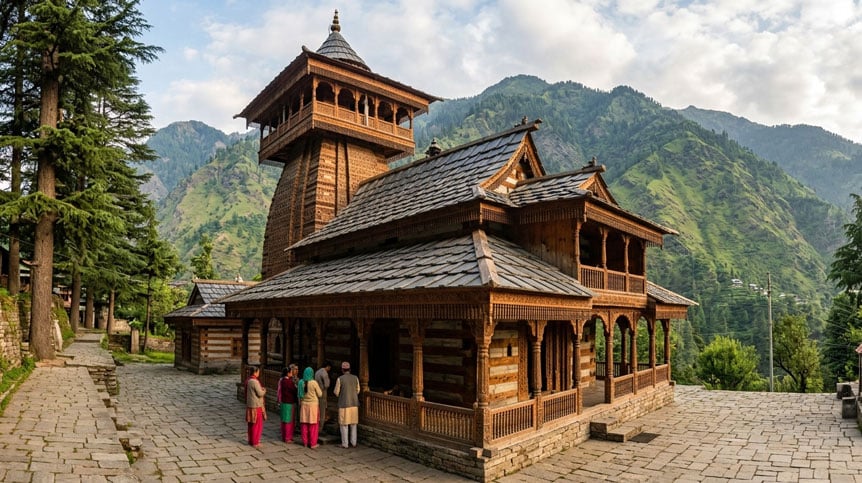

Kullu’s religious landscape is not a single uniform circuit—it shifts sharply from valley temples and town shrines to monastery complexes, riverside gurudwaras, and high-altitude pilgrimage routes. Each zone demands a different travel rhythm, whether it is short town loops, structured valley drives, or physically demanding hill approaches.
The real value lies in matching each place to its terrain, travel time, and seasonal conditions rather than trying to cover everything in a single plan. Some shrines fit easily into sightseeing routes, while others require dedicated time, effort, and weather awareness to be fully meaningful.
Whether you are a pilgrimage-focused traveller, a cultural explorer, a family seeking accessible religious sites, or a visitor interested in monasteries and local traditions, this guide helps you identify the places that best match your travel style, comfort level, and available time.
Planning a longer stay? Explore our Kullu Travel Guide for sightseeing ideas, seasonal travel advice, shopping recommendations, and local experiences that pair well with these religious attractions.
Main Religious Places to Visit in Kullu by Journey Style
| Journey Style | Recommended Places |
|---|---|
| Ritual-Centred Pilgrimage | Shri Raghunath Temple, Mahadevi Tirth Vaishno Devi Temple |
| Quiet Devotional Visits | Jagannathi Devi Temple, Sheetla Mata Mandir, Shivradi Narayan Temple |
| Monastic & Multi-Faith Experiences | Dechen Choekhor Monastery, Christ Church, Dagpo Shedrupling Monastery |
| Active Pilgrimage Stops | Bijli Mahadev Temple |
| Valley-Based Spiritual Routes | Manikaran Sahib |
Ritual-Centred Pilgrimage Temples
1. Shri Raghunath Temple
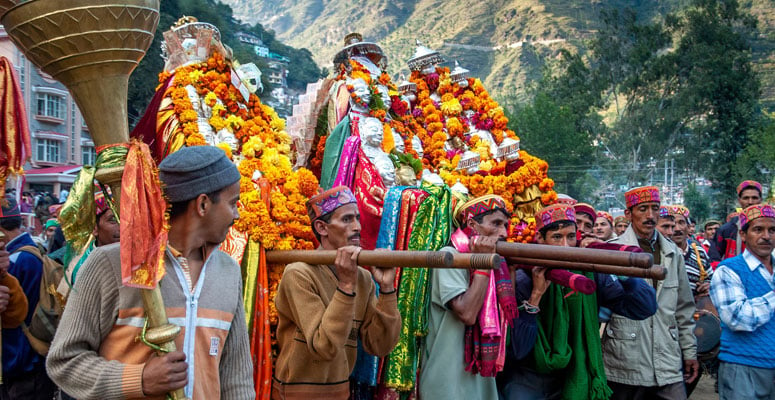
A central Vaishnav shrine dedicated to Lord Raghunath, deeply tied to Kullu’s royal deity traditions and Dussehra celebrations. It suits cultural pilgrims, first-time travellers, and those exploring the valley’s spiritual identity. Located in Kullu town, it integrates naturally with exploring the local market and the Beas riverside.
Famous Festivals Celebrated: Kullu Dussehra, Ram Navami, Janmashtami
Best Time to Visit: March – June; September – November
Ideal Duration: 30 – 60 minutes
2. Jagannathi Devi Temple
A hillside Devi shrine associated with local protective deity worship, offering a quieter counterpoint to the valley’s larger pilgrimage centres. Best for slow travellers, active senior pilgrims comfortable with a short uphill walk, and visitors seeking less crowded spiritual stops near Kullu town. It fits well into short uphill detours from the main Kullu–Naggar route.
Famous Festivals Celebrated: Navratri, Chaitra Ashtami, Sharad Purnima
Best Time to Visit: April – June; September – October
Ideal Duration: 45 – 90 minutes
3. Mahadevi Tirth Vaishno Devi Temple
A modern pilgrimage-style temple that reflects Vaishno Devi-inspired worship rituals, attracting devotional travellers, family groups, and short-stay visitors in the Kullu region. It serves as an easy stop on the local Kullu town circuit or while travelling towards Naggar and Manali.
Famous Festivals Celebrated: Navratri, Chaitra Navratri, Vaishno Devi-linked local observances
Best Time to Visit: March – June; September – November
Ideal Duration: 30 – 60 minutes
Quiet Devotional Shrines
1. Sheetla Mata Mandir
A small, locally revered Shakti shrine associated with healing and protective worship traditions, drawing a steady footfall from nearby villages rather than tourist circuits. Slow travellers, senior pilgrims, and those exploring everyday devotional life in Kullu will appreciate the experience. It is situated in a simple settlement, making it an easy, short halt rather than a destination.
Famous Festivals Celebrated: Sheetla Ashtami, Navratri, local village fairs
Best Time to Visit: March – June; September – November
Ideal Duration: 20 – 40 minutes
2. Shivradi Narayan Temple
A calm Vishnu-focused shrine reflecting ancient valley worship traditions, known for its peaceful surroundings, rather than for its architectural prominence. Suited for travellers interested in offbeat religious spaces, cultural observers, and those combining temple visits with rural Kullu exploration. It works best as a brief detour within local village or roadside circuits rather than a standalone pilgrimage.
Famous Festivals Celebrated: Janmashtami, Ekadashi, Kartik month rituals
Best Time to Visit: April – June; September – October
Ideal Duration: 30 – 45 minutes
Monastic & Multi-Faith Religious Landmarks
1. Dechen Choekhor Monastery
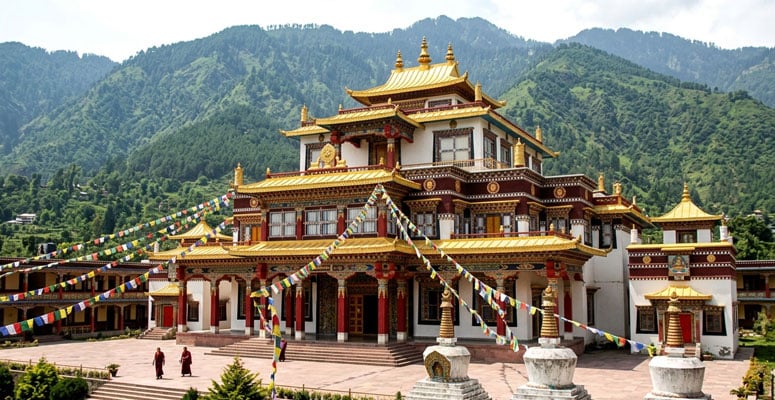
A contemporary Tibetan Buddhist monastery known for its structured monastic practice, large prayer halls, and preserved teaching traditions linked to the Nyingma lineage. Best for travellers interested in experiencing monastic systems, meditation, and Tibetan cultural studies within the Kullu Valley. It fits naturally into Naggar-side explorations and slower village circuits where Buddhist influence is still active.
Famous Festivals Celebrated: Losar, Buddha Purnima, Monlam Prayer Festival
Best Time to Visit: April – June; September – November
Ideal Duration: 1 – 2 hours
2. Christ Church
A colonial-era Gothic church reflecting the Christian heritage within Kullu’s broader multi-faith landscape, known for its quiet interiors, stained-glass details, and reflective atmosphere rather than scale. Well-suited to heritage walkers, architecture enthusiasts, and travellers interested in the colonial layer of Himachal’s hill culture. It is best visited as part of the Kullu town–Dhalpur–Raghunath Temple riverside loop, which links cultural stops in a short walking circuit.
Famous Festivals Observed: Christmas, Good Friday, Easter Sunday
Best Time to Visit: March – June; September – December
Ideal Duration: 30 – 60 minutes
Religious Places Along the Route Around Kullu
1. Bijli Mahadev Temple – Hilltop Shrine
A ridge-top Shiva temple where the central Shivling is periodically restored after lightning strikes, forming part of a long-standing local ritual cycle tied to weather and valley belief systems. Suit active travellers, short-hike seekers, and those combining spiritual stops with mountain ascents. It aligns well with Kullu–Chansari–Bijli Mahadev day excursions that involve a moderate uphill trail rather than a drive-only visit.
Effort Level: Moderate physical effort due to the continuous uphill walk from the roadhead.
Famous Festivals: Shivratri, Bijli Mahadev Fair, Nag Panchami
Best Time to Visit: March – June; September – November
Ideal Duration: 2 – 3 hours
2. Manikaran Sahib – Gurudwara Traditions
The place attracts multi-faith pilgrims, family groups, and long-stay travellers moving through Parvati Valley who value shared worship spaces and community-led service traditions. The gurudwara is known for its hot spring-based langar system, where daily ritual life and collective dining form the core experience. Positioned directly on the Kullu–Kasol–Manikaran road, it naturally serves as a midway stop on journeys around the Parvati Valley.
Famous Festivals Celebrated: Guru Nanak Jayanti, Baisakhi, Gurpurab
Best Time to Visit: April – June; September – November
Ideal Duration: 2 – 4 hours
3. Dagpo Shedrupling Monastery – Buddhist Retreat
Set in the Parvati Valley’s quieter stretch, this monastery reflects Tibetan Buddhist learning traditions where daily life revolves around chanting, study, and structured monastic routines rather than visitor-facing rituals. It appeals to travellers seeking slower cultural immersion, spiritual observation, and an alternative rhythm to temple-based pilgrimage stops. The monastery slots naturally into the Kasol–Manikaran–Pulga circuit, especially for those extending beyond the main valley road into less commercial hamlets.
Famous Festivals Celebrated: Losar, Buddha Purnima, Dharma teachings gatherings
Best Time to Visit: March – June; September – October
Ideal Duration: 45 – 90 minutes
Best Time of Day to Visit: When does the Crowd Peak?
Most temples in Himachal are calmer earlier in the day, when queues are shorter and movement inside shrines is easier. Crowds build steadily toward late morning and peak on weekends, at festivals, and during seasonal pilgrimage windows like Navratri, Kullu Dussehra, and major local fairs. High-traffic shrines such as Raghunath Temple, Mahadevi Tirth Vaishno Devi Temple, and Manikaran Sahib see the sharpest surges during these periods, while smaller village temples remain relatively steady throughout the day.
• Ceremony Timings
Aarti and prayer cycles generally take place in the morning and evening at most temples, and these windows often bring a more active spiritual atmosphere and longer waiting times. At monasteries and churches, fixed services (times vary) or prayers may temporarily restrict access to inner halls. In most route-based or high-altitude shrines, ritual timing is secondary to weather, daylight, and travel conditions rather than fixed schedules.
• Senior Travellers Suitability
Foothill temples and town-based shrines are generally the most accessible for senior travellers, with shorter walking distances and easier access points. Sites like Raghunath Temple, Christ Church, Mahadevi Tirth Vaishno Devi Temple, and Sheetla Mata Mandir generally fall into this category. Moderate effort is required at hillside shrines such as Manikaran, Jagannathi Devi or Bijli Mahadev. Dagpo Monastery route extensions, or Bijli Mahadev’s climb, are less suitable for those with mobility or stamina limitations.
• Queue Pattern and Access
Major pilgrimage temples operate under structured yet dense crowd conditions during festivals, while smaller shrines often have minimal or no formal queuing. Access varies significantly: foothill temples are typically road-connected with short stair sections, whereas ridge and valley-edge shrines may require uphill walks or longer road transfers. Parvati Valley routes also introduce narrower roads and longer travel gaps between sites.
• Is a Guide Required for Exploration?
Guides are rarely required for basic darshan, as most temples are self-explanatory regarding access and worship. However, they become valuable in select contexts, particularly at sites where local history, temple traditions, or regional religious practices add deeper context, such as Raghunath Temple, Bijli Mahadev Temple, or heritage-focused Naggar excursions. In monasteries and multi-faith spaces, visits are generally self-guided and observational.
Extend your journey from Kullu to the other sacred destinations across Himachal Pradesh. Travellers planning to combine Kullu with other temple towns, monasteries, and pilgrimage destinations across Himachal Pradesh may find these curated Himachal Tour Packages useful for a more structured spiritual and cultural journey.
The Ideal Kullu Religious Places Route For You
1. Kullu Valley Core Temple Loop (1 Day | Town + Short Drives)
Route: Kullu → Shri Raghunath Temple → Christ Church → Dechen Choekhor Monastery → Jagannathi Devi Temple
Estimated Duration: 5–7 hours, including local travel and temple visits.
Why This Route Works: Keeps all key town-based spiritual and multi-faith landmarks within a compact circuit, avoiding long inter-valley travel and allowing flexible pacing around Kullu town.
2. Kullu–Naggar Sacred & Heritage Circuit (1–2 Days | Cultural + Temple Mix)
Route: Kullu → Mahadevi Tirth Vaishno Devi Temple → Naggar (Tripura Sundari Temple) → Dechen Choekhor Monastery → return via riverside loop
Why This Route Works: Temple visits with Naggar’s cultural layer and slower village stretches, forming a balanced drive without rush.
3. Parvati Valley Spiritual Route (1–2 Days | River Valley Circuit)
Route: Kullu → Manikaran Sahib → Dagpo Shedrupling Monastery → Kasol / Pulga extension
Why This Route Works: Follows the Parvati River axis, where gurudwara traditions and Buddhist monastic life coexist within short travel distances.
4. Bijli Mahadev Short Pilgrimage Extension (Half Day–1 Day | Active Climb)
Route: Kullu → Chansari → Bijli Mahadev → return to Kullu
Why This Route Works: A dedicated uphill pilgrimage detour rather than part of a longer circuit, keeping effort and timing contained in a single ascent-descent window.
5. Kullu Devotional + Village Shrine Circuit (Half Day | Local Exploration)
Route: Kullu → Sheetla Mata Mandir → Shivradi Narayan Temple → Raghunath Temple (return loop)
Why This Route Works: Focuses on quieter village-linked shrines and everyday devotional spaces without requiring valley travel.
Structured Ways to Explore Kullu’s Sacred Landscape
Instead of isolated visits, these itineraries connect Kullu’s foothill shrines, heritage temples, and high-valley pilgrimage sites into clear travel flows. Each route is shaped by distance, terrain, and local temple clusters to enable efficient movement across the broader Himachal region.