

Ajmer’s fort and palace work best for travellers who want to add a heritage stop to a city known for pilgrimage and its connection to Pushkar. For most visitors, this page is not about covering a long checklist of palaces. This is not the kind of destination where you build two full days around palace sightseeing alone. In Ajmer, the smarter question is which fort or palace is actually worth your time, how much effort it takes, and whether it fits naturally into the rest of your day.
Two to three days cover Jaisalmer properly. Add one extra day for a western desert circuit or a day trip to Kuldhara and Bada Bagh. October to March is the strongest window. February is the most vibrant month — the three-day Desert Festival transforms the city and dunes into a carnival of camel races, folk performances, and turban-tying contests.
How Ajmer’s key sites differ
The biggest difference among Ajmer’s sites lies in the kind of experience they offer. One works best for views and a hill-fort feel; the other is easier and more museum-led. The sections below will help you understand which place best suits your time, travel pace, and interests.
Taragarh Fort
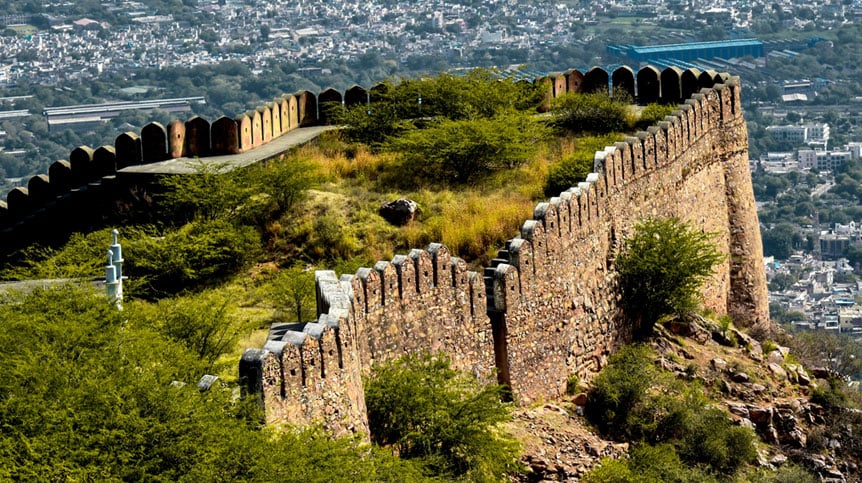
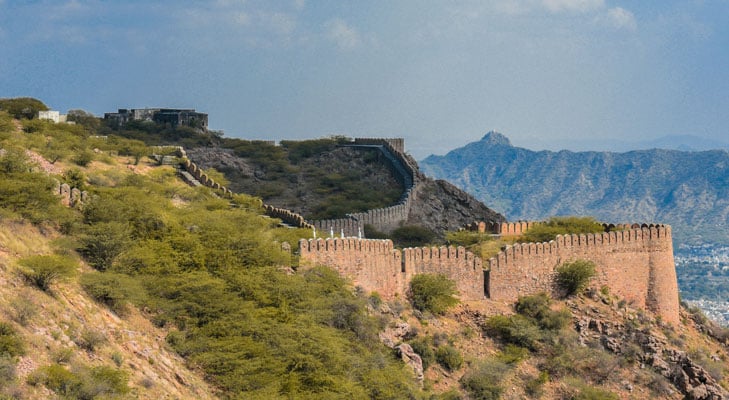
Taragarh Fort is the site to prioritise if you want Ajmer’s strongest fort experience. It sits atop the city and is valued mainly for its hilltop setting, old fort character, and panoramic views. This is the stop that gives a more rugged, defensive, Rajput-era feel.
Highlights: Wide city views, hilltop fort setting, ruined defensive character, and a stronger sense of scale than the other sites in this cluster.
Ideal duration: Around 2 to 3 hours if you want to take the climb comfortably and spend proper time at the viewpoints.
Akbar Palace
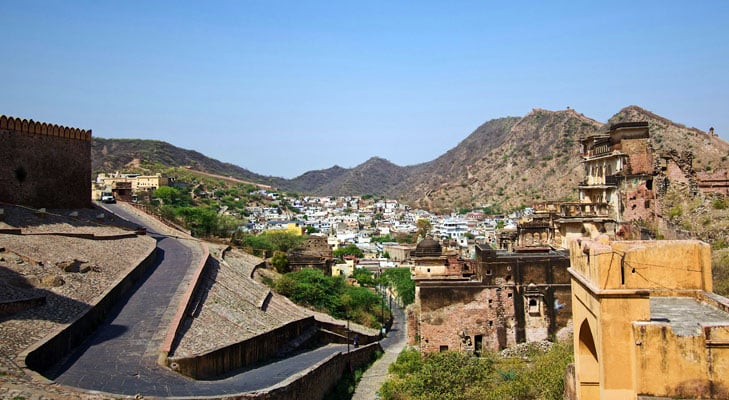
Akbar Palace is the better choice if you want an easier heritage stop inside the city. It works less as a sweeping fort experience and more as a museum and history visit. The structure itself matters, but the main value here is that it lets you understand Ajmer’s Mughal layer without the climb and exposure that come with Taragarh.
Highlights: Mughal-era structure, government museum setting, city access, and a more contained historical visit.
Ideal duration: About 1 to 1.5 hours is usually enough for most travellers.
Mansingh Palace
Mansingh Palace belongs more to the heritage-stay side of Ajmer than to the monument-priority side. It is presented as a palace hotel with the look of an old fortress, so the appeal here is atmosphere, architecture-inspired styling, and comfort rather than a standalone historical site that demands dedicated sightseeing time.
Highlights: Palace-style ambience, fortress-inspired design, and the option of experiencing heritage character in a more relaxed setting.
Ideal duration: Minimal as a sightseeing stop; more meaningful if you are staying here or stopping for a meal or break.
Bijay Niwas Palace
Bijay Niwas Palace is even more clearly a heritage stay experience than a visit to a city monument. It is a former palace property that now works as a retreat-style heritage hotel, so it makes sense for travellers who want a slower palace atmosphere, not for those trying to cover Ajmer’s main sights in a few hours.
Highlights: Heritage-palace setting, quieter surroundings, and a more retreat-like experience than an urban sightseeing stop.
Ideal visit duration: Best treated as an overnight or a longer stop, not a short monument visit.
How to combine them in one route
If you have only a short stay in Ajmer, it is usually better to choose one main heritage anchor rather than trying to cover every fort and palace.
Taragarh Fort is the right pick if views, scale, and fort atmosphere matter most. Akbar Palace is the better pick if you want a lower-effort visit inside the city. Mansingh Palace and Bijay Niwas Palace serve more as optional palace-style additions, especially for travellers who prioritise heritage stays over monument coverage.
On a fuller day, Taragarh can be paired with Adhai Din Ka Jhonpra because the climb begins beyond that side of the city. Akbar Palace fits more easily into a city-based sightseeing sequence with Ajmer Sharif or other central attractions.
What to know before you visit
The main planning variable in Ajmer’s fort-and-palace is effort, not sheer monument volume.
- Taragarh involves the most physical exertion, so it is less suitable for travellers trying to sightsee in peak afternoon heat, older visitors who want low-effort access, or anyone trying to keep the day very light.
- Akbar Palace is the easiest site in practical terms and gives you the best heritage return for the least effort.
- Mansingh Palace is simple to include only if you are using it as a stay or comfort-led stop.
- Bijay Niwas Palace should be treated as a separate heritage-stay decision rather than something to force into the core Ajmer sightseeing loop.
Continue planning your Ajmer trip
For the next step, move upward into the Ajmer planning path:


