
Jhalawar defies Rajasthan’s stereotypes in the most unexpected ways. It is called the “Cherrapunji of Rajasthan“. As the state’s wettest city, this former princely state amazes first-time tourists with lush greenery and mounds of oranges at every turn. Here’s a fun fact – Jhalawar is India’s second-largest orange producer after Nagpur!
Founded in 1791 AD by Rajput Jhala Zalim Singh, the then Dewan of Kota, it embodies classic Rajasthan with majestic forts, ancient palaces, weathered temples, great food, and thrilling tales of folklore and battles. The Gagron Fort, Garh Palace, the government museum, and Bhawani Natyashala are top favourites with visitors. Tourists find the city charming, historic, and colourful and enjoy their time here with an endless supply of freshly squeezed orange juice.
Why Visit Jhalawar?
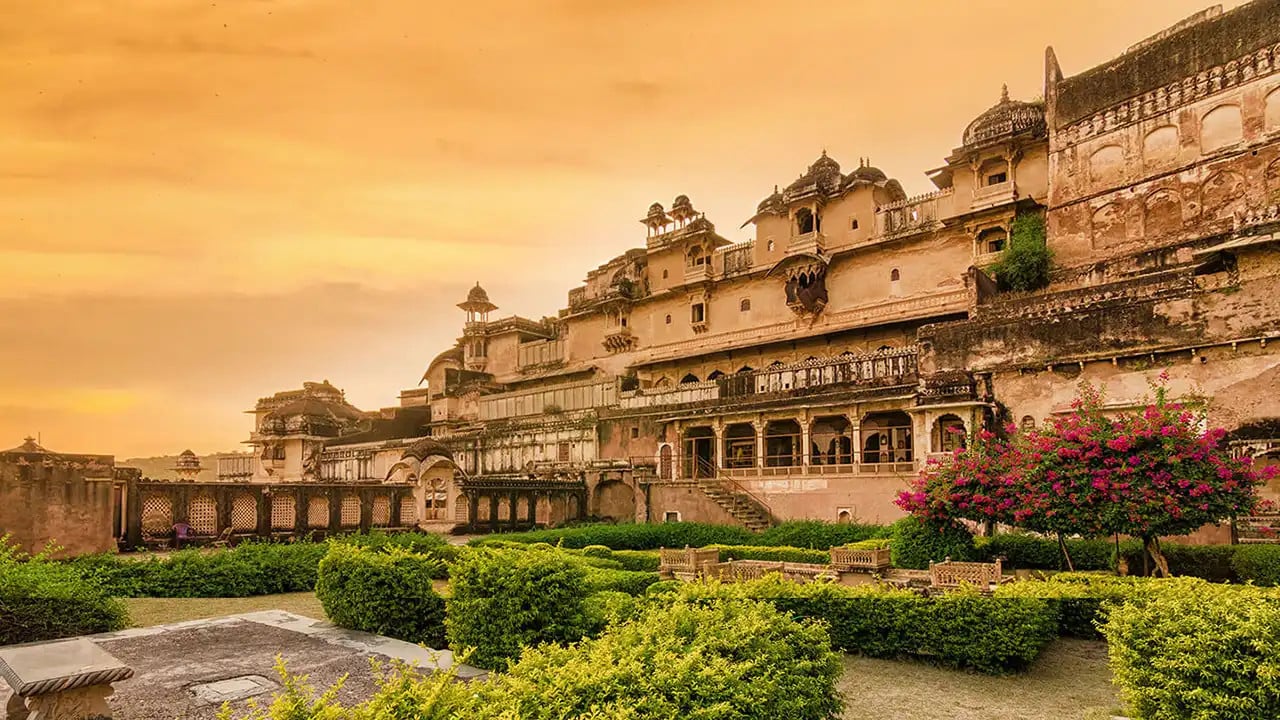
A city replete with beautiful architecture – Jhalawar has a varied cultural heritage that includes many forts and palaces from the Rajput and Mughal periods.
Rajasthan’s green jewel – Unlike other tourist cities in Rajasthan, Jhalawar has a verdant green cover.
Scrumptious fare – The city offers a mix of delicacies like Feni, khoya gulab jamun, and laal maas, topping the list.
Close to other tourist cities – Jhalawar is a few hours’ drive from touristy cities like Chittorgarh and Bhilwara.
What are the Top Places to Visit in Jhalawar?
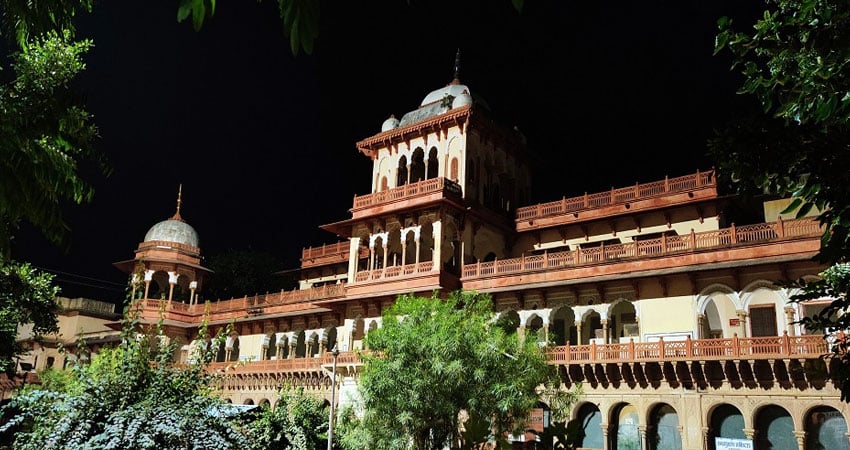
Garh Palace (Jhalawar Fort)
You walk through the heart of Jhalawar and find Garh Palace, built between 1838 and 1854 by Maharaj Rana Madan Singh and his successors. Inside, it quietly surprises you with intricate paintings, frescoes, and mirror work on walls, which pay testament to the artistic heritage that bloomed within the city limits.
Government Museum
Right in the city centre, you will find the Jhalawar Government Museum, established in 1915. Housed within the Garh Palace, it displays rare manuscripts, idols, and centuries-old inscriptions dating back to the 6th and 7th centuries. It invites you to slow down and take in Rajasthan’s rich history through carefully preserved artefacts.
Bhawani Natyashala
The Bhawani Natyashala is one of the most unusual theatres in India, constructed in 1921 A.D. by Maharaja Bhawani Singh. This architectural wonder gives you an excellent insight into the world of theatre and art and is known to have an underground passage that allowed horses and chariots to appear on stage. The theatre saw the enactment of several great plays, ranging from Kalidas’s Abhijnana Shakuntalam to Shakespeare’s classics.
Gagron Fort
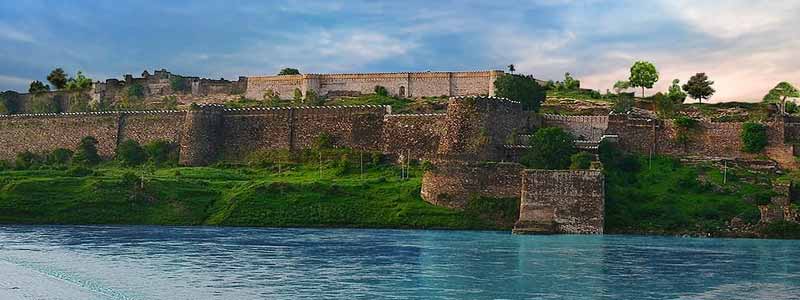
Gagron Fort greets you with the calm of two rivers that surround it on three sides – namely, Kali Sindh River and Ahu River. It’s a rare hill-and-water fort and finds mention in the UNESCO World Heritage list. A short stroll will take you to the mausoleum of Sufi saint Mitheshah and Saint Pipa’s monastery giving you much-needed peaceful respite on a day brimming with activity.
Chandrabhaga Temple
Walk along the banks of the Chandrabhaga River and discover a group of temples with carved pillars and arched gateways. Chandramouleshwar, Lakulish, Harihar, and Devi temples form the complex carrying a meditative and spiritual charm.
Sun Temple
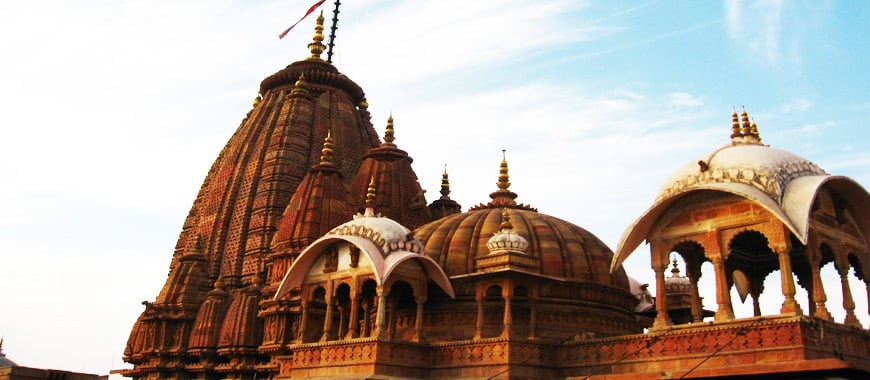
As you walk into the Sun Temple, it’s hard not to pause and marvel at its grandeur. The temple was built in the 10th century with its spire standing 97 feet tall. It is dedicated to Lord Vishnu and is known locally as the Padmanabha Temple. Its walls, inside and out, come alive with statues and intricate carvings. The eight-petalled lotus blooming upwards, the gracefully layered shikhara, and the kalash-topped domes, all speak of a time when every detail mattered. When you enter the Toran Dwar, the Mandap ceiling greets you with sages carved in stone. The famous historian Alexander Cunningham once called this the second Khajuraho.
What are some things you can do to experience the Local culture and Activities?
When in Jhalawar, start your day with a plate of hot, flaky kachoris from Sarovar Kachori or Ambika Kachori. They’re local legends for a reason. If you’re in the mood for something different, the delicious dosas at Sankar Masala Dosa never disappoint. If it’s a fast-food fix that you are after, Vandey’s is the go-to.
For a taste of the local culture, check out what’s happening at Radha Raman Ground as it often hosts fairs and exhibitions. You might find a local handicrafts expo, fun rides, or just catch a glimpse of the city’s festive spirit.
The best place to enjoy the serenity of this city and its natural wealth is the Gavadi Talab, where locals go to spend some quiet time.
On the livelier side, Gomti Sagar and its nearby Herbal Garden are popular hangouts for evening strolls, food stalls, and weekend picnics.
What is the Best Time to Visit Jhalawar?
The best time is between October and March, with comfortable days (10 – 25 °C) and cultural festivities being celebrated like the Jhalawar Mahotsav Monsoon (July to September) that brings lush landscapes and budget rates though rain may disrupt travel.
| Season | Months | Temp (°C) | Weather & Tip |
|---|---|---|---|
| Winter | Oct–Feb | 10–25 | Cool, sunny days, ideal for sightseeing & festivals |
| Summer | Mar–Jun | 27–45 | Scorching heat, not recommended for tourism |
| Monsoon | Jul–Sep | 23–34 | Lush greenery & off-season pricing; occasional rain delays |
How to Reach Jhalawar by Air, Train, and Road
By Air: Kolana (Jhalawar) Airport serves smaller aircrafts, the nearest major airport is Jaipur (335 km) or Udaipur (about 235 km)
By Train: Jhalawar Road station (38 km from town) connects via Kota (87 km), Ramganj Mandi (30 km)
By Road: Located on NH 12, well-connected to Kota (87 km), Bundi (123 km), Ajmer (292 km), Jaipur (335 km), and Udaipur (445 km). Regular bus and taxi services are available.
What are some of the Popular Festivals and Cultural Events in Jhalawar that are a must-do?
Jhalawar Mahotsav (Winter months): A cultural festival celebrating music, dance, and heritage, giving just the right touch of a vibrant feast for visitors.
Holi & Diwali: Experience local traditions as you celebrate popular festivals like colour-filled Holi and Diwali giving the city a special glow and warmth.
Seasonal fairs at Radha Raman Ground: Regular craft and food events bring local colours and community spirit to life.
Quick Travel Tips
Dress in light cotton during summers, but for winters carry woolens as evenings get very chilly.
Bring binoculars for birdwatching around Gavdi Talab.
Support local artisans at Radha Raman craft fairs.
Hire a guide for Gagron Fort and Kolvi caves to add a dash of expert storytelling to your day out.
Want help planning your trip to Jhalawar? Our IndianHoliday travel specialists will draw an itinerary that will have the best of everything from beautiful accommodations to guided city tours – Click Here!