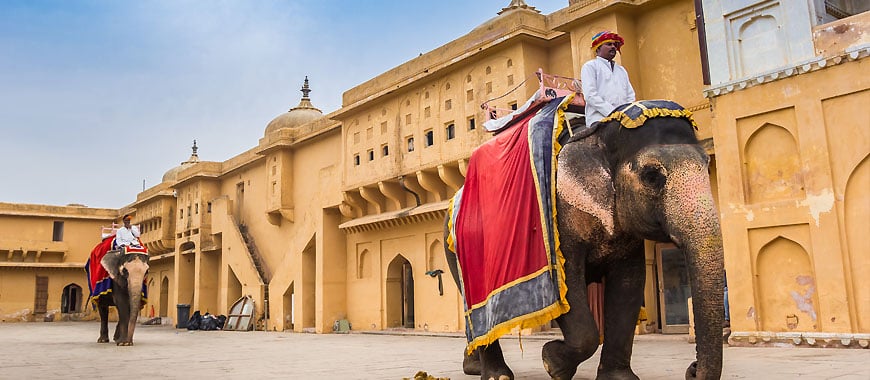

Rajasthan's monuments go far beyond its famous forts.
In Jaipur, Jantar Mantar reveals the scientific thinking behind the royal city, while Hawa Mahal is known for its unusual screened façade. Chand Baori at Abhaneri shows how water architecture became a remarkable piece of engineering. In Jodhpur, Jaswant Thada brings a quieter marble memorial into the heritage route, while Chittorgarh's Vijay Stambh and Kirti Stambh tell very different stories within the same fort complex.
You do not need to visit every monument.
For a first Rajasthan journey, choose the ones that already fit your Jaipur, Jodhpur or Chittorgarh route. Smaller sights such as Hathi Bhata and Laxmangarh's Ghanta Ghar make more sense on deeper regional trips.
Which Monuments in Rajasthan You Should Prioritise?
| If You Want to See… | Best Choice |
|---|---|
| Rajasthan's strongest science monument | Jantar Mantar, Jaipur |
| Iconic Jaipur architecture | Hawa Mahal |
| A short lakeside architectural stop | Jal Mahal |
| Historic water engineering | Chand Baori, Abhaneri |
| A quieter memorial in Jodhpur | Jaswant Thada |
| A major victory monument | Vijay Stambh, Chittorgarh |
| Jain architecture and symbolism | Kirti Stambh, Chittorgarh |
| A smaller regional monument near Tonk | Hathi Bhata |
| A Shekhawati town landmark | Ghanta Ghar, Laxmangarh |
For a first trip, Jantar Mantar, Hawa Mahal, Chand Baori and Jaswant Thada have the broadest appeal.
Vijay Stambh and Kirti Stambh should be included when Chittorgarh is already part of the route.
Hathi Bhata and Laxmangarh Ghanta Ghar are optional rather than essential.
Jantar Mantar, Jaipur
Jantar Mantar is one of Rajasthan's most unusual monuments because its architecture was designed for observation and calculation rather than royal residence or defence.
Sawai Jai Singh II's observatory contains 19 astronomical instruments, including the large Samrat Yantra sundial. The structures were used to measure time, follow celestial positions and make astronomical observations. The monument is now a UNESCO World Heritage Site.
Why Visit?
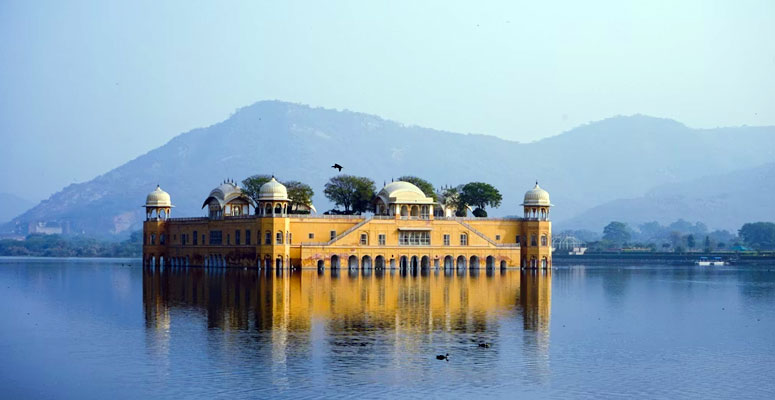
The site adds something completely different to a Jaipur itinerary.
After seeing forts and palaces, Jantar Mantar shows the scientific side of Jai Singh II's court.
A guide or audio guide adds real value here. Without an explanation, many of the instruments can look like large geometric structures without an obvious purpose. The guide helps in decoding instrument functions (e.g., zodiac latitudes via Rasivalaya); essential for non-astronomy buffs.
Time needed: Around 45–60 minutes.
Opening hours: 9:00 AM–7:00 PM; last ticket at 6:30 PM.
Current 2026 entry fee: Indian adult – ₹100, Foreign adult – ₹600
Best paired with: City Palace and Hawa Mahal.
Jal Mahal, Jaipur
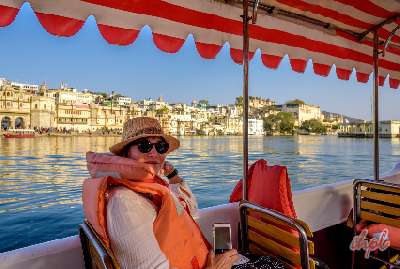
Jal Mahal is best treated as a short architectural viewpoint, not as a palace tour.
The structure stands in Man Sagar Lake and was associated with Maharaja Madho Singh I. Rajasthan Tourism notes that four of its levels lie below the waterline when the lake is full, leaving the upper portion visible above the lake.
Why Visit?
The main appeal is the setting.
Water, sandstone architecture and the surrounding hills create a very different scene from Jaipur's old-city monuments.
You currently view the palace from the lakeside. Normal public interior access is not available.
Time needed: Around 20 – 30 minutes.
Opening/closing time: There is no standard palace-tour schedule because visitors use the public lakeside viewpoint. Daylight and early evening are the practical visiting periods.
Entry fee: Free for exterior viewing.
Best paired with: Amber Fort because Jal Mahal lies naturally along the Amer route.
Hawa Mahal, Jaipur
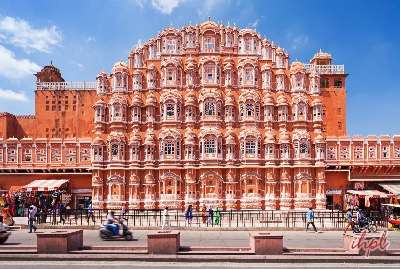
Hawa Mahal is one of Rajasthan's most recognisable city monuments.
Built in 1799, the five-storey façade is lined with 953 small jharokhas. The screened openings allowed women of the royal household to observe activity in the streets while maintaining privacy.
Most people first see Hawa Mahal from the street, but going inside gives a different perspective. Ramps and narrow passages lead upwards to views across Jaipur's old city.
Why Visit?
This is one of the best places to see how architecture responded to privacy, airflow and city life.
The exterior façade is the main visual highlight, while the interior helps explain how the structure actually worked.
Time needed: Around 45–60 minutes if entering.
Current 2026 entry fee:Indian adult – ₹100, Foreign adult – ₹600.
Opening hours: Around 9:00 AM. Current published closing times vary slightly between government and visitor listings.
Best paired with: City Palace and Jantar Mantar.
Chand Baori, Abhaneri
Chand Baori is one of Rajasthan's strongest monuments outside its major cities.
The stepwell dates to around the 8th–9th century and is known for its precise arrangement of thousands of narrow steps. Rajasthan Tourism describes it as one of Rajasthan's oldest and most popular attractions.
One side has a multi-level pavilion, while the other sides descend in repeated geometric patterns towards the water.
Why Visit?
Chand Baori is worth seeing because it combines practical water management with striking architectural design.
It also gives travellers something very different from Rajasthan's forts and royal palaces.
Time needed: Around 45–60 minutes.
Opening hours: Incredible India currently lists 7:30 AM–6:30 PM.
Entry fee: No entry fee, according to the Archaeological Survey of India's Jaipur Circle.
Best paired with: Harshat Mata Temple next to the stepwell.
It works particularly well on a Jaipur–Agra road journey rather than as a long standalone return excursion.
Jaswant Thada, Jodhpur
Jaswant Thada is a white-marble memorial close to Mehrangarh Fort.
It was built in memory of Maharaja Jaswant Singh II and completed in 1906 by Maharaja Sardar Singh. The main hall contains portraits of Marwar rulers, while the gardens and smaller cenotaphs create a calmer setting than nearby Mehrangarh.
Why Visit?
It works well after a long fort visit.
The scale is smaller, the marble architecture is quite different from Mehrangarh's sandstone walls, and the visit does not require several hours.
Time needed: Around 30–45 minutes.
Opening hours: 9:00 AM–5:00 PM.
Entry fee: Domestic visitor – ₹50, International visitor – ₹100.
Best paired with: Mehrangarh Fort.
Vijay Stambh and Kirti Stambh, Chittorgarh
These two towers stand within Chittorgarh Fort but represent very different parts of its history.
Vijay Stambh
Maharana Kumbha built Vijay Stambh, or the Tower of Victory, in the 15th century to commemorate military success against the rulers of Malwa and Gujarat.
The nine-storey tower is decorated with carved religious figures and is one of the most recognisable structures within Chittorgarh Fort.
Why visit: It is the fort's strongest monumental symbol of Mewar's military history.
Kirti Stambh
Kirti Stambh, or the Tower of Fame, is older.
The seven-storey Jain tower is dedicated to Adinath, the first Jain Tirthankara, and is decorated with Jain figures. Rajasthan Tourism dates it to the 12th century.
Time needed: Around 45–60 minutes for both within a wider fort visit.
Opening/closing time: Visit during Chittorgarh Fort's normal daylight sightseeing period; current national tourism information lists the fort from sunrise to sunset.
Entry fee: No separate tower ticket should normally be planned; access forms part of the wider Chittorgarh Fort visit. Reconfirm the current fort admission at the entrance before travel.
Ghanta Ghar, Laxmangarh
Laxmangarh's Ghanta Ghar is a local clock tower within the town's market area.
IGNCA heritage documentation confirms the tower near the old bus stand and describes its square form, projecting balcony and clock structure.
Why Visit?
This is not a monument worth making a long Rajasthan detour for.
Its value comes from seeing it as part of Laxmangarh and the wider Shekhawati townscape, alongside havelis and local streets.
Time needed: Around 15–20 minutes.
Opening hours: It is viewed externally in a public market area rather than through a controlled monument entrance. Daylight hours are best.
Entry fee: No formal exterior-viewing ticket.
Best paired with: Laxmangarh's havelis and fort.
Hathi Bhata, Tonk
Hathi Bhata is a large elephant figure carved from a single rock in the Tonk region.
Rajasthan Tourism credits the monument to Ram Nath Slat during the reign of Sawai Ram Singh and notes an inscription linked with the story of Nala and Damayanti.
Why Visit?
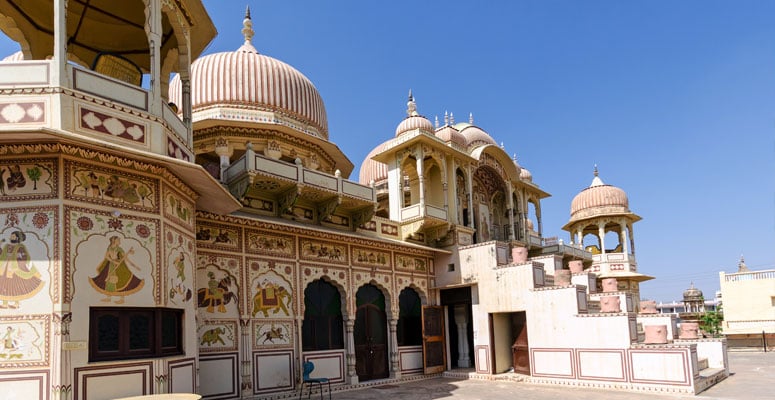
Its appeal lies in the unusual single-rock form rather than in a large museum or architectural complex.
It is worth considering when Tonk or the Tonk–Sawai Madhopur route is already part of your trip.
Time needed: Around 30–45 minutes.
Opening hours: Rajasthan Tourism does not currently publish controlled visitor hours. Visit in daylight and confirm local access.
Entry fee: Rajasthan Tourism does not publish a formal admission tariff for the site. Confirm locally rather than printing an estimated charge.
Rajasthan Monuments: Timings and Entry Fees
| Monument | Current Visitor Timing | Entry Fee |
|---|---|---|
| Jantar Mantar, Jaipur | 9:00 AM–7:00 PM; last ticket 6:30 PM | ₹100 Indian adult; ₹600 foreign adult |
| Hawa Mahal, Jaipur | Opens around 9:00 AM; verify current closing time | ₹100 Indian adult; ₹600 foreign adult |
| Jal Mahal, Jaipur | Exterior lakeside viewing; no controlled palace-visit hours | Free exterior viewing |
| Chand Baori, Abhaneri | 7:30 AM–6:30 PM | Free |
| Jaswant Thada, Jodhpur | 9:00 AM–5:00 PM | ₹50 domestic; ₹100 international |
| Vijay Stambh & Kirti Stambh | During Chittorgarh Fort daylight visiting hours | Covered within fort access; no separate tower ticket normally required |
| Laxmangarh Ghanta Ghar | Public exterior; daylight visit recommended | No formal exterior-viewing fee |
| Hathi Bhata, Tonk | No official fixed hours published; daylight recommended | No current official tariff published |
Monuments in Rajasthan That Pair Well Together
Jantar Mantar + Hawa Mahal
These work naturally within Jaipur's old-city sightseeing area.
Add City Palace if there is enough time, but keep the monument page focused on Jantar Mantar and Hawa Mahal rather than turning this into a Jaipur itinerary.
Jal Mahal + Amber Area
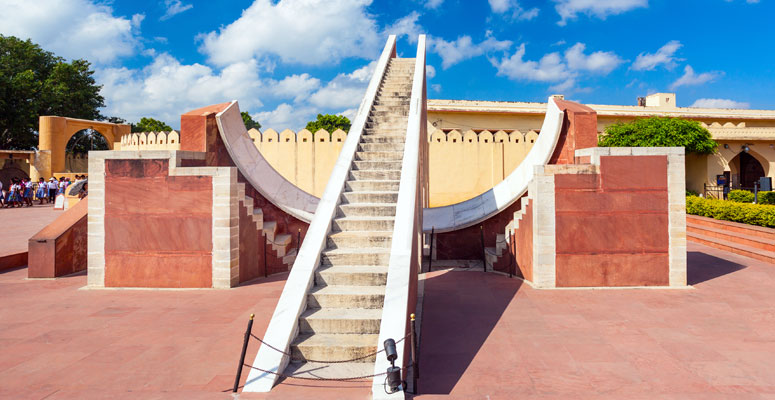
Jal Mahal works well as a short roadside stop while travelling between central Jaipur and Amber.
There is no need to create a separate half-day around the palace.
Chand Baori + Harshat Mata Temple
The temple stands beside Chand Baori and adds religious architecture to the stepwell visit. This is the most logical pairing at Abhaneri.
Jaswant Thada + Mehrangarh Fort
These are the strongest natural pairings in Jodhpur.
Spend most of the sightseeing time at Mehrangarh, then allow 30–45 minutes for Jaswant Thada.
Vijay Stambh + Kirti Stambh
Both belong within a wider Chittorgarh Fort visit.
Do not treat them as two separate cross-city sightseeing stops.
Laxmangarh Ghanta Ghar + Shekhawati Havelis
Visit the clock tower only when Laxmangarh or the wider Shekhawati region is already part of the route.
Hathi Bhata + Tonk
Keep Hathi Bhata within a Tonk-area sightseeing plan rather than pairing it with Shekhawati.
Practical Tips for Visiting Monuments in Rajasthan
Core Decision Principle
These monuments in Rajasthan justify time only when they sharpen heritage choices. Jantar Mantar stands essential for Jaipur science seekers; Jal Mahal adds a serene contrast. Laxmangarh/Tonk suit deliberate detours – skip otherwise. Stronger itineraries emerge from selective focus, not comprehensive coverage.
Strong Rajasthan itineraries come from selecting a few high-payoff monuments that match your interests, rather than trying to cover every historical name on the map.
Continue Planning Your Rajasthan Heritage Journey
The best Rajasthan monument route is usually the one that follows the cities already in your trip.
In Jaipur, prioritise Jantar Mantar and Hawa Mahal, with Jal Mahal as a short addition. Add Chand Baori when travelling towards Agra or exploring the Dausa side of the state.
In Jodhpur, Jaswant Thada fits naturally with Mehrangarh. In Chittorgarh, Vijay Stambh and Kirti Stambh should be experienced as part of the larger fort complex.
Laxmangarh Ghanta Ghar and Hathi Bhata are better suited to deeper regional journeys.
Continue to the Rajasthan Travel Guide for wider state planning, the Rajasthan Forts page for major fortified sites, and the relevant Jaipur, Jodhpur and Chittorgarh guides for city-level sightseeing. Travellers ready to plan a wider journey can then move to Rajasthan Tour Packages and relevant heritage tours.