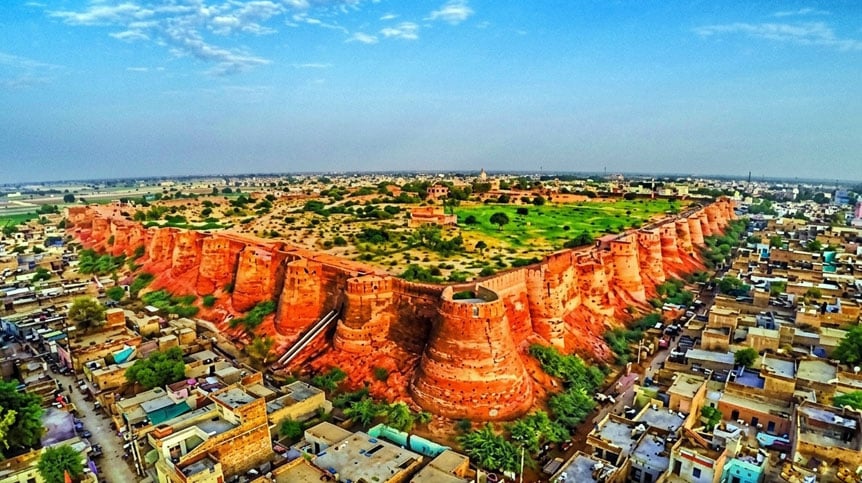

Hanumangarh is a culturally rich city in Rajasthan that was once called ‘Bhatner’. It has evidence-backed links to the mighty Indus Valley Civilisation and now lies on the historic trade route between Central Asia and Delhi. The place is quite famous for its ancient Bhatner Fort and enriching archaeological sites and was renamed after Lord Hanuman when King Suraj Singh captured it on a Tuesday. This Hanumangarh Travel Guide gives you an insight into the city’s beauty, places to visit, local experiences, festivals, and easy travel options.
Why should you visit Hanumangarh?
Walk through Harappan soil – In Hanumangarh, you will be strolling along the streets that are over 4000 years old and have been part of the Indus-Valley and Harappan civilisations.
Beautiful sunsets and sunrises – The sunrise-sunset views from the ancient fort or the rolling green fields will surely soothe your mind and soul.
Witness the cotton-to-cloth journey – Hanumangarh’s weavers spin cotton and wool on age-old handlooms. You can see and buy these wonders made with pure craftsmanship.
Fusion of Rajasthan and Punjab – Being a border city, Hanumangarh offers a splendid mix of both Rajasthani and Punjabi culture. The delicious ghevars (sweets) here are proof of this claim.
Festival celebrations – During the festive seasons, the locals invite you home and treat you to the famous ‘Athiti Devo Bhava’ culture.
What are the top places to visit in Hanumangarh?
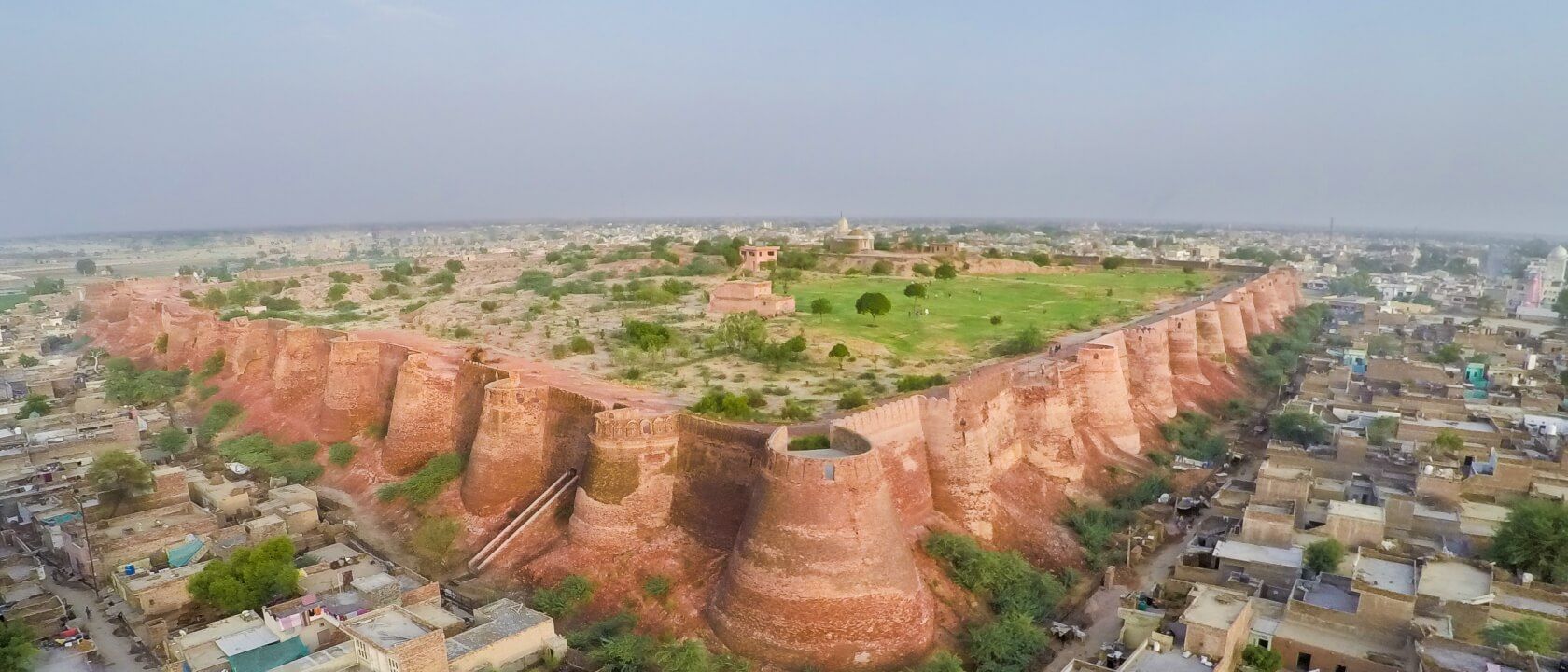
Bhatner Fort
The massive brick fort is spread over a sprawling 21 hectares, with 52 bastions and impressive rainwater kunds. It displays a blend of Mughal and Rajput architectural styles and was held by rulers like Mahmud Ghazni and Timur before being recaptured by Bikaner rulers.
Kalibangan Archaeological Site and Museum
The Kalibangan town has an archaeological site from which several artefacts belonging to the Harappan and Indus Valley civilisation were excavated. These include seals, skeletons, scriptures, stamps, ornaments, coins, and pottery. The Kalibangan Museum displays all these items to visitors in three different sections.
Bhadrakali Temple
The Bhadrakali Temple is about 7 km away from the city centre and houses Goddess Kali in her vibrant form. The temple sees a heightened tourist influx during the Navratri months. It is also said that the Mughal Akbar had sought blessings here.
Sila Mata Peer
The sanctum sanctorum holds a slab (sila) that is believed to have healing powers. Devotees offer milk and water to the sila and apply the same on their bodies to treat skin conditions. On Thursdays, there’s a Mela (fair) arranged near the temple premises.
Masitavali Head
The Masitavali Head is the entry point of the 837 km long Indira Gandhi Canal, which was constructed to aid farming activities in Haryana and Rajasthan. It is a serene spot to enjoy sunrise and sunset.
Hanumangarh Market
The market is Hanumangarh’s oldest commercial hub. You can buy Bandhani sarees, jewellery, footwear, traditional pottery, and seasonal crop produce here. Most are family-run shops, and you’ll need to bargain to get good deals. The street stalls here sell Kachoris, Kulche, Parathas, Lassi, and Chaat.
Hanumangarh Travel Guide: What are some of the fun local activities?
Join Impromptu Ragni and Kissa performances
During festivals and local fairs, you’ll come across artists performing Ragni or Kissa performances. These are dance-singing shows where performers usually narrate folklore or sing devotional songs. You can join them and dance your heart away!
Chai and Chit-Chat at Cotton Ginning Units
Most of the cotton ginning and weaving units in Hanumangarh are open to tourists. You can watch how raw cotton is expertly turned into threads and fabric, that too while sharing a cup of chai and a friendly conversation with the workers.
Evening stroll along the Ghaggar riverbanks
The evenings at the Ghaggar riverbank are lively with kids playing around, elders taking a stroll, and street-side stalls selling kadak masala chai and piping hot bread pakoras!
Wrestling Matches – Akhara
Akharas are wrestling rings where you’ll see locals get into a friendly ‘Dangal’ session. It is surprisingly very popular among the youth. Stand by the crowd and cheer while the participants send the dust flying.
What is the best time to visit Hanumangarh?
The best time to visit Hanumangarh is during the winter and early spring months. October to November (Winter; 18°C – 30°C) marks the post-monsoon season of clear skies, a great time to visit the fort and temples.
December to January (Peak Winter; 6°C – 22°C) are the coldest months. This is the best time for food tours and rural events like Akharas.
February to March (Spring; 12°C to 28°C) offer mild weather ideal for viewing mustard fields in full bloom.
Try to avoid April to June owing to the extreme summer heat (42ºc+). July to September (Monsoon; 28°C-36°C) brings light to moderate rainfall. It’s a good time to visit Masitawali Head and see the canal in full flow.
How to Reach Hanumangarh
By Air: The nearest domestic airport is in Bathinda, Punjab (100 km), and the international airport is in Amritsar (307 km).
By Rail: The Hanumangarh Railway Station receives weekly trains from Delhi, Chandigarh, Haryana, Jalore, Agra, Jaipur, and Guwahati.
By Road: Rajasthan State buses operate between Hanumangarh and other cities like Delhi, Agra, Jaipur, Jodhpur, Ludhiana, and Chandigarh. NH7, NH9, NH52 and NH754 are popular routes.
Hanumangarh Travel Guide: Which Festivals and Events to attend?
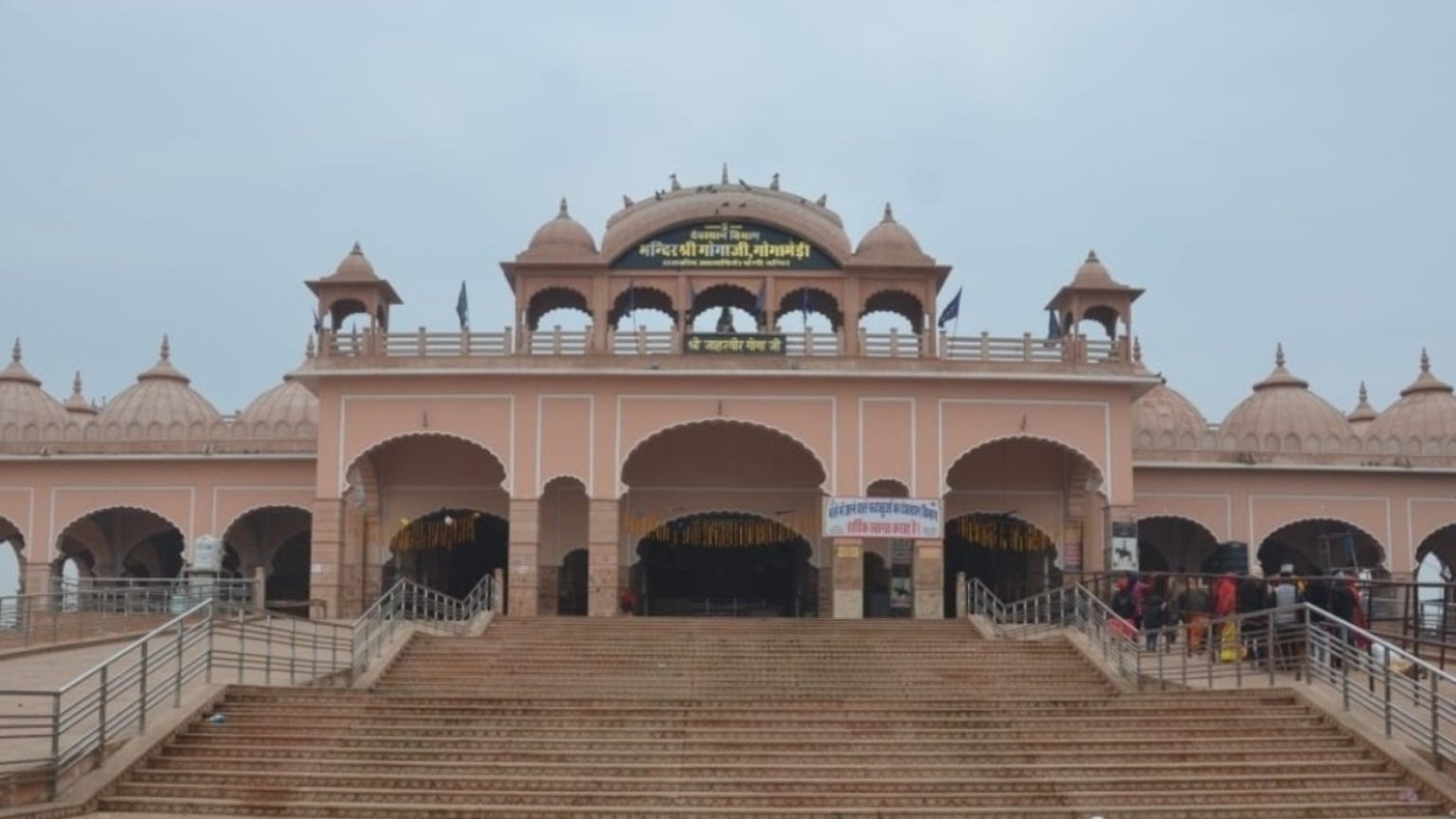
Gogamedi Mela – August/September
The mela celebrates warrior-saint Gogaji, who is revered for his spiritual powers and religious influence. You will see lakhs of devotees participating in camel rides, folk dances, all-night gatherings, and mela games.
Makar Sankranti – January
Hanumangarh celebrates Makar Sankranti grandly. Farmers offer prayers to thank the Gods for a good harvest. Locals invite visitors into their houses and share sweets made from the fresh harvest. You can expect to see kite-flying competitions, rangolis, street snacks, Akahara battles, and traditional games.
Hanumangarh Travel Guide: What are Quick Expert Tips to Note?
Buy pure jaggery and mustard oil from the village stalls as souvenirs
It’s considered auspicious to wear red or blue to the Bhadrakali temple
Ask for sattu or bajra rotis at dhabas. These are the regional specialties.
Local students often volunteer as guides at archaeological sites. You can use their services.
Don’t try to dip your legs in the Masitavali canal, the current is very strong.
Hanumangarh is your place to be if you want a glimpse into the history and ancient civilisations!
Facing trouble in making your perfect travel plan? Ask an expert NOW!