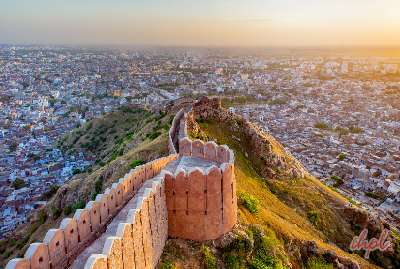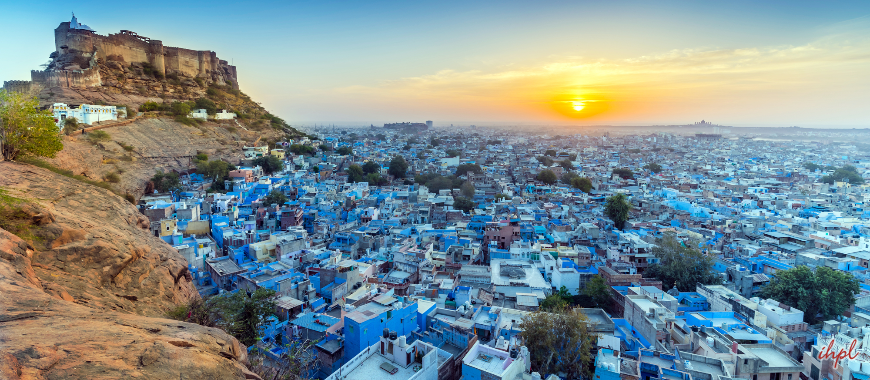

Jodhpur is one of Rajasthan’s strongest cities for travellers interested in forts, old neighbourhoods, food and Marwar culture.
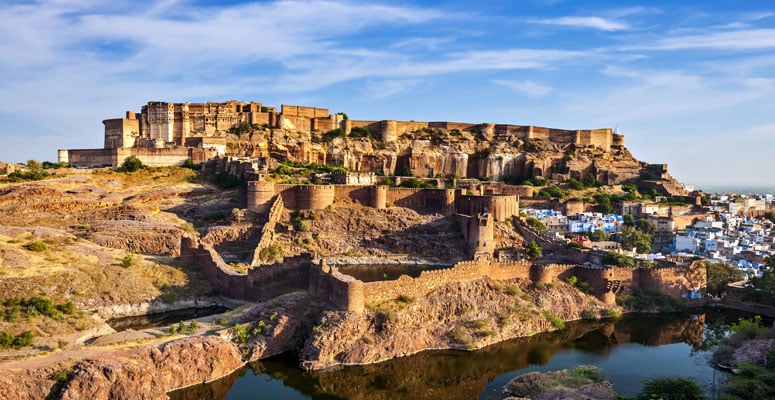
Mehrangarh Fort dominates the skyline, while the blue-painted lanes below give the old city a character that feels very different from Jaipur or Udaipur. Jaswant Thada, Umaid Bhawan Palace, Sardar Market and Mandore add different layers without requiring days of monument-hopping.
Jodhpur also works well as a base for exploring the countryside. A Bishnoi village visit introduces the traditions of rural Marwar, while Osian adds old temples and a desert setting.
For a first visit, keep two full days in the city. Add a third day if you want a village or Osian excursion.
Why Visit Jodhpur?
Jodhpur works particularly well for travellers who want heritage without spending the whole trip inside palaces.
Mehrangarh gives the city its strongest historical experience. The old blue lanes below are better explored slowly on foot. Sardar Market adds everyday city life, while Umaid Bhawan shows a much later chapter of Jodhpur’s royal story.
Beyond the city, Bishnoi villages and Osian bring rural and desert landscapes into the journey.
This variety is Jodhpur’s real strength. You can spend one day on forts and the old city, then use the next for palace architecture, gardens, food or the countryside.
Places to Visit in Jodhpur
Mehrangarh Fort
Mehrangarh should be the priority for most visitors.
The fort rises above the old city and contains palace rooms, courtyards and museum galleries displaying arms, textiles, paintings, palanquins and decorative arts from Marwar. The ramparts of Mehrangarh fort also give some of the clearest views over Jodhpur’s blue neighbourhoods.
The museum is currently open 9:00 AM–5:00 PM daily.
Jaswant Thada
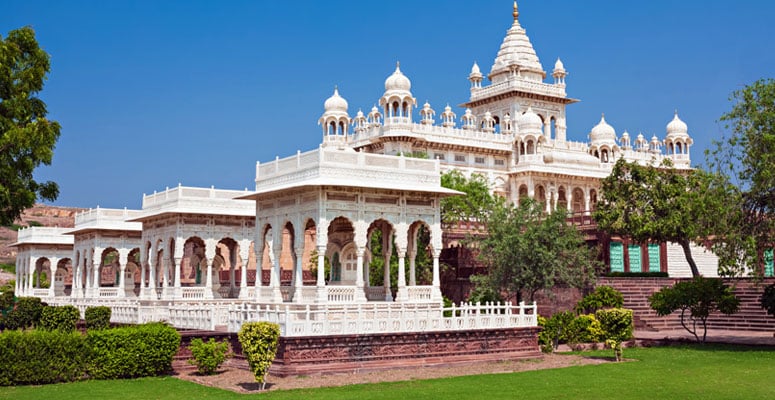
Jaswant Thada is a quieter stop close to Mehrangarh.
The white-marble cenotaph was completed in 1906 in memory of Maharaja Jaswant Singh II. Its carved marble, gardens, and setting offer a lighter experience after the fort’s scale.
Allow around 30–45 minutes.
The Mehrangarh Museum Trust currently lists visiting hours of 9:00 AM–5:00 PM.
Umaid Bhawan Palace Museum
Umaid Bhawan Palace represents the 20th-century side of Jodhpur’s royal history.
The building still serves partly as a royal residence and partly as a luxury hotel, while a museum section is open to visitors. Displays cover the building of the palace and objects associated with the Jodhpur royal family.
This is a shorter sightseeing stop than Mehrangarh.
Clock Tower and Sardar Market
The Clock Tower marks the centre of one of Jodhpur’s busiest old-city areas.
Come here less for a standalone monument and more for the surrounding streets. Sardar Market is useful for spices, textiles, handicrafts and everyday street life. Rajasthan Tourism identifies the Clock Tower as a central landmark within market in Jodhpur.
Late afternoon into early evening works well.
Mandore Gardens
Mandore was the old capital of Marwar before Jodhpur developed around Mehrangarh.
This garden in Jodhpur contain cenotaphs, temples and historic remains. This makes Mandore useful for travellers who want more context after seeing the main city monuments.
The main visitor area is currently listed around 9:00 AM–5:00 PM.
Rao Jodha Desert Rock Park
Rao Jodha Desert Rock Park sits beside Mehrangarh Fort, Jodhpur and gives you a break from built heritage.
The park was created to restore the natural ecology of the rocky landscape around the fort. Walking trails bring desert plants, rock formations and views of Mehrangarh into the same experience.
It works best for travellers who enjoy landscape, walking and photography.
Kaylana Lake
Kaylana Lake is better treated as a relaxed evening or nature stop than a major tourist attractions of Jodhpur.
Add it when you have extra time and want a quieter break after forts and old-city streets.
Balsamand Lake
Balsamand lies on the road towards Mandore.
Rajasthan Tourism records it as a historic reservoir built in 1159, with the later Balsamand Lake Palace overlooking the water.
It fits best with a Mandore-side excursion rather than as a separate cross-city trip.
Best Time to Visit Jodhpur
October to March is the best time to visit Jodhpur.
Most of the city’s major experiences involve outdoor walking. Mehrangarh, the Blue City lanes, Mandore and markets are far more comfortable when temperatures are lower.
December and January can bring cool mornings and evenings, so carry an extra layer.
From April to June, the heat changes how the day should be planned. Visit Mehrangarh and outdoor sites in the morning. Keep palace museums, a long lunch or hotel time for the hotter middle of the day.
The monsoon period can bring cloud cover and occasional rain, but humidity rises and outdoor sightseeing becomes less predictable.
Summer temperatures across the state can reach the mid-40s Celsius, while October to March generally brings much easier touring conditions.
How to Reach Jodhpur
Jodhpur has its own airport, located nearly 5 km from the city center. You can get regular flights from major cities like Delhi, Mumbai, Jaipur, Udaipur, and other places. Once reached, take a cab or auto to reach the desired location. Trains from Jaipur, Kolkata, Mumbai, Chennai, and Delhi can run to Jodhpur Junction.
Apart from regular express trains, the Palace on Wheels luxury train is available for a once-in-a-lifetime experience. Direct buses from Delhi and Jaipur can be hired as the excellent road network makes it convenient. In addition, government-run Volvo coaches and several private deluxe and luxury buses are available on this route. Here is complete guide on How to Reach Jodhpur click here!
Things to Do in Jodhpur
Beyond the main monuments, a few experiences add real value to a Jodhpur stay.
Walk through the Blue City: Explore the old lanes below Mehrangarh with a local guide. The experience is less about finding one famous blue street and more about understanding the neighbourhood around the fort.
Explore Sardar Market: Combine the Clock Tower with a relaxed market walk for spices, textiles and local snacks.
Visit a Bishnoi village: This works well for travellers interested in rural life, craft traditions and the Bishnoi community’s long connection with nature.
Spend time in Salawas: Rajasthan Tourism identifies Salawas as a centre for handwoven cotton rugs, pottery and block printing.
Explore Rao Jodha Desert Rock Park: Add this around a Mehrangarh visit if you want landscape and walking rather than another monument.
Take an Osian excursion: Old temples and a desert-edge setting make Osian the better choice when you have a third day.
Culture and Festivals in Jodhpur
Jodhpur’s cultural identity is strongly connected with the wider Marwar region.
If your dates coincide with the Marwar Festival, it can add folk music, dance and public events to the city experience. Rajasthan Tourism currently lists the 2026 festival for 24–25 October, with activity in Jodhpur and Osian.
Festival dates change from year to year, so if your travels centre around festivals, confirm dates well in advance before booking your tickets.
How Many Days Are Enough for Jodhpur?
Keep two full days for a comfortable first visit.
On one day, focus on Mehrangarh, Jaswant Thada and the old city.
Use the second for Umaid Bhawan Palace, Mandore, markets and any attractions you could not cover comfortably on the first day.
Keep three days if you want to add Osian or spend meaningful time with Bishnoi and craft villages outside the city.
For IndianHoliday’s traveller profile, two well-paced days are usually better than squeezing Jodhpur into one overnight stop between Jaipur and Jaisalmer.
Where to Stay in Jodhpur
Where you stay changes the feel of a Jodhpur trip.
For a landmark palace experience, Umaid Bhawan Palace remains the city’s most distinctive luxury stay and is still partly an active royal residence.
Travellers who want to stay close to the old city can consider a premium heritage property such as RAAS Jodhpur.
Taj Hari Mahal works for travellers who prefer the facilities and space of a full-service luxury hotel, while Bal Samand Lake Palace suits a quieter stay away from the busiest old-city streets.
Choose by location and the kind of experience you want rather than star rating alone.
What to Eat in Jodhpur
Jodhpur is one of the better Rajasthan cities for building local food into sightseeing.
Try mirchi bada, a chilli-and-potato snack that Rajasthan Tourism specifically associates with Jodhpur. Mawa kachori and pyaaz kachori are other useful local stops.
For a proper meal, look for dishes such as dal baati churma, ker sangri, gatte and laal maas.
A makhaniya lassi also works well as part of an old-city food stop.
Shopping in Jodhpur
The Clock Tower and Sardar Market area is the easiest place to combine sightseeing with shopping.
Look for bandhani textiles, mojris, pottery, spices and wooden crafts. These are also highlighted in current Jodhpur visitor material.
Nai Sarak is useful for textiles, while specialist craft shopping can be tied to a Salawas visit if handwoven rugs interest you.
For expensive textiles, antiques or jewellery, use an established seller and ask for clear information on materials, origin and shipping.
There is no need to visit six markets simply to complete a list.
How to Reach Jodhpur
How to Get Around Jodhpur
Use a private car with a driver for places spread across the city, such as Umaid Bhawan Palace, Mandore and Balsamand.
For the old city, walking is often better.
The lanes around Mehrangarh, Clock Tower and Sardar Market are narrow, and a guided walk gives you more flexibility than trying to move door to door by car.
Auto-rickshaws remain useful for shorter trips.
Places to Visit Near Jodhpur
Osian
Osian is the strongest day-trip option for travellers who want to add temple architecture and desert scenery.
Rajasthan Tourism places it around 65 km from Jodhpur and highlights its early medieval temple remains, including the Harihar temples, along with active Sachiya Mata and Jain temples.
Keep around half a day or longer if you also want a desert experience.
Salawas and Bishnoi Villages
Salawas lies around 22 km from Jodhpur and is known for handwoven cotton rugs, pottery and block printing.
A wider Bishnoi village visit can also introduce local farming, wildlife conservation traditions and rural Marwar.
For a premium traveller, this works best as a private guided visit rather than a rushed multi-village checklist.
Khejarli
Khejarli is important to the history of the Bishnoi community.
Rajasthan Tourism records the village memorial connected with the 1730 sacrifice led by Amrita Devi and other Bishnoi villagers who tried to protect khejri trees.
Include it when conservation history or rural culture is a genuine interest, rather than adding it automatically to every first visit.
Practical Tips for a Jodhpur Trip
Continue Planning Your Jodhpur Trip
Jodhpur works best when you leave enough space between its big sights.
Start with Mehrangarh and the old city. Add Umaid Bhawan Palace and Mandore for another side of Jodhpur’s history. Then decide whether your extra time is better spent in Osian, with the Bishnoi community, or simply enjoying a slower evening around the city.
Opt for Rajasthan Tour Packages if Jodhpur is one stop on a broader itinerary covering Jaipur, Jaisalmer, Udaipur, and beyond—or focus solely on the city with a dedicated Jodhpur plan.