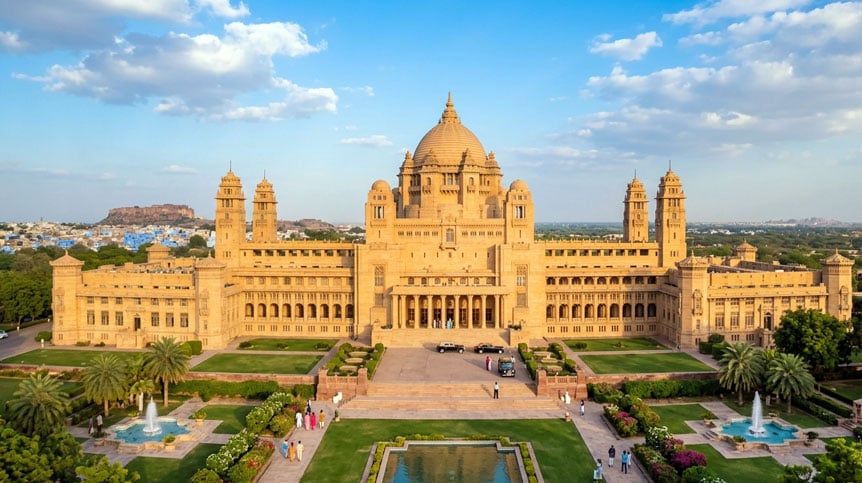

Umaid Bhawan Palace is best included as a luxury cultural stop in Jodhpur to see one of the world’s largest private homes. It shifts the focus from ancient stone forts to modern royal comfort, highlighting the transition into 20th-century architecture and a grand lifestyle.
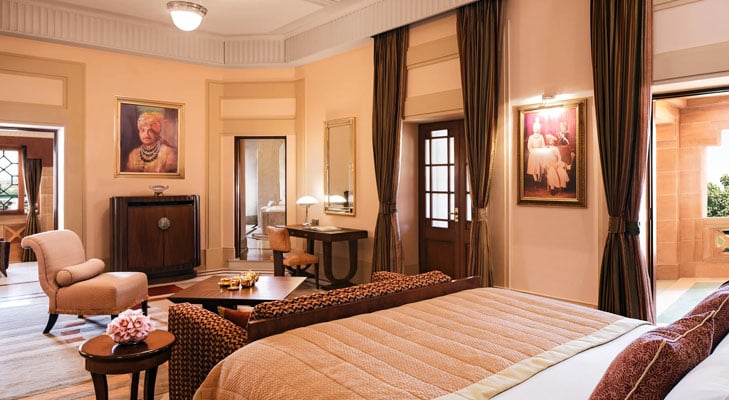
Set on a high ridge overlooking the city, the palace is divided into three sections: a royal residence, a luxury hotel, and a museum. This layout allows travellers to stay as guests at the Taj-managed hotel for a full royal experience or to visit the public museum and gardens without an overnight booking.
Most travellers visit the palace for a half-day trip to explore the museum’s collection of vintage cars, clocks, and royal items. It is a practical addition to a Jodhpur itinerary for those who want to see the polished, more recent history of the Rathore dynasty while enjoying views across the city toward Mehrangarh Fort.
How to Experience Umaid Bhawan Palace?
This route focuses on the transition from the expansive gardens to the structured museum and royal grounds:
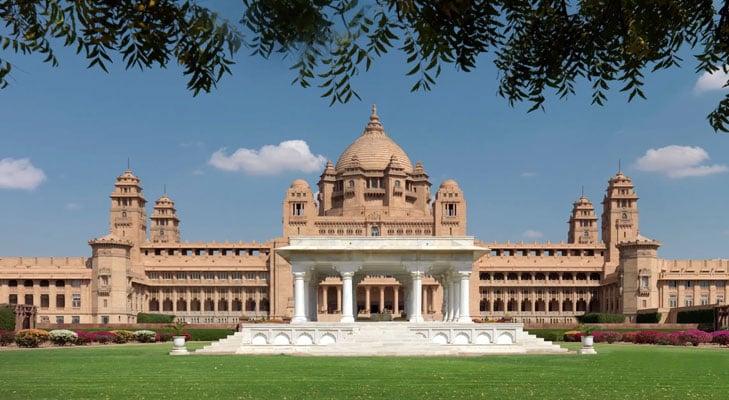
- Begin at the main driveway to observe the scale of the Chitar sandstone facade and the central 105-foot-high dome.
- Proceed to the Museum wing, located in a dedicated section of the palace, to see the royal family’s private collections.
- Walk through the gallery displaying vintage clocks and cars to understand the 20th-century lifestyle of the Jodhpur royals.
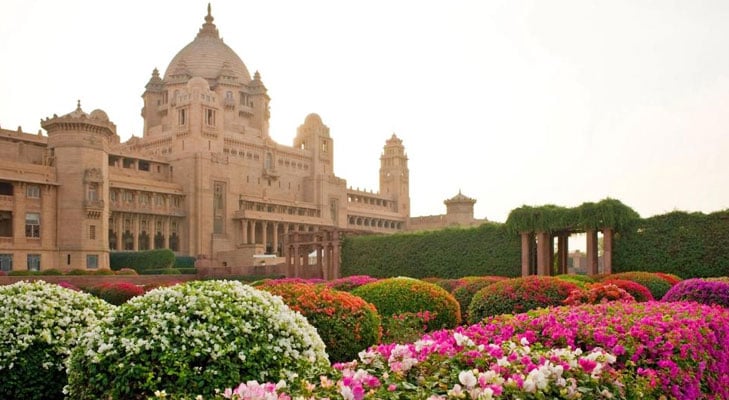
- Move to the Baradari Gardens to view the symmetrical layout of the lawns and the exterior of the residential wing.
- Follow the path to the viewpoint overlooking the city and Mehrangarh Fort in the distance.
- If staying at the property, enter the Taj Hotel lobby to see the inner rotunda and the murals painted by Stefan Norblin.
Who Should Visit Umaid Bhawan Palace?
1. Luxury Travellers
Luxury travellers will appreciate the palace as a premier example of high-end heritage living. Unlike older military forts, the focus here is on the transition to 20th-century comfort and Art Deco elegance. It offers a chance to experience the polished service and grand scale of a property that remains an active royal residence, making it ideal for those who value exclusivity and a refined atmosphere.
2. Automobile Enthusiasts
The palace is a key destination for those interested in mechanical history and rare transport. The palace grounds house a private collection of vintage cars, including classic Rolls-Royces, Bentleys, and custom models used by the royal family. It provides a practical, close-up look at the engineering and aesthetics of earlier luxury vehicles.
3. Nature and Garden Lovers
Travellers who enjoy manicured landscapes will value the Baradari Gardens and the expansive 15-acre grounds. The high elevation provides a unique ecosystem where peacocks roam freely among indigenous desert trees and symmetrical flower beds. It offers a quiet, green space to watch local birdlife away from the city’s desert heat.
4. Couples and Leisure Seekers
This site works well for those looking for a quiet, scenic environment rather than a busy sightseeing trek. The wide terraces and open courtyards provide a relaxed space for viewing the Jodhpur skyline and Mehrangarh Fort. The combination of grand architecture and private seating areas allows for a more personal and stationary experience of the city’s heritage.
5. Families with Children
The palace serves as an engaging alternative to traditional museums, offering variety to maintain interest for all ages. Children can explore the museum’s diverse displays, which include royal clocks, stuffed leopards, and a large symbolic flag. The indoor and outdoor pools, along with activities like kite flying and cookie-making sessions, ensure a balanced visit for younger travellers.
6. Modern History and Art Deco Fans
The palace represents a rare mix of Western Art Deco and traditional Rajput styles. You can examine the unique use of golden-yellow Chitar sandstone and the symmetrical layouts that define 20th-century royal buildings.
How does Umaid Bhawan Palace Fit Into Your Jodhpur Itinerary?
- Visit on your final day, as the site is located conveniently near the airport and station.
- Directly after Mehrangarh Fort, to compare medieval defence with modern luxury.
- It is a focused 2-hour museum stop for vintage cars and royal clock collections.
- During the late afternoon, to access the gardens and elevated skyline views.
Looking to cover more tourist attractions across multiple cities of Rajasthan? This Rajasthan Travel Guide helps you plan without overloading your schedule.
Best Time To Visit
- October to March (10°C to 28°C) – Winter
Cooler temperatures are ideal for spending time in the Baradari Gardens and viewing the outdoor vintage car collection. Clear winter skies provide sharp, unobstructed views of the Jodhpur skyline and Mehrangarh Fort from the palace’s elevated terraces. - April to June (30°C to 44°C) – Summer
High heat limits most of the visit to the indoor museum exhibits and shaded galleries. Exploring the 15-acre grounds is difficult during the day, so you can only realistically view the gardens and massive sandstone courtyards in short intervals to avoid the direct sun. - July to September (25°C to 35°C) – Monsoon
The palace grounds become lush, and resident peacocks are more active across the lawns. The rain highlights the natural texture of the yellow Chitar sandstone, and the surrounding desert landscape turns green, providing a relaxing view from the palace’s height.
Quick Planning Snapshot
- Time to Spend: 1-1.5 hours for the museum section and palace grounds.
- Best time of day: Late morning or early afternoon, ideally after visiting Mehrangarh Fort.
- Best Months to Visit: October to March
- Best for: Architecture lovers, luxury heritage seekers, and those curious about royal lifestyles.
- Skip if: You are expecting full palace access or prefer sites with extensive interiors open to visitors.
Plan Your Visit
For general visitors, access is limited to the museum section and a portion of the palace gardens. Tickets can be purchased directly at the entrance counter on arrival. If you plan to stay at the heritage hotel, bookings should be made through the official Taj Hotels website to ensure a confirmed reservation and access to the residential sections that are not open to day visitors.
1. How much time should I spend in Umaid Bhawan Palace?
If you are visiting only the museum and accessible grounds, 60 to 90 minutes is sufficient to cover the vintage car display, royal artefacts, and architectural highlights. For those staying at the property, a one-night stay works well, giving you enough time to experience the scale of the palace and its setting.
2. What is the tourist crowd like?
If you prefer a quieter visit, plan for late September or early March when the city sees fewer peak-season travellers. The busiest period runs from October to February, when Jodhpur is included in most Rajasthan itineraries and museum footfall increases. The peak hours are between 11:00 AM and 2:30 PM. Late-afternoon visits are usually more relaxed, with fewer people in the museum corridors and on the lawns.
3. Do you need a guided tour?
A guide is not essential for the museum visit, as the displays are clearly labelled and easy to follow. Most visitors move through the exhibits independently. If you are interested in deeper context around the palace’s construction, royal lineage, or artefacts, you may consider a guide, but for a standard visit, self-exploration works well.
Visit Umaid Bhawan Palace To Make Your Jodhpur Itinerary Wholesome!
Umaid Bhawan Palace serves as a useful reference point for Jodhpur planning focused on palace heritage, especially when mapping the city’s royal-era architecture alongside forts and old-city circuits through curated Rajasthan tour packages.
Want a smooth Jodhpur experience? Our travel experts will organise your trip with Umaid Bhawan Palace and city highlights included – Contact IndianHoliday Experts now.