
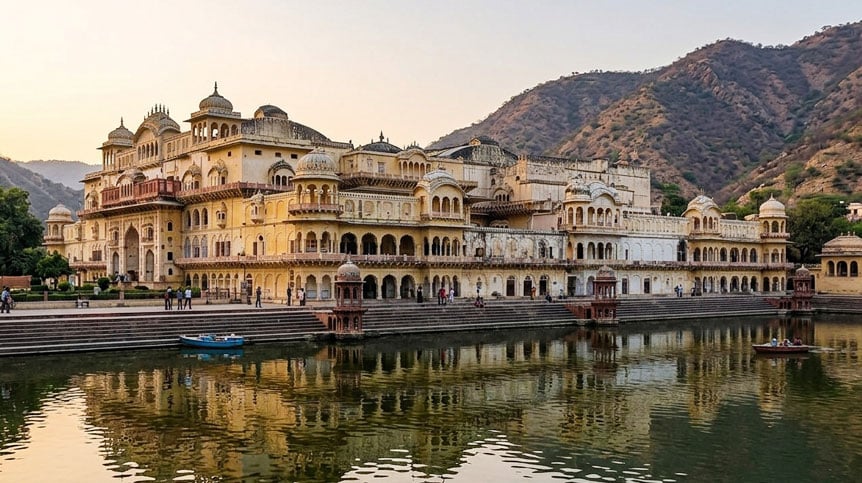

The City Palace Alwar is best approached as a central heritage stop within the city rather than a quick add-on. Unlike quieter outskirts monuments, this palace sits within the heart of Alwar’s cityscape, making it both more accessible and more layered in terms of experience.
Positioned below the hills that lead up to Bala Quila Fort, the palace reflects a mix of royal residence, administrative space, and cultural archive. The experience here combines architecture, interiors, and museum collections such as arms, manuscripts, miniature paintings, royal objects, and court-era artefacts.
Historically associated with Alwar’s royal administration, the complex is also important because its museum preserves royal arms, manuscripts, miniature paintings, and court objects that connect the palace to Alwar’s wider political and cultural history.
This makes City Palace particularly suitable for architecture and heritage-focused travellers, as well as those looking for cultural depth over quick checklist sightseeing, where both movement through spaces and observation of details play a role.
Rather than viewing it from a distance, the palace invites gradual exploration, where each section reveals a different aspect of its historical role.
How to Experience City Palace Alwar
A semi-structured route works best here, as the palace combines open and enclosed spaces:
- Begin at the main entrance, observing the facade and how the structure rises against the surrounding hills
- Move into the central courtyards, where the scale and symmetry of the palace become more apparent
- Prioritise displays that explain Alwar’s royal court, weaponry, manuscripts, and miniature art rather than trying to examine every object equally.
- Spend time in the larger halls, noting architectural details like arches, columns, and decorative elements
- Pause at the balcony or corridor edges to view the surrounding city and landscape transitions
- Move at a steady pace, balancing walking with short stops rather than rushing through sections
This approach allows the palace to be experienced as both a physical space and a historical narrative.
How to Plan Your Visit to City Palace Alwar
When is the best time to visit the City Palace, Alwar?
The most comfortable period to visit is between October and March, when temperatures allow for easy movement across both open courtyards and interior sections.
- Summer (April-June): High daytime temperatures make extended exploration less comfortable. Early morning visits are more practical.
- Monsoon (July-September): Surroundings appear greener, but humidity may affect comfort during outdoor movement.
Within the day, early morning or late afternoon works best, when temperatures are lower, crowd movement is lighter, and the overall experience feels more relaxed.
Midday visits are still possible, but they can feel warmer and busier inside the museum areas.
If you’re visiting multiple locations, plan it within the broader Alwar forts circuit, as it is typically included as part of a larger itinerary rather than a standalone visit.
Practical Itinerary Context
Senior travellers should move slowly through the courtyards and museum sections, as the experience may involve stairs, uneven surfaces, and warm enclosed areas during busier hours.
- In cooler months, it works well as part of a half-day heritage block, combined with nearby sites without causing fatigue
- During warmer periods, it works best as an early-day primary stop.
- In monsoon conditions, the palace remains accessible, but the experience leans more toward interior exploration, with shorter outdoor pauses
Most travellers use it as a central anchor within Alwar, structuring the rest of their visit around it rather than placing it between distant locations.
How City Palace Fits Into an Alwar Itinerary
City Palace usually functions as a core stop rather than a secondary one. It is commonly included in:
- Central heritage anchor: Forms the base of city-focused exploration before moving toward forts or outer landmarks.
- Fort–palace combination: Pairs well with Bala Quila to contrast palace interiors with hilltop fort views.
- Half-day city exploration: Combines well with Moosi Maharani ki Chhatri and local museum stops.
Who This Experience Is For (And Who It Isn’t)
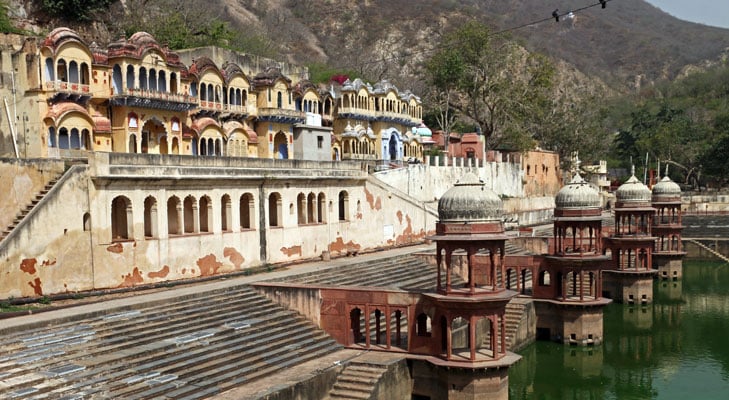
It works well for:
- Travellers interested in palace architecture combined with museum collections, rather than exterior viewing alone
- Visitors who prefer moving through defined spaces such as courtyards, halls, and galleries within a single complex
- Those planning a city-focused exploration of Alwar, where central landmarks form the core of the itinerary
- Cultural travellers looking to understand how royal, administrative, and residential functions were integrated within one site
It may not be ideal for:
- Travellers looking for short, photo-only stops without spending time inside the complex
- Visitors prioritising quiet, offbeat locations away from the city environment
- Tight itineraries focused on wildlife or outer-region travel, such as visits to the Sariska Tiger Reserve
- Those expecting a fully restored, highly curated palace experience with modern presentation formats
How Much Time Should You Spend at City Palace Alwar?
A visit typically takes 1.5 to 2 hours, allowing enough time to move through the courtyards, explore the museum, and pause at key architectural sections.
If you prefer a slower pace or deeper observation, you can extend this to around 2–3 hours, especially when combining it with nearby city stops.
Since the palace includes both interior and exterior elements, it works best as a dedicated visit rather than a very brief stop.
As it does not require a full day, City Palace Alwar is best planned as a primary but time-bound stop within a broader itinerary, rather than a standalone destination.
For sequencing City Palace with Bala Quila, Siliserh Lake, and Sariska, use the Alwar Travel Guide before finalising your schedule.
How Can You Avoid Crowds and Move Comfortably?
Start early in the morning to experience quieter courtyards and easier movement through the museum sections. Late afternoons also work well for a more relaxed pace, especially when the light is softer and visitor flow begins to thin out.
Midday tends to see more visitor movement, particularly in enclosed museum areas where groups naturally cluster. Planning your visit either at the beginning or toward the end of your day helps avoid this peak overlap and allows for more uninterrupted exploration.
To move more comfortably inside the palace, it also helps to follow a one-direction flow approach rather than backtracking between sections. This reduces crowd crossing and makes navigation smoother, especially in narrower corridors and stairways.
Spacing this visit away from other major attractions in your schedule also helps maintain a relaxed pace, as rushing between sites is one of the main reasons travellers feel congestion more sharply.
Should You Take a Guided Visit or Explore on Your Own?
A guide can add value here, especially in the museum section, where historical context enhances the experience. Understanding the background of the artefacts and the role of different sections makes the visit more meaningful.
However, self-guided exploration works equally well if you prefer flexibility. The layout is easy to navigate, and many travellers choose to move at their own pace, focusing on areas of personal interest.
Practical Planning Tips for City Palace Alwar
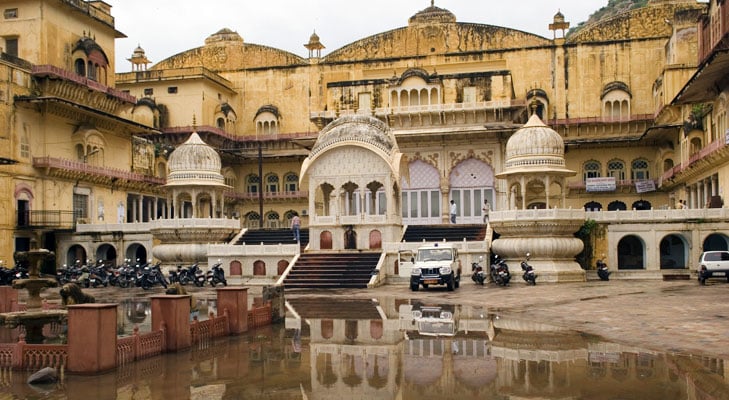
Planning your visit to the City Palace Alwar works best when it is integrated thoughtfully into your overall time in Alwar. Since the palace involves both interior exploration and movement across courtyards, a clear approach to timing, pacing, and route sequencing helps make the experience more efficient and comfortable.
- Treat it as a primary stop, not a quick detour, within your Alwar itinerary
- Pair it with nearby sites to avoid unnecessary travel gaps
- Allocate enough time for both the museum and architectural exploration
- Visit early or late in the day for a more comfortable experience
- Keep your itinerary balanced, and avoid clustering too many major stops in one day.
Plan Your Alwar & Rajasthan Journey
If the City Palace Alwar aligns with your travel style, it works best within itineraries that combine city-based heritage exploration with forts and regional routes across Rajasthan:
Positioning City Palace within these routes allows it to function as a central cultural anchor, supporting a more structured and well-paced travel plan.


