
Jaipur’s museums are most useful for travellers who want cultural context beyond forts, palaces, and photo stops. Albert Hall is the city’s strongest all-around museum. City Palace Museum explains royal Jaipur, Anokhi Museum works best for craft and textile-focused travellers, while the Wax Museum, Dolls Museum, and Birla Planetarium are better suited to families and lighter sightseeing days. This guide helps you decide which museums deserve time, which are optional, and how to combine them with Jaipur’s main heritage circuits.
Which Museum in Jaipur Should You Prioritise?
| Traveler Need | Best Museum |
|---|---|
| Strongest overall museum experience | Albert Hall Museum |
| Royal-history collections | City Palace Museum |
| Textile and block-printing heritage | Anokhi Museum of Hand Printing |
| Family-friendly entertainment | Jaipur Wax Museum |
| Children and costume traditions | Dolls Museum |
| Science and astronomy | Birla Planetarium |
| Limited time in Jaipur | Albert Hall Museum only |
| Evening museum experience | Albert Hall night visit |
| Interactive child-friendly experience | Digital Museum / Birla Planetarium |
Albert Hall Museum
Easy-access museum with relatively low physical strain.
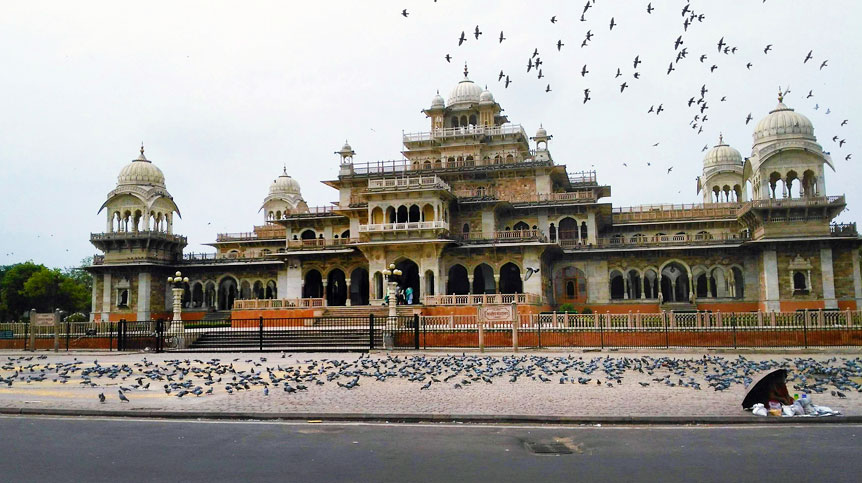
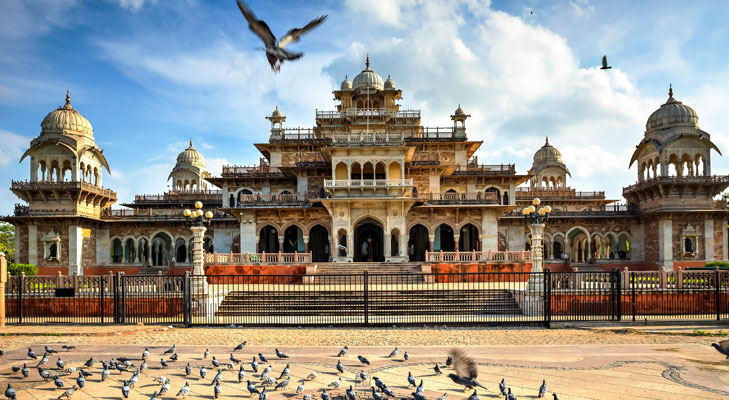
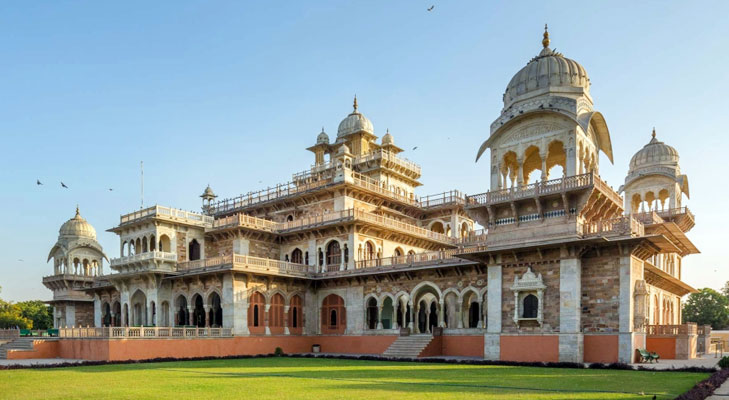
Built in 1887 under the architectural direction of Samuel Swinton Jacob, Albert Hall is Jaipur’s premier cultural institution and the most comprehensive museum in the city. The Indo-Saracenic building sits inside Ram Niwas Garden and houses 16 art galleries showcasing artefacts from across the world.
Best for: First-time visitors, museum-focused travellers, architecture lovers, and anyone wanting Jaipur’s strongest all-round cultural museum.
Key collection highlights: the Egyptian mummy — a rare presence in India, gifted by the Brugsch brothers, on which an X-ray was performed in 2011 with all bones found intact; the Persian Garden Carpet featuring birds, aquatic life, and landscape motifs; miniature paintings from Rajasthani, Mughal, and Persian schools; clay art models depicting 19th-century society, rituals, and daily life; marble sculptures including Mahisasur Mardini, Dasha Avatar, and Ganesh; musical instruments including Dhap, Shehnai, Masak Baja, Rabab, Karana, and Pungi; textiles, costumes, coins, pottery, and metalwork.
Worth dedicated time? Yes. If you visit only one museum in Jaipur, make it Albert Hall.
The building’s evening illumination is one of the most atmospheric experiences in Jaipur’s public spaces — the nightly light show transforms the Indo-Saracenic exterior into a glowing heritage landmark.
Timings: Day 9 AM–5 PM; Night 7–10 PM.
Planning update: Rajasthan revised ticket prices for many state-run monuments and museums from January 1, 2026, and Albert Hall is included in the revised fee structure. Reconfirm current prices before publishing or visiting.
Also keep the night-visit point because IndianHoliday’s own page lists Albert Hall day timings as 9 AM–5 PM and night visit as 7 PM–10 PM, with free-entry dates such as Rajasthan Day, World Heritage Day, World Museum Day, and World Tourism Day.
City Palace Museum (Maharaja Sawai Man Singh II Museum)
Expect moderate walking across courtyards and palace sections.
Located in the heart of Jaipur’s Pink City within the City Palace complex, this museum gives direct access to the royal life of Jaipur’s rulers. Mubarak Mahal, Chandra Mahal, and Maharani Palace are the main sections — housing royal attire, weaponry, and artefacts of the Jaipur ruling family. The world’s largest sterling silver vessels — recorded by the Guinness Book of World Records — are on display.
Best for: Travelers interested in royal Jaipur, ceremonial clothing, arms, court objects, and palace interiors.
Timings: 9:30 AM–5 PM. Confirm current closure days before planning.
Worth dedicated time? Yes for heritage-focused travelers, but casual visitors can combine it with the larger City Palace visit instead of treating it as a separate museum stop.
Jaipur Wax Museum
Requires uphill access to Nahargarh Fort and moderate walking.
Located inside Nahargarh Fort, the Wax Museum opened in December 2016. The Tadigate entrance is built in the Indo-European and Western architectural style. Key sections: the Hall of Icons with lifelike statues of national and international celebrities, film stars, national heroes, and sports personalities; a dedicated children’s section with Doraemon, Nobita, Iron Man, and Spider-Man; the Vishram Ghar — an 18th-century royal courtroom recreation displaying traditional costumes, artefacts, paintings, a royal carriage, and antiques; the Sheesh Mahal on the upper floor featuring centuries-old thikri mirror work created by 100 craftsmen using over 2.5 million glass pieces; and the Royal Darbar where visitors can wear Maharaja costumes for photographs.
Best for: Families, couples, casual travelers, and visitors already planning Nahargarh Fort.
Timings: 10 AM–6:30 PM daily. Timings may change during festivals — confirm locally.
Worth dedicated time? Optional. It is more entertainment-oriented than historically interpretive, so serious heritage travelers should not prioritize it over Albert Hall or City Palace Museum.
Route fit: Visit only when already going to Nahargarh Fort; avoid treating it as a standalone museum trip.
Comfort note: The museum requires reaching Nahargarh Fort first, so travel time and uphill access should be factored into the plan.
Dolls Museum
Established in 1974 and located 4 kilometres from the city centre, the Jaipur Dolls Museum is the most family-oriented in the city. The collection covers Indian state dolls dressed in traditional attire from West Bengal, Maharashtra, Gujarat, Tamil Nadu, Punjab, Assam, and Kashmir; dolls in bridal attire from Mysore, Gujarat, Kerala, Bengal, and Punjab; dolls in classical dance costumes including Bharatnatyam, Odissi, Kuchipudi, and Kathakali; and international dolls in traditional dress from Uganda, China, New Zealand, Britain, Mexico, Spain, USA, Malaysia, Sweden, Germany, and Afghanistan.
Best for: Families with children, costume-culture interest, and short indoor stops near Ram Niwas Garden.
Timings: Daily 9 AM–5 PM.
Worth dedicated time? Optional unless traveling with children or specifically interested in regional dress traditions.
Birla Planetarium
Located near the BM Birla Auditorium, the Birla Planetarium combines traditional Rajasthani architecture — white marble exterior with a hemispherical dome ceiling decorated with hand-painted crafts — with modern astronomical facilities. Sky shows and audiovisual presentations on astronomy, space science, and celestial mechanics. Facilities include an observatory equipped with a Celestron C-14 telescope, a conference hall, a science museum, and a library.
Best for: Families with children, science-oriented travelers, and visitors looking for an indoor afternoon experience.
Show timings: 1 PM, 3 PM, and 5 PM. All shows are in Hindi. No shows on the last Wednesday of each month due to maintenance.
Timings: Tuesday–Sunday, 10 AM–6 PM. Closed Mondays and 14 gazetted holidays.
Worth dedicated time? Yes for families and science-focused visitors; optional for heritage-only travelers.
Amrapali Museum
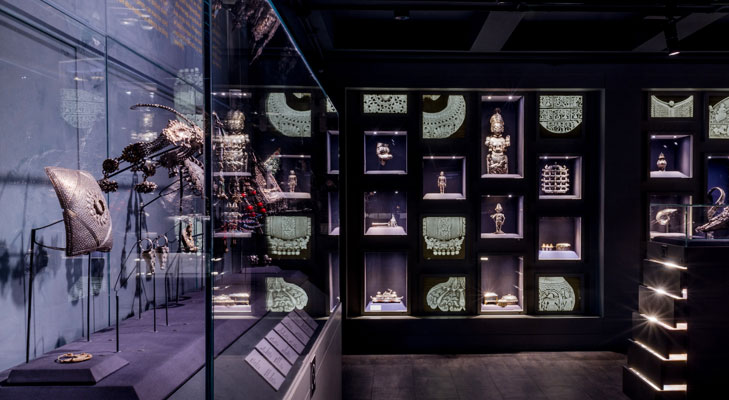
Amrapali Museum is one of Jaipur’s strongest specialist museums for jewelry, silverwork, tribal ornaments, and decorative arts. It is best suited to travelers interested in design, gemstones, craftsmanship, and Rajasthan’s ornament traditions rather than broad history.
Best for: Jewelry lovers, design-focused travelers, craft researchers, and luxury shoppers.
Worth dedicated time? Yes for specialist travelers; optional for first-time visitors with limited time.
Museum of Legacies
Museum of Legacies focuses on Rajasthan’s living craft traditions, textiles, decorative arts, and regional material culture. It works well for travelers who want a more curated understanding of craft heritage beyond palace displays.
Best for: Craft-focused travelers, textile enthusiasts, and visitors interested in Rajasthan’s living traditions.
Route fit: Pair with old-city sightseeing or Albert Hall depending on available time.
Specialist and Niche Museums in Jaipur
For Craft, Art, and Culture
Jawahar Kala Kendra
Gyan Museum
Artchill Gallery
Gallery of Modern Art
For Families and Interactive Visits
Digital Museum
Jaipur Wax Museum, if not already visited with Nahargarh
Birla Planetarium
For Niche Interests
Jewels Lake Palace Museum
Alice Garg National Seashell Museum
Jawahar Kala Kendra — Built to preserve Rajasthan’s arts and crafts. Museums, libraries, art studio, display centers, and cafeteria. Organises a three-day music festival celebrating local culture. Timings: Monday–Saturday 10 AM–5 PM.
Jantar Mantar — UNESCO World Heritage Site and the world’s largest astronomical observatory. Nineteen architectural astronomical instruments were built by Maharaja Sawai Jai Singh II. Timings: 9 AM–6 PM.
Jewels Lake Palace Museum — For gemstone and crystal enthusiasts. Displays royal jewellery with rare and valuable gems; loose semi-precious stones available for purchase. Located near Jal Mahal on Amer Road. Timings: 9 AM–7 PM daily.
Hawa Mahal Museum — Behind the iconic Hawa Mahal facade, housing sculptures from Sambar, Ganeshwar, Nagar, Virat Nagar, and Raid; terracotta, fishing equipment, Rajput swords, helmets, and armour. Timings: 9 AM–4:30 PM. Closed Fridays and Saturdays.
Anokhi Museum of Hand Printing (Heritage-building layout may involve stairs and narrower internal movement.) — Dedicated to Jaipur’s block printing tradition. Tools, images, demonstrations, and textile exhibits. Located near Panna Meena ka Kund, 1 km from Amber Fort. Timings: Tuesday–Saturday 10:30 AM–5 PM, Sunday 11 AM–4:30 PM.
Gyan Museum — Extensive collection of contemporary paintings, jewellery, textiles, furniture, coins, Jain and Buddhist thangka paintings, and Mughal and Rajput miniature hand paintings. Located at EPIP Sitapura. Timings: 11 AM–6:30 PM. Closed Sundays.
Digital Museum — State-of-the-art government facility with Space Shuttle Ride, VR Vertigo, VR Football, Roller Coaster, and digital experiences. Timings: 10 AM–5 PM. Closed Saturdays and public holidays.
Alice Garg National Seashell Museum — One of India’s few museums dedicated to marine life. Timings: 10 AM–5 PM. Closed Thursdays. Foreigners INR 100. Free for children.
Gandhi Vatika Museum: A newer interactive museum in Central Park focused on Mahatma Gandhi’s life through modern exhibits such as holography and 3D installations. Best for educational groups and visitors specifically interested in Gandhi history; optional for standard Jaipur sightseeing.
Art Galleries
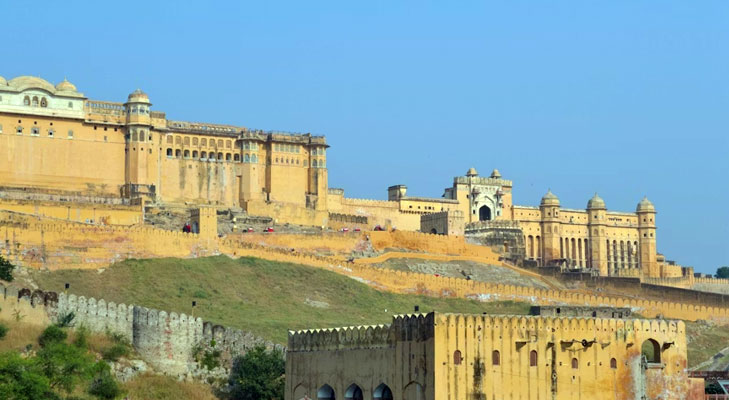
Six prominent art galleries serve Jaipur’s contemporary and traditional art scene:
Mukesh Art Gallery (JLN Marg, INR 500, 11 AM–8 PM);
Gallery Artchill at Amber Fort (8 AM–6:30 PM, free);
Naila Art Gallery at Naila Bagh Palace;
Gallery of Modern Art at Ravindra Manch in Ram Niwas Bagh (9 AM–5 PM, free);
The ICA Gallery (11 AM–8 PM, free);
Gallery Samanvai Art at Ganpati Plaza (1–7 PM, free).
How to Plan Jaipur’s Museum Circuit
Best single museum visit: Albert Hall Museum, preferably with the evening illumination if your schedule allows.
Old-city heritage circuit: City Palace Museum → Jantar Mantar → Hawa Mahal Museum.
Family-friendly museum day: Albert Hall → Dolls Museum → Birla Planetarium or Wax Museum with Nahargarh.
Craft-focused route: Anokhi Museum → Amber Fort → Panna Meena ka Kund.
Specialist culture route: Amrapali Museum → Museum of Legacies → Jawahar Kala Kendra, depending on current exhibitions.
Planning Notes
Albert Hall is the strongest museum for most visitors.
City Palace Museum is best treated as part of the City Palace visit.
Jaipur Wax Museum is entertainment-led and works best with Nahargarh Fort.
Birla Planetarium shows are in Hindi at 1 PM, 3 PM, and 5 PM; it is closed Mondays and has no shows on the last Wednesday of each month.
Reconfirm current ticket rates before publishing because Rajasthan revised state-run monument and museum fees from January 1, 2026.
October to March remains the most comfortable sightseeing window.
Family travelers should prioritize Dolls Museum, Birla Planetarium, Wax Museum, and Digital Museum.
Craft-focused travelers should prioritize Anokhi Museum, Amrapali Museum, and Museum of Legacies.
Continue Planning Your Jaipur Heritage Trip
Travelers exploring Jaipur’s museums often combine them with fort circuits, palace interiors, old-city monuments, craft shopping, and wider Rajasthan heritage routes.