
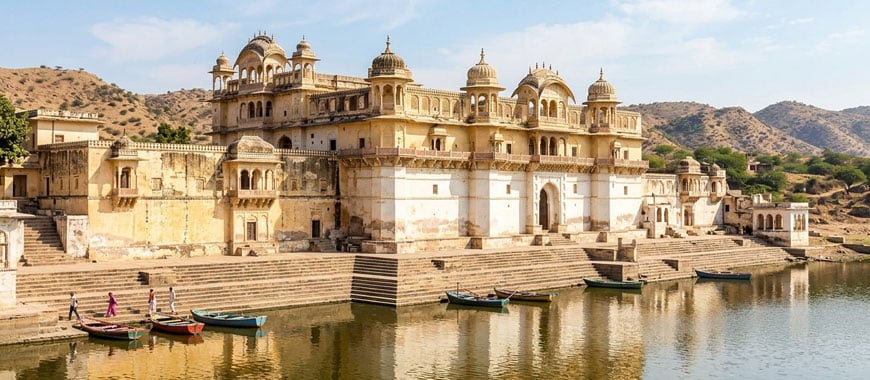

Man Mahal is best experienced as part of a relaxed stay in Pushkar, or a wider Rajasthan itinerary, where the town blends spiritual energy with lakeside heritage. Positioned along the edge of sacred Pushkar Lake, it offers one of the few vantage points that frames the lake without immersion in the busiest ghat zones.
While most visitors focus on temple visits and ghat activity, Man Mahal adds a quieter, more observational layer to the experience, making it particularly valuable for travellers who prefer slower, reflective moments in their itinerary.
The setting slows the pace, shifting the experience from active sightseeing to a more reflective view of the lakefront. Unlike the more crowded temple zones, this vantage point frames Pushkar rather than immersing you in it, making it a quiet, reflective pause within a busy itinerary. It works best for travellers who want to balance temple visits and local exploration with a slower, more scenic and experiential layer of Pushkar’s heritage and lake views.
How to Experience Man Mahal
How to Plan Your Visit to Man Mahal
The best time to visit Man Mahal is during the winter season (October to March), when the weather in Pushkar is pleasant for exploring the lakeside and temple surroundings comfortably. Within the day, the most rewarding experience comes in two windows:
Early morning (around 8:00–10:00 AM): Quieter lakeside stretch along Pushkar Lake with softer light and fewer crowds around the ghats.
Late afternoon (around 4:00–6:00 PM): More atmospheric views as the lakefront becomes calmer and the light highlights the heritage structure against the water.
To structure your visit more effectively around temples, ghats, and lakeside routes, explore the Pushkar Travel Guide to understand how Man Mahal fits into a well-paced itinerary.
How Man Mahal Fits Into Your Travel Itinerary
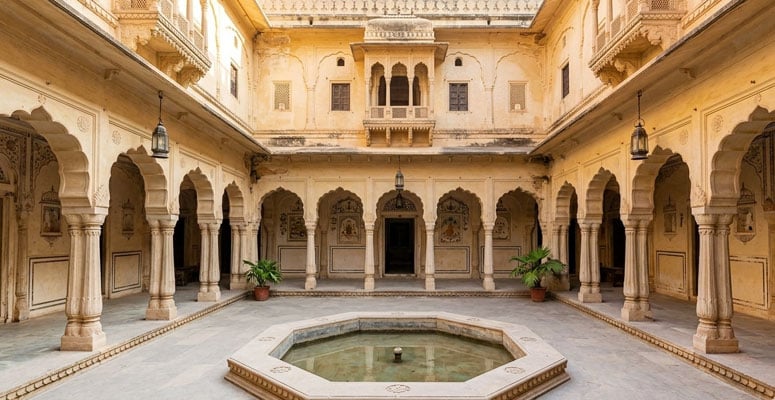
Man Mahal fits naturally into a slow-paced stop in Pushkar, where most itineraries balance temple visits, lakeside walks, and local market exploration. It is typically included in your day plan in one of these ways:
As a mid-itinerary pause between temple visits: After exploring key ghats around Pushkar Lake, it works as a quiet break point before continuing into the main temple lanes or market streets.
As part of a lakeside walking circuit: Travellers often include it as they circle the lake, combining ghats, viewpoints, and heritage edges in a single relaxed route rather than separate stops.
As a short cultural stop within a Rajasthan circuit: In broader itineraries like Jaipur–Pushkar–Ajmer routes, it adds a slower, scenic layer between faster-paced sightseeing days.
Who This Experience Is For (And Who It’s Not)
Man Mahal is best suited for:
Travellers who want to experience Pushkar’s lakeside heritage as part of a slower, more reflective itinerary.
Visitors who enjoy combining temple visits with calm cultural pauses along Pushkar Lake.
Cultural travellers who prefer atmospheric viewpoints and architectural context over rushed sightseeing.
Photographers and experience-led travellers who value light, reflections, and lake-facing perspectives.
This may not be ideal if:
You are expecting a large monument-style attraction with extensive interiors or exhibits.
You prefer fast-paced itineraries focused only on major temples and market stops.
You are looking for entertainment-heavy or activity-based sightseeing experiences.
You have very limited time in Pushkar and are covering only the main ghats and temple circuit.
Practical Experience Advice
How much time should I spend at Man Mahal?
Man Mahal is best experienced as a 20 to 45-minute stop, depending on how you include it in your Pushkar itinerary.
A shorter visit (around 20–25 minutes) works well if you are passing through during a lakeside or ghat circuit, focusing mainly on quick views and a short pause along Pushkar Lake.
If you prefer a slower pace, extending it to around 40–45 minutes allows you to spend more time taking in the lakefront setting, reflections, and the calmer side of Pushkar between temple and market visits.
It is best treated as a short pause within your Pushkar itinerary rather than a standalone attraction, fitting naturally between temple visits and lakeside exploration.
Best Time to Visit Man Mahal
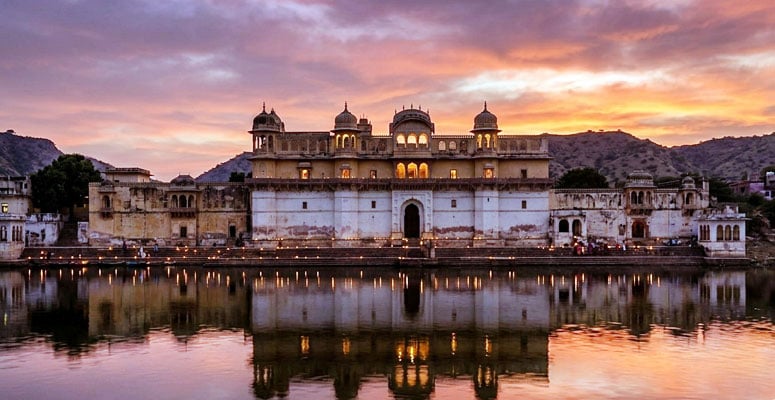
The best time to visit Man Mahal is during winter (October to March), when the weather in Pushkar is pleasant for exploring the lakefront and nearby temple areas.
This period also includes the Pushkar Camel Fair (October–November), when the town becomes culturally vibrant with fairs, gatherings, and increased activity around Pushkar Lake, though it also brings heavier crowds.
Monsoon (July to September) offers a quieter lake setting, but humidity and occasional rain showers can affect comfort.
Summer (April to June) is generally avoided due to high temperatures, which make daytime exploration difficult around the lake and ghats.
Many travellers plan their visit as part of a Pushkar Fair Tour, though it also means higher crowds and a more vibrant atmosphere.
Within the day, plan your visit in two key windows:
Early morning (8:00–10:00 AM): Enjoy quieter ghats and soft light over the lake
Late afternoon (4:00–6:00 PM): Experience calmer surroundings and more atmospheric lake views
Avoid midday, when heat and visitor movement make exploration less comfortable.
Should I Take a Guided Tour or Explore on My Own at Man Mahal?
Man Mahal works best as a self-paced stop within your itinerary in Pushkar, rather than a structured guided experience. A guided tour can help if you want context around the lakeside setting and understand the role of the structure within the broader heritage of Pushkar Lake, especially when it is part of a larger temple-and-ghat circuit.
However, most travellers prefer to explore on their own, as the experience is more about pausing, taking in the lake views, and moving through Pushkar at a slower rhythm rather than following a fixed narrative.
Practical Planning Insights for Man Mahal
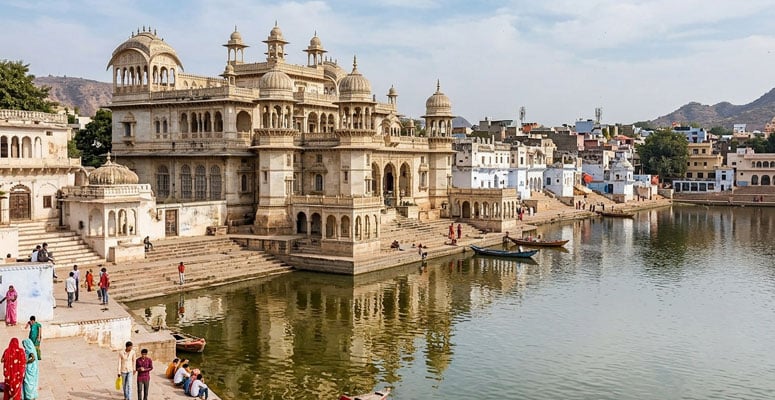
Man Mahal is best planned as a short, flexible stop from a walking circuit around Pushkar rather than a fixed sightseeing slot.
Time your visit around early morning or late afternoon to align with calmer movement along Pushkar Lake.
Include it naturally between temple visits and ghats instead of planning it as a standalone attraction.
Keep your schedule open-ended so you can extend or shorten the stop based on crowd levels and lake activity.
Combine it with nearby ghat-side exploration for a smoother, continuous lakeside experience.
Avoid treating it as a long halt; the value lies in brief observation and transition between key Pushkar experiences.
Explore More: Plan Your Rajasthan Tour
If you want to extend your experience beyond Man Mahal, Rajasthan offers curated journeys that combine heritage cities, royal architecture, and cultural experiences in well-planned itineraries.
Man Mahal is best experienced as a brief lakeside pause within a thoughtfully planned Pushkar itinerary rather than as a standalone stop.


