
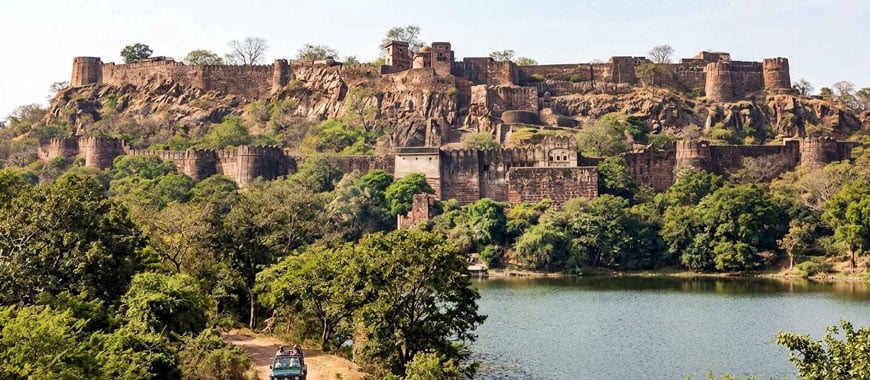

Ranthambore Fort is best experienced as a historical layer to your wildlife trip. Most travellers incorporate Ranthambore Fort in their stay as a mid-trip transition, using the plateau’s height to gain a visual overview of the park’s topography between scheduled safari drives.
Including the fort in your Sawai Madhopur trip requires a bit of logistical planning. Because it is located inside the national park, your visit needs to be timed carefully to avoid conflicting with safari slots while still managing the heat and the climb.
This guide outlines the most efficient way to include the fort in your itinerary, what to expect in terms of accessibility, and how to group it with other local sites for an enjoyable Thar experience.
Who will find Ranthambore Fort most rewarding?
1. Active Hikers and Adventure Seekers
If the sedentary nature of safaris feels restrictive to you, the steep climb here is a welcome physical challenge. The uneven stone stairs and the sprawling 7-kilometre perimeter wall provide a rugged trek that requires good stamina and rewards you with high-altitude views of the Aravalli and Vindhya ranges.
2. Wildlife Enthusiasts

For those who have already spent hours in a safari jeep, the fort offers a unique aerial view of the park’s water bodies. From the ramparts, you can observe the movement of crocodiles and birds around Padam Talao and Raj Bagh. This is a completely different yet interesting way to monitor the ecosystem.
For well-timed safaris and better chances of spotting wildlife in action, refer to the tips in this Sawai Madhopur Travel Guide.
3. Photographers
The fort is an ideal location for capturing the intersection of old stone walls and the encroaching forest. Banyan roots growing through the structures and the weathered gates provide strong focal points. The ruins of the Badal Mahal serve as the highest accessible viewpoint for photographing the forest canopy and the shifting colours of the landscape below.
4. Families and Cultural Explorers
Families can engage with the Trinetra Ganesh Temple to see local traditions in action. Children often find it fascinating to watch pilgrims mailing wedding invitations to the deity or to join in building miniature stone houses along the path, which serves as a hands-on way to engage with folklore outside of a traditional museum setting.
5. People Avoiding the Safari Rush
If you prefer a slower pace or couldn’t secure a vehicle slot, you will find the fort to be a quiet and reliable alternative. It allows you to enjoy an unhurried exploration of ancient stepwells and hidden monuments where the space allows for sitting and appreciating the forest’s silence, away from the usual tourist noise.
How to Experience Ranthambore Fort
A structured approach helps you explore Ranthambore Fort without exhausting yourself during a safari-based itinerary:
- Begin at the main entrance gate:
Starting your climb early in the day to avoid heat buildup - Ascend gradually through the stone pathways:
Pacing yourself as the elevation increases - Pause at intermediate viewpoints:
Where the forest canopy and water bodies begin to come into view - Visit the Trinetra Ganesh Temple mid-way:
Which acts as a natural rest point and cultural highlight - Continue toward the upper sections:
Including Badal Mahal and key fort ruins, where panoramic views are most rewarding - Spend time at the ramparts:
Observing lakes like Padam Talao and Raj Bagh from above - Descend at a steady pace:
Allowing time for additional stops without rushing the experience
This sequence allows the fort to be experienced as a gradual climb-and-view journey rather than a physically demanding, unstructured visit.
How Does Ranthambore Fort Fit Into Your Wildlife Safari Itinerary?
You can add the Ranthambore fort to your wildlife excursion itinerary as –
- A mid-day link between jungle safaris – It provides a productive way to spend the hours when the park is closed, and the animals are less active.
- A pedestrian-friendly contrast to the vehicle-bound safari experience – Walk through the park’s natural ecosystem.
- A unique vantage point for park topography – You can look down from the 700-foot cliffs to view the different safari zones and lakes
Best Time To Visit Ranthambore Fort

The best time to visit Ranthambore Fort depends on how you align it with your safari schedule, especially during mid-day gaps between morning and afternoon game drives.
- October to March (15°C to 30°C) – Winter: This period allows you to comfortably combine the fort climb with safari schedules, making it ideal for a mid-day exploration between drives.
- April to June (30°C to 45°C+) – Summer: The climb to the fort and movement between sections can feel demanding during summer. Best attempted early in the morning or avoided during peak hours, as the climb can be physically demanding alongside already intensive safari conditions.
- July to September (25°C to 35°C) – Monsoon: Rainfall may slow down your movement inside the fort. This season is suitable for travellers prioritising quieter visits and greener surroundings, though access and movement may be affected depending on park conditions.
Planning Overview for Ranthambore Fort
- Suggested visit time: 2 – 3 hours
- Best time of day: Early morning after opening hours or late afternoon to avoid heat and get clearer views of the forest below
- Suitable for: History lovers, trekkers, wildlife enthusiasts, and travellers interested in older fort structures set within a national park
- Pair your visit with: Ranthambore National Park safari or a stop at Padam Talao nearby.
- Consider skipping if: You have limited time in Ranthambore, since access and exploration together can take longer than expected.
Most travellers use the fort as a mid-day activity between safari drives, making it one of the most efficient ways to utilise non-safari hours without overloading the itinerary.
Entry Information and Ticketing

Entry to Ranthambore Fort is accessed as part of the Ranthambore National Park entry system, and most visitors visit it in combination with a safari booking.
Where to book:
- Online: Through the official Rajasthan Forest Department safari booking portal or authorised travel operators
- Offline: At the Ranthambore National Park booking counters (Sawai Madhopur) or through hotel desks and local agents
Safari (park entry) charges
- Indian visitors: ₹1,800 – ₹2,400 per person (Gypsy/Canter)
- Foreign visitors: ₹4,500 – ₹5,000 per person (Gypsy/Canter)
- Fees generally include permit, vehicle, driver, and guide
- Gypsy safaris (6-seater) cost more, especially for premium zones
- Canter safaris (20-seater) are more economical
Time Required to Explore
Plan for at least 2 – 3 hours if you want to walk through the main gates, temples, and viewpoints. The fort area is spread out, and walking between sections takes time due to its elevation and layout.
Visitor Flow and Timing Patterns
- Quieter hours: Early morning, right after opening, before safari crowds and group visits begin
- Busier periods: Late morning to early afternoon when safari vehicles and guided groups arrive
- Peak movement: Around midday, especially during weekends and holiday periods
- Better days for fewer visitors: Weekdays, particularly in October to February, when overall safari traffic is moderate compared to peak season months like November, December, and January.
Should You Take a Guide Along?
A local guide can help you understand the history of the fort, including its connection to the surrounding wildlife reserve and old royal routes. While not mandatory, guidance is useful for navigating the layout and identifying key temples, gates, and viewpoints without missing important sections.
Plan Your Ranthambore & Rajasthan Journey
You can enhance your Sawai Madhopur trip by pairing a historic fort experience within your wildlife itinerary with Indian Holiday.
Our travel specialists thoughtfully weave a visit to Ranthambore Fort into your time at Ranthambore National Park, allowing you to experience both heritage and wilderness.


