
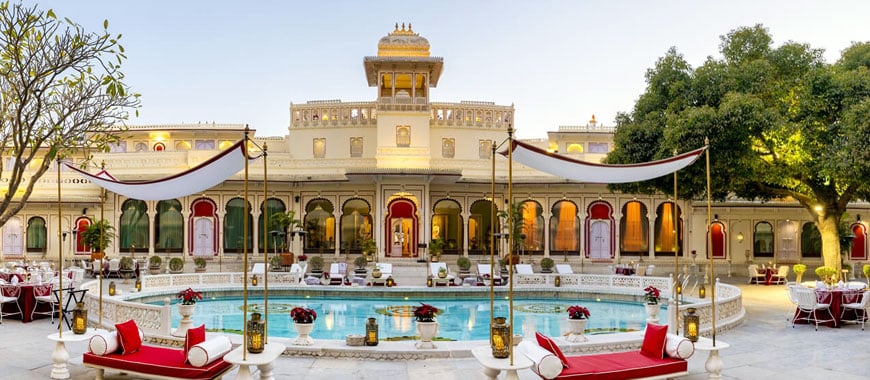

Best experienced as part of a heritage-driven Udaipur or wider Rajasthan journey, Shiv Niwas Palace offers travellers a rare and immersive opportunity to stay within the living City Palace complex, surrounded by lake views, royal courtyards, and centuries-old architecture. For Udaipur planners designing an itinerary that blends palace heritage with immersive lakefront experiences, this palace stay becomes a seamless, strategically valuable addition.
Set along the tranquil edge of Lake Pichola, the palace’s crescent-shaped structure wraps around open courtyards, arched balconies, and soft-lit corridors that still echo the charm of its royal origins. Unlike many modern heritage hotels, Shiv Niwas Palace retains a strong sense of continuity, once the guest residence of Udaipur’s Maharanas, now a luxury stay that preserves that same feeling of exclusivity.
It plays a key role in Udaipur itineraries by shifting the experience from active sightseeing to immersive heritage living, allowing travellers to engage with the City Palace beyond surface-level exploration.
For travellers, the experience is not simply about accommodation. It’s about waking up to lake reflections, walking through the City Palace’s private pathways, and staying in a property that still belongs to the Mewar royal family. It feels personal, and carefully curated, and deeply rooted in Udaipur’s living legacy.
To plan your day more effectively across Udaipur’s palace complex and lakefront attractions, explore the Udaipur Travel Guide for a well-structured itinerary.
Why Shiv Niwas Palace Appeals to Udaipur Planners
Shiv Niwas Palace holds significance not just as a heritage hotel but as a continuation of Udaipur’s living royal legacy. Originally built in the early 20th century as a royal guest residence, it has evolved into a heritage stay while retaining its architectural integrity and cultural context.
For itinerary planners, it plays an important role in pacing. Udaipur is filled with visually rich but often crowded sites. This palace offers a softer counterbalance, allowing travellers to experience heritage in a more relaxed, personal setting.
It aligns especially well with planners who want to create layered itineraries rather than rushed ones.
Key reasons it fits well into Udaipur travel planning:
- quiet, atmospheric heritage spaces within a busy palace complex
- slow, scenic walking paths across courtyards and corridors
- distinct Rajput-European architectural blend
- central location with seamless access to major attractions
- lake-facing viewpoints and photogenic corners
Geographically, it sits at the heart of Udaipur’s old city and lakefront circuit. This makes it easy to combine with Jagdish Temple, Bagore Ki Haveli, and boat rides on Lake Pichola without additional travel time.
How to Experience Shiv Niwas Palace
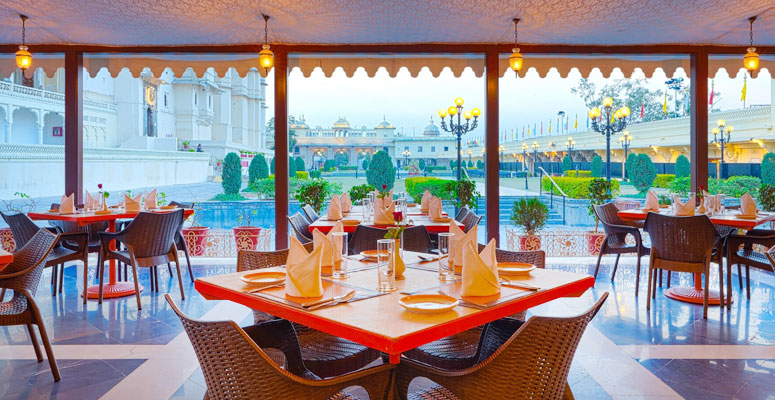
To get the most out of Shiv Niwas Palace, it helps to follow a simple, structured flow. This ensures you experience the property without rushing or retracing your steps.
- Start at the main entrance courtyard
Begin with the palace entry zone, where the structure’s scale and symmetry become immediately apparent. - Move through the arched corridors and internal passages
Walk slowly through the corridors to observe frescoes, mosaics, and architectural detailing. - Explore courtyards and pavilion spaces
Pause in open courtyards where light and shadow create a calm, immersive atmosphere. - Spend time at lake-facing balconies
These are among the most rewarding spots, offering uninterrupted views of Lake Pichola. - End at a quiet vantage point or terrace
Finish your visit with a relaxed pause, ideally during sunset or early evening.
This flow avoids backtracking and maintains a steady, unhurried pace, which is key to enjoying the palace properly.
Traveler Insight
Shiv Niwas Palace suits travellers who value atmosphere, design, and thoughtful pacing.
- Heritage & Architecture Travellers
The blend of Rajput and European elements makes the palace visually and historically engaging. - Slow-Paced & Atmospheric Explorers
Its quiet courtyards and soft-lit corridors create an experience that feels calm and reflective. - Planners Sequencing the Day Thoughtfully
It works well between high-energy sightseeing stops, offering a natural pause in the itinerary. - Families & Casual Travellers
Open spaces and structured layouts make it easy to explore without fatigue. - Photographers
The palace offers excellent angles, from lake reflections to detailed interiors, especially in soft morning or evening light.
For travellers planning a broader itinerary, you can explore Rajasthan tour packages to see how Udaipur’s palace stays are integrated into multi-city heritage journeys.
Best Time to Visit Shiv Niwas Palace
- October to February (Winter)
The most suitable season to include Shiv Niwas Palace within a relaxed Udaipur itinerary, allowing for extended exploration of courtyards and lake-facing spaces.
- March to June (Summer)
Best visited early morning or evening. The palace interiors and shaded corridors make it manageable even in warmer months.
- July to September (Monsoon)
Offers a quieter, more atmospheric experience. The lake views become more dramatic, though movement may slow during rainfall.
Key Highlights Inside Shiv Niwas Palace
1. Architectural Layout and Design
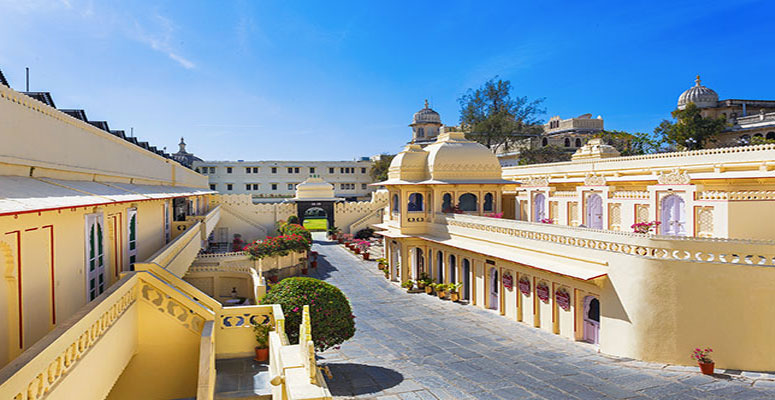
The semi-circular structure is designed for both aesthetics and function. It allows natural airflow while framing views of the lake and the surrounding palace complex.
2. Courtyards and Pavilions
Open courtyards provide breathing space within the structure. These areas were historically used for gatherings and now serve as calm exploration zones.
3. Frescoes and Glass Work
The interiors feature intricate detailing created by Indian and European artisans. These elements add depth and texture to the palace experience.
4. Lake-Facing Views
Balconies overlooking Lake Pichola offer one of the most peaceful vantage points in Udaipur.
5. Evening Ambience
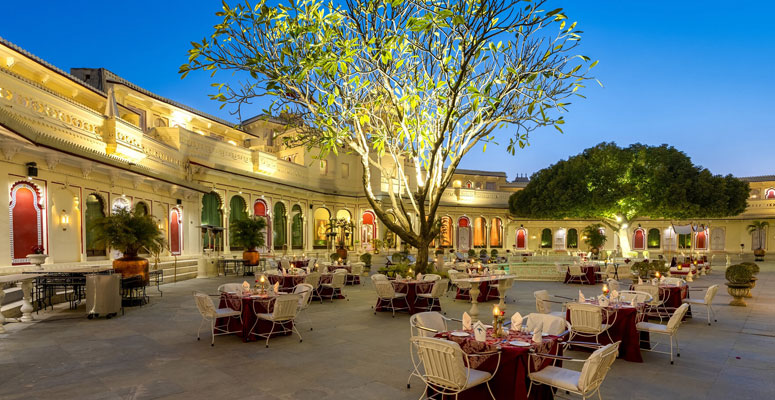
Between 6 and 8 PM, the palace takes on a softer tone. The lighting, cooler air, and reduced movement create an ideal setting for photography and quiet exploration.
Quick Planning Snapshot
- Ideal duration: 60–90 minutes (longer if staying overnight)
- Best time of day: early morning or evening
- Best for: slow travellers, couples, photographers
- Combine with: City Palace, Jagdish Temple, Bagore Ki Haveli
- Avoid if: looking for fast-paced sightseeing
Practical Planning Advice
Best Time to Visit (Experience-Based)
Post-monsoon and winter months offer the best balance of comfort and visibility. Summers require careful timing but remain manageable due to shaded areas.
Ideal Duration
A short visit takes about an hour, but staying overnight or extending your visit allows for a more immersive experience.
Crowd Patterns
Morning visits are the quietest. Afternoons can feel warmer but remain manageable. Evenings offer a gentle, relaxed flow.
Essential Visitor Information
Timings
Generally accessible throughout the day for guests and visitors, though hotel access may vary.
Location
Inside City Palace Complex, Udaipur, Rajasthan
How to Reach
- By Air: Maharana Pratap Airport, approx. 24 km
- By Train: Udaipur Railway Station, well-connected
- By Road: Easily accessible via local taxis and auto-rickshaws
- Local Transport: Auto, cab, or walking from nearby old city areas
Nearby Attractions
- City Palace Complex (walking distance)
- Jagdish Temple (approx. 5 minutes)
- Bagore Ki Haveli (approx. 10 minutes)
- Lake Pichola ghats (nearby access)
These can be combined into a half-day or full-day heritage circuit.
Explore Udaipur & Rajasthan Heritage Journeys
If you’re planning to include Shiv Niwas Palace in your trip, these curated itineraries help you experience Udaipur’s palace heritage within a well-paced Rajasthan journey:
Shiv Niwas Palace is best experienced as an immersive heritage stay within a thoughtfully planned Udaipur itinerary rather than as a brief standalone visit.


