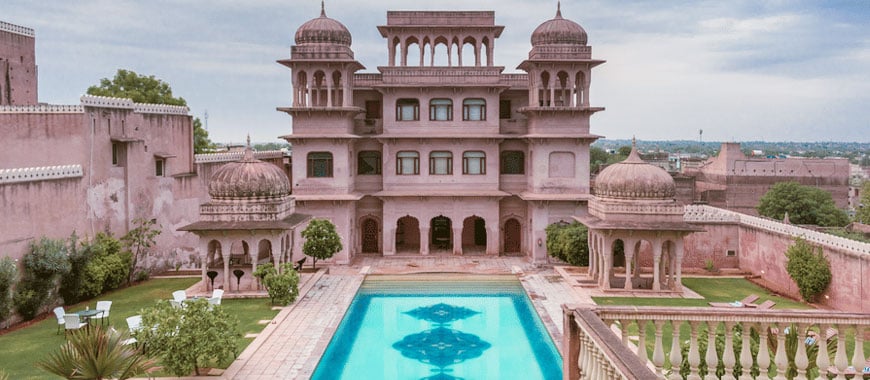

Best experienced as a relaxed heritage pause within a fresco-driven Shekhawati or wider Rajasthan journey, Mandawa Fort offers a calm, well-structured heritage setting between the region’s painted havelis and desert trading routes. For Mandawa planners, it works as both a visual anchor and a functional base, helping organise a stay around one central, character-rich heritage property.
Unlike standalone monuments that require short visits, Mandawa Fort allows travellers to slow down. Its courtyards, painted corridors, and layered architecture create a space where history is not rushed. It becomes a pause that balances movement across Shekhawati, especially when routing between Mandawa, Nawalgarh, and nearby heritage clusters.
Mandawa Fort plays a key role in Shekhawati itineraries by acting as both a visual anchor and a functional base, helping travellers explore surrounding fresco towns without constant relocation.
Positioned within the town itself, the fort fits seamlessly into an itinerary focused on fresco exploration. Compared to busier forts in Rajasthan, this one feels intimate and lived-in. The design blends Rajput defensive planning with haveli-style detailing, making it ideal for travellers who prefer aesthetic depth over large-scale monument sightseeing.
To plan your route more effectively across Mandawa and nearby fresco towns, explore the Mandawa Travel Guide to structure a well-paced Shekhawati itinerary.
Why Mandawa Fort Appeals to Mandawa Planners
Mandawa Fort is not just a landmark; it is the core around which most Mandawa itineraries are built. Originally constructed in the 18th century by Thakur Nawal Singh to protect this trading outpost, it gradually evolved into a residence and later into a heritage hotel. This layered evolution makes it both historically relevant and functionally useful for modern travel planning.
For planners, the value lies in how the fort supports itinerary pacing. Instead of rushing between multiple sites, travellers can stay within the fort and explore the surrounding havelis in a relaxed loop. It reduces travel fatigue while maintaining strong cultural continuity.
Key reasons it works well in planning:
- quiet, atmospheric heritage spaces
- slow, scenic walking paths through courtyards and corridors
- distinct fresco-rich architectural style
- easy-to-reach location within Mandawa town
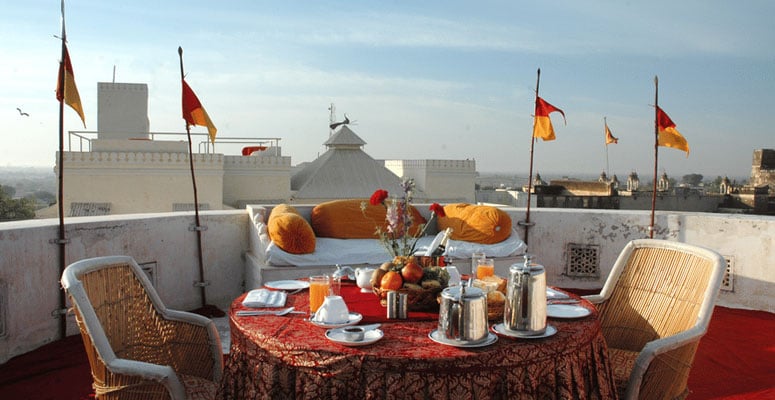
- scenic terraces and painted corners for photography
Geographically, Mandawa Fort sits at the centre of the Shekhawati circuit, making it ideal for routes connecting Mandawa with Nawalgarh, Fatehpur, and Jhunjhunu. It acts as a convenient base rather than just a stop.
How to Experience Mandawa Fort
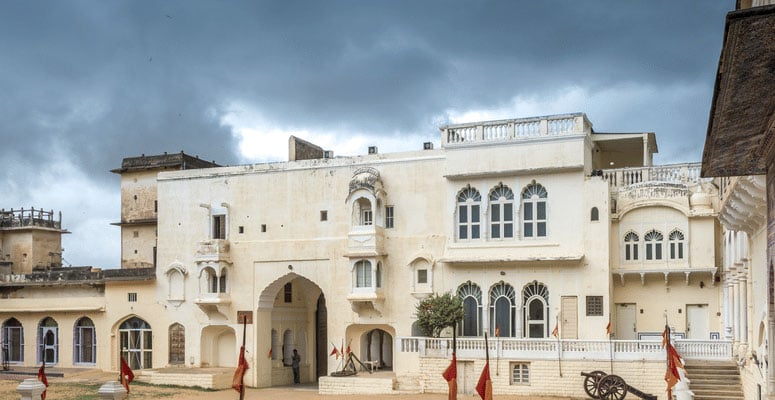
To get the most out of Mandawa Fort, it helps to follow a structured yet relaxed movement through the property. This avoids unnecessary backtracking and allows you to absorb the details gradually.
- Start at the main entrance gateway:
Where the fort’s scale and defensive design become immediately visible. - Move into the central courtyards:
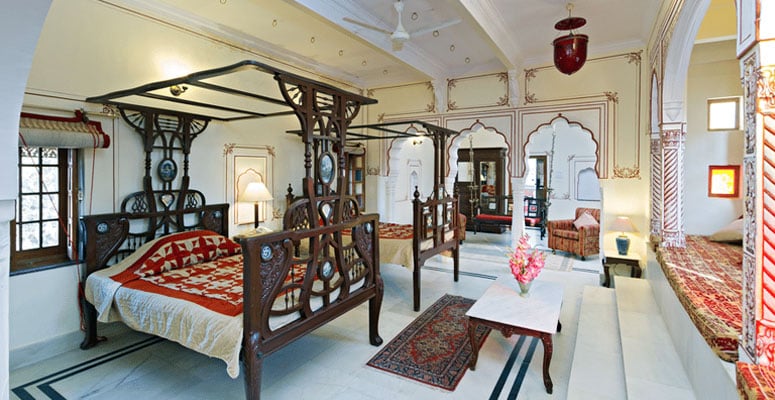
Observing frescoes, arches, and painted walls. - Walk through interior corridors and themed rooms:
Each reflecting a different aspect of royal living. - Pause at quieter corners:
Such as verandahs or shaded seating areas for a slower experience. - Finish at the terrace or rooftop sections:
For panoramic views of Mandawa town.
This flow ensures a balanced experience between architecture, ambience, and visual storytelling without feeling rushed.
Traveller Insight
Mandawa Fort suits travellers who value atmosphere and architectural detail over large-scale monument visits.
- Heritage and Architecture Travellers
The frescoes, wall paintings, and structural layout reflect a fusion of Rajput and merchant-era design. The detailing rewards slow observation. - Slow-Paced and Atmospheric Explorers
The fort’s quiet courtyards and shaded corridors create a calm environment ideal for unhurried exploration. - Planners Sequencing the Day Thoughtfully
It fits perfectly between haveli visits, offering a central pause for rest, meals, or overnight stays. - Families and Casual Travellers
Open spaces, seating areas, and easy navigation make it comfortable even for those not deeply focused on history. - Photographers
Soft light, painted walls, and terrace views provide excellent opportunities for both wide shots and detailed compositions.
Best Time to Visit Mandawa Fort
- October to February (Winter)
This is the most comfortable season for exploring both the fort and nearby havelis. The weather supports long walks and outdoor dining experiences. - March to June (Summer)
Daytime can be warm, so plan visits during early morning or evening. The fort’s shaded interiors still provide a relatively comfortable experience. - July to September (Monsoon)
The region becomes quieter during this period. Occasional rain adds a softer tone to the surroundings, though movement may slow slightly.
Key Highlights Inside Mandawa Fort
1. Fresco-Rich Interiors
The fort is known for its painted walls depicting mythology, royal life, and even colonial influences. These frescoes form the core of the experience.
2. Courtyards and Verandahs
Open courtyards allow natural light to enhance the architecture, while verandahs offer shaded resting points.
3. Themed Rooms and Suites
Each room carries a distinct character, with antique furnishings, murals, and traditional design elements.
4. Terrace Views
The upper sections provide views of Mandawa’s rooftops and surrounding desert landscape, especially appealing during sunset.
5. Evening Ambience
Between 6 and 8 PM, the fort takes on a softer tone with warm lighting and a quieter atmosphere, ideal for relaxation or photography.
Quick Planning Snapshot
- Ideal duration: 60 to 90 minutes for exploration, longer if staying
- Best time of day: early morning or evening
- Best for: slow travellers, couples, photographers
- Combine with: Mandawa havelis, Nawalgarh fresco circuit
- Avoid if: seeking large-scale fort exploration
Unveil the wonders of the city with our curated list of Mandawa Tourist Attractions.
Practical Planning Advice
Best Time to Visit (Experience-Based)
Post-monsoon months bring cleaner surroundings and softer light. Winter offers the most balanced experience. Summers require careful timing but remain manageable with early visits.
Ideal Duration
A standard visit takes about 60 to 90 minutes. Extend to a full stay if you want to experience the property as a heritage hotel.
It is best treated as a central base within a Mandawa itinerary rather than just a short, standalone stop.
Crowd Patterns
Morning remains the quietest. Afternoons are warmer with fewer visitors. Evenings see a gentle flow, especially from in-house guests.
Essential Visitor Information
Timings
Open to visitors typically between 9:00 AM and 6:00 PM. Hotel guests have extended access.
Location
Mandawa Fort, Mandawa, Jhunjhunu District, Rajasthan, India
How to Reach
- By Air: The nearest airport is Jaipur, around 180 km away
- By Train: Jhunjhunu and Churu are the nearest railway stations
- By Road: Well connected by road from Jaipur, Delhi, and Bikaner
- Local Transport: Taxis and private cars are the most convenient options
Nearby Attractions
- Mandawa Havelis (within 1 km) – A cluster of fresco-rich mansions within walking distance, ideal for a half-day exploration.
- Gulab Rai Ladia Haveli (0.5 km)
- Nawalgarh fresco town (30 km) – An “open air” gallery famous for its collection of 18th-20th century havelis (mansions) covered in intricate frescoes.
- Fatehpur Shekhawati (25 km) – Another “open air” gallery features stunning and intricate 19th-century frescoes, vibrant murals, and unique Indo-Persian architecture
These can be combined into a half-day or full-day fresco exploration circuit.
Mandawa Fort is best experienced as a relaxed heritage base within a thoughtfully planned Shekhawati itinerary rather than as a quick stop.