
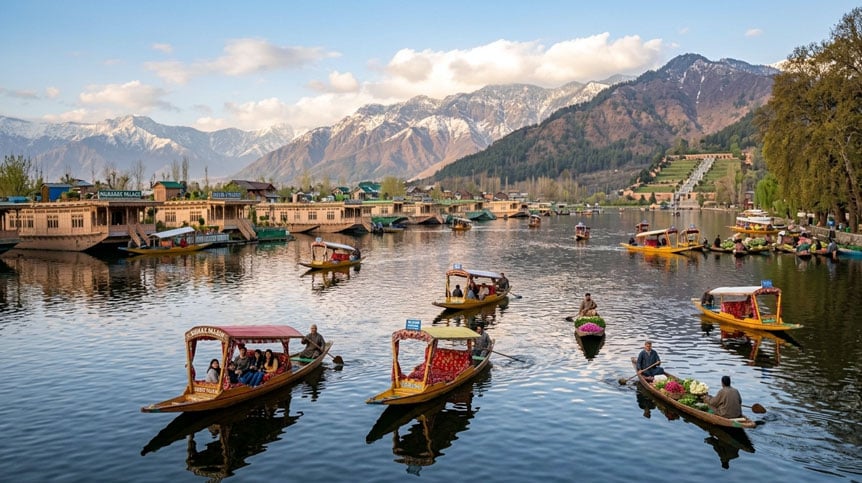

Kashmir stretches across a dynamic landscape that constantly changes as you navigate it. One stretch leads you into calm lake views and historic gardens in Srinagar; another opens into wide alpine meadows in Pahalgam, while higher altitudes around Gulmarg and Sonmarg shift into rugged snow zones and glacier-fed terrain.
Travel here is defined by contrast as much as by scenery. Ancient shrines, hillside forts, Mughal-era landscapes, and river valleys sit within the same region, yet differ in atmosphere and pace.
Kashmir is best planned as a route, not a list of isolated places. Srinagar works as the cultural and logistical base, Gulmarg adds high-altitude scenery, Pahalgam slows the trip into river valleys, and Sonmarg depends more heavily on season and road access. Travellers with more time can add quieter meadows such as Yusmarg or Doodhpathri, while Jammu works best as a heritage and pilgrimage extension for those entering through Jammu Tawi or Katra.
For a first-time trip, avoid trying to cover every famous name. A better Kashmir holiday usually comes from choosing one lake-and-garden base, one alpine stop, one river-valley stay and only then adding glacier, heritage, or offbeat extensions.
Quick Planning Snapshot
Which Tourist Places Should You Prioritise?
| Traveller / Trip Type | Prioritise | Defer or Skip | Why |
|---|---|---|---|
| First-time 3-day traveller | Srinagar + Gulmarg | Pahalgam, Sonmarg, Gurez, Jammu | Gives the strongest Kashmir highlights without long road fatigue. |
| 5-day family or couple trip | Srinagar + Gulmarg + Pahalgam | Gurez, Tulail, Doodhpathri | Best balance of lakes, mountains, and river valleys. |
| 7-day complete valley trip | Srinagar + Gulmarg + Pahalgam + Sonmarg | Jammu, unless arriving by train/road | Covers the main valley circuit at a workable pace. |
| Heritage-focused traveller | Srinagar heritage + Awantipora + Martand + Jammu heritage belt | Too many meadow stops | Gives better cultural depth than a scenery-only route. |
| Snow/adventure traveller | Gulmarg, Apharwat/Gondola, Sonmarg if accessible, Pahalgam pony routes | Offbeat valleys in peak winter | Keeps the route focused on altitude and snow conditions. |
| Slow travel/photographer | Yusmarg, Doodhpathri, Gurez, Tulail, Dal Lake mornings | Rushed 3-hub circuits | Better for travellers with 8–10+ days and flexible road plans. |
| Pilgrimage + Kashmir trip | Jammu/Katra + Srinagar + Pahalgam/Gulmarg | Gurez/Tulail | Works for Vaishno Devi combinations and rail/road arrivals. |
Major Places to Visit in Kashmir
1. Srinagar & Dal Lake Heritage Belt
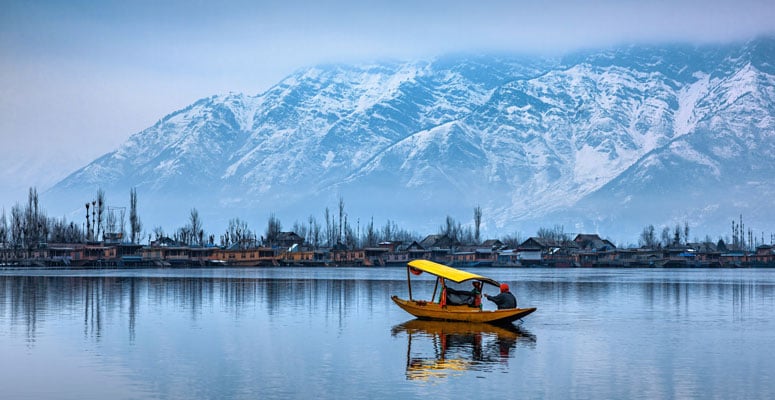
Srinagar is the natural entry point to Kashmir tourism, connecting travellers to major valleys, historical landmarks, and lakeside experiences. The city blends old-world Mughal architecture with everyday life on Dal Lake, making it both a cultural centre and a practical base for travel across the region.
Most itineraries begin here because it allows smooth access to Gulmarg, Pahalgam, and Sonmarg while keeping travel time between key attractions manageable.
Why visit: Primary gateway to Kashmir’s lakes, gardens, and heritage sites.
Best experiences: Shikara rides, Mughal gardens, heritage walks, and hill viewpoints.
Time needed: 2–3 days.
How to plan Srinagar:
Allow at least 1 full day for Dal Lake, the Mughal Gardens, the Shankaracharya Temple, and a shikara ride. If you have 2 days, add Hazratbal, Pari Mahal, a slower walk along Boulevard Road, and one local market stop. Srinagar should not be treated only as an arrival city as it gives the best combination of lake life, gardens, temples, shrines, and city viewpoints.
Best half-day circuit: Shankaracharya Temple early morning → Mughal Gardens → Dal Lake shikara ride near sunset.
Best slow circuit: Hazratbal → Nishat / Shalimar → Boulevard Road → houseboat dinner.
Skip if rushed: Repeating too many gardens in one day; choose 2–3 strong stops instead of turning the day into a garden checklist.
• Dal Lake
Dal Lake is the most recognisable feature of Srinagar, known for its floating homes, wooden shikaras, and vibrant lake markets. Dal Lake works best either early morning or around sunset. Travellers staying on a houseboat should plan one shikara ride from the houseboat side and one short walk or drive along Boulevard Road. The Kashmir houseboat experience should be explained clearly: these houseboats are usually moored on the lake and do not cruise like Kerala houseboats.
• Mughal Garden Circuit (Shalimar, Nishat, Chashme Shahi)
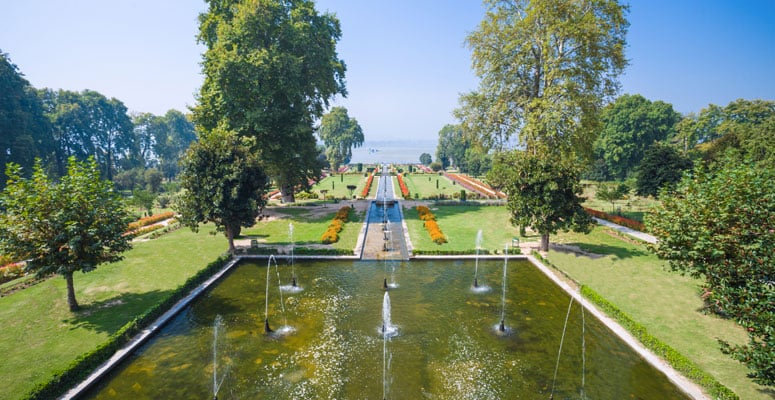
These gardens reflect Kashmir’s Mughal past through terraced layouts, flowing water channels, and carefully planned landscapes. Each garden has its own character, from expansive lawns to spring-fed terraces, and works best as a combined half-day visit.
Treat Shalimar, Nishat, and Chashme Shahi as a planned garden circuit, not separate disconnected stops. Nishat and Shalimar pair well with Dal Lake and Boulevard Road, while Chashme Shahi works better with Pari Mahal because both sit toward the Zabarwan side. Add Tulip Garden only as a seasonal spring stop, not as a year-round attraction.
• Shankaracharya Hill Temple
Perched above the valley, this ancient Shiva temple requires a short uphill climb but rewards visitors with wide views across Srinagar and Dal Lake. It is one of the most striking vantage points in the city, especially in clear morning light.
• Pari Mahal
Built on a hillside overlooking Dal Lake, Pari Mahal carries a quieter, more reflective atmosphere compared to other monuments in Srinagar. The structure is best known for its layered terraces and sunset views rather than detailed interiors.
• Hazratbal Shrine
Located along the northern edge of Dal Lake, Hazratbal stands out for its serene white façade and calm lakeside setting. It remains an important spiritual site and is often included in cultural itineraries of Srinagar.
2. Gulmarg & High-Altitude Adventure Zone
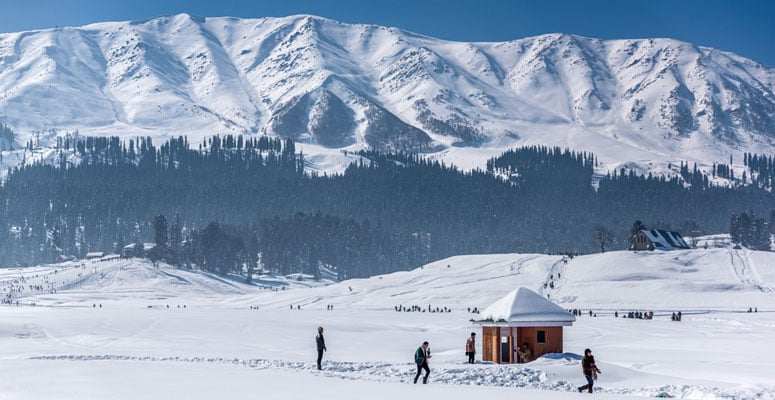
Gulmarg shifts the Kashmir experience from heritage and lakes to wide alpine landscapes and year-round adventure activities. Surrounded by dense pine forests and snow-covered peaks, it is one of the most visited hill destinations in the region, especially for skiing, gondola rides, and open mountain views.
Travellers usually plan Gulmarg as a dedicated stop because road conditions and altitude make it a slower-paced destination compared to Srinagar or nearby valleys.
Why visit: Snow activities, alpine scenery, and mountain experiences.
Best experiences: Gondola ride, skiing, snow walks, and meadow viewpoints.
Time needed: 1–2 days.
• Gulmarg Gondola
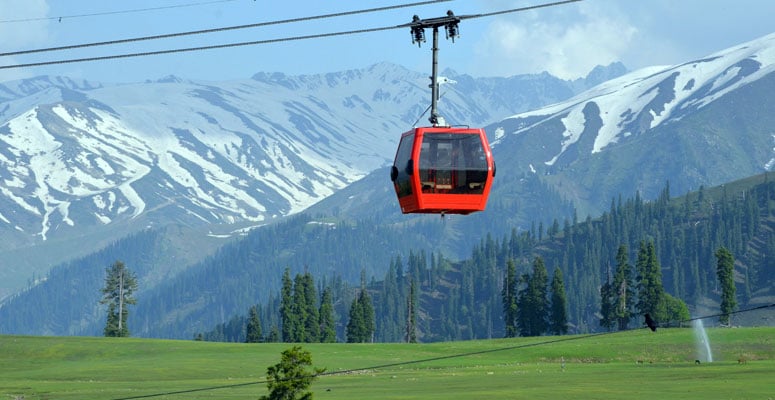
The Gulmarg Gondola is the main high-altitude experience in Gulmarg and should be planned before local sightseeing. Phase 1 is better for families, first-time visitors, snow views, and travellers who want a lower-altitude experience. Phase 2 is more weather-sensitive and better suited to travellers who are comfortable with colder, higher-altitude conditions. Keep the Gondola plan flexible because visibility, wind, maintenance, and official operations can affect the day’s schedule.
• Ski Slopes & Snow Fields
Gulmarg is widely recognised for its skiing terrain, which attracts beginners and experienced skiers alike. Winter months bring consistent snow cover, turning the slopes into a hub for snowboarding, sledging, and ski training sessions.
• Apharwat Peak Viewpoint
Apharwat Peak offers some of the most dramatic mountain views in Kashmir, especially after the Gondola ascent. On clear days, the landscape opens up to vast snow-covered ridges and distant Himalayan ranges.
• Gulmarg Golf Course
During warmer months, the high-altitude golf course transforms into an open meadow surrounded by alpine scenery. It is one of the highest golf courses in the world and is often included for its unique setting rather than its gameplay alone.
In summer and autumn, Gulmarg should not be positioned only as a snow destination. The golf course and meadow edges make it useful for travellers who prefer soft adventure, landscape photography, and relaxed walking.
• Khilanmarg Meadow
Khilanmarg is a quieter stretch near Gulmarg that offers panoramic valley views and seasonal flower cover. It is ideal for short walks and photography away from the main tourist activity zones.
3. Pahalgam & River Valley Circuit
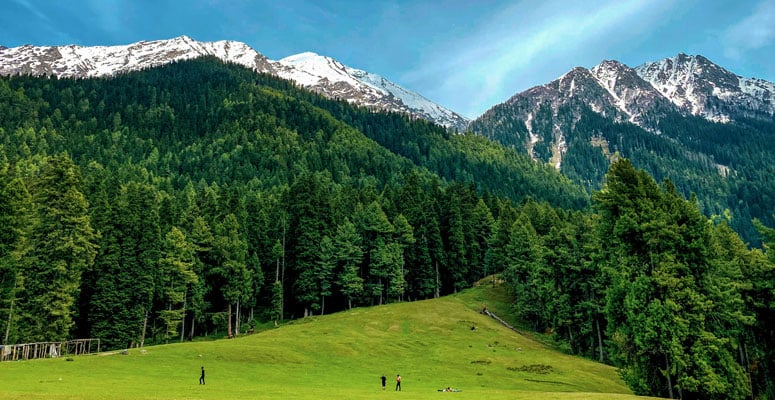
Pahalgam offers a slower, more nature-driven side of Kashmir, shaped by the Lidder River, pine forests, and open meadows. Unlike high-altitude or urban stops, this region is best known for relaxed walks, riverside stays, and short excursions into surrounding valleys.
It is usually planned as a key overnight stop because nearby attractions are spread out and best explored at a comfortable pace.
Why visit: River landscapes, meadow valleys, and light adventure activities.
Best experiences: Riverside walks, valley drives, pony rides, forest views.
Time needed: 1–2 days.
How to plan Pahalgam:
Pahalgam works best with an overnight stay because Aru Valley, Betaab Valley, Baisaran, and riverside walks should not be rushed into one tight sightseeing slot. Families and senior travellers should prioritise Lidder River, Betaab Valley, and Aru Valley by vehicle. Travellers comfortable with pony rides or uneven trails can add Baisaran if weather and trail conditions are suitable.
Best pairing: Lidder River walk → Betaab Valley → Aru Valley.
Culture add-on: Mamleshwar Temple before or after the valley drive.
Skip if rushed: Baisaran if the weather is poor, the trails are muddy, or the traveller is uncomfortable with pony routes.
• Lidder River Walks
The Lidder River defines Pahalgam’s landscape with its clear-water streams and continuous flow through pine-lined paths. Walks along the river are best in the early hours when the surroundings are quieter, and the light is soft.
• Aru Valley
Aru Valley offers wide-open scenery framed by mountains and dense forests. It is commonly used as a base for light treks and is especially popular for its calm, less commercial atmosphere compared to central Pahalgam.
• Betaab Valley
Betaab Valley is known for its cinematic backdrop of meadows, rivers, and forested slopes. It is one of the most accessible sightseeing points from Pahalgam and works well for short visits and photography stops.
• Baisaran Valley
Often referred to as “mini Switzerland,” Baisaran is reached by pony or a moderate hike. The meadow opens into a wide circular valley surrounded by pine trees and is best visited in stable weather conditions.
• Mamleshwar Temple
Mamleshwar Temple is one of the oldest Shiva shrines in the region, located near the Lidder River. It combines spiritual significance with a quiet riverside setting, making it a cultural stop within the valley circuit.
Mamleshwar Temple adds a quiet cultural layer to Pahalgam’s nature-heavy sightseeing. It is associated with Lord Shiva and is located near the river landscape around Pahalgam, making it a short spiritual stop rather than a separate half-day plan. Travellers should dress modestly, keep the visit quiet, and avoid carrying heavy electronics into the temple area.
4. Sonmarg & Glacier Route
Sonmarg marks the transition from Kashmir’s green valleys into high-altitude terrain filled with glaciers, alpine meadows, and dramatic mountain roads. The journey itself is a major highlight, with the Sindh River flowing alongside steep valleys and snow walls appearing during colder months.
Sonmarg planning rule:
Plan Sonmarg as a day trip from Srinagar for most first-time itineraries. Add an overnight stay only when hotels, weather, and road access are confirmed. Sonmarg becomes more rewarding in late spring, summer, and early autumn; in March and winter months, access can change quickly.
This region is usually planned as a day trip or short stay because weather and road conditions can vary, especially near higher passes.
Why visit: Glacier views, alpine landscapes, and scenic mountain drives.
Best experiences: Glacier walks, pony rides, high-altitude photography.
Time needed: 1 day (or overnight if road conditions allow).
• Sindh River Corridor
The drive to Sonmarg follows the Sindh River, creating one of the most scenic road stretches in Kashmir. The landscape shifts from forested valleys to open rocky terrain as elevation increases.
• Thajiwas Glacier
Thajiwas Glacier is one of the most visited spots near Sonmarg, known for its snowfields even outside peak winter. It is usually reached by pony ride or short trek, depending on seasonal accessibility.
• Zoji La Pass Route
Zoji La connects Kashmir with Ladakh and is known for its rugged mountain road and high-altitude conditions. It remains a key strategic and scenic route, though access depends on weather and road clearance schedules.
Zoji La should be treated as a seasonal high-altitude route, not a guaranteed sightseeing point. The official Kashmir Tourism Sonamarg page describes Zoji La as a crucial pass connecting Kashmir with Ladakh, located around 17 km from Sonmarg, open roughly May to November depending on weather, with the Zoji La tunnel still referenced as under construction. For ordinary Kashmir sightseeing, include Zoji La only when road status, local permissions, and weather make it practical.
• Snow Meadows & Viewpoints
Sonmarg’s open meadows offer wide-angle Himalayan views, especially during early summer when snow begins to melt. These areas are often used for short stops, photography, and rest breaks.
• Glacier Edge Walks
Short walks around accessible glacier points provide close-up views of ice formations and surrounding peaks. These walks should be planned with local guidance due to terrain variability.
5. Offbeat Kashmir: Meadows, Villages & Lesser-Visited Landscapes
Beyond the well-known circuit of Srinagar, Gulmarg, Pahalgam, and Sonmarg, Kashmir offers several quieter destinations that reward travellers looking for slower journeys and fewer crowds.
These regions are less commercialised, often requiring additional travel time, but they showcase a different side of the valley through remote meadows, traditional villages, and untouched natural scenery.
Most of these destinations work best as additions to longer itineraries rather than first-time essential stops.
Why visit: Peaceful landscapes, local culture, and lower visitor numbers.
Best experiences: Meadow walks, village exploration, scenic drives, and photography.
Time needed: 1–3 additional days.
• Yusmarg
Yusmarg offers rolling meadows, pine forests, and gentle walking trails without the crowds commonly found in Kashmir’s more famous destinations. The area is particularly appealing to travellers seeking quiet outdoor experiences and relaxed day excursions.
• Nilnag Lake
Reached via a short forest trail from Yusmarg, Nilnag Lake is known for its deep blue waters and tranquil setting. It works best as a short walking excursion rather than a standalone destination.
• Doodhpathri
Known for its broad grasslands and mountain streams, Doodhpathri has become increasingly popular among travellers seeking open landscapes away from Srinagar’s busier attractions. The scenery changes significantly with the seasons, ranging from flower-filled meadows to snow-covered slopes.
• Gurez Valley
Located near the northern frontier of Kashmir, Gurez Valley offers dramatic mountain scenery, traditional wooden settlements, and a distinctly different cultural atmosphere. Its remote location means travel planning requires additional time, but many visitors consider it one of the most rewarding regions in the valley.
• Tulail Valley
An extension of the Gurez region, Tulail Valley appeals to travellers interested in remote landscapes and lesser-explored routes. The area is characterised by traditional villages, river valleys, and striking mountain backdrops.
6. Historical & Cultural Places in Kashmir
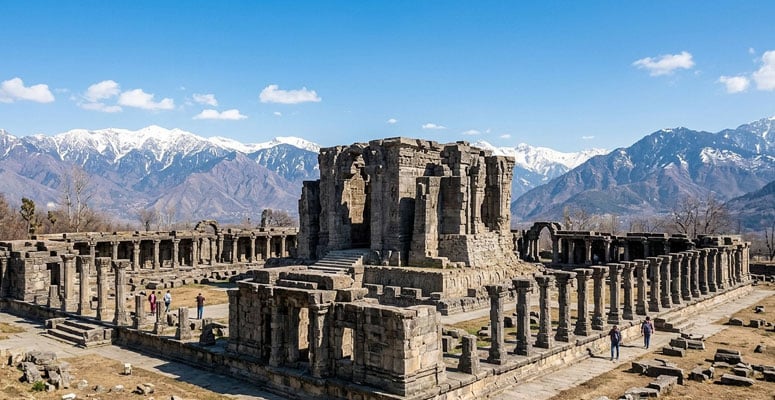
While Kashmir is often associated with lakes and mountain scenery, the region also preserves centuries of religious, architectural, and cultural heritage. Ancient temples, Mughal-era structures, forts, and shrines provide valuable insight into the region’s diverse historical influences.
Many of these sites can be combined with sightseeing routes around Srinagar, Pahalgam, and Jammu, making them easy additions to broader travel itineraries.
Why visit: Historical architecture, religious landmarks, and cultural heritage.
Best experiences: Temple visits, heritage walks, archaeological sites, hilltop viewpoints.
Time needed: Half day to 2 days, depending on coverage.
• Martand Sun Temple
The Martand Sun Temple near Anantnag is one of Kashmir’s most important archaeological landmarks. Built during the eighth century, its imposing ruins continue to overlook the valley from an elevated plateau, creating one of the region’s most impressive historical settings.
• Awantipora Ruins
Located along the Srinagar–Pahalgam route, the Awantipora temple complex preserves the remains of early medieval Kashmiri architecture. The site offers an accessible heritage stop for travellers interested in the region’s ancient past.
• Hari Parbat Fort
Overlooking Srinagar from Koh-e-Maran Hill, Hari Parbat Fort provides sweeping views of the city and the surrounding landscapes. The hill also holds religious significance for multiple faith communities, adding cultural depth to the visit.
• Raghunath Temple
Located in Jammu, Raghunath Temple is one of the region’s most important Hindu pilgrimage centres. Its extensive temple complex reflects Dogra architectural influences and remains a major religious landmark.
• Mubarak Mandi Palace
Once the royal residence of the Dogra rulers, Mubarak Mandi Palace combines Rajput, Mughal, and European architectural styles. The palace complex continues to be one of Jammu’s most significant heritage attractions.
• Bahu Fort
Perched above the Tawi River, Bahu Fort blends historical importance with religious significance through the revered Bawe Wali Mata Temple located within the fort complex.
• Pari Mahal
Built during the Mughal period, Pari Mahal combines historical architecture with elevated views across Dal Lake. The terraced structure remains one of Srinagar’s most scenic heritage landmarks.
• Shankaracharya Temple
One of the oldest religious sites in Kashmir, the temple occupies a prominent hilltop location overlooking Srinagar and continues to attract both pilgrims and visitors seeking panoramic valley views.
Jammu Heritage & Pilgrimage Gateway
Jammu should be added when travellers are entering through Jammu Tawi, combining Kashmir with Vaishno Devi, or want a heritage-focused extension before moving toward Srinagar. It should not be forced into a short Kashmir Valley itinerary. For most travellers, Jammu needs half a day to one full day, while Jammu + Katra needs a separate pilgrimage-led plan.
Best Jammu circuit: Bahu Fort and Bawe Wali Mata → Bagh-e-Bahu → Bagh-e-Bahu Aquarium → Mubarak Mandi Palace and Dogra Art Gallery → Raghunath Bazaar.
Bahu Fort and Bawe Wali Mata: Bahu Fort works as a combined history and spirituality stop because the revered Bawe Wali Mata Temple sits within the fort complex.
Bagh-e-Bahu and Aquarium: Pair Bahu Fort with Bagh-e-Bahu instead of treating the garden separately. Bagh-e-Bahu adds a relaxed terraced-garden stop, while the nearby aquarium is a family-friendly add-on.
Mubarak Mandi Palace and Dogra Art Gallery: Mubarak Mandi Palace should be positioned as the main Dogra-era heritage stop in Jammu. The linked IndianHoliday page highlights its Rajasthani, Mughal, and Baroque-European architectural mix and sections such as Sheesh Mahal, Pink Hall, and Gol Ghar. The Dogra Art Gallery, located in the Pink Hall, adds depth through Basohli, Jammu, and Kangra paintings, sculptures, terracotta objects, manuscripts, and royal artefacts.
Amar Mahal Palace: Add Amar Mahal as a quieter museum and architecture stop for culture-focused travellers. It has a red sandstone palace setting, Tawi River and Shivalik views, art galleries, and a large library collection. This should be recommended for travellers interested in Dogra heritage, art, and slower museum visits.
Raghunath Bazaar: Use Raghunath Bazaar as a short shopping and local culture stop near the Jammu temple circuit. Woollens, pashmina-style shawls, phirans, carpets, wickerwork, brass/silverware, woodwork, and decorative items are notable items to look for.
Experiences to Pair With Kashmir Sightseeing
| Experience | Best Paired With | Planning Note |
|---|---|---|
| Shikara ride | Dal Lake, houseboat stay, Boulevard Road | Best early morning or sunset. Avoid turning this into only a photo stop. |
| Houseboat stay | Srinagar arrival or final night | Better for travellers who want a slow lake experience; explain that houseboats are usually moored, not cruising boats. |
| Gulmarg Gondola | Gulmarg overnight or full-day trip | Book officially, verify live operations, and keep weather backup time. |
| Pony ride | Baisaran, Gulmarg, Yusmarg, Chandanwari, where relevant | Good only for travellers comfortable with uneven trails; carry water and avoid in poor weather. |
| Golfing | Gulmarg / Srinagar leisure stay | Premium add-on for summer/autumn, not essential for every itinerary. |
| Water sports / rafting | Adventure-focused itinerary, suitable for only a certain season | The water-sports page says summer after snowmelt is the better season for rafting and notes permission/expert guidance; verify exact location, operator, safety rules, and permissions before publishing. |
| Shopping | Srinagar local markets / Raghunath Bazaar in Jammu | Add as a short cultural stop, not a full sightseeing day. |
| Cuisine stop | Srinagar / Pahalgam / Jammu | Add as soft local experience for premium travellers; avoid generic food-list stuffing. |
How to Plan Your Kashmir Trip by Duration
• 3-Day Kashmir Highlights Route
Srinagar → Gulmarg → Srinagar
This short itinerary focuses on Kashmir’s most iconic experiences, combining Srinagar’s lakes and heritage attractions with Gulmarg’s mountain scenery and alpine landscapes. It works well for travellers with limited time who want to experience the region’s highlights without long road journeys.
Recommended focus:
- Dal Lake and houseboat experience.
- Mughal Gardens.
- Shankaracharya Temple.
- Gulmarg Gondola.
- Snow activities (seasonal).
Prioritise: Dal Lake, shikara, Mughal Gardens, Shankaracharya Temple, Gulmarg Gondola or meadow views.
Do not add: Pahalgam, Sonmarg, Jammu, Gurez, or Doodhpathri.
Best for: First-time visitors, couples, weekend travellers, and travellers with limited time.
• 4-Day Short Comfort Route
Route: Srinagar → Gulmarg → Srinagar, with one extra Srinagar day
Best for: Families, senior travellers, travellers who want a slower first Kashmir trip.
Prioritise: Srinagar heritage, Dal Lake, Gulmarg, and one low-rush market/garden evening.
Optional swap: Replace the extra Srinagar day with Pahalgam only if the traveller is comfortable with longer road movement.
• 5-Day Classic Kashmir Route
Srinagar → Gulmarg → Pahalgam → Srinagar
This route balances Kashmir’s lakes, mountain scenery, gardens, and river valleys while maintaining a comfortable pace.
Recommended focus:
- Srinagar heritage and lake experiences.
- Gulmarg mountain landscapes.
- Aru Valley and Betaab Valley.
- Lidder River scenery.
- Local markets and Kashmiri cuisine.
Prioritise: Srinagar lake/gardens, Gulmarg Gondola/weather-permitting mountain views, Pahalgam riverside stay, Aru and Betaab Valley.
Do not add: Sonmarg unless the traveller accepts a faster pace.
Best for: Families, couples, and first-time visitors.
• 7-Day Complete Valley Circuit
Srinagar → Gulmarg → Pahalgam → Sonmarg → Yusmarg / Doodhpathri → Gurez / Tulail
A well-rounded itinerary covering Kashmir’s major tourist regions while allowing time for both sightseeing and relaxation.
Recommended focus:
- Dal Lake and Mughal Gardens.
- Gulmarg Gondola and alpine landscapes.
- Pahalgam valley excursions.
- Thajiwas Glacier.
- Scenic mountain drives.
- Heritage and cultural attractions.
Prioritise: Srinagar, Gulmarg, Pahalgam, Sonmarg day trip or overnight, Thajiwas Glacier if accessible.
Best for: Travellers seeking a comprehensive Kashmir experience.
• Extended Kashmir Route (8–10+ Days)
Srinagar → Gulmarg → Pahalgam → Sonmarg → Yusmarg / Doodhpathri → Gurez Valley
This route is designed for travellers who want to move beyond the standard tourist circuit and explore quieter landscapes.
Recommended focus:
- Offbeat meadows and valleys.
- Village experiences.
- Lesser-visited viewpoints.
- Extended photography opportunities.
- Cultural and heritage sites.
Prioritise: Fewer hotel changes, early starts, flexible offbeat days.
Do not add: Gurez/Tulail for travellers who need predictable roads, strong mobile connectivity, or high hotel comfort throughout.
Best for: Repeat visitors, photographers, and slow-travel enthusiasts.
• Jammu + Kashmir + Vaishno Devi Route
Route: Jammu / Katra → Srinagar → Gulmarg → Pahalgam → Srinagar
Best for: Pilgrimage plus Kashmir travellers, rail arrivals, families.
Prioritise: Vaishno Devi, the Jammu heritage belt if time allows, Srinagar, Gulmarg, and Pahalgam.
Do not add: Offbeat valleys unless the trip is longer than 8 days.
• March / Early Spring Route
Route: Srinagar → Gulmarg → Pahalgam, with Sonmarg only after access confirmation
Best for: Snow traces, early blooms, fewer crowds.
Best Time to Visit Kashmir
| Season | Months | What to Expect | Best For |
|---|---|---|---|
| Spring | March–May | Blooming gardens, almond blossoms, pleasant temperatures, reopening of many attractions after winter | Tulip Garden, Mughal Gardens, sightseeing, photography |
| Summer | June–August | Mild weather, lush valleys, and comfortable travel conditions across most regions | Family holidays, Pahalgam, Sonmarg, outdoor activities |
| Autumn | September–October | Golden Chinar foliage, clear skies, fewer crowds, crisp weather | Scenic drives, photography, cultural exploration |
| Winter | November–February | Snowfall in higher regions, frozen landscapes, and the winter sports season | Skiing, snowboarding, snow experiences, Gulmarg holidays |
How to Reach Kashmir in 2026
Kashmir is well connected by air, rail, and road, with Srinagar serving as the main gateway for most travellers. Air travel is the fastest option, while rail and road journeys are commonly used for combining Kashmir with other destinations in North India.
1. By Air
Nearest airport: Srinagar International Airport
- Direct flights are available from major cities, including Delhi, Mumbai, Bengaluru, Chandigarh, and Jammu.
- Taxis and pre-booked transfers are available from the airport to Srinagar, Gulmarg, Pahalgam, and Sonmarg.
- Fastest and most convenient option for most travellers.
2. By Train
Nearest major railhead: Jammu Tawi Railway Station
- Well-connected to Delhi, Mumbai, Kolkata, Ahmedabad, and other major cities.
Jammu Tawi remains the major rail hub for travellers entering Jammu and Kashmir by train. However, Kashmir rail access changed in 2026 with the Jammu Tawi–Srinagar Vande Bharat Express. PIB reports that the 20-coach Jammu Tawi–Srinagar Vande Bharat Express was flagged off on 30 April 2026 and regularised from 2 May 2026. Travellers should still check the current timetable, seat availability, station transfers, and onward road movement before finalising the route.
Best use: Rail is useful for travellers combining Jammu, Katra/Vaishno Devi, and the Kashmir Valley. Air travel to Srinagar remains the fastest option for travellers focusing only on the Kashmir Valley.
3. By Road
Main route: Jammu → Srinagar via NH-44
The Jammu–Srinagar NH-44 route remains important for road trips and Jammu/Katra combinations, but road movement can be affected by weather, landslides, maintenance, convoy regulation, and winter/monsoon conditions. Do not plan tight same-day connections after long road transfers. Check official traffic advisories close to departure and keep buffer time, especially during winter, rain spells, and long weekends.
Plan Your Kashmir Journey
A good Kashmir itinerary depends on your travel month, arrival city, number of nights, preferred hotel comfort, and how much road travel you want each day. Share whether you want a classic Srinagar–Gulmarg–Pahalgam route, a Sonmarg extension, a Vaishno Devi + Kashmir plan, or a slower offbeat valley holiday. IndianHoliday’s travel specialists can help shape the route around season, road access, Gondola availability, senior/family comfort, and the right hotel locations.
Start with these Kashmir tour options:
- Gems of Kashmir — best for a compact first-time Kashmir holiday.
- Kashmir Vaishno Devi Tour — best for travellers combining Jammu/Katra with the Kashmir Valley.
- Gulmarg Sonamarg Pahalgam Tour — best for a fuller valley circuit.
- Splendid Kashmir Tour — best for a shorter classic Kashmir plan.
- Discover Wonderful Kashmir — best for travellers who want a balanced highlights route.


