
Kerala hill station comparison
Munnar vs Wayanad – Best Hill Station for Your Mood
Tea gardens or misty forests? Use this first-hand comparison to choose the Kerala hill station that suits your pace, travel style and mood.
Kerala itineraries
Trips that help you experience the difference
Choose a short hill escape or combine Kerala’s scenic highlights with private transfers and planned stays.


Choose what you want to explore
Munnar vs Wayanad – Which Kerala Hill Station Matches Your Mood?
Kerala gave me two hill stations and two completely different experiences.
One greeted me with rolling tea gardens and cool mountain air, the other led me through misty forests and ancient caves.
To be honest, I didn’t expect such a contrast, but that’s what makes choosing between Munnar and Wayanad so interesting.
How could I forget those nights in these two places, each of which has its rhythm, charm, and purpose?
So if you’re caught between the two, let’s break it down based on what kind of mood you’re in.
Munnar or Wayanad: What Suits Your Travel Mood?
| Feature | Munnar | Wayanad |
|---|---|---|
| Mood Match | Calm, romantic, introspective | Adventurous, curious, energetic |
| Ideal For | Couples, slow travelers, honeymooners | Trekkers, families, and nature lovers |
| Top Vibe | Misty tea gardens, laid-back charm | Lush forests, earthy and wild |
| Best Time to Visit | September to March | October to May |
| Travel Ease | 4–5 hrs from Kochi | 3 hrs from Calicut / 6 hrs from Bangalore |
| Activities | Tea plantation walks, viewpoint drives | Waterfalls, trekking, cave exploration |
| Stay Options | Colonial resorts, luxury retreats | Treehouses, eco-stays, jungle lodges |
Comparing Munnar and Wayanad: Scenery, Mood & What Suits You Best
Let me tell you something! Even though these two Kerala hill stations might seem similar on the map, the vibe on the ground. Well, that’s different. Here’s how they stack up when it comes to nature, atmosphere, and what kind of traveller they’re really for.
Which Hill Station Has Better Weather, Munnar Or Wayanad?
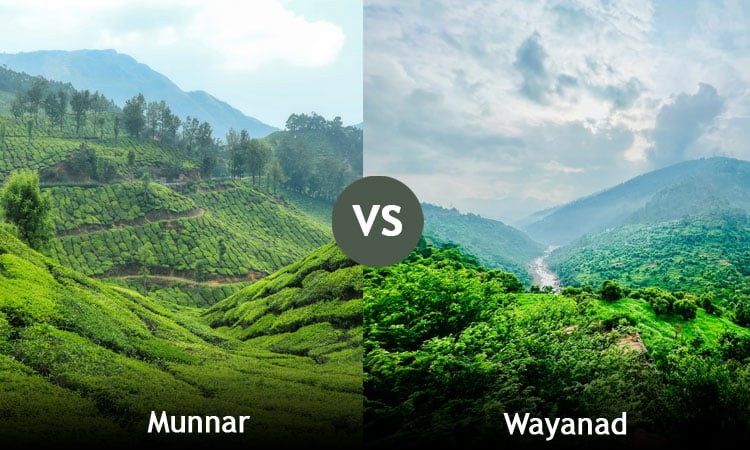
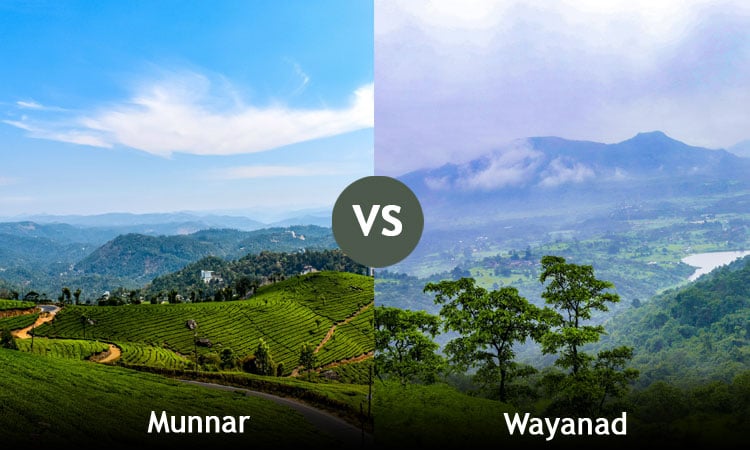
The higher altitude means cooler weather year-round. That’s what I found while sipping chai in Munnar. Be prepared for misty mornings, breezy afternoons, and chilly nights, especially between October and March. It’s definitely the best time to visit Munnar. Plus, it’s perfect for cozy getaways, especially if you’re escaping city heat.
But Wayanad is different! It’s slightly warmer and more humid, but still pleasant. The monsoons bring out its wild side, lush, green, and alive (just as in the movies), but it can get slippery if you’re not into trekking in the rain. That said, the post-monsoon freshness in Wayanad feels like nature just hit refresh.
Munnar Vs Wayanad: Which One Fits Your Budget Better?
I found that Munnar is more upscale overall, especially around popular tea estates. Why do I say that? Here, you’ll find luxury stays and curated experiences great for honeymooners or those looking to splurge a bit. However, a budget stay exists too if you’re willing to stay outside the main tourist hub.
So, if you are someone looking to plan a short and affordable trip to Munnar, you may rely on Munnar Tour Packages.
Wayand offers more budget flexibility(I had to find some spots myself). From forest lodges to affordable homestays, it’s ideal if you want nature without a high price tag. Even luxury options here often come with an eco-tourism twist rather than just a glamorous setting.
Where Will You Sleep Better: In Style or Surrounded by Nature?

Both these places are no short of good staying options!
At Munnar, I stayed at elegant resorts and colonial-era bungalows that offer the royal treatment. Many overlook tea gardens and come with private balconies. I once stayed in a heritage bungalow where the fog literally drifted into the room; it was magical! On my very next trip, I could find an affordable hotel too!
You can find easy accommodation in Wayanad. You can expect treehouses, eco-resorts, and jungle homestays. You’ll wake up to birds, not alarms. Some stays even offer spice plantation tours and bamboo rafting as a part of the package.
Which Is Easier to Reach, Munnar Or Wayanad?
It’s a draw for me because both of these places are well-connected.
Munnar is connected to Kochi (around 4.5 hours by road). The ride is scenic, winding, and popular with tourists. There are also frequent buses and private cabs from major Kerala cities. So if you are here for a longer stay, you may visit the best places in Kerala too!
The nearest airport is Calicut (around 3 hours away). The roads are good, but it’s less touristy, so fewer transport options are available unless you’re driving or hiring a car. On the plus side, it means fewer crowds once you arrive.
Related Post: Wayanad Tour Packages
Top 3 Places to Visit in Munnar
1. Kolukkumalai Tea Estate
At over 7,900 ft, Kolukkumalai Tea Estate is the world’s highest organic tea plantation, and the journey there is half the fun. The jeep ride up is rocky, but watching the sunrise spill over endless tea hills feels almost surreal.
2. Eravikulam National Park
Eravikulam National Park is a protected haven that is home to the endangered Nilgiri Tahr and sprawling grasslands. When the Neelakurinji flowers bloom (every 12 years), the hills turn purple-blue, a once-in-a-lifetime view I’ll never forget.
3. Mattupetty Dam & Echo Point
Calm waters, distant hills, and the simple joy of hearing your voice bounce back at you. I spent an hour here just soaking in the silence, broken only by laughter and echoes.
Top 3 Places to Visit in Wayanad
1. Edakkal Caves
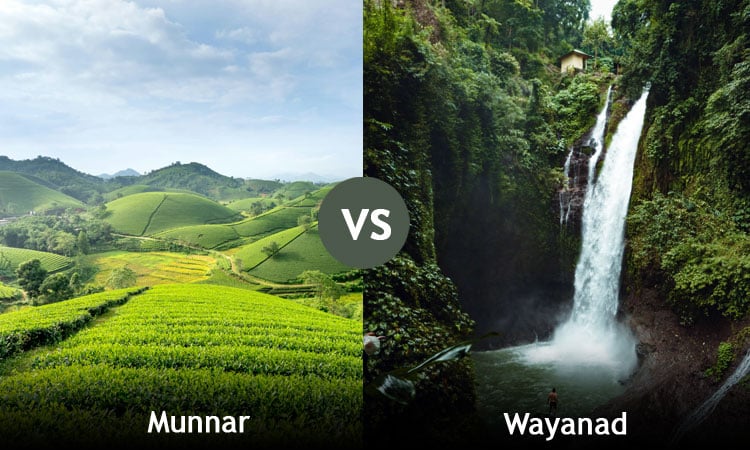
With prehistoric carvings dating back over 6,000 years, this spot blew me away. The uphill climb at Edakkal Caves made me sweat, but the ancient energy inside the caves was absolutely worth it.
2. Meenmutty Waterfalls
Tucked deep in the forest, these multi-tiered falls feel wild and untouched. The trek down is steep, but standing at the base with mist in your face feels like walking into a nature documentary.
3. Banasura Sagar Dam
More than just a dam, it’s a full-blown scenic escape with boating, trails, and picnic spots. I reached Banasura Sagar Dam just before sunset, and the light over the reservoir and hills was something out of a painting.
Which Hill Station Suits Your Travel Personality?
Munnar and Wayanad are both gems, but they shine differently depending on your vibe. Here’s who might enjoy each the most:
Choose Munnar if you’re a…
- Peace Seeker: Munnar is perfect if you crave quiet moments with nature, think misty mornings, long walks through tea gardens, and slow sips of chai.
- Luxury Lover: You’ll love the boutique stays, heritage bungalows, and dreamy resorts overlooking valleys. It’s where I truly unplugged without sacrificing comfort.
- Couple on a Romantic Getaway: Candlelight dinners in the hills, spa sessions, and private stays, Munnar is ideal for romance.
Choose Wayanad if you’re a…
- Adventure Enthusiast: Love getting your shoes muddy? Wayanad’s dense forests, waterfalls, and treks offer more adrenaline and raw nature.
- Culture Curious: Wayanad has a tribal side and ancient caves that whisper stories from the past; it’s perfect for curious minds.
- Offbeat Explorer: If you’re done with the usual hill stations and want something less polished, Wayanad gives you that untouched feeling.
Parting Comments
So, where does this Munnar vs Wayanad comparison end? Well, both these places will lighten your mood!
If you’re in the mood to unwind, sip tea with a view, and stay somewhere peaceful, go to Munnar. It’s the kind of place where you don’t need a packed itinerary.
But if your idea of a great trip involves waterfalls, long drives through forest roads, and a bit of adventure, Wayanad’s your spot.
Honestly, both are amazing; it just depends on what kind of vibe you’re after.
Still can’t decide?
Drop us a message and we’ll help you figure out which vibe suits your trip best.
FAQs
Q: Can I cover both Munnar and Wayanad in one trip?
Technically, yes, but they’re around 9–10 hours apart by road. Unless you have at least 10–12 days, it’s better to enjoy one fully instead of rushing both.
Q: Which is more child-friendly for a family vacation?
Munnar has smoother roads, better medical access, and more structured attractions—great for families with younger kids. Wayanad suits older children who enjoy light trekking and wildlife.
Q: Is Wayanad suitable for solo travellers?
Yes, but it’s best for experienced solo travellers who are okay with remote locations. Munnar has more tourist infrastructure, making it a bit more beginner-friendly.
Q: Where’s the better food scene: Munnar or Wayanad?
Wayanad wins if you’re after authentic Kerala-style meals and local homestays. Munnar has more tourist-oriented cafés and pan-Indian cuisine.
Since 1990Crafting customised journeys
Govt RecognisedMinistry of Tourism accredited
National Tourism AwardTwo-time award winner
100+ ExpertsTravel specialists to assist you
Choose the Kerala hill break that fits your pace
Plan a calm tea-country escape in Munnar, an active forest break in Wayanad, or a longer route with private transfers and suitable stays.