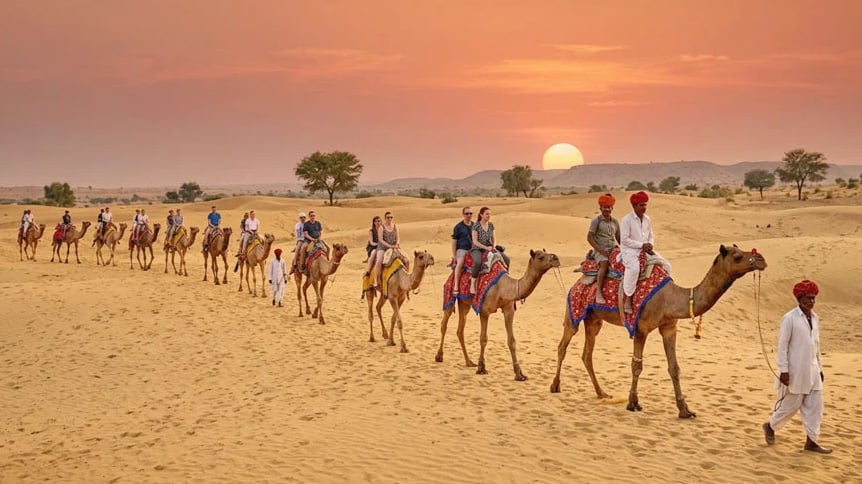

Rajasthan is India’s royal land, captivating travellers with its majestic forts, golden deserts, and vibrant festivals. From the pink-hued streets of Jaipur to the blue city of Jodhpur, this ‘Land of Kings’ brings history alive through its ancient traditions and modern hospitality. This northwestern state has become one of the most popular tourist destinations, attracting over 50 million annual visitors in search of cultural experiences.
The best way to experience Rajasthan is through places that feel a bit distinctive from each other. If you are a first-time visitor, Rajasthan will stun you with its rich heritage, history, architecture, cuisines, crafts and landscapes.
Trying to cover too many cities often turns a trip into a series of long drives and hotel changes. An enjoyable Rajasthan tour package focuses on three or four main destinations, giving you enough time to actually experience each one.
Rajasthan Trip Planning at a Glance
| Planning Point | What Usually Works Best |
|---|---|
| Best time for a first visit | October to March |
| Good duration for one compact circuit | 7 – 8 days |
| Better duration for a classic multi-city journey | 10 – 14 days |
| For desert + wildlife + major cities | Around 2 weeks or longer |
| Best gateway | Jaipur for many first-time routes |
| Major air gateways | Jaipur, Udaipur and Jodhpur |
| Best travel style between cities | Private car with driver for most connected routes; train or flight where it reduces a long transfer |
| Typical pace | 2 – 3 nights in major cities |
| Best suited to | Cultural travellers, couples, families, heritage lovers and first-time India visitors |
| Guide value | High at major forts, palaces and historic city areas |
Where to Go in Rajasthan
Jaipur: The Best Starting Point
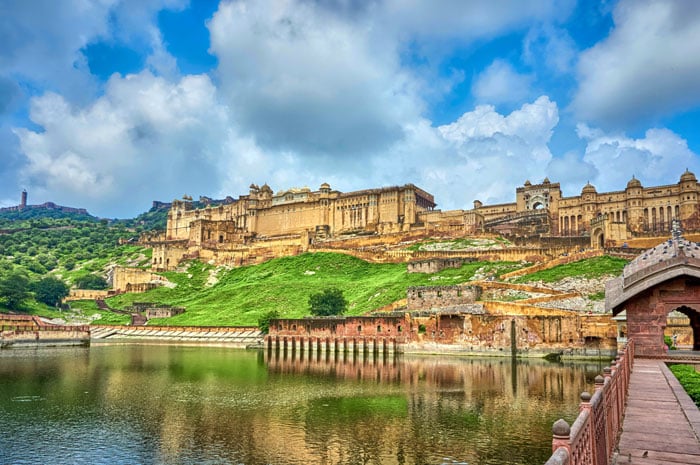
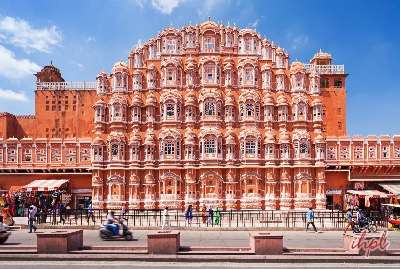
Jaipur is best for experiencing large forts, palaces, marketplaces and its proximity to Delhi and Agra.
Amer Fort, City Palace, Jantar Mantar and the old Pink City give a broad introduction to Rajasthan’s royal and urban heritage. Amer is also one of the six forts included in UNESCO’s Hill Forts of Rajasthan.
Jaipur also works naturally at the beginning of a Golden Triangle journey or as the starting point for Ranthambore, Pushkar or western Rajasthan.
Best for: First-time travellers, architecture, crafts and guided heritage.
Time needed: 2 – 3 nights for first-time visitors
Jodhpur: For Forts and Marwar Culture
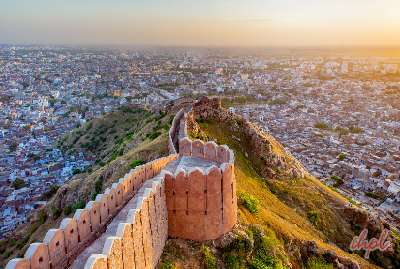
Jodhpur is renowned for the majestic Mehrangarh Fort, which is the main attraction here to experience.
But the experience needs to extend beyond the fort. There are old neighbourhoods, the Clock Tower area, markets and smaller heritage properties that reveal more of the city’s character.
Jodhpur also works well as a route bridge. From here, you can continue west towards Jaisalmer or south towards Ranakpur and Udaipur.
Best for: Fort architecture, old-city walks and heritage stays.
Time needed: 2 nights
Udaipur: For Lakes and Slow Pace
Often called the Venice of the East, Udaipur stands out in Rajasthan owing to its rhythm, slow pace and tranquil lakes.
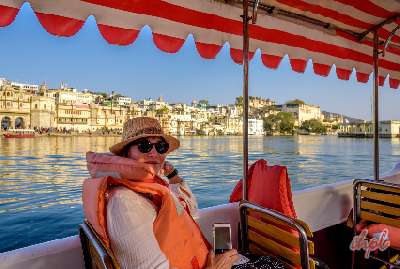
Make some time for leisurely exploration while visiting the City Palace and Lake Pichola; enjoy boat rides, small museums and palace hotels, building some unhurried time into your itinerary.
Best for: Palace stays, couples, families and travellers who want a slow pace.
Time needed: 2 – 3 nights
Jaisalmer: Thar Desert
If you are visiting Rajasthan to explore its golden desert landscapes, Jaisalmer should be on your itinerary.
Jaisalmer is situated at the far west of Rajasthan, so it’s better to plan your journey accordingly. The architecture, the sandstone havelis, and dunes create an unforgettable experience for discerning travellers.
Best for: Desert landscapes, historic havelis and western Rajasthan.
Time needed: 2 – 3 nights
Bikaner: For Forts and Havelis
Bikaner also treats you to a desert experience but adds a dash of colour with rich merchant havelis, stunning artwork and handcrafted goods.
Junagarh Fort is the main landmark. The old city adds merchant havelis, Jain heritage, food traditions and markets.
Bikaner is especially useful on a route through Shekhawati towards Jaisalmer.
Best for: Repeat visitors, architecture and travellers taking a deeper western Rajasthan route.
Time needed: 1 – 2 nights
Bundi: For Paintings & Stepwells
Bundi is a small, picturesque city in Rajasthan that is relatively underrated and quieter than the rest.
You get to explore Garh Palace, Chitrashala, Taragarh Fort, and the town’s stepwells in Bundi, which make it particularly rewarding for travellers interested in art and architecture.
Best for: Art, photography, architecture and slower heritage travel.
Time needed: 1 – 2 nights
Chittorgarh: For Mewar History
If the purpose of your visit is to explore and get some historical context, then Chittorgarh is a great destination.
The towering hill fort comprises historical palaces, temples and structures. A half day is enough to cover major sites, but an overnight stay will give you more if you are a history enthusiast.
It combines naturally with Udaipur rather than needing to become a separate long stay.
Best for: History lovers
Time needed: Half a day – 1 day
Sawai Madhopur & Ranthambore: For Wildlife
Sawai Madhopur is an important base for visiting Ranthambore National Park.
Combining dry forest area, lakes, ancient ruins and stunning wildlife, Ranthambore is a great place for wildlife enthusiasts. The main season usually runs from October to June; however, it is advisable to book your safaris in advance to ensure there are no last-minute issues.
One safari can introduce you to the park, but wildlife sightings are not guaranteed. If your reason of visit is to spot tigers only, then you must try planning for more than one safari.
Best for: Wildlife enthusiasts
Time needed: 2- 3 nights
Bharatpur: For Birdlife
Keoladeo National Park gives Rajasthan a completely different landscape.
This wetland is listed by UNESCO and supports hundreds of bird species. You can explore it on foot, by bike, or by cycle-rickshaw too.
Bharatpur fits naturally between Agra and Jaipur, so plan accordingly.
Best for: Bird lovers, birding enthusiasts
Time needed: 1 night
Pushkar and Ajmer: Religious Culture
Pushkar and Ajmer sit close to each other but offer different experiences.
While Pushkar offers you a sacred lake, ghats and temples, Ajmer is known for Ajmer Sharif Dargah, one of India’s important Sufi pilgrimage sites.
Together, they add religious and cultural depth to a Rajasthan trip.
Best for: People with a spiritual bent of mind
Time needed: 1- 2 nights are enough
Shekhawati: Painted Havelis
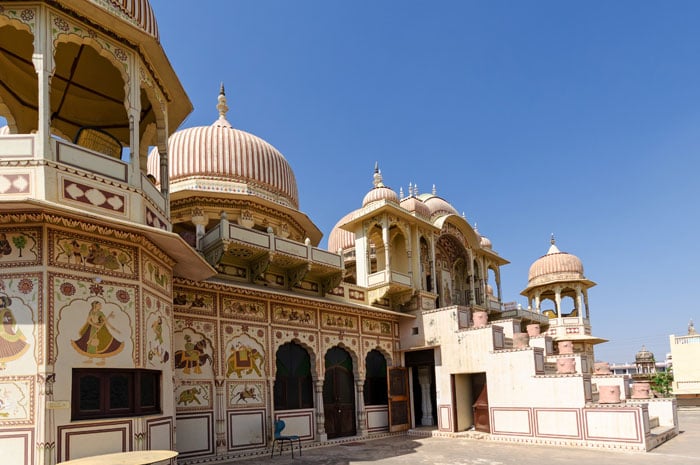
Shekhawati is a region rather than a single city.
Mandawa, Nawalgarh and nearby towns are known for painted merchant havelis. This makes the region particularly interesting for travellers who enjoy frescoes, merchant history and smaller heritage stays.
One well-guided haveli walk is usually more meaningful than rushing between several towns.
Best for: Travellers who love history with art
Time needed: 1 – 2 nights
Mount Abu: For a Different Landscape
Mount Abu is Rajasthan’s hill station and offers a marked change from desert and palace cities.
The Dilwara Jain temples are the strongest cultural reason to visit. The hills and lake environment also provide a different pace.
Mount Abu works better on longer southern Rajasthan routes. It should not take time away from Udaipur simply because it appears on a list of Rajasthan destinations.
Best for: Spiritual travellers
Time needed: 1 – 2 days
Major Attractions Across Rajasthan
The most useful landmarks for understanding Rajasthan include Amer Fort and Jantar Mantar in Jaipur, Mehrangarh Fort in Jodhpur, City Palace in Udaipur, Jaisalmer Fort, Junagarh Fort in Bikaner, Chittorgarh Fort, Kumbhalgarh Fort, the painted palace complex in Bundi and the Dilwara temples at Mount Abu.
Rajasthan’s six UNESCO-listed Hill Forts are at Chittorgarh, Kumbhalgarh, Ranthambore, Gagron, Amer and Jaisalmer. Jaipur’s Jantar Mantar is separately recognised by UNESCO for its historic astronomical instruments.
Things to Do in Rajasthan
| Experience | Where It Works Best | Planning Note |
|---|---|---|
| Guided fort and palace visits | Jaipur, Jodhpur, Udaipur, Chittorgarh | Guided context is worth prioritising at major complexes rather than hiring a guide everywhere |
| Stay in a heritage hotel | Jaipur, Udaipur, Jodhpur, Shekhawati | Check room access, stairs and modern facilities; heritage properties vary widely |
| Experience the Thar Desert | Jaisalmer | Choose the camp and setting carefully rather than booking only by distance from the dunes |
| Wildlife safari | Ranthambore | Book early and allow more than one drive when wildlife is a priority |
| Birding | Bharatpur | Early mornings give more time and a quieter park experience |
| Explore traditional crafts | Jaipur, Bagru, Sanganer and regional craft centres | One good studio visit is more valuable than several compulsory shopping stops |
| Lake and palace time | Udaipur | Leave some unscheduled time rather than turning every lake view into another ticketed visit |
| Old-city walks | Jodhpur, Jaipur, Bikaner, Bundi | Morning or late afternoon usually works better than midday |
How to Reach Rajasthan
By Air
Jaipur is the main city for international air gateway.
Udaipur and Jodhpur are important domestic gateways, while Jaisalmer, Kishangarh near Ajmer and Bikaner also have operational airport facilities. Flight schedules may differ by season and route, so confirm before fixing/booking your itinerary
For international travellers, a Rajasthan trip can also begin through Delhi. Jaipur can then be reached as part of the Golden Triangle before continuing deeper into Rajasthan.
By Train
Rajasthan has strong rail connections with Delhi, Mumbai and other major Indian cities.
Important railway stations include Jaipur, Kota, Bharatpur, Bikaner, Ajmer, Alwar, Udaipur, Abu Road and Jodhpur. Jaipur and Kota are among the main rail hubs identified by Rajasthan Tourism.
By Road
Road travel is central to most Rajasthan itineraries.
Jaipur, Jodhpur, Udaipur, Pushkar, Chittorgarh, Bundi and many smaller heritage towns connect naturally by private vehicle.
A private car with an experienced driver is often the most practical option for a multi-city circuit. It allows hotel-to-hotel travel and makes smaller stops possible without depending on station transfers.
Best Time to Visit Rajasthan
For most first-time, multi-city Rajasthan trips, October to March is the easiest travel period.
The days are usually more comfortable for fort visits, old-city walks and road journeys. Rajasthan Tourism currently identifies October through March as the best time to visit Rajasthan.
October and November
These months work particularly well for heritage circuits.
The intense summer heat has passed, and sightseeing days are easier to manage. It is also a good period for combining cities with desert experiences.
December and January
These are popular months, but Rajasthan is not warm all the time in winter.
Desert areas can become cold after sunset, and early mornings may be surprisingly cool. Pack layers rather than planning only for daytime sunshine.
Christmas and New Year dates also bring heavier demand at sought-after palace and heritage hotels, so early planning matters.
February and March
This period gives a useful balance between comfortable sightseeing and slightly warmer days.
March becomes progressively warmer, especially in western Rajasthan.
July to September
The monsoon changes Rajasthan more than many first-time visitors expect.
Udaipur, Bundi and parts of the Aravalli region become greener. Rajasthan Tourism specifically highlights Bundi and Udaipur as appealing monsoon choices.
This period can suit repeat visitors or travellers who do not need a classic desert-heavy circuit.
April to June
For a first multi-city heritage trip, this is the hardest period.
Daytime temperatures can become very high across the plains and desert. Rajasthan Tourism notes that summer temperatures can rise into the mid-40s Celsius and higher in some areas.
If you must travel at this time, reduce outdoor sightseeing, begin earlier and build longer midday breaks into the schedule.
Food & Culture in Rajasthan
- Rajasthani food and culture are deeply influenced by its heritage and history, desert landscape and bold flavours.
- Dal baati churma is one of Rajasthan’s best-known delicacies. Other regional dishes include ker sangri, gatte ki sabzi, laal maas, safed maas, pyaaz kachori and ghevar. Rajasthan Tourism’s current cuisine guide lists these among the state’s established food traditions.
- Jaipur and Jodhpur are particularly good for snacks and market food. Try local food where it fits naturally into the route. Try and savour the local flavours whenever possible in your journey.
- If you visit heritage hotels, you will often find comfortable portions of regional meals designed for an average person’s palate. Especially for travellers who prefer controlled spice levels or have dietary requirements.
- When shopping in Jaipur, look for blue pottery, jewellery and the block-printing traditions of Sanganer and Bagru. The state is also renowned for colourful Bandhani, Leheriya patterns, carpets, dhurries and regional textile traditions. You can also look out for Jaipur’s Kundan and Meenakari jewellery, Pratapgarh’s Thewa work, Bagru and Sanganer block prints.
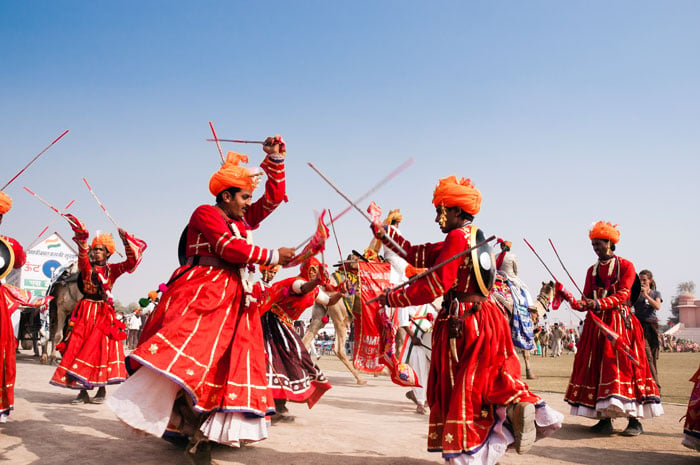
- To get some cultural context, you can take a walk through the merchant havelis and explore artisan workshops, experience folk music or spend some time at a revered religious site.
- Festivals can also change the experience of a destination. If your dates overlap with a major event, expect busier hotels, traffic and public spaces. Plan around the event only when it is genuinely part of what you want from the journey.
Suggested Rajasthan Travel Routes
These are suggested high-level circuits, not day-by-day itineraries.
Classic Rajasthan: 8 – 10 Days
Jaipur → Jodhpur → Udaipur
It combines three different styles of Rajasthan without requiring the journey to stretch all the way into the Thar Desert.
Rajasthan with Jaisalmer: 12 – 14 Days
Jaipur → Jodhpur → Jaisalmer → Udaipur
Jaisalmer adds distance, so the journey feels much better when there is space around the longer transfers rather than cutting nights from Jodhpur or Udaipur.
Western Rajasthan: 10 – 12 Days
Shekhawati → Bikaner → Jaisalmer → Jodhpur
Choose this when merchant havelis and desert Rajasthan matter more than lakes or southern Mewar.
It works particularly well for repeat India visitors or travellers who want to spend less time on the classic Golden Triangle.
Heritage and Wildlife: 8 – 10 Days
Jaipur → Ranthambore → Bundi → Udaipur
This route combines royal heritage with wildlife and a quieter town.
It also gives more variety than spending the entire trip moving between major palace cities.
Golden Triangle with Rajasthan: 10 – 14 Days
Delhi → Agra → Jaipur → Jodhpur → Udaipur
This is a strong first-India route for international travellers.
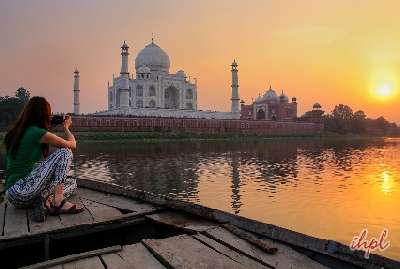
Delhi and Agra sit outside Rajasthan, but the sequence creates an easy transition from the Taj Mahal and Golden Triangle into a deeper Rajasthan journey.
Mewar-Focused Route: 6 – 8 Days
Udaipur → Chittorgarh → Kumbhalgarh / Ranakpur
This suits travellers who prefer one part of Rajasthan in depth rather than covering long distances across the state.
Practical Travel Tips
- Keep two or three nights in major cities. Jaipur, Jodhpur, Udaipur and Jaisalmer all suffer when reduced to a one-night stop.
- Plan long drives before booking hotels. A route that looks simple on a map can still involve several tiring road sectors.
- Use guides selectively. A strong guide adds real value at places such as Amer, Mehrangarh and Chittorgarh. You do not need guided sightseeing every hour of the trip.
- Book wildlife early. Ranthambore is popular, and safari availability is limited. Rajasthan Tourism advises reservations.
- Check heritage-hotel accessibility. Old palaces and havelis may have stairs, uneven floors or rooms spread across separate wings. This matters for seniors and multi-generational families.
- Carry layers in winter. Desert nights and early safari mornings can be much colder than midday temperatures suggest.
- Dress with religious sites in mind. Modest clothing is useful, and individual temples or shrines may have their own footwear, photography or access rules.
- Leave some unscheduled time. A Rajasthan journey feels better when every evening is not another formal sightseeing session.
- Buy significant craft pieces early enough in the trip. This gives you time to compare quality and arrange professional packing or shipping if required.
Continue Planning Your Rajasthan Journey
Rajasthan does not need to be covered in one trip.
For a first visit, choose a few strong contrasts. Jaipur can provide the royal and architectural introduction. Jodhpur brings Marwar. Udaipur adds lakes and a slower pace. Jaisalmer, Ranthambore or Bundi can then be added when they match your interests and the time available.
The strongest Rajasthan journey is rarely the one with the most stops. It is the one where the route makes sense, and each place has enough time to feel different from the last.