
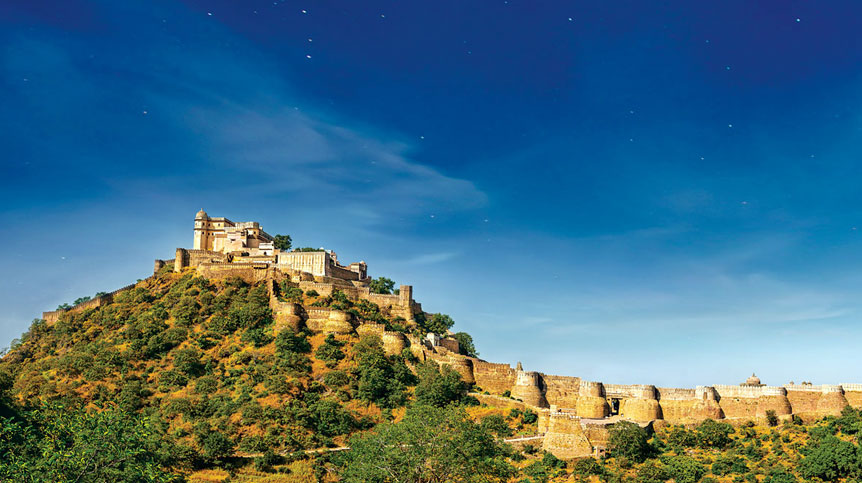

Kumbhalgarh Fort fits into a Udaipur-region itinerary as a full-scale fort excursion, adding a high-altitude stronghold experience beyond the city’s lakes and palaces.
Travellers approach Kumbhalgarh Fort as a half- or full-day outing from Udaipur, usually routed via Ranakpur or as a standalone drive into the Aravallis. The focus here shifts from palace architecture to defensive scale – the massive fort walls, layered gateways, elevated viewpoints, and long stretches of uphill movement.
Unlike Jaipur’s urban forts or Udaipur’s palace complexes, Kumbhalgarh feels isolated, elevated, and defensive in character, surrounded by forested Aravalli ridges rather than city movement. The fort is also one of the UNESCO-listed Hill Forts of Rajasthan and is closely associated with the military history of the Mewar kingdom.
This guide explains who will value Kumbhalgarh Fort the most, how to plan the visit efficiently—including opting for a dedicated 2 Days Kumbhalgarh Tour Package—and how to fit it naturally into wider Udaipur–Rajasthan itineraries.
Traveller Perspective – Who Will Appreciate Kumbhalgarh Fort The Most?
Military Architecture Lovers
Kumbhalgarh has a 36-kilometre perimeter wall, the second-longest continuous wall in the world. You can examine the massive masonry and the strategic positioning of the seven fortified gateways. The fort provides one of Rajasthan’s clearest examples of large-scale hill-fort defensive planning and mountain warfare architecture.
Why Kumbhalgarh Fort Matters Historically
Built by Rana Kumbha in the 15th century, Kumbhalgarh became one of the most strategically important strongholds of the Mewar kingdom. It is widely known as the birthplace of Maharana Pratap and formed part of the larger defensive network that protected Mewar during repeated conflicts with the Mughals. In 2013, UNESCO included Kumbhalgarh among the Hill Forts of Rajasthan World Heritage grouping.
Historical references identify Mandan, one of medieval Rajasthan’s best-known architects, as the chief architect associated with Kumbhalgarh’s construction.
Legend and Folklore Enthusiasts
The fort is a central site for stories of royal sacrifice and wartime grit. You can visit the specific shrine dedicated to the voluntary human sacrifice that legend says was required to complete the fort’s construction. The site is also popular as the birthplace of Maharana Pratap, serving as a physical backdrop to the sagas of Mewar resistance.
The atmosphere becomes especially powerful near the upper fort sections, where the scale and isolation of the Aravalli setting reinforce the stories of siege, sacrifice, and resistance associated with Mewar history.
Trekking and Adventure Travellers
The steep climb to the Badal Mahal at the highest point provides a rigorous physical challenge. You can explore the rugged perimeter walks along the high-altitude ramparts or venture onto the forest trails of the Kumbhalgarh Wildlife Sanctuary. Kumbhalgarh works best for travellers comfortable with steep inclines, uneven stone surfaces, and long walking routes across varied terrain.
Spiritual and Temple Explorers
Kumbhalgarh fort houses a massive cluster of over 360 ancient temples, with the majority belonging to the Jain faith. The Neelkanth Mahadev Temple, featuring a unique 5-foot stone deity, is the most prominent Hindu site.
The Jain temple cluster inside the fort adds a quieter spiritual layer that contrasts sharply with the fort’s military architecture.
Nature and Wildlife Observers
Because the fort is situated within a protected sanctuary, it provides a chance to see local flora and fauna in a historical setting. You can often spot grey junglefowl, peacocks, and occasionally antelopes from the high ramparts. It is an apt tourist destination to visit for those who want to combine a historical trip with the sights and sounds of the Aravalli forest ecosystem.
Wildlife sightings are possible but not guaranteed. Most visitors experience the sanctuary more as a dramatic forested backdrop to the fort rather than as a dedicated safari zone.
Light and Sound Show Spectators
The fort serves as a great evening venue for narrated history. Every evening, the entire structure is illuminated, and a Light and Sound Show explains the history of the Mewar kings and the fort’s construction. The illuminated fort walls against the dark Aravalli backdrop create a dramatically different atmosphere from the daytime fort experience.
How to Experience Kumbhalgarh Fort?
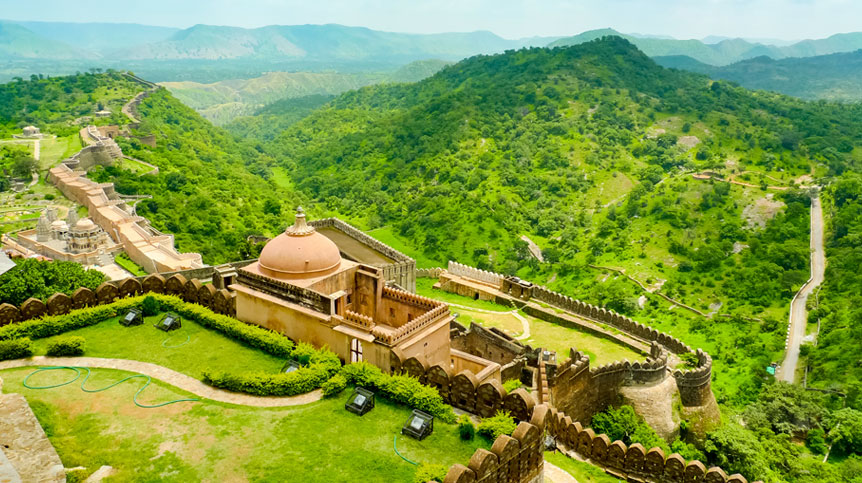
A slower uphill route works best because the fort gradually reveals its scale rather than presenting it all at once.
The fort walls stretch roughly 36 kilometres across the hills and are often compared with some of the world’s largest defensive wall systems.
Start at Ram Pol and move gradually uphill through the layered gateway system instead of rushing directly toward Badal Mahal.
Pause along the wider wall sections where the fort curves across the Aravalli ridges — this is where the defensive scale becomes easiest to understand.
As you move higher, the atmosphere shifts from military architecture into quieter palace and temple zones.
Spend time around the Neelkanth Mahadev Temple and smaller temple clusters to experience the fort beyond its battlefield identity.
Reach Badal Mahal in the late afternoon if possible, when softer light improves visibility across the surrounding hills.
Descend slowly because the return route reveals architectural details and viewing angles often missed during the climb upward.
Where Kumbhalgarh Fort Fits in Your Wider Udaipur Itinerary?
You can position Kumbhalgarh Fort into your Rajasthan circuit at these junctions –
As a strategic overnight or extended stop between Udaipur and Jodhpur, especially for travellers wanting a deeper Aravalli-region experience rather than a direct highway transfer.
Combined with a visit to the Ranakpur Jain Temples, as both are located in the Aravalli range and share a similar travel route.
As a dedicated full-day trip from Udaipur, allowing enough time for both the steep climb to the palace and the temple circuit below.
In the late afternoon, to ensure you are present for the evening illumination and history show.
Combined with nearby villages, sanctuary landscapes, or heritage stays for slower Mewar-region travel beyond standard Rajasthan circuits.
Alongside Kumbhalgarh Fort, many other attractions wait for you in Udaipur. Use this Udaipur Travel Guide to draft a smooth and fulfilling itinerary.
Best Time To Visit Kumbhalgarh Fort
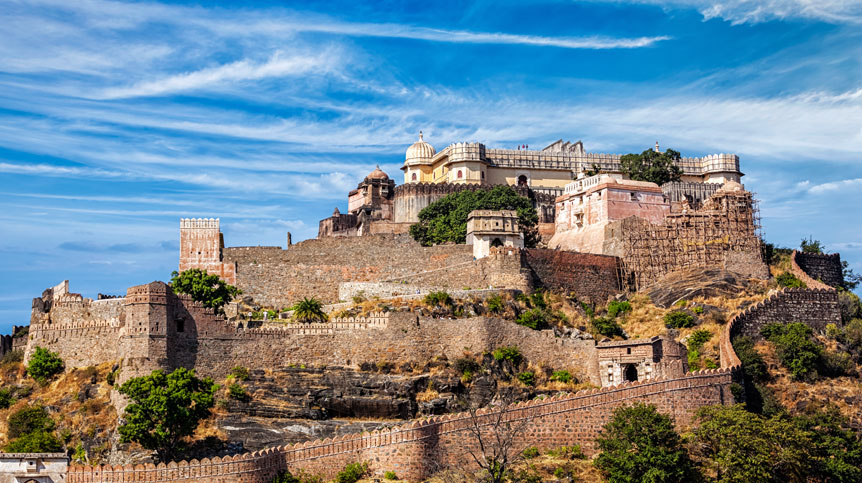
The best time to visit Kumbhalgarh Fort depends on how you are including it into your Udaipur itinerary, as a standalone attraction that you dedicate an entire day to, or a quick stop en route to Udaipur to Jodhpur.
October to March (10°C to 27°C) – Winter
This period lets you walk across the fort’s large layout at a steady pace, including the long wall stretches and multiple gates. Clear weather also improves views of the surrounding hills, making it easier to take in the full scale of the fort.
Winter mornings also provide the clearest visibility across the Aravalli ridges and the most comfortable conditions for longer wall walks.
April to June (28°C to 42°C) – Summer
Visits work best when planned around early hours, with a focus on key sections rather than covering the entire fort. Open areas and long walking routes feel more demanding, most travellers prefer limiting exploration to the main gateways, palace areas, and key viewpoints.
July to September (22°C to 30°C) – Monsoon
Suitable if you want to see the fort with greener surroundings and fewer visitors. Movement across the fort depends on rain breaks, but the changing clouds and mist add a different visual character to the experience.
The drifting mist and greener hill slopes create a softer, more atmospheric version of the fort compared with the dry winter landscape.
You can make Udaipur one of the many stops on a wider Rajasthan itinerary. Read this Rajasthan tour guide to know how to plan your trip to your liking.
Quick Planning Snapshot
Time to Spend: 2 to 3 hours to walk the fort walls, gateways, and main palace sections.
Best time of day: Early morning or late afternoon for better light across the fort walls and surrounding hills.
Best Months to Visit: October to February
Best for: History enthusiasts, fort architecture lovers, and those interested in expansive defensive structures.
Skip if: You prefer compact urban attractions or are uncomfortable with steep climbs, uneven walking surfaces, and long fort circuits.
UNESCO Status: Part of the UNESCO-listed Hill Forts of Rajasthan group.
Entry & Access Information
Fort opening hours generally operate from morning to early evening.
Evening light-and-sound shows operate after sunset, with timing varying seasonally.
Standard ASI monument entry fees apply for Indian and foreign visitors.
Separate charges may apply for the light-and-sound show and professional video equipment.
Local guides are available near the main entrance and are especially useful for understanding the fort’s defensive layout and hidden sections.
How much time should I spend at Kumbhalgarh Fort?
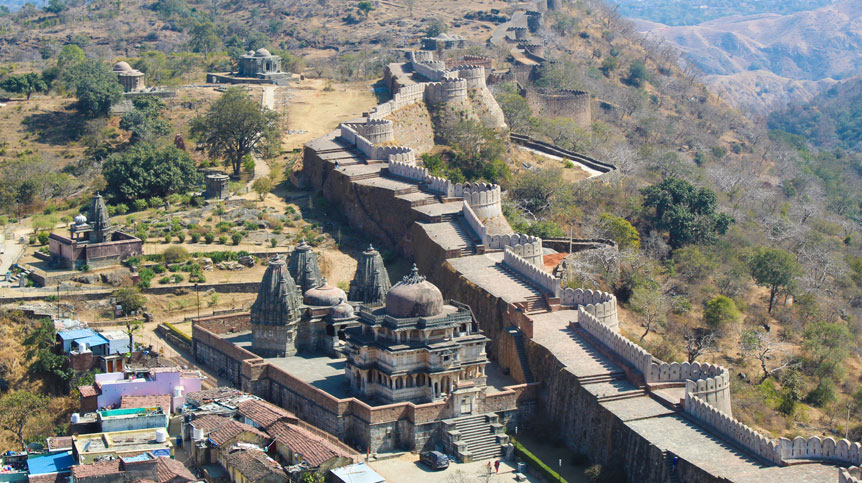
Set aside 2 to 3 hours to explore the main gateways, Badal Mahal, temples, and a section of the fort wall. Add more time if you plan to walk longer stretches or stay for the evening light and sound show.
How crowded does Kumbhalgarh Fort get?
November to February: High visitor numbers, especially during weekends
October and March: Balanced flow with comfortable movement
April to September: Noticeably quieter, except holidays
Peak hours: Late morning to mid-afternoon
Less crowded areas: Upper wall sections, smaller temples, and extended pathways
The upper ramparts and longer wall sections remain noticeably quieter than the palace areas even during peak season.
Do you need to hire a guide?
A guide is not essential, but it significantly improves the experience because Kumbhalgarh’s scale, layered gateways, hidden temple zones, and defensive planning are difficult to fully understand independently. Travellers particularly interested in military history or Mewar politics benefit the most from guided exploration.


