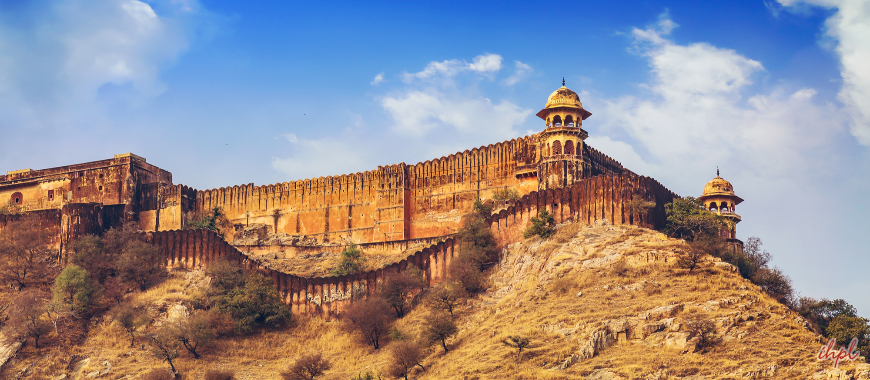

Jaigarh Fort is best experienced as part of a Jaipur or wider Rajasthan heritage journey, where hilltop forts reveal the strategic depth behind the region’s royal architecture. Positioned above Amber Fort, it offers a contrasting experience focused on military design, expansive ramparts, and panoramic views across the Aravalli landscape.
Unlike palace-focused sites, Jaigarh Fort shifts the experience toward function and defence, making it a valuable addition for travellers seeking a more complete understanding of Jaipur’s fort network.
Most travellers include Jaigarh Fort to complement a trip to Amber Fort, using the higher elevation to gain a complete perspective of the valley’s defensive grid. It serves as a less crowded alternative for those who prefer to explore at their own speed, away from the denser crowds found in the city centre.
Jaigarh Fort plays an important role in Jaipur itineraries by adding a military and structural layer that complements the architectural and aesthetic experience of Amber Fort.
How to Experience Jaigarh Fort?
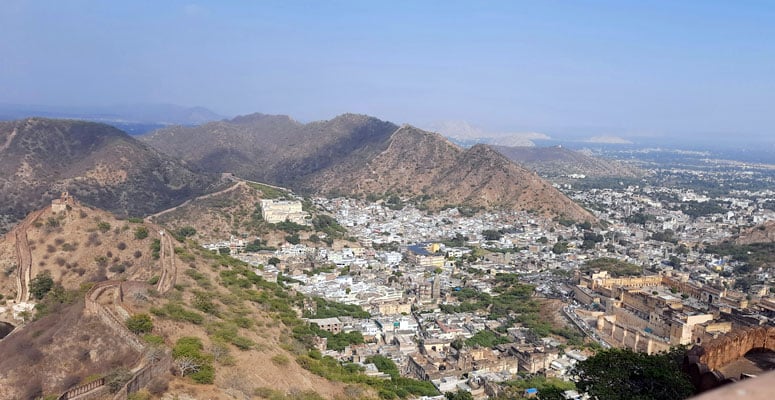
A simple route helps you take in the fort’s scale, views, and military design without feeling rushed:
Enter through the main gate and walk along the ramparts to get your first wide view of the Aravalli hills
Head straight to Jaivana Cannon, noticing the massive courtyard and its defensive layout
Spend a moment around the cannon platform, where the height and open views show why this spot was strategic
Move toward the water reservoirs and underground tanks, understanding how the fort sustained long sieges
Walk through the armoury and storage sections to get a sense of its military purpose rather than royal luxury
End at the outer walls or watchtowers, where you can look down toward Amer Fort and the surrounding landscape
This flow lets you experience Jaigarh as a function-driven military stronghold, not just a viewpoint stop.
Traveller Insight – Who Will Enjoy Their Time At Jaigarh Fort?
History and Heritage Enthusiasts
This fort appeals to travellers interested in authentic military structures and preserved defensive architecture. It houses the Jaivana Cannon, the world’s largest wheeled cannon, which has remained in its 1720 firing position for over three centuries. Travellers can examine the authentic foundry where these weapons were cast and walk through an armoury filled with 18th-century Rajput swords and shields.
To plan your route more effectively across forts, palaces, and hilltop viewpoints, explore the Jaipur travel guide to structure a well-paced itinerary.
Active and Solo Travellers
Travellers who prefer physical exploration over stationary tours will value the underground tunnel system. These dark, reinforced passages were built for secret royal escapes and provide a rugged path for those moving between the palace and the defensive towers. The fort also features a 5 kms long perimeter wall, offering a long-distance hiking route.
Landscape Photographers
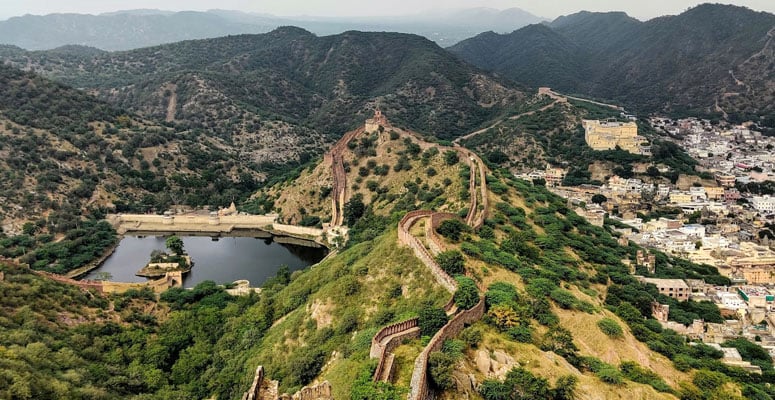
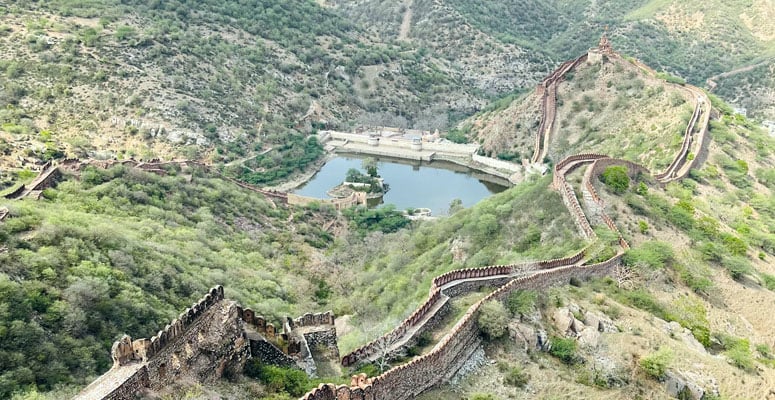
This site is ideal for those seeking the highest vantage point in the region, known as the Hill of Eagles. From these ramparts, travellers can capture bird’s-eye shots of the entire Amber Fort complex and Maota Lake below. The high elevation provides a clear perspective of the winding defensive walls as they stretch across the Aravalli range.
Families with Older Children
The fort offers a more adventurous experience than a typical museum, appealing to families who enjoy outdoor discovery. Children and teenagers often find interest in the mechanical boring tools used to drill heavy gun barrels and the massive scale of the water storage tanks.
Nature and Wildlife Lovers
People interested in local ecosystems will find the fort’s location on the Cheel ka Teela to be a prime spot for observing birds. Because the site is less crowded and more elevated, it is common to see Black Kites and Egyptian Vultures circling the cliffs. The surrounding scrub forest is also home to Grey Langurs and indigenous desert vegetation that thrives along the ancient stone walls.
Where Jaigarh Fort Fits in Your Jaipur Itinerary
Jaigarh Fort fits into your plan at these points:
Scheduled after Amber Fort, as it sits directly above and can be reached in continuation without returning to the city
Combined with Nahargarh Fort for a hill-fort circuit that focuses on views and defensive architecture rather than palace interiors
Included when your itinerary prioritises military structures, ramparts, and artillery over palace-based experiences
Jaigarh Fort works well as a secondary fort stop, adding depth to your Jaipur plan without requiring a separate day of exploration.
Best Time to Visit Jaigarh Fort
October to March (12°C to 28°C) – Winter
Jaigarh Fort becomes more accessible during the cold days, especially when spending time at cannon points, extended wall sections, and areas like the Jaivana cannon platform and water storage systems.
April to June (30°C to 45°C) – Summer
The fort has limited interior spaces, so most of the visit happens in open areas with little cover. Time spent at key points like the cannon platforms and outer walls becomes shorter due to the blazing sun, and most people limit their visit to core sections rather than covering the full layout.
July to September (25°C to 35°C) – Monsoon
Rainwater collects in visible sections of the fort’s storage system, including large underground tanks and open channels, making these features easier to identify during the visit. Low cloud cover and passing mist can partially obscure distant views of Amber Fort below.
Quick Planning Snapshot
Ideal duration: 1 to 1.5 hours for covering the cannon platforms, ramparts, and main internal sections.
Best time of day: Late morning or directly after completing your Amber Fort visit.
Best for: History-focused travellers, those interested in military structures, and wide-view photographers.
Combine with: Amber Fort, Nahargarh Fort, or as part of a connected hill-fort route.
It is best treated as a secondary but high-value stop within a Jaipur fort circuit rather than a standalone visit.
Entry Information
Timings: 9:00 AM to 4:30 PM
Entry Fee: ₹150 for Indians; ₹200 for Foreigners
Camera Charges: ₹50 for still cameras; ₹200 for video cameras
Guide Charges: Approved guides typically charge between ₹300 and ₹500. Travellers should confirm the rate at the main entrance gate near the cannon foundry.
How much time should I spend at Jaigarh Fort?
Plan for about 60 to 90 minutes to cover the central courtyard, Jaivana cannon area, armoury displays, and selected stretches of the fort walls. Extend your time if you want to walk deeper into the ramparts or examine the water reservoirs and channels more closely.
What is the tourist crowd like?
November to February: Regular inflow, mostly concentrated near the main entry and cannon sections
October and March: Balanced distribution, with space across most parts of the fort
April to September: Fewer overall visitors, with short spikes on weekends
Peak hours: Late morning arrivals, especially from travellers coming up after the Amber Fort
Less crowded areas: Distant ramparts, storage sections, and far-end pathways
Do you need to hire a guide?
You do not need a guide at Jaigarh Fort. The site focuses on large, clearly defined spaces such as courtyards, ramparts, and cannon platforms, where the purpose of each section is visually evident. Basic signage and the fort’s straightforward layout provide enough context for an unguided visit.
Explore Jaipur & Rajasthan Heritage Journeys
Jaigarh Fort connects directly with Amber Fort above the same ridge, making it a logical continuation without returning to the city. It also fits into a hill-fort circuit with Nahargarh before heading back toward Jaipur.
Jaigarh Fort is best experienced as a strategic, viewpoint-rich extension of a thoughtfully planned Jaipur fort itinerary rather than as a standalone attraction.