
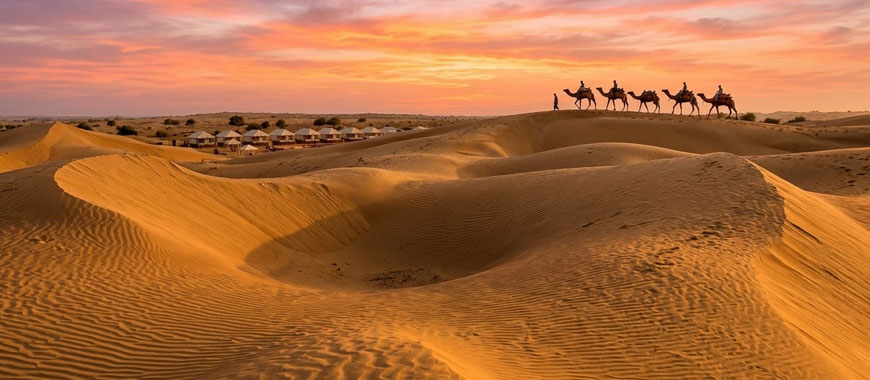

The sand dunes in Jaisalmer are best experienced as part of a Jaisalmer or wider Rajasthan desert journey, where open landscapes balance the intensity of forts and heritage sites. Positioned between the city’s architectural highlights and evening desert experiences, they offer a natural transition that slows the pace and expands the visual experience.
Unlike monument-led stops, the dunes introduce a landscape-driven layer to the itinerary, making them one of the few experiences in Rajasthan where space, light, and silence become the primary focus.
Within most Jaisalmer itineraries, the dunes sit comfortably after the main city highlights and before evening cultural sessions. They reflect traditional Thar desert planning principles, where open spaces, gradual contours and horizon-facing paths create visual ease. Compared with the busier city monuments, the dunes offer a quieter, more atmospheric landscape. This contrast proves especially valuable for travellers who prefer aesthetically driven stops, wide visual fields and slower-paced experiences.
For planners comparing Sam, Khuri and nearby dune belts, the sandscapes provide diverse yet harmonious options that suit different mood preferences and routing needs.
To plan your route more effectively across forts, havelis, and desert experiences, explore the Jaisalmer Travel Guide to structure a well-paced itinerary.
Why Sand Dunes in Jaisalmer Appeal to Jaisalmer Planners
The dunes hold significance not only for their natural beauty but also for their role in shaping the region’s cultural identity. Their location west and southwest of Jaisalmer city makes them practical additions to half-day or sunset routes. As indigenous communities settled along the trade corridors passing through the Thar desert, these dune belts became essential markers of landscape, orientation and movement. Today, they help planners structure itineraries with an ideal rhythm that moves from fort interiors to open desert stretches.
Planners appreciate the dunes because they offer:
- quiet, atmospheric heritage spaces
- slow, scenic walking paths
- distinct desert landscape style
- easy to reach routing advantage from Jaisalmer
- scenic or photographic corners across dunes and ridges
Geographically, Sam lies west of the city and suits travellers wanting classic, iconic desert visuals. Khuri, located to the southwest, offers a softer ambience and more secluded frames. Lodhruva, the closest dune area, works well when planners want minimal travel time and a short, scenic pause without committing to a full desert excursion.
How to Experience Sand Dunes in Jaisalmer
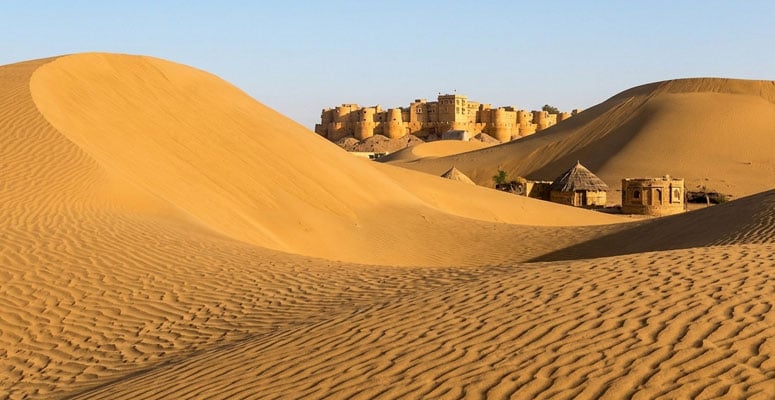
A structured flow helps travellers move through the dunes without backtracking while maintaining a relaxed pace:
- Begin at the primary dune access point:
Whether at Sam, Khuri, or the small dune stretches near Lodhruva. - Walk towards the gentler ridges:
That offer broad horizon views and good orientation. - Stroll across the open dune corridors:
Where the sand forms natural pathways shaped by wind movement. - Pause at quiet corners:
To watch the light shift across the landscape and observe the texture of the dunes. - Conclude at a slightly elevated ridge:
That provides an ideal viewpoint for sunset or soft evening colours.
This structured approach ensures that travellers enjoy the desert without rushing, allowing each area’s distinct environment to unfold naturally. Sam’s ridges offer higher dunes, Khuri’s curves feel quieter and more organic, and Lodhruva’s compact dunes give a brief but pleasant experience.
Traveller Insight
1. Heritage and Architecture Travellers
They value the dunes for their connection to traditional desert settlement patterns. The smooth contours, natural geometry and horizon symmetry mirror the visual principles used in Jaisalmer’s historical architecture.
2. Slow Paced and Atmospheric Explorers
The dunes offer a quiet, immersive atmosphere shaped by open space and minimal visual distraction.
3. Planners Sequencing the Day Thoughtfully
The dunes fit neatly between the city’s architectural sites and night activities. They create a comfortable afternoon or early evening transition point that prevents itinerary fatigue.
4. Families and Casual Travellers
Open spaces, safe walking areas and accessible dune edges make this desert environment easy for families. Many camps near Sam and Khuri also offer seating, small play areas and relaxed cultural performances.
5. Photographers
The dunes provide sweeping angles, shadow patterns and golden hour lighting for perfect shots.
Best Time to Visit Sand Dunes in Jaisalmer
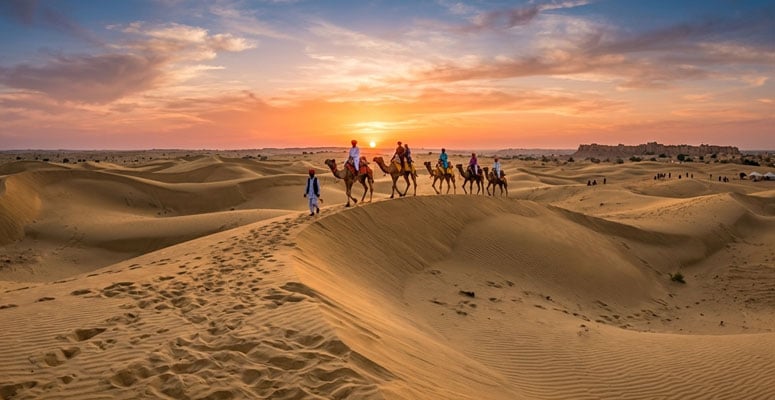
- October to February (Winter)
This is the most pleasant period for walking and combining the dunes with city attractions. Cooler temperatures allow longer stays and comfortable sunset experiences. - March to June (Summer)
Early morning or late evening visits work best at this time. The dunes act as a low-effort stop where travellers can enjoy the desert without spending much time under the sun. - July to September (Monsoon)
The dunes remain suitable for quiet visits, though movement may be slower due to potential rain. Occasional cloud cover adds dramatic sky views and comfortable walking conditions.
Key Highlights Inside Sand Dunes in Jaisalmer
1. Natural Desert Formations
The dunes create organic waves and curves formed by centuries of wind patterns. Each dune belt carries its own character, from the tall ridges near Sam to the gentle slopes near Khuri and the smaller formations of Lodhruva.
2. Symmetrical Pathways and Ridges
The natural alignment of dune lines offers intuitive walking paths. These allow planners to guide travellers along scenic routes without steep climbs or difficult navigation.
3. Light and Reflection Corners
Sunrise and sunset create colour shifts across the sand. Travellers often enjoy reflective surfaces where the sand appears to glow under low light, ideal for photography.
4. Nature Backed Setting
Open sky, distant desert vegetation and occasional bird sightings add depth to the environment. Khuri, in particular, feels more natural with relatively fewer visitors.
5. Evening Ambience from 6 to 8 PM
Cooler temperatures, soft lighting and cultural performances near Sam create a pleasant evening atmosphere. Khuri provides a quieter version of the same experience.
Quick Planning Snapshot
- Ideal duration: It is best treated as a short, experience-led stop within a Jaisalmer itinerary rather than a standalone visit.
- Best time of day: early morning or 6 to 8 PM
- Best for: slow travellers, couples, photographers
- Combine with: Jaisalmer Fort, Bada Bagh, Kuldhara, Lodhruva Jain Temple
- Avoid if: wanting only large monument sightseeing
Practical Planning Advice
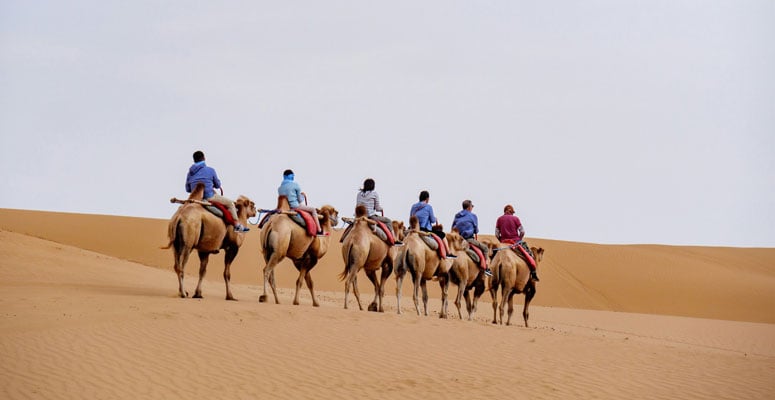
Best Time to Visit (Experience Based)
Post monsoon provides cleaner sand lines and clear skies. Winter is the ideal season for extended visits. Summer requires timing visits during cooler hours.
Ideal Duration
A standard visit takes about an hour, though photographers often extend their stay to capture the changing light.
Crowd Patterns
Morning hours are quiet. Afternoons can be hot. Evenings draw a gentle crowd flow, especially near Sam.
Essential Visitor Information
Timings
Open throughout the day.
Location
Dune belts lie west and southwest of Jaisalmer, with Sam about 45 km away, Khuri about 40 km away and Lodhruva about 6 km away.
How to Reach
- By Air: Jodhpur Airport is the nearest major airport.
- By Train: Jaisalmer Railway Station connects smoothly with major cities.
- By Road: Jaisalmer is well connected by highways and local transport.
Nearby Attractions
- Jaisalmer Fort, 1 km from the city centre
- Patwon ki Haveli, 1.5 km
- Bada Bagh, 6 km
- Lodhruva Jain Temple, 6 km
These combine well with a half-day or sunset circuit.
Explore Jaisalmer & Rajasthan Desert Journeys
The dunes in Jaisalmer are best experienced as a sunset-driven landscape stop within a thoughtfully planned desert itinerary rather than as a standalone attraction.


