
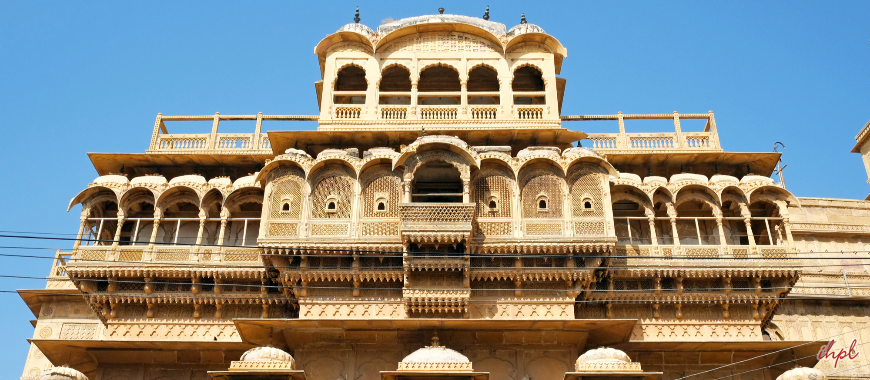

Nathmalji Ki Haveli is best experienced as part of a walk through Jaisalmer’s old city within a Jaisalmer or wider Rajasthan itinerary, where carved havelis, narrow lanes, and views of the fort come together into a rich heritage setting.
While Nathmalji Ki Haveli is not a large-scale monument, it plays an important role in Jaisalmer’s travel experience by shifting the focus from grand forts to fine architectural detail, making it a key stop for travellers who want to understand the craftsmanship behind the city’s historic streets.
Rather than a standalone attraction, it fits naturally into a haveli-focused trail that includes nearby landmarks and extends outward from Jaisalmer Fort.
This haveli is best included as a short but detail-rich stop, adding depth to a fort-and-old-city itinerary. Its uniqueness lies less in scale and more in craftsmanship, especially for travellers who want to slow down and observe the intricacies of Jaisalmer’s stone architecture rather than major sights.
This experience is particularly suited to architecture enthusiasts, heritage-focused travellers, and those interested in craft detail, especially as a part of a broader Rajasthan journey.
To structure your visit more effectively across the old city, fort, and nearby attractions, explore the Jaisalmer Travel Guide for route planning and suggested walking circuits.
How to Experience Nathmalji Ki Haveli

How to Plan Your Visit Flow at Nathmalji Ki Haveli?
Start your visit in the morning, ideally between 8 and 10 AM, when the old city lanes are quieter, and the carved façade can be viewed without crowding. The haveli is located near other heritage structures, making it easy to reach on foot as part of a continuous walk.
Focus on the carved jharokhas, interior paintings, and decorative motifs. Unlike larger palaces, the experience here is observational, so the pace depends entirely on how closely you engage with the details.
This sequence works best as a 30–45 minute stop, either before or after visiting nearby havelis such as Patwon Ki Haveli, forming a cohesive old-city exploration block.
If you’re exploring Jaisalmer within a broader Rajasthan journey, you can explore Jaisalmer tour packages to see how old-city haveli walks are combined with forts, desert landscapes, and multi-city journeys.
How Nathmalji Ki Haveli Fits into a Jaisalmer Itinerary
Nathmalji Ki Haveli is not a standalone highlight like Jaisalmer Fort or the desert experiences. Instead, it fits into the city as a smaller architectural stop that enriches the old-town exploration. Most travellers experience it in the following ways:
As part of a heritage walking route through the old city: It blends naturally with nearby havelis, where each structure adds a different layer of craftsmanship and design within a compact walking zone.
Alongside a Jaisalmer Fort visit: After exploring the fort, this haveli offers a closer look at everyday residential architecture and the finer details of sandstone carving at street level.
Within a broader Rajasthan travel circuit: On longer itineraries, it represents the quieter side of Jaisalmer, shifting focus from grand monuments to intricate, lived-in heritage spaces.
Who Nathmalji Ki Haveli Is For (And Who It’s Not)
Best suited for:
Travellers who enjoy exploring local neighbourhood heritage on foot.
Those who appreciate fine architectural detailing over large-scale monuments.
Visitors interested in everyday urban history and merchant-era design.
Photographers looking for character-rich street-level compositions.
May not suit if:
You are prioritising only headline attractions like forts and desert experiences.
You prefer fully immersive palace interiors with extensive walkthroughs.
You are short on time and covering Jaisalmer in a single rushed visit.
You are expecting a structured, museum-style interpretation of the site.
Practical Experience Advice
How to Avoid Crowds at Nathmalji Ki Haveli
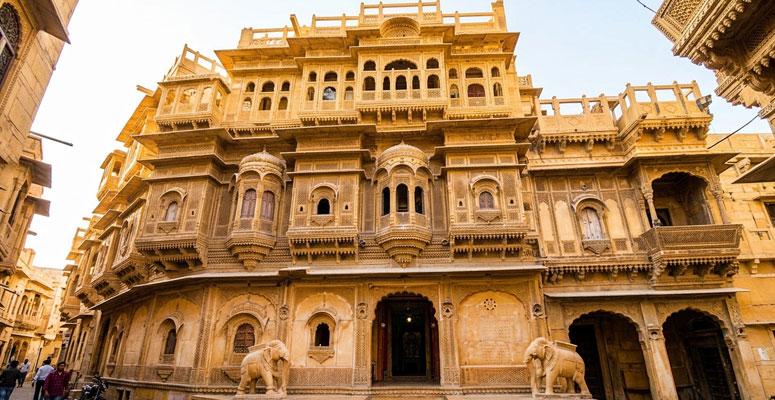
Visit early in the morning, ideally between 8 and 10 AM, when the old city lanes are still open for easy movement, and you can walk in without getting caught in narrow bottlenecks caused by tour groups.
Try to approach and exit via the wider connecting lanes rather than cutting through the busiest market stretch near the fort side, as this helps avoid slow-moving foot traffic and guided group clusters.
Weekdays are more manageable than weekends, when haveli circuits get congested, and movement in and out becomes slower due to continuous group arrival.
Best Time to Visit Nathmalji Ki Haveli
This place is best visited when you can comfortably navigate Jaisalmer’s old city before the lanes become busy with guided walking groups and local market activity builds up around the fort approach.
October to February (Winter – Best Overall Season)
October, November, December, January, and February offer the most comfortable weather for exploring the old city on foot. This is the best time to include this Haveli within a relaxed old city walking circuit where comfortable weather allows for slower exploration and detailed observation of architecture. This period also overlaps with festivals like Desert Festival, Diwali, and Makar Sankranti, making the old city more vibrant and active.
March to June (Summer – Early Morning Window)
March starts to get warm, while April to June brings strong heat that affects walking conditions in narrow sandstone lanes. Visits should be limited to early morning hours when movement is easier, and the façade can be viewed without discomfort.
July to September (Monsoon – Flexible but Less Predictable)
July, August, and September see fewer tourists, which keeps the old city relatively open. However, occasional rain and humidity can make walking routes slower, so visits work best when kept flexible within a broader sightseeing plan.
Should You Explore Nathmalji Ki Haveli on Your Own or With a Guide?
Nathmalji Ki Haveli can be experienced in two distinct ways, depending on how you like to engage with heritage spaces. A self-guided visit suits travellers who prefer slowing down, observing the façade closely, and noticing small design quirks at their own rhythm while moving through the old city circuit.
A guided visit, on the other hand, adds context to what you are seeing, helping you pick up on subtle architectural decisions, construction techniques, and the layered character of Jaisalmer’s merchant-era homes that are easy to overlook during a quick stop.
For travellers planning a structured Rajasthan journey, guided itineraries can help organise old-city walks alongside major attractions. You can explore Rajasthan tour packages that include heritage walks as part of a well-paced itinerary.
Practical Planning Tips

Carry small change for local interactions (guides, shopkeepers, or entry-related requests if applicable) since digital payments may not always be convenient in narrow inner-lane areas.
Position your visit before larger group arrivals (especially heritage walking tours) by starting your old-city circuit immediately after breakfast hours rather than mid-morning when footfall increases sharply.
Use shaded corridor breaks strategically inside the old city lanes, especially during warmer months, to manage heat buildup between stops without breaking your walking rhythm.
If arriving by cab or auto, get dropped slightly outside the densest lane cluster, then walk in; this avoids vehicle congestion and makes both entry and exit smoother.
Explore Jaisalmer & Rajasthan Heritage Journeys
If Nathmalji Ki Haveli is part of your Jaisalmer stay, choose an itinerary that gives enough space to explore the old city on foot and absorb its layered haveli architecture
Nathmalji Ki Haveli is best experienced as part of a continuous old-city walk rather than as an isolated stop, making route planning key to enjoying its architectural detail.


