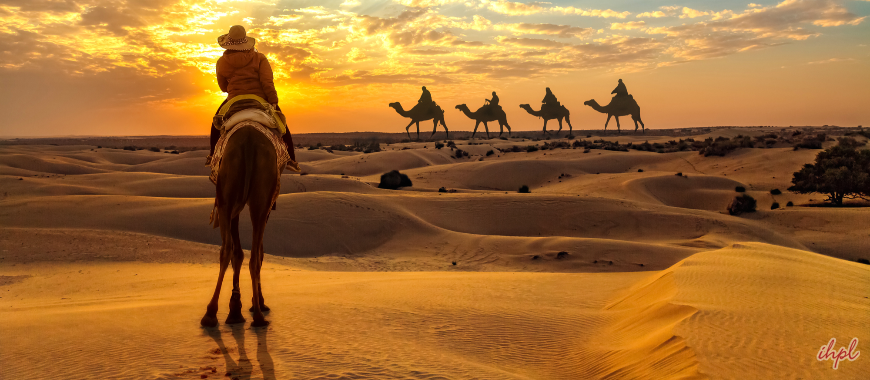

Rajasthan's religious places range from major pilgrimage centres to temples that are worth visiting for their architecture alone.
Ajmer Sharif and Khatu Shyam Ji draw large numbers of devotees. Pushkar's Brahma Temple is closely tied to the sacred character of Pushkar, while Shrinathji at Nathdwara is central to Vaishnava worship. For architecture, Ranakpur and Dilwara stand out for their marble carving. Karni Mata Temple at Deshnok offers a very different living religious tradition.
For a first cultural journey, Ajmer-Pushkar, Udaipur-Nathdwara-Eklingji, Ranakpur and Mount Abu provide the strongest mix of pilgrimage, architecture and local religious life.
Which Religious Places in Rajasthan Should You Prioritise?
| If You Want… | Best Choice |
|---|---|
| A major Sufi pilgrimage experience | Ajmer Sharif Dargah |
| Pushkar's most important temple | Brahma Temple |
| A major Krishna pilgrimage centre | Shrinathji Temple, Nathdwara |
| Outstanding Jain marble architecture | Ranakpur Jain Temple |
| The finest close-up marble carving | Dilwara Jain Temples |
| A high-energy devotional experience | Khatu Shyam Ji Temple |
| Rajasthan's unusual Karni Mata tradition | Karni Mata Temple, Deshnok |
| Mewar's royal Shiva shrine | Eklingji Temple |
| A temple within central Udaipur sightseeing | Jagdish Temple |
| A modern marble temple in Jaipur | Birla Temple |
For travellers interested mainly in architecture, prioritise Ranakpur and Dilwara.
For a pilgrimage-led trip, Shrinathji, Khatu Shyam, Ajmer Sharif and Pushkar have greater relevance.
Religious Places in Rajasthan: Timings and Entry Fees
| Religious Place | Current / Published Visitor Time | General Entry Fee |
|---|---|---|
| Ajmer Sharif Dargah | Winter: 5:00 AM–9:00 PM; Summer: 4:00 AM–10:00 PM | Free |
| Brahma Temple, Pushkar | Around 5:00 AM–1:30 PM and 3:00 PM–9:00 PM | Free |
| Shrinathji Temple, Nathdwara | Several short darshan windows from early morning to evening; not continuously open for darshan | No standard general admission ticket listed; paid seva/manorath is separate |
| Ranakpur Jain Temple | Tourist/non-Jain access generally 12:00 PM–5:00 PM | Indian visitors generally free; foreign/audio-guide/camera charges should be checked locally |
| Dilwara Jain Temples | Tourist access generally 12:00 PM–5:00/6:00 PM | Free |
| Khatu Shyam Ji Temple | Winter: 5:30 AM–1:00 PM & 5:00 PM–9:00 PM; Summer: 4:30 AM–12:30 PM & 4:00 PM–10:00 PM | Free general darshan |
| Karni Mata Temple, Deshnok | 4:00 AM–10:00 PM | Free |
| Eklingji Temple | Common darshan windows: 4:30–7:00 AM, 10:30 AM–1:30 PM, 5:00–7:30 PM | Free |
| Jagdish Temple, Udaipur | 4:30 AM–1:00 PM and 5:00 PM–8:00 PM | Free |
| Birla Temple, Jaipur | Government tourism listing: 8:00 AM–12:00 PM and 4:00 PM–8:00 PM | Free |
Ajmer Sharif Dargah
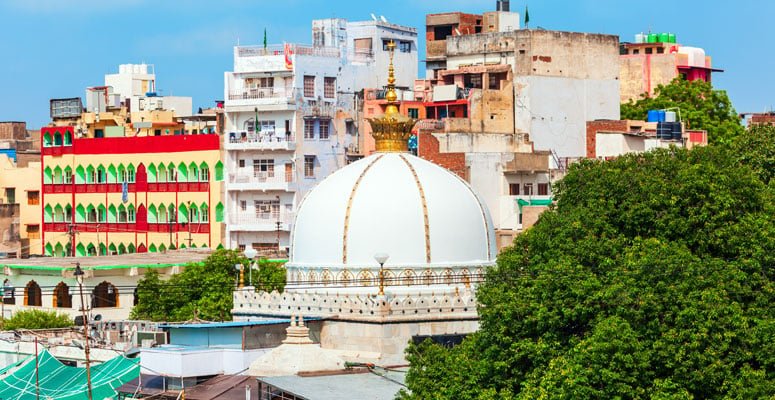
Ajmer Sharif is Rajasthan's most important Sufi shrine and one of Ajmer's defining attractions.
The complex contains the tomb of Khwaja Moinuddin Chishti, along with gateways, courtyards and mosques added during different periods. Rajasthan Tourism notes that both Akbar and Shah Jahan contributed structures to the shrine complex.
Why Visit?
The experience is not only architectural.
Ajmer Sharif remains an active pilgrimage centre visited by people from different religious backgrounds. The narrow approach, flower offerings, prayer areas and constant movement of devotees make it very different from visiting a preserved historic monument.
Time needed: Around 1–2 hours in normal conditions.
Timings:
Winter: 5:00 AM–9:00 PM
Summer: 4:00 AM–10:00 PM.
Entry: Free general access.
Brahma Temple, Pushkar
The Brahma Temple is the most important religious landmark in Pushkar.
The present structure is associated largely with later rebuilding and renovation, with Rajasthan Tourism dating the current form to around the 14th century. The sanctum contains a four-faced image of Brahma, while the temple's red shikhara is visible from the surrounding old town.
Why Visit?
The temple is closely connected with Pushkar's identity as a pilgrimage town.
It makes most sense when combined with the ghats around Pushkar Lake rather than treated as an isolated architectural stop.
Time needed: Around 45–60 minutes.
Timings: Approximately 5:00 AM–1:30 PM and 3:00 PM–9:00 PM.
Entry fee: Free.
Shrinathji Temple, Nathdwara
Shrinathji Temple is the main reason travellers visit Nathdwara.
The temple is dedicated to Shrinathji, a form of Krishna, whose image was brought from the Govardhan region and installed at Nathdwara in the 17th century. Rajasthan Tourism records the deity's installation at Nathdwara in 1672.
Why Visit?
This is one of Rajasthan's strongest places to experience an active Vaishnava temple tradition.
The day is divided into a series of short jhanki or darshan periods, during which the deity is presented with different dress, decoration and offerings.
That rhythm is important for travellers. You cannot simply arrive at any hour and assume the sanctum will be open for darshan.
Time needed: Allow 1–2 hours, including waiting.
Darshan: Several windows run from early morning into the evening. The exact schedule changes by season, festival and daily ritual.
Entry fee: The official temple site does not list a conventional general-admission ticket. Paid seva, manorath and related services are separate.
Ranakpur Jain Temple
Ranakpur is one of Rajasthan's strongest religious attractions for travellers who are as interested in architecture as they are in pilgrimage.
The principal Chaumukha Temple is dedicated to Adinath, the first Jain Tirthankara. Rajasthan Tourism highlights its large marble structure and 1,444 carved pillars, with extensive domes, halls and ceiling work.
Why Visit?
The experience is about scale and detail together.
Instead of concentrating on one sculpture, look at how light moves through the pillars and how the carving changes from column to column.
Time needed: Around 1.5–2 hours.
Tourist visiting hours: Generally 12:00 PM–5:00 PM. Morning hours are primarily used for Jain worship.
Entry: Indian visitors are generally admitted free. Current published foreign visitor, audio-guide, and camera charges are inconsistent, so confirm these at the temple.
Dilwara Jain Temples, Mount Abu
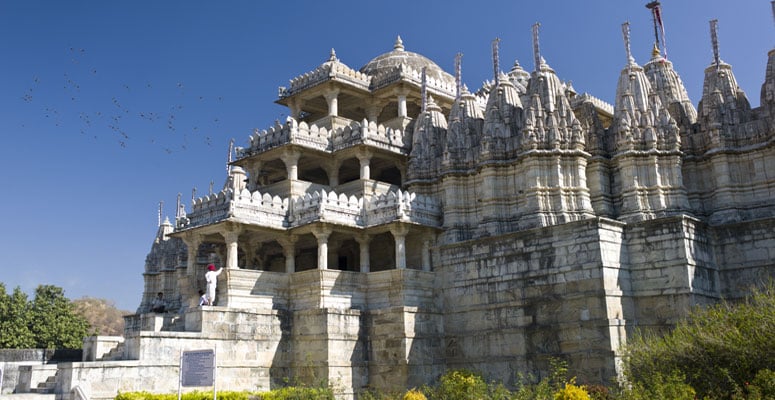
Dilwara is the other major Jain architectural experience to prioritise in Rajasthan.
The complex contains five temples built over several centuries. The marble work is especially detailed in the ceilings, pillars and domes of Vimal Vasahi and Luna Vasahi.
Why Visit?
Ranakpur impresses through the number and rhythm of its pillars. Dilwara feels more intimate and detailed.
Travellers interested in stone carving should take time to look upwards at the ceilings rather than moving quickly between the shrines.
Time needed: Around 1–2 hours.
Tourist access: Generally 12:00 PM–5:00 or 6:00 PM. Morning hours are reserved mainly for Jain worship.
Entry: Free.
Khatu Shyam Ji Temple
Khatu Shyam Ji Temple is one of Rajasthan's busiest Krishna-linked pilgrimage centres.
According to the traditional account, Khatu Shyam is identified with Barbarika, the son of Ghatotkacha from the Mahabharata tradition. This is more accurate than the old wording describing the deity as “the manifestation of the son of Ghatotkacha.”
The white-marble temple includes the main sanctum and Jagmohan prayer hall, but for most visitors the main experience is the intensity of the devotional atmosphere rather than architectural sightseeing alone.
Why Visit?
Choose Khatu Shyam if you specifically want to experience a major living pilgrimage centre.
It is less suited to travellers looking mainly for a quiet architectural temple visit.
Winter hours: 5:30 AM–1:00 PM and 5:00 PM–9:00 PM.
Summer hours: 4:30 AM–12:30 PM and 4:00 PM–10:00 PM.
Entry: Free for general darshan.
Karni Mata Temple, Deshnok
Karni Mata Temple near Bikaner is one of Rajasthan's most unusual religious attractions.
The temple is dedicated to Karni Mata and is widely known for the thousands of kabbas, or sacred rats, that live inside the complex. Rajasthan Tourism currently describes more than 25,000 rats moving freely through the temple.
Why Visit?
This is a living religious tradition, not a staged tourist experience.
The marble work and silver doors are worth noticing, but the relationship between devotees and the resident rats is what makes the temple unlike other sites on this page.
Time needed: Around 45–60 minutes.
Timings: 4:00 AM–10:00 PM daily.
Entry fee: Free.
Eklingji Temple
Eklingji is one of the most important religious sites connected with the rulers of Mewar.
Located north of Udaipur, the temple complex is dedicated to Shiva as Eklingji and has long been closely tied to the Mewar royal tradition. Current national tourism material highlights its four-faced black-stone Shiva image and its historic relationship with the region's rulers.
Why Visit?
Eklingji works especially well for travellers already exploring Udaipur and Nathdwara.
Unlike Jagdish Temple in central Udaipur, it feels more like a dedicated pilgrimage destination than a city sightseeing stop.
Common darshan windows:
4:30 AM–7:00 AM
10:30 AM–1:30 PM
5:00 PM–7:30 PM.
Entry fee: Free.
Jagdish Temple
This temple displays a fine example of the Indo-Aryan style of architecture. Jagdish Temple in Udaipur was built in 1651 and is one of the most popular attractions in Rajasthan. It is dedicated to Lord Vishnu. Built by Maharana Jagat Singh I, the temple has exquisite architecture, including carved pillars, painted walls, and graceful ceilings.
Timings: 4:30 AM–1:00 PM and 5:00 PM–8:00 PM.
Entry fee: Free.
Time needed: Around 30–45 minutes.
Pair with: Udaipur City Palace and the Lake Pichola old-city area.
Birla Temple
This is one of the most renowned religious sites of Rajasthan. Built on an elevated platform, this is designed completely in white marble and dominates the skyline of south Jaipur city. Birla Temple was commissioned by the Birlas, the famous industrialists, in 1988.
The temple is dedicated to Vishnu, also called Narayan, and his companion, Lakshmi, the Goddess of wealth and good fortune.
Timings: The safest current government-published schedule is 8:00 AM–12:00 PM and 4:00 PM–8:00 PM.
Entry fee: Free.
Time needed: Around 30–45 minutes.
Birla Temple should remain a secondary Jaipur religious attraction, below Rajasthan's larger pilgrimage centres.
When Does Timing Matter at Rajasthan's Religious Places?
Timing matters more at religious attractions than at ordinary monuments because many temples close between ritual periods.
At Shrinathji, darshan is available only during specific jhanki windows. Check the day's schedule rather than relying on a broad opening time.
At Ranakpur and Dilwara, general sightseeing access for non-Jain visitors normally begins around noon. Arriving early can leave you waiting for several hours.
At Khatu Shyam, Ajmer Sharif and Karni Mata, major fairs or religious dates can change both visitor flow and access arrangements.
If experiencing the religious event itself is not your main reason for visiting, ordinary weekdays usually make sightseeing easier.
Religious Places in Rajasthan That Work Well Together
Ajmer Sharif + Brahma Temple, Pushkar
Ajmer and Pushkar are close enough to combine comfortably.
The two experiences are very different: Ajmer Sharif is a major Sufi shrine, while Pushkar centres on Hindu pilgrimage around Brahma Temple and Pushkar Lake.
Keep enough time for each rather than treating one as a roadside stop.
Shrinathji + Eklingji
These work naturally within the wider Udaipur-Mewar area.
The main planning issue is darshan timing, not distance. Check both temple schedules before setting the order of the day.
Ranakpur Jain Temple + Kumbhalgarh
Ranakpur and Kumbhalgarh are commonly combined when travellers are already exploring the Mewar/Aravalli region.
Remember that Ranakpur's general tourist access normally begins around noon, so route planning should work around that restriction.
Dilwara Jain Temples + Mount Abu
Dilwara fits naturally with Mount Abu sightseeing.
Because tourist entry begins later in the day, use the morning for an outdoor attraction such as Guru Shikhar and keep Dilwara for after noon.
Practical Tips for Visiting Religious Places in Rajasthan
Continue Planning Your Rajasthan Journey
Rajasthan's religious places are easiest to include when they already fit the wider route.
Combine Ajmer and Pushkar for two important pilgrimage traditions. Around Udaipur, Shrinathji and Eklingji add a strong religious layer to a Mewar journey. Ranakpur works for travellers interested in Jain architecture, while Dilwara fits naturally into a Mount Abu stay.
Khatu Shyam and Karni Mata deserve separate detours when the religious experience itself is important to you.
Continue with the Rajasthan Travel Guide for wider state planning and the relevant Ajmer, Pushkar, Udaipur, Bikaner and Mount Abu guides for destination-level sightseeing.