
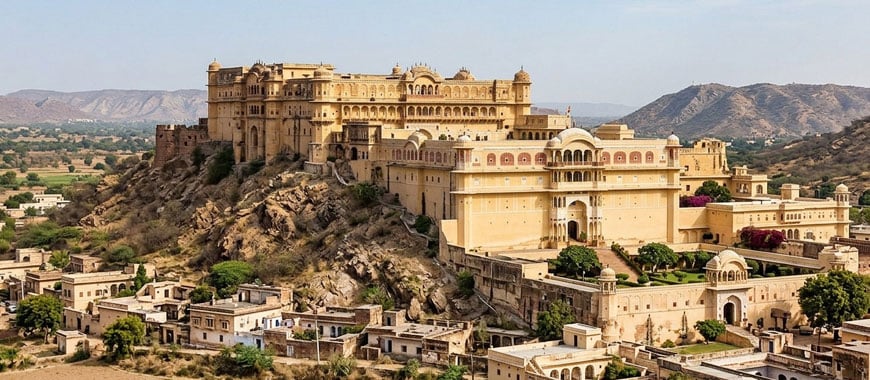

Samode Fort is best experienced as a rugged, historical counterpart to the nearby palace, offering a glimpse into the defensive origins of the Samode lineage. It provides a unique opportunity for those wanting to see the architectural shift from a hilltop military stronghold to a refined garden estate.
Most travellers include the fort as a morning trekking extension to their palace visit or as a scenic waypoint while transitioning between the rural outskirts and the main Jaipur city circuit.
This guide outlines how to plan your ascent to the ridge, entry details, crowd intensity, and how to seamlessly blend a visit to the fort into your wider Samode and Jaipur heritage circuit.
How to Experience Samode Fort?
A steady, planned ascent helps you get the most out of the climb to Samode Fort:
- Begin the climb early To reach the ridge before the sun gets too high and the stone path heats up.
- Stop at the mid-way bastions To look back at the village and palace, as these spots offer the best perspective on the climb you have completed.
- Walk the perimeter of the upper ramparts Once you reach the top to see the 360-degree views of the Aravalli hills and the desert plains.
- Explore the inner stone ruins briefly To see the old water tanks and military masonry before starting your steady walk back down.
Following this sequence ensures you manage your energy well while observing the defensive details of the fort and the expansive landscape that surrounds it.
Who Will Enjoy Their Visit To Samode Fort?
1. Architecture Lovers
Unlike the nearby palace, the fort remains largely unrestored. It appeals to visitors who want to study original 16th-century military masonry, defensive bastions, and ancient water catchment systems in their natural, weathered state.
2. Active Travellers
The ascent involves a steep climb on a stone path, making it a good choice for those who prefer physical movement over standard monument tours. Reaching the summit offers a sense of outdoor accomplishment and a chance to explore a site without the usual crowds found in city forts.
3. Families with Older Children
The hike provides an engaging outdoor activity for families who want to break up a day of sightseeing with some physical effort. Older children and teenagers often enjoy the explorer feel of the unpolished ruins and the challenge of the uphill climb, which is more adventurous than a typical museum visit.
Want to explore more destinations across Rajasthan with your loved ones? Start planning your itinerary using the tips and tricks in this Rajasthan Travel Guide.
4. Nature Lovers
The path to the fort passes through the dense scrub of the Aravalli range. It is a quiet environment where travellers can observe indigenous desert vegetation like Khejri trees, Dhok (Anogeissus pendula), and thorny acacia bushes.
5. Landscape Photographers
The fort provides the highest vantage point in the region, offering a clear view of the entire valley. It is ideal for those looking to photograph the contrast between the rugged Aravalli ridge lines and the structured layout of the Samode Garden and village below.
6. Wildlife Enthusiasts
The rocky cliffs and surrounding trees are home to several local species. You can easily spot Grey Langurs, peacocks, and Indian rollers along the fort walls. Looking up, you will often see Black Kites and Egyptian Vultures circling above the ridge, making the site a practical spot for birdwatching and seeing small mammals in the wild.
Where Samode Fort Fits in Your Jaipur Itinerary
Samode Fort works best in the following itinerary positions:
- As an early morning addition to a Samode Palace visit, allowing you to finish the climb before the midday heat.
- As a scenic stopover when travelling between the busy sights of Jaipur and the heritage towns of Shekhawati or Mandawa.
- After exploring the Old City, to provide a rugged, outdoor contrast to the polished courtyards and museums of central Jaipur.
- It is most effective as a complementary stop to the Palace or a travel break on the Shekhawati route rather than a primary destination on its own.
Best Time To Visit Samode Fort
The best time to visit Samode Fort depends on how you structure your itinerary—especially whether you are combining the climb with a Palace visit or using it as a transition between Jaipur and rural Rajasthan routes.
- October to March (15°C to 28°C) – Winter: This is the most suitable window for the steep ascent, as the mild temperatures allow you to complete the climb without the physical strain caused by intense sun. There is sharp visibility of the distant Jaipur skyline and the surrounding countryside.
- April to June (30°C to 45°C) – Summer: Best attempted at first light, as the exposed stone path and uphill climb become physically demanding once temperatures rise.
- July to September (25°C to 35°C) – Monsoon: Suitable for travellers prioritising greener surroundings and softer light, though the climb requires extra caution due to uneven and occasionally slippery terrain. The stone steps and paths can get slippery after rain, and the terrain requires careful footing and taking it slow while moving around.
To understand how the fort connects with other key places to visit in Samode, check out our complete travel guide before outlining your daily itinerary.
Quick Planning Snapshot
- Ideal duration: 1.5 – 2 hours (includes the ascent)
- Best time of day: Early morning (at first light)
- Best for: Active travellers, architecture purists, high-angle photographers
- Combine with: Samode Palace or a transit stop toward Shekhawati.
Most travellers pair the fort climb with a stay or visit to Samode Palace, using the early morning hours for the ascent and the rest of the day for a more relaxed heritage experience.
How to book your tickets to the fort?
There is no online booking for Samode Fort. You must purchase tickets in person on the day of your visit.
Where to Buy: Tickets are sold at the main security gate of Samode Palace. There is no separate ticket booth at the fort itself.
Cost: The entry fee is ₹1,000. This is a cover charge that typically includes access to both the Palace and the Fort, and can be redeemed for food or drinks inside the Palace. It also includes a guided tour of the palace.
Hotel Guests: If you are staying at Samode Palace or Samode Bagh, the fort visit is usually included. Check with the front desk for your entry pass before heading to the trail.
How much time should you spend at Samode Fort?
Plan for 1.5 to 2 hours for the full experience. This includes roughly 30 to 45 minutes for the uphill climb, depending on your fitness level, and another 45 minutes to walk along the ramparts and explore the ruins.
An insight into tourist footfall
The fort receives significantly fewer visitors than the palace, offering a more isolated experience. However, the environment changes based on the time of day:
- Least crowded: Early morning (at sunrise). This is when you will mostly encounter local residents or hotel guests.
- Moderate footfall: Late morning to early afternoon. Day-trippers from Jaipur often arrive during these hours, though the fort never feels congested.
- Weekends: A minor increase in hikers and photography enthusiasts from nearby cities.
- Best for a quiet experience: Any weekday morning. The silence at the summit is best preserved before the midday heat sets in.
What to do – go for a Guided or Unguided visit?
An unguided visit is recommended for Samode Fort. The appeal of the site is its rugged, unrestored state and the panoramic views, which do not require historical narration. If you are interested in the specific military strategy of the Aravalli fortifications, you can request a briefing from the palace staff, and they’ll share the facts with you.
Explore The Best of Rajasthan Along with Samode Fort
Samode Fort serves as a high-altitude introduction to the desert landscape. It is best utilised as a way that bridges the gap between the urban history of Jaipur and the rural geography of Samode.
Looking to explore the top places to visit in samode alongside Jaipur? Let our travel experts help turn your ideas into a seamless, custom plan – Ask Our Experts.


